

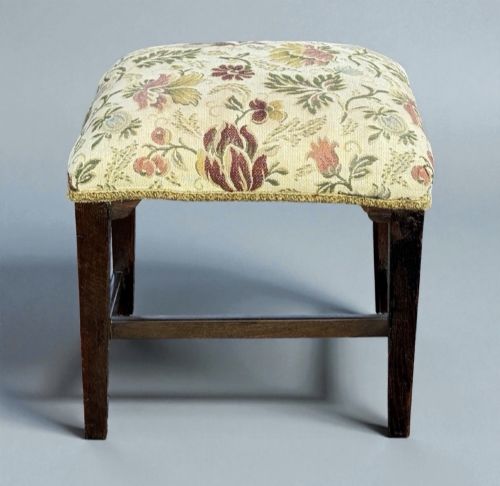


Vintage Floral Ottoman
A vintage floral ottoman brings tactile warmth to a room through traditional needlework, carved wood, and practical low seating.
Vintage Floral Ottoman
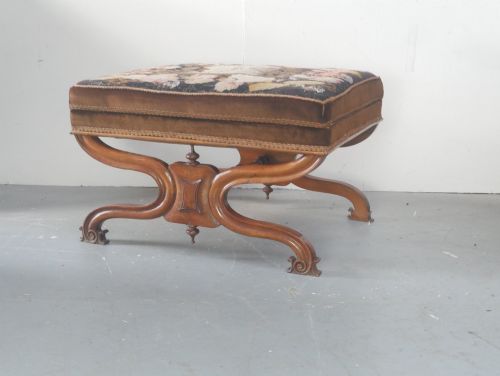
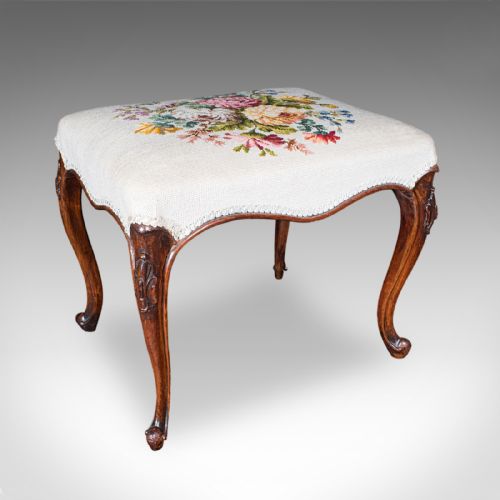
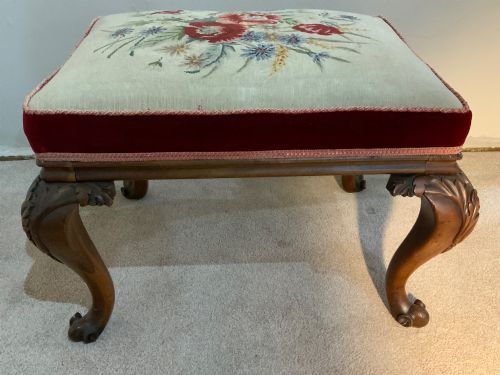
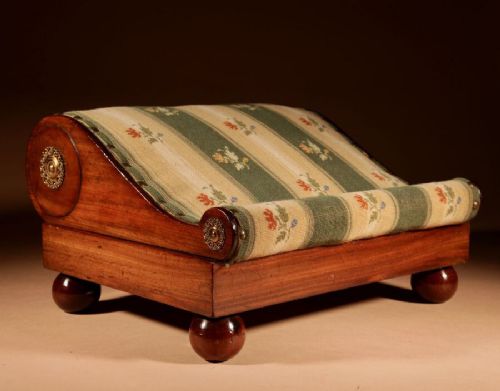
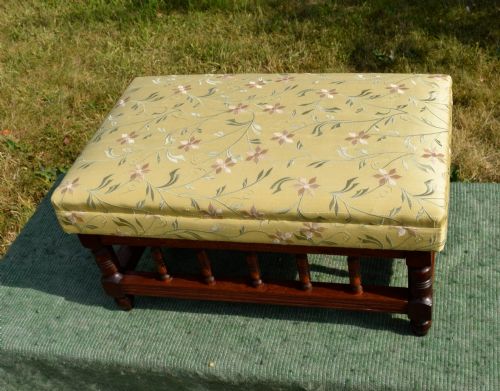
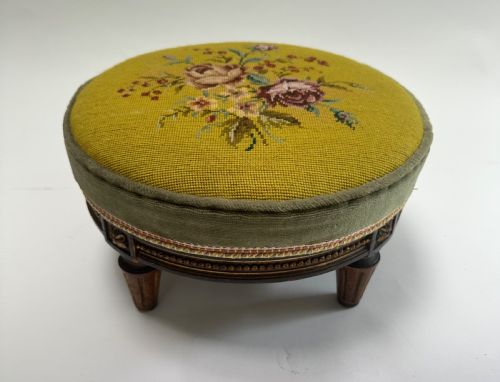
When you search for a vintage floral ottoman, you are looking at upholstered footstools, low seats, and box ottomans carrying botanical motifs, needlepoint, or tapestry covers. The listings combine nineteenth-century Victorian walnut and mahogany frames with early twentieth-century pieces, spanning footstools, window seats, and work boxes.
You are most likely to meet Victorian and Edwardian examples featuring needlework or tapestry upholstery set over wooden frames in mahogany or walnut. Alongside these footstools, the selection includes related textile forms such as embroidered fragments and woven carpets originating from Ushak.
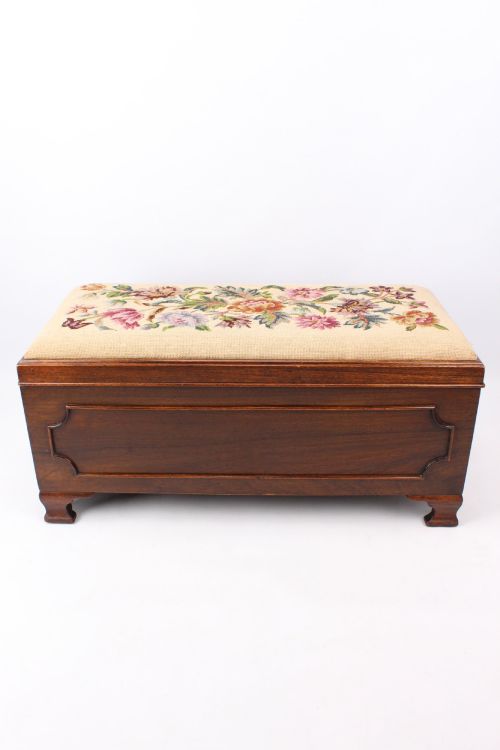
The category encompasses diverse regional workshops, ranging from English mahogany frames to French painted stools and Queen Anne style variants. Formats vary from small fireside footstools to long footstools and box ottomans designed with internal storage.
Materials and construction
Frames rely principally on dense hardwoods, predominantly mahogany and walnut, alongside oak and painted wood constructions. Joinery and carving reflect period cabinetry standards, from simple turned legs to elaborately carved Victorian and Queen Anne style supports.
Upholstery and surface decoration utilise wool, cotton, and silk threads worked into needlepoint, petit point, and tapestry panels. These textiles are fixed over padded foundations, occasionally complemented by brass detailing or internal wooden box compartments.
Some nineteenth-century ottomans doubled as work boxes, hiding sewing kits inside while keeping feet warm by the hearth.
Assessing quality in construction and textiles
Quality reveals itself in the density of the wood framing and the crispness of the hand-carved details. Superior pieces display substantial timber weights, tight joinery, and refined secondary woods, whereas lesser examples use simpler turned elements and thinner stock.
The needlework or tapestry cover represents a major factor in distinction. Finely worked needlepoint featuring complex botanical shading and dense wool tension separates exceptional decorative pieces from simpler machine-woven or later replacement textiles.
Howard and Sons
The Vintage Floral Ottoman Glossary
- Ottoman
- A low, upholstered seat or footstool without arms or a back, frequently fitted with a hinged lid for interior storage. Examples range from nineteenth-century mahogany window stools to larger box forms.
- Needlepoint
- A type of counted thread embroidery stitched over canvas mesh, commonly utilised on period footstool tops. It creates firm, durable floral designs using wool or silk yarns.
- Ushak
- A classification of traditional hand-knotted carpets originating from western Anatolia, known for large-scale floral and medallion motifs. These antique rugs frequently accompany textile displays.
- Walnut
- A heavy, dark hardwood favoured by cabinet makers during the Victorian era for its rich grain and capacity for sharp carving. It forms the structure of many high-quality period stools.
- Tapestry
- A thick textile woven on a loom or worked by hand to depict pictorial and floral scenes. It provides durable and decorative upholstery for footstools and window seats.
Vintage Floral Ottoman: Frequently Asked Questions
How do I clean antique needlework?
Surface dust should be gently removed using a soft brush attachment through a mesh screen to protect old wool fibres.
Moisture and harsh cleaning agents must be avoided entirely to prevent the historic threads from shrinking or bleeding.
Are these ottomans comfortable for daily use?
Most period footstools and ottomans were constructed with firm stuffing suited for resting feet rather than deep lounging.
Their sturdy wood frames support everyday seating, though the vintage padding may feel firmer than modern equivalents.
How do I date a Victorian footstool?
Dating relies on examining the timber species, joinery methods, and the style of the turned or carved legs. Walnut and heavy mahogany frames with hand-stitched needlepoint typically point toward the nineteenth century.
Secondary woods and the type of underside webbing or tacks provide further clues to the manufacturing decade.
Can I use an ottoman as a coffee table?
Firmly padded rectangular footstools and long stools serve well as coffee tables when paired with a stable wooden tray.
Care should be taken to select pieces with sturdy frames and durable wool tapestry or needlework tops capable of supporting everyday items.