

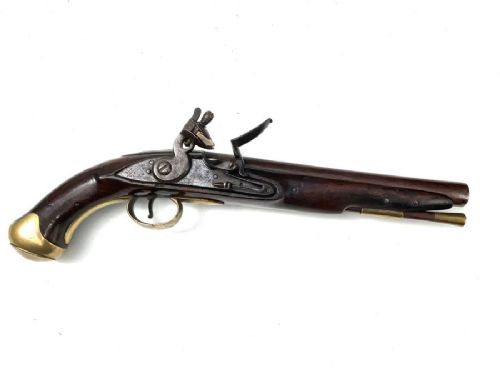


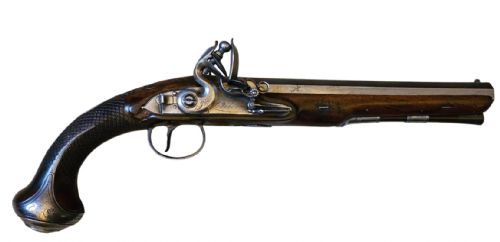

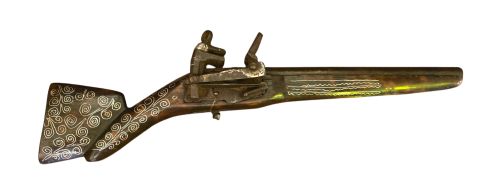


Vintage Flintlock Handgun
A vintage flintlock handgun brings tangible history into a room, offering the tactile weight and mechanical ingenuity of early firearms.
Vintage Flintlock Handgun
When searching for a vintage flintlock handgun, collectors encounter a diverse array of firearms spanning the eighteenth and nineteenth centuries. These pieces encompass military service arms, civilian pocket pistols, and ornate regional variations from British, European, and Ottoman makers.
The selections on this page heavily feature eighteenth-century and early nineteenth-century designs, ranging from heavy dragoon service pistols to pocket-sized overcoat variants. Buyers frequently meet pieces bearing signature plates from London gunsmiths alongside elaborately decorated Balkan and Ottoman holster arms.
Form follows function across these examples, showing distinct variations between military utility and civilian elegance. Whether configured as a duelling piece or a coach inspector's sidearm, each vintage flintlock handgun reflects the specific security needs and technological standards of its era.
Construction and materials
Makers constructed stocks from dense woods like figured walnut, shaping them to fit the hand while housing complex lock mechanisms. Barrels and lock plates utilised forged steel and iron, occasionally complemented by cast brass for longevity and resistance to coastal air.
Artisans decorated these functional arms using intricate silver inlay work and embossed brass cladding, particularly evident on regional Ottoman and Balkan pieces. London and provincial workshops relied on precision machining for internal springs and frizzen faces to ensure reliable sparks upon ignition.
The listings show pieces originating from Georgian Britain, Regency London, and the Ottoman Balkan frontier.
Defining characteristics of quality
Superior quality rests in the crispness of the lock action and the legibility of maker signatures stamped upon the metalwork. Finely executed silver wire inlay and deeply chased brass mounts elevate provincial arms into exceptional examples of period craftsmanship.
The balance between stock wood grain and metal component integration dictates the overall execution of the piece. Well-preserved transition eras, clear proof marks, and untouched original percussion or flintlock mechanisms separate ordinary hardware from distinguished collector items.
Harrison of London·Thomas Anelli·Timothy Hughes·Meyer & Mortimer·Barber of Newark·Dutton·Wilson
The Vintage Flintlock Handgun Glossary
- Flintlock
- An ignition mechanism utilising a piece of flint held in a cock to strike a steel frizzen, creating sparks to ignite the gunpowder charge. This system dominated firearm design from the seventeenth through the early nineteenth centuries.
- Frizzen
- The vertical steel plate struck by the flint to create sparks while covering the priming pan. A grooved frizzen helps direct the spark downward into the powder.
- Bore
- The interior diameter of the barrel, often measured in gauge or bore size to indicate the projectile weight a firearm accepts. Smaller numbers denote wider barrel diameters.
- Miquelet
- A distinct form of snaplock mechanism common in Mediterranean and Ottoman regions, featuring an external mainspring and combined frizzen and pan cover.
- Proof marks
- Official stamps applied to barrels and lock plates by licensed assay offices or guilds to certify that the metal withstood high-pressure testing. These marks help verify geographic origin and production dates.
Vintage Flintlock Handgun: Frequently Asked Questions
How do I identify a flintlock?
A flintlock relies on an external hammer holding a flint that strikes a vertical steel plate called a frizzen. This action opens the priming pan to expose gunpowder to the resulting sparks.
Examination of the lock plate on the side of the firearm reveals this distinct mechanism, separating it from later percussion cap and cartridge systems.
What is an overcoat pistol?
An overcoat pistol is a compact firearm designed to be concealed within deep coat pockets for personal defence during travel. These pieces typically feature shorter barrels for easy drawing in confined spaces.
Civilian travellers, mail coach inspectors, and merchants utilised these concealable arms against highwaymen during the eighteenth and nineteenth centuries.
Why do some pistols have brass barrels?
Brass barrels resisted rust and corrosion from sea air and gunpowder residue far better than untreated iron or steel. Naval officers and travellers in humid climates frequently favored this material.
These barrels were cast rather than forged, often displaying maker stamps and London proof marks near the breech.
How should I display a pistol?
Displaying a vintage handgun requires a stable environment away from direct sunlight and excessive humidity to protect the wooden stock and metal components. Wall mounting brackets or dedicated glass display cases provide secure presentation.
Maintaining a consistent indoor temperature prevents the walnut stock from drying out and keeps the metalwork stable over time.