






Antique Brass Pistol
When you search for an antique brass pistol, you are looking at functional 18th and 19th-century firearms defined by alloy furniture, barrels, and frames.
Antique Brass Pistol
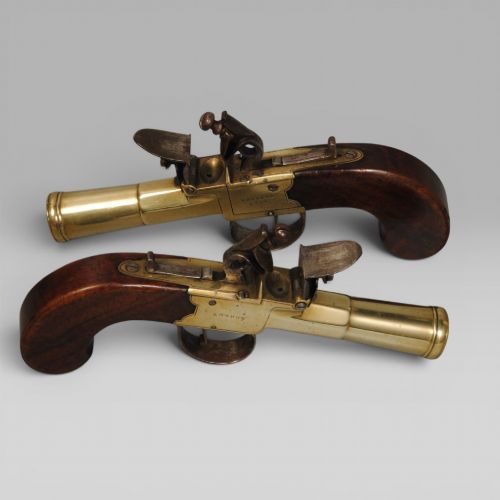
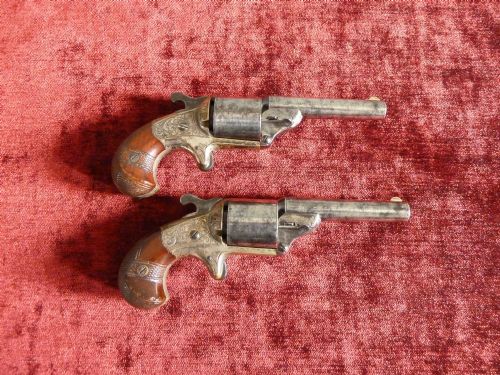
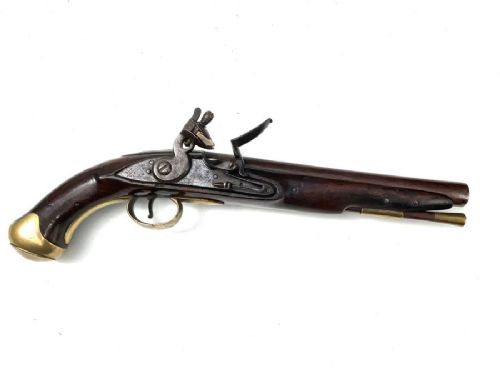
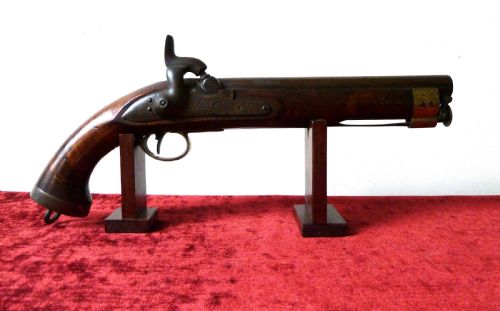
Collectors seeking an antique brass pistol encounter flintlock and percussion ignition systems spanning the Georgian and Victorian eras, including British service arms, duelling pieces, and Ottoman trade weapons. The selection centres heavily on 18th-century and 19th-century examples featuring cast brass barrels, frames, and decorative mounts combined with iron lockplates.
The form varies from pocket-sized Queen Anne turn-off pistols to heavy dragoon and holster weapons designed for military service or travel. Many specimens originate from British makers, alongside continental European workshops and Balkan regions where brass cladding and intricate mountings predominated.
Construction and materials
Gunsmiths cast barrels and furniture from brass, pairing the yellow metal with forged iron or steel lock mechanisms, internal springs, and triggers. Stocks were shaped from dense hardwoods like walnut and mahogany, occasionally inlaid with silver wire or mounted with mother-of-pearl.
Makers utilised brass for its resistance to corrosion in marine or field environments, casting cannon-mould barrels and sideplates that were subsequently hand-chased, engraved, or stamped with Birmingham and London proof marks.
Mail coach inspectors carried specialised short-barreled brass pistols to safeguard the mailbags from highwaymen on isolated rural routes.
Distinctions in quality and execution
The calibre of engraving on brass mounts and the crispness of maker signatures on the lockplate separate standard military issue arms from bespoke civilian pieces. Superior examples exhibit matching serial numbers, original flintlock or percussion mechanisms in working order, and stocks retaining their factory contours without heavy timber replacement.
Execution depends upon the precision of the brass casting and the harmonious integration of wood and metal, where lesser items show heavy pitting on steel components or poorly fitted replacement ramrods and hardware.
Harrison of London·Henry Nock·La Motte·Thomas Henshaw·H.W. Mortimer & Son·Thomas Anelli·I Parr·John Rimes·J. Robinson
The Antique Brass Pistol Glossary
- Flintlock
- An ignition mechanism utilising a piece of flint held in a cock to strike a steel frizzen, creating sparks to ignite the priming powder. This system dominated European and American firearms from the 17th into the 19th century.
- Percussion cap
- A small metal cup containing fulminate of mercury placed on a nipple, which detonates when struck by the hammer to fire the charge. This mid-19th-century innovation largely replaced the flintlock.
- Turn-off barrel
- A barrel designed to be unscrewed from the breech for loading, commonly found on 18th-century pocket pistols. This design allowed tight compaction of the powder and ball without a ramrod.
- Miquelet lock
- A form of snaplock ignition featuring an external mainspring, widely utilised across the Ottoman Empire, Spain, and North Africa. It employs a combined steel and frizzen struck by a flint-holding cock.
- Cannon barrel
- A barrel shaped with a flared muzzle resembling a naval cannon, frequently cast in brass on 18th-century pocket and overcoat pistols. The flared design facilitated easier loading.
Antique Brass Pistol: Frequently Asked Questions
How do I identify a flintlock from a percussion pistol?
Examine the ignition area above the stock where the hammer strikes. A flintlock uses a jaw holding a piece of flint that hits an upright steel frizzen to generate sparks, whereas a percussion pistol uses a small pivoting hammer that falls directly onto a percussion cap seated on a hollow nipple.
Flintlock mechanisms generally date earlier, predominantly spanning the 17th and 18th centuries, while percussion systems became standard after the 1820s. Both types frequently incorporated brass barrels and furniture during the transitional periods.
Were brass barrels safe to fire with gunpowder?
Yes, contemporary makers cast brass barrels to withstand standard black powder charges of the era. Brass possesses adequate tensile strength for smoothbore pistols and resists rust from salt air and powder residue better than iron.
Modern collectors treat antique firearms as display pieces rather than shooting arms due to age-related metal fatigue and weakened wood stocks. Proof marks stamped into the metal verify that the barrel passed safety tests when originally manufactured.
What does a Birmingham proof mark indicate?
A Birmingham proof mark signifies that the pistol was inspected and tested for structural integrity at the official Birmingham Proof House. These stampings provide confirmation of the piece's British origin and commercial validity during the 18th and 19th centuries.
Different stamp designs evolved over decades, helping historians date the manufacture window of un-dated locks and barrels. London maintained a separate proof house, resulting in distinct stamps for metropolitan makers.