






Antique Flintlock Weapon
An antique flintlock weapon is a historic piece of engineering, sought after by collectors for its mechanics and design.
Antique Flintlock Weapon
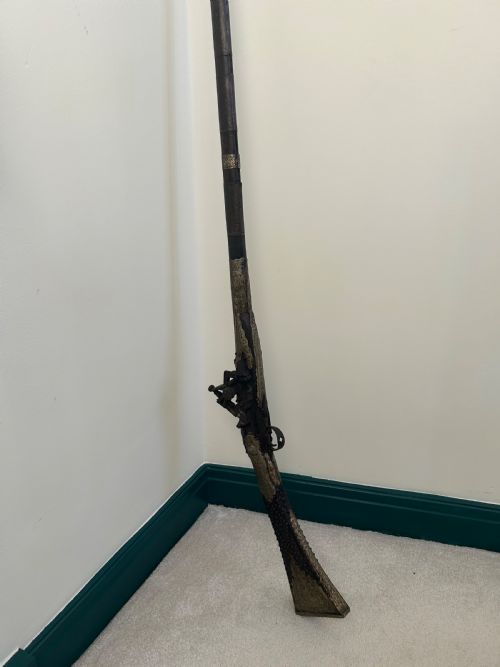
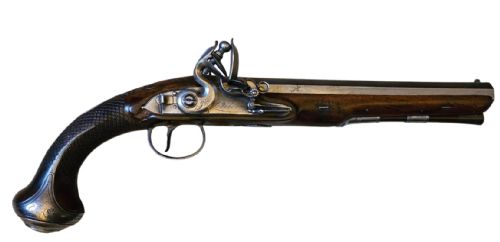
An antique flintlock weapon is a firearm operated by a flint and steel ignition mechanism, spanning periods from the seventeenth century through to the nineteenth century. Buyers searching for an antique flintlock weapon encounter various forms including holster pistols, blunderbusses, jezail rifles, and muskets.
The pieces listed on this page originate from diverse cultural regions, featuring English, French, Turkish, and Afghan tribal examples. Makers such as Harrison of London, Sargant and Son, and Barber of Newark represent the British and European traditions frequently found here.
These items range from Georgian military pieces to Ottoman and French firearms, reflecting the global reach of flintlock technology. Collectors can find items varying from standard military issue to specialised overcoat and duelling pistols.
How they were made
Gunmakers constructed these firearms using a combination of forged steel or iron for barrels and locks, paired with stocks fashioned from walnut or other dense wood. Brass furniture and fittings frequently appear on eighteenth-century and nineteenth-century examples to reinforce and adorn the frame.
Higher-end pieces incorporate decorative techniques such as silver inlay and gold accents, particularly on Ottoman holster pistols and fine French designs. Metal parts are hand-forged and engraved, while stocks are shaped to fit the specific lock plate and barrel dimensions.
Antique Flintlock Weapon Retail Price Guide 2026
Typical asking prices for flintlock weapon among the pieces listed under this phrase on Sellingantiques today, from the lower quarter to the upper quarter. They describe what is for sale here now, not the wider market.
Listings feature steel, walnut, brass, iron, silver, and gold across eighteenth and nineteenth-century periods.
What varies in quality
Quality in these firearms is determined by the crispness of the lock mechanism, the integrity of the wood stock, and the presence of maker signatures or hallmarks. Pieces signed by known makers like Barber of Newark or Harrison of London command greater attention from serious collectors.
The refinement of ornamentation, such as intricate silver inlay on Ottoman pistols versus plain military issue finish on a Brown Bess musket, marks the difference between standard field arms and bespoke officer pieces.
Harrison of London·Sargant and Son·Barber of Newark
The Antique Flintlock Weapon Glossary
- Flintlock
- An ignition mechanism that uses a piece of flint held in a cock to strike a steel frizzen, creating sparks to ignite the priming powder.
- Holster pistol
- A large handgun designed to be carried in a saddle holster, typically produced during the eighteenth and nineteenth centuries.
- Blunderbuss
- A muzzle-loading firearm with a flared barrel, designed to discharge a spread of shot at close range.
- Jezail
- A type of long gun used in the Middle East and Central Asia, often featuring a distinct curved stock and flintlock or percussion mechanism.
- Frizzen
- The vertical steel plate struck by the flint in a flintlock mechanism to create sparks.
Antique Flintlock Weapon: Frequently Asked Questions
How do flintlock mechanisms work?
When the trigger is pulled, the cock holding a piece of flint falls forward to strike the steel frizzen. This action opens the pan cover and creates sparks that drop into the priming powder, igniting the main charge inside the barrel.
The resulting combustion forces the projectile down the bore. This mechanical ignition system replaced earlier matchlock and wheel-lock designs and remained standard for centuries.
How are different periods identified?
Periods are identified through a combination of stylistic markers, barrel shapes, lock plate designs, and maker marks stamped into the metal. Georgian pieces often display distinct crown or inspector proofs.
Changes in stock shaping and the transition from brass to iron mountings also help date these firearms. Documentation or signatures from makers like Sargant and Son provide precise manufacturing windows.
Were these weapons used in combat?
Many examples on this page served active military roles during conflicts such as the Napoleonic Wars. Muskets like the Brown Bess equipped infantry regiments across campaigns.
Other pieces, such as duelling and overcoat pistols, served civilian purposes for personal protection and the resolution of disputes among officers and gentlemen.
How should these firearms be displayed?
Flintlock weapons require stable indoor environments away from direct sunlight and excessive humidity to preserve the walnut wood and steel components. Wall mounts or specialised display cabinets with glass protection suit these objects.
Regular light oiling of metal surfaces prevents corrosion while maintaining the historical finish. Wooden stocks benefit from occasional waxing to prevent drying.