



Vintage Fishing Art
Vintage fishing art covers painted coastal scenes, carved marine subjects, and engraved studies spanning the nineteenth century through the mid twentieth century.
Vintage Fishing Art
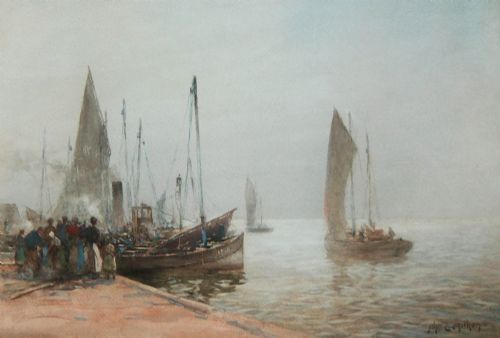
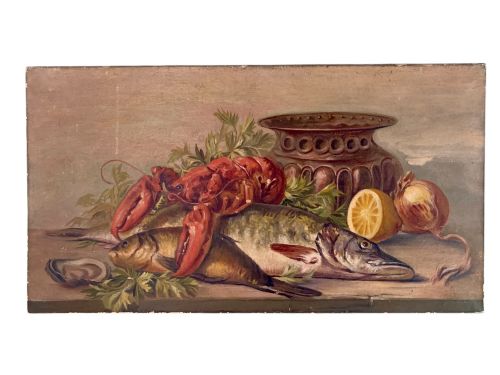
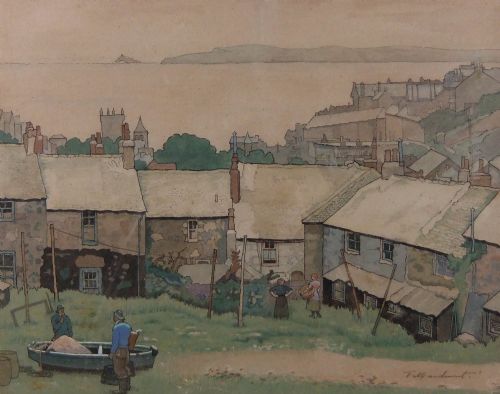
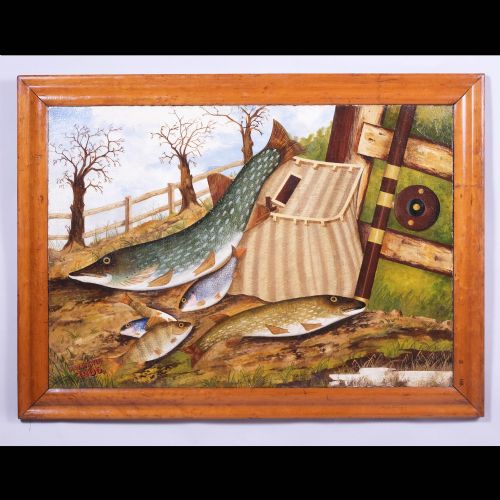
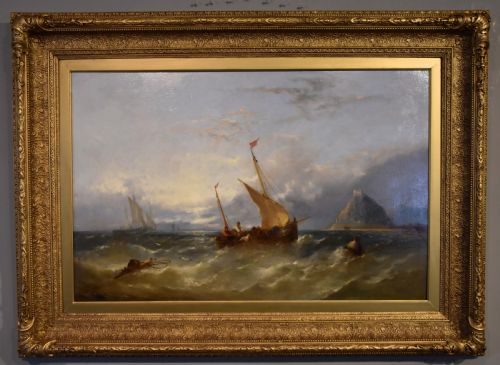
Vintage fishing art encompasses oil paintings and watercolours depicting coastal harbours, fishing boats at sea, and river landscapes. These works record maritime activity and seaside communities from the Victorian era onward, reflecting both British and European coastal life.
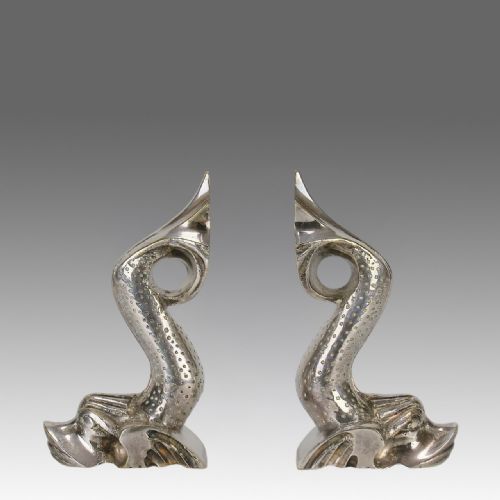
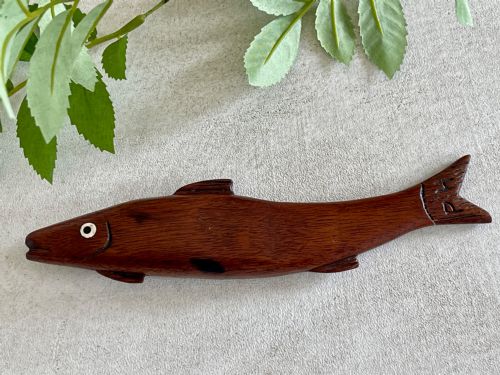
The category extends beyond flat works on paper and canvas to include carved wooden figures, glass bowls featuring marine motifs, and metal bookends. Buyers frequently encounter coastal watercolours alongside oil paintings on canvas and board.
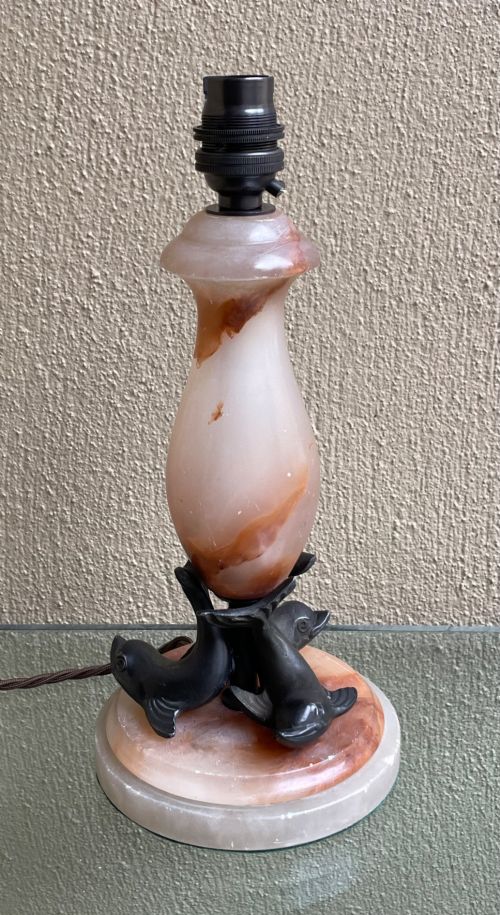
Objects range from detailed nineteenth-century engravings of fish to Art Deco glass vessels and lamps modelled with aquatic forms. This variety bridges fine art and decorative objects linked by a common marine theme.
How they were made
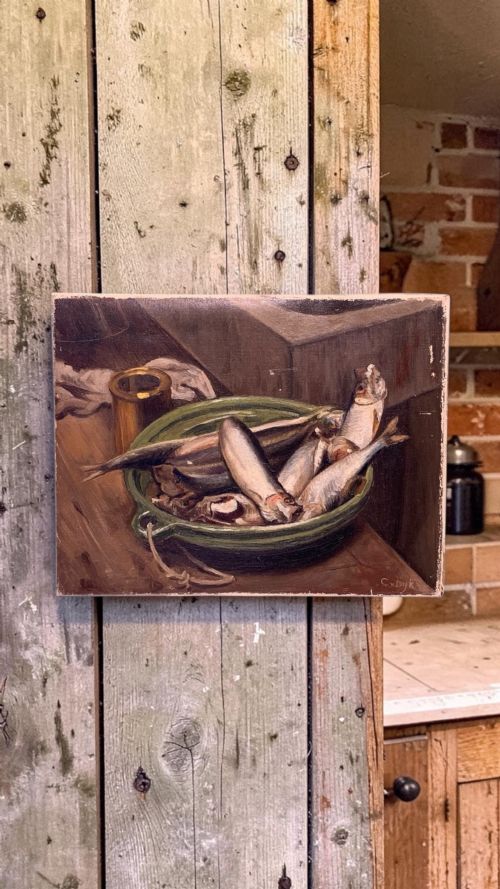
Oil paint on canvas, panel, and board provides the medium for many of the maritime scenes and still lifes. Artists built up coastal views using layered pigments to capture changing light over water and stormy seas.
Watercolour on paper forms another major group of works, allowing artists to render translucent skies and coastal harbours with fluid brushwork. Engravings utilise inked plates pressed onto paper to record detailed studies of fish.
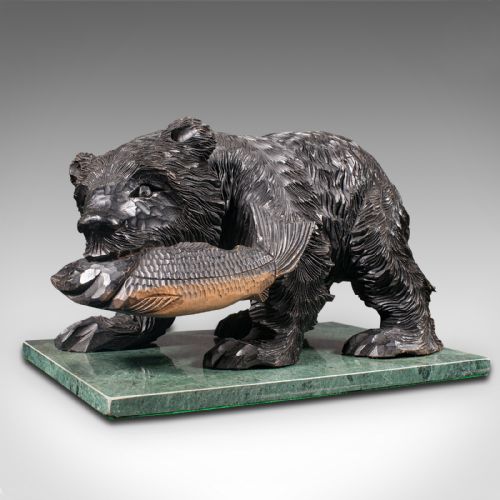
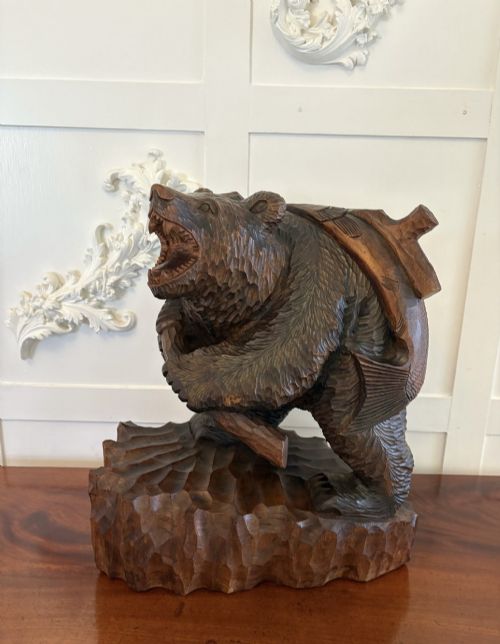
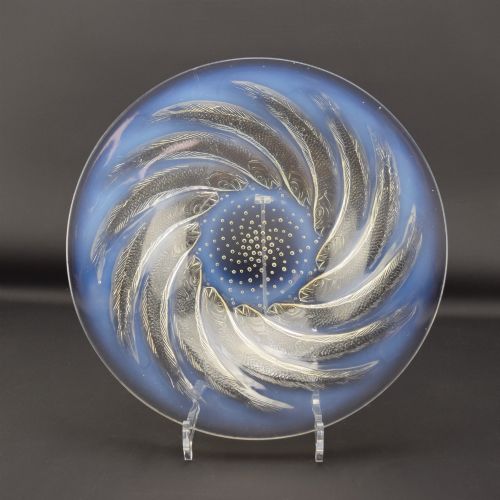
Carved wooden pieces employ materials such as linden wood, shaped using hand tools to create sculptural forms like bears carrying fish or knitting sheaths. Glass items utilise pressed or moulded techniques to produce opalescent bowls and decorative lamps.
Listings span the nineteenth century through the 1960s, combining oil paintings, watercolours, engravings, glass, and carved wood.
What varies in quality
The skill of the artist and the precision of the execution dictate the standing of painted works. Stronger pieces demonstrate a confident handling of light, atmospheric perspective, and accurate rendering of marine architecture such as rigging and hull forms.
Material choice and finishing define decorative objects within the genre. Higher quality glass items show crisp moulding and distinctive opalescence, while carved wooden pieces reveal depth of detail and clean tool work in the carving.
F Abella & Sons·Rene Lalique·Suckling Ltd
The Vintage Fishing Art Glossary
- Coble
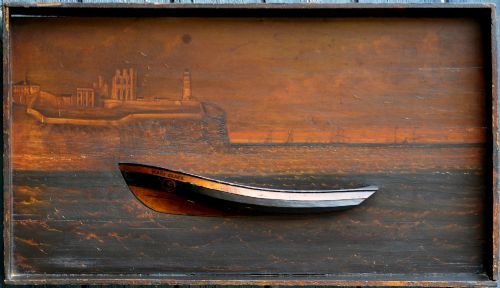
- A traditional type of open fishing boat with a high bow and flat floor, commonly found along the northeast coast of England and frequently featured in marine watercolours.
- Engraving
- A printmaking process where an artist cuts lines into a metal plate to hold ink, producing sharp, detailed impressions on paper such as scientific fish studies.
- Opalescent glass
- Glass that displays a milky, iridescent quality shifting in tone under different lighting conditions, often utilised in decorative Art Deco bowls.
- Treen
- Small handmade wooden household objects and utensils, which include carved items like fish-shaped knitting sheaths.
- Watercolour
- A paint consisting of water-soluble pigments applied to paper, valued for its translucent washes and immediacy in capturing coastal weather.
Vintage Fishing Art: Frequently Asked Questions
What subjects appear in vintage fishing art?
These works primarily depict coastal harbours, fishing vessels at sea, and coastal villages alongside river scenes with figures angling. Natural history studies of fish and marine life also form part of the genre.
Paintings often record specific locations such as Cornish ports, Scottish harbours, and French coastal towns. Decorative objects draw on similar aquatic motifs, featuring dolphins, lobsters, and fish.
How do I date a piece of fishing art?
Dating relies on stylistic clues, framing methods, and artist signatures where available. Victorian and Edwardian works often feature traditional academic or impressionistic brushwork, while 1930s pieces may show Art Deco influences.
Mediums and materials also help establish age. Mid-century works often use modern board supports, whereas nineteenth-century pieces typically employ heavy canvas or traditional paper.
Where were these coastal scenes painted?
Artists painted across various British and European fishing ports, with particular focus on Cornwall, Yorkshire, and Scottish coastal settlements. St Ives and Whitby frequently appear in the titles of these works.
Continental locations also feature, including French ports and Normandy shores. Painters travelled directly to these working harbours to capture maritime life firsthand.
How should I display vintage marine art?
Paintings and watercolours suit traditional framing to protect the paper or canvas from environmental moisture. Keeping works away from direct sunlight preserves the pigments in watercolours and oil paints.
Three-dimensional items like glass bowls or carved wooden figures sit well on plain surfaces where their form and material remain visible. Glass pieces benefit from placement near natural light to highlight opalescent qualities.