
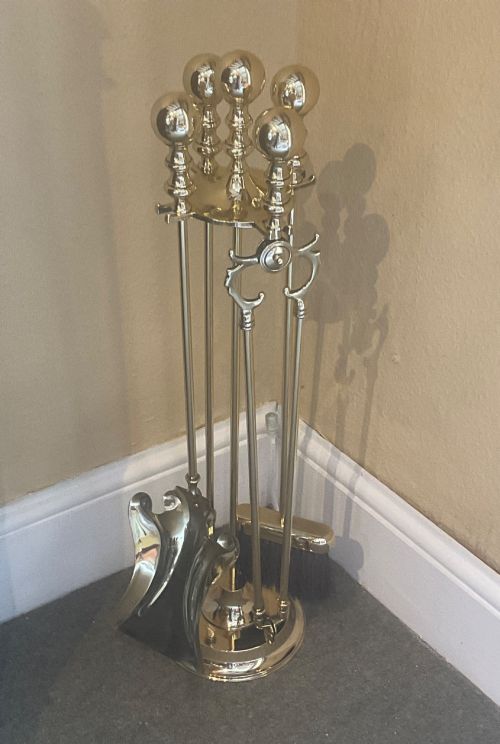


Vintage Fireplace Tool Set
A vintage fireplace tool set brings functional metalwork and period character to the hearth.
Vintage Fireplace Tool Set
When you search for a vintage fireplace tool set, you encounter companion sets, fire irons, and fireside accessories spanning the eighteenth, nineteenth, and early twentieth centuries. These pieces encompass utilitarian hearth equipment designed to manage coal and wood fires efficiently.
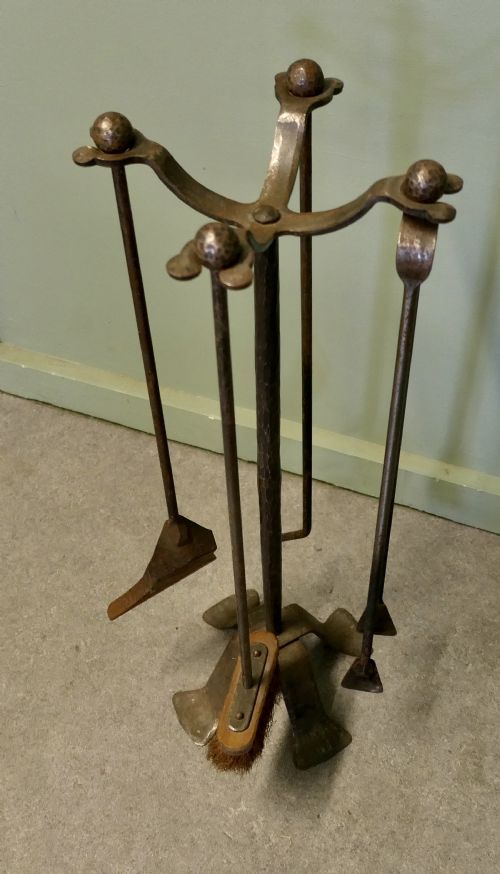
The selections on this page frequently originate from the Victorian and Edwardian eras, alongside Georgian and eighteenth-century examples. Common stylistic expressions include Gothic Revival, Arts and Crafts, Rococo, and French Country designs.
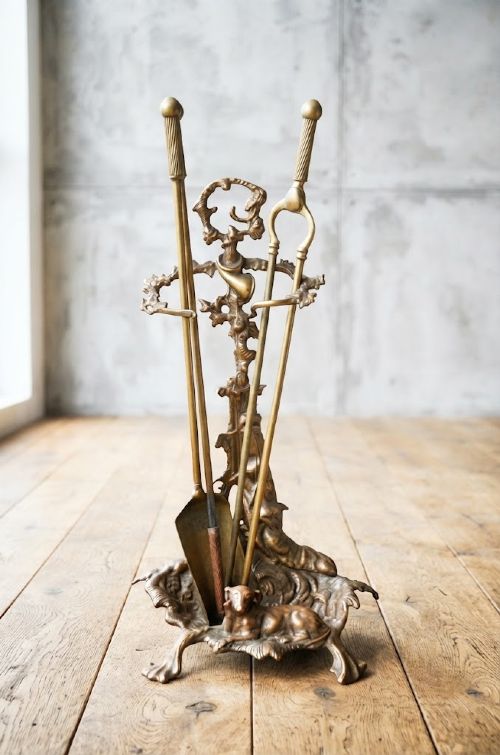
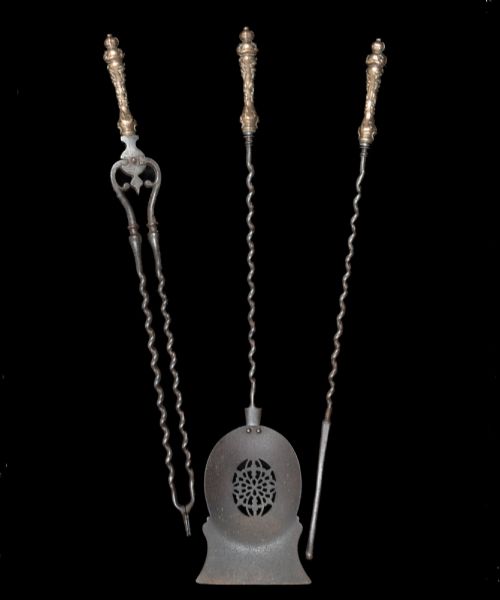
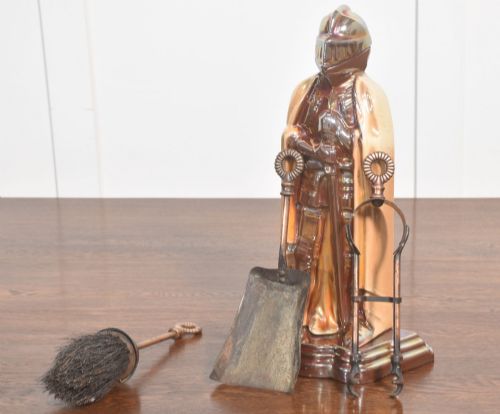
Sets commonly comprise pokers, tongs, shovels, and sometimes fire dogs or companion stands. Some configurations incorporate thematic figurative elements such as knights, golfers, or hunting scenes.
Materials and Construction
These tools utilise metals such as brass, steel, iron, wrought iron, cast iron, polished steel, copper, and gun metal. Smithing and casting techniques shape the heavy materials required to withstand daily exposure to heat and ash.
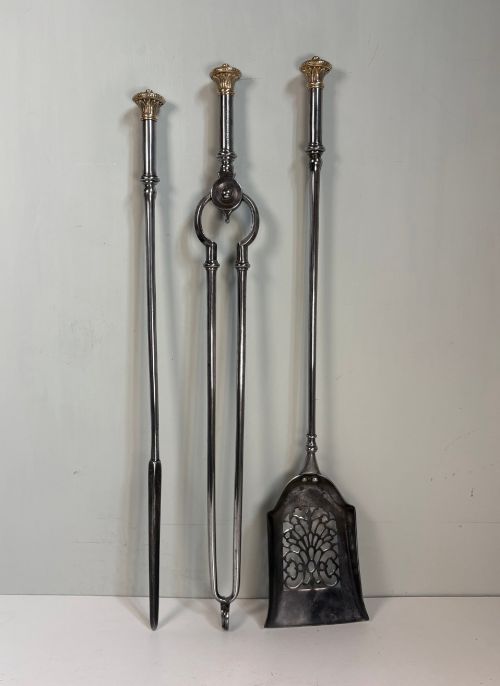
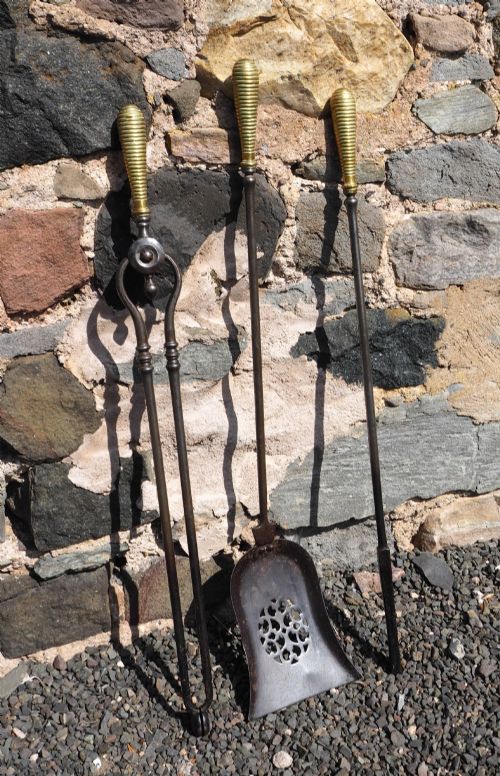
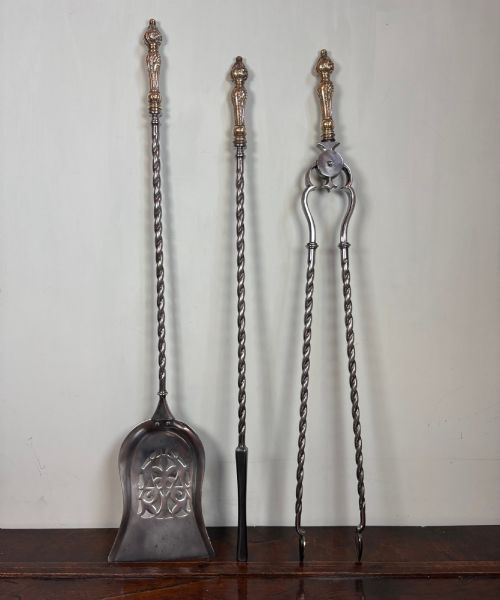
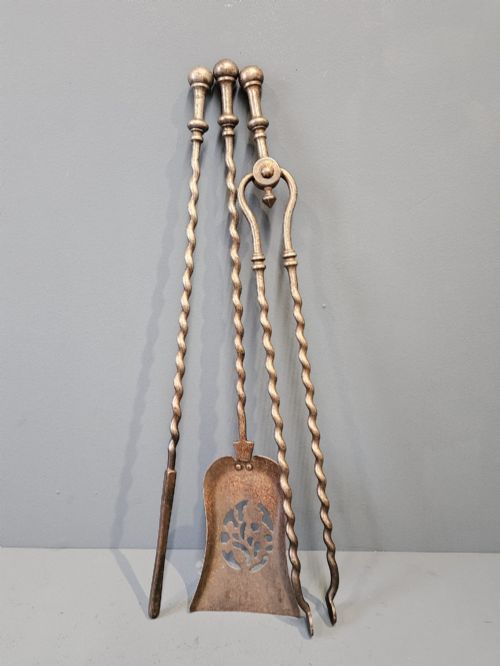
Makers combine steel shafts with brass fittings or turn handles into rope twist patterns for grip and decoration. Painted metal and bronze appear in specific decorative companion sets from the later periods.
The listings span multiple centuries, incorporating eighteenth-century iron alongside Victorian brass and Edwardian copper.
Distinctions in Execution
Superior sets display substantial weight in their steel and brass components, indicating thick gauge metal that resists bending during use. Heavy quality nineteenth-century pieces balance durability with refined handling.
Decorative detail distinguishes standard utility items from finer examples, seen in crisp casting on rococo stands, detailed figurative figures like knights or golfers, and precise rope twist handles on brass fire irons.
The Vintage Fireplace Tool Set Glossary
- Companion set
- A matched group of fireside tools housed together on a stand or mounted frame. These assemblies typically include a poker, tongs, and shovel.
- Fire irons
- Individual poker, shovel, and tongs designed for tending an open hearth. They date across Georgian, Victorian, and Edwardian periods.
- Fire dogs
- Andirons placed horizontally on the hearth to support logs for burning. They frequently accompany brass and steel tool sets from the nineteenth century.
- Rope twist
- A decorative spiral pattern carved or turned into metal handles. This detail appears on nineteenth-century brass fire irons.
- Inglenook
- A deep recess beside a fireplace used for seating or warmth. Country house inglenook fire tools are scaled for large hearth spaces.
Vintage Fireplace Tool Set: Frequently Asked Questions
How do I use antique fire tools?
These metal implements serve the same practical purpose today as they did centuries ago, allowing you to arrange logs and manage ash in an open hearth or basket grate.
exercise care with older steel and brass to preserve their historical surface finishes during regular fireside use.
What tools come in a set?
A standard companion set contains a poker for adjusting fuel, tongs for gripping pieces of wood or coal, and a shovel for clearing ash.
larger groupings may also incorporate a hearth brush or matching fire dogs to complete the fireside arrangement.
How do I clean brass tools?
Dust the metal surfaces regularly with a soft dry cloth to prevent the accumulation of soot and grime from the hearth.
avoid harsh chemical polishes that strip away historical patination built up over decades of use.
Are these tools made of solid brass?
Many Victorian and Edwardian companion sets utilise solid cast brass for handles and decorative stands, paired with robust steel shafts for strength.
this combination provided the necessary durability for tending coal fires while maintaining a bright appearance.
How do I date a tool set?
Stylistic clues such as gothic revival motifs, arts and crafts simplicity, or rococo curves help assign pieces to specific nineteenth or early twentieth-century eras.
the choice of materials, from eighteenth-century steel to polished steel and gun metal, further indicates the period of manufacture.