

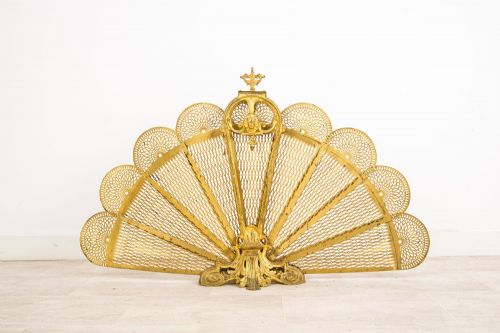
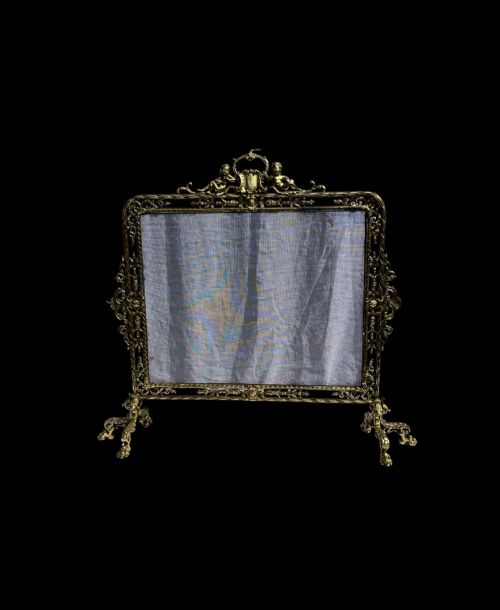
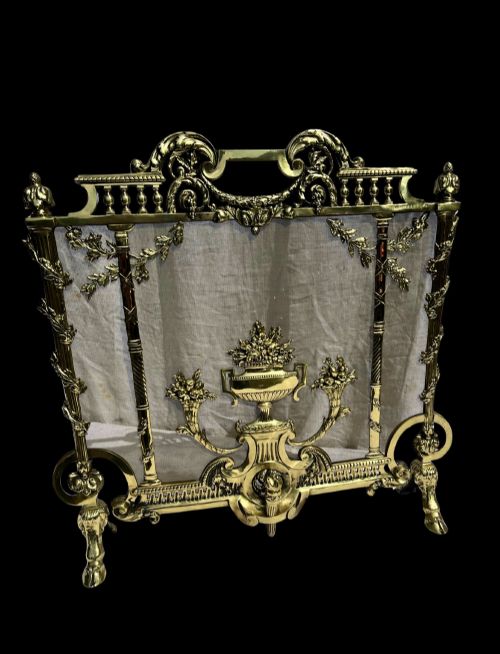
Vintage Fireplace Spark Guard
These vintage fireplace spark guards protect rooms from stray embers while bringing period brass, copper and ironwork to the hearth.
Vintage Fireplace Spark Guard
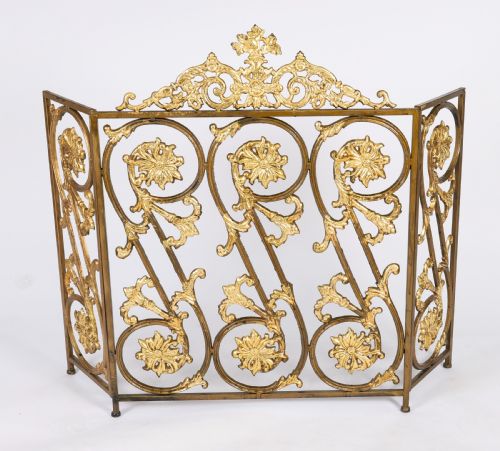
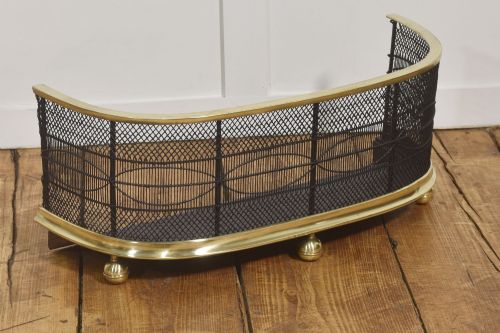
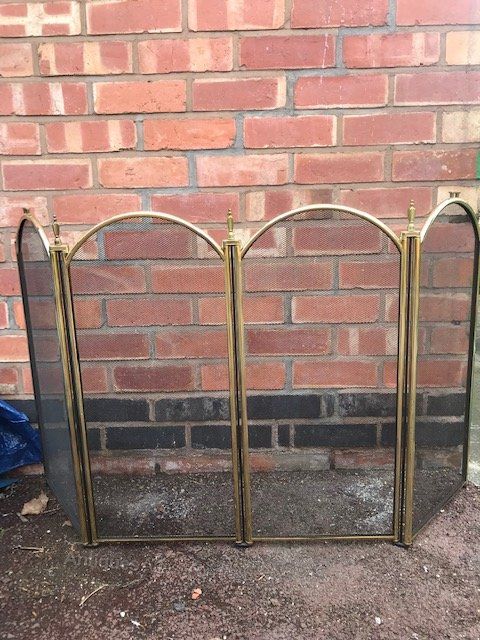
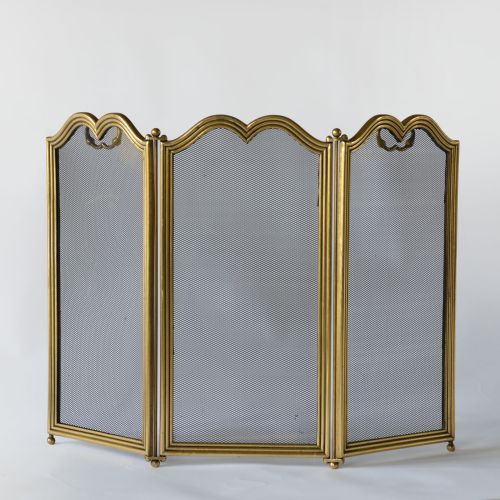
A vintage fireplace spark guard serves as a decorative and practical barrier before an open hearth, stopping flying coals while framing the fire. You encounter various forms here, ranging from rigid flat panels to folding fan guards and protective wire mesh nursery fenders.
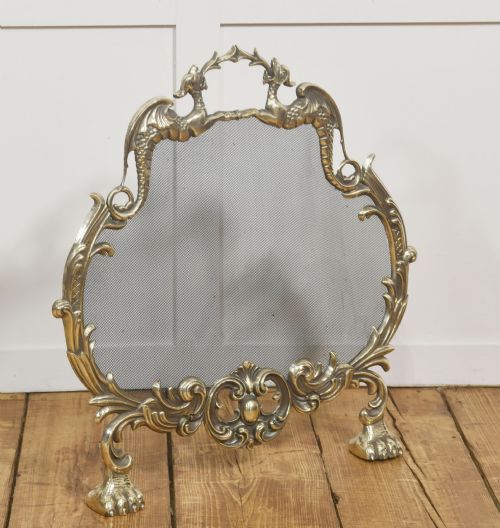
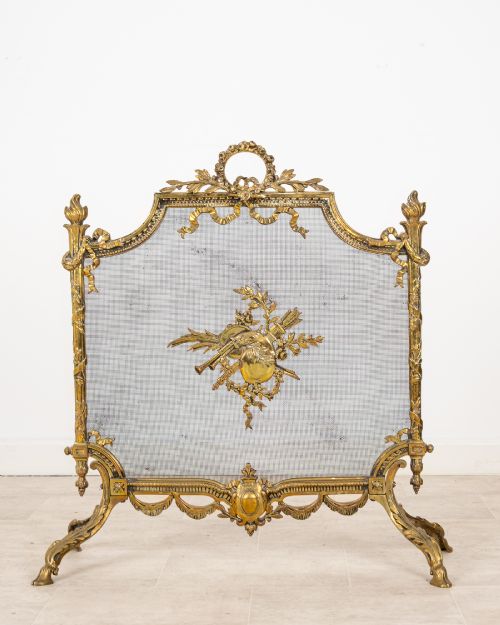
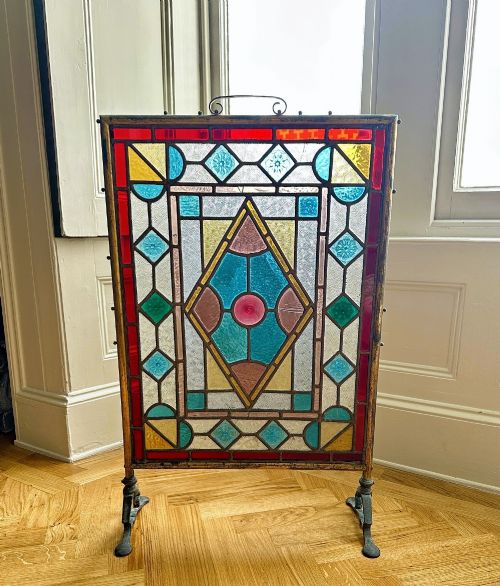
The selection draws on styles spanning the Victorian era through the Edwardian period, incorporating French Rococo Revival, Art Nouveau and Arts and Crafts aesthetics. Brass frames dominate the selection, often paired with wire mesh, iron stands or decorative glass panels.
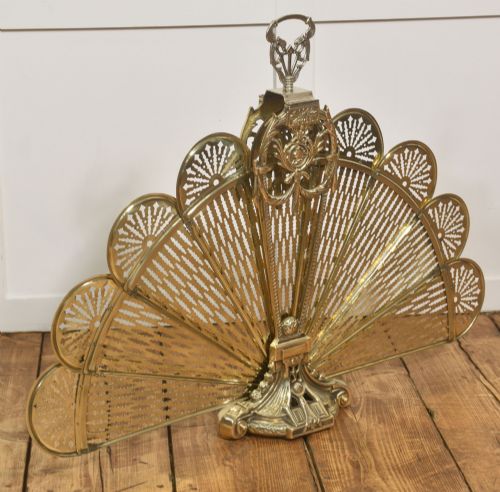
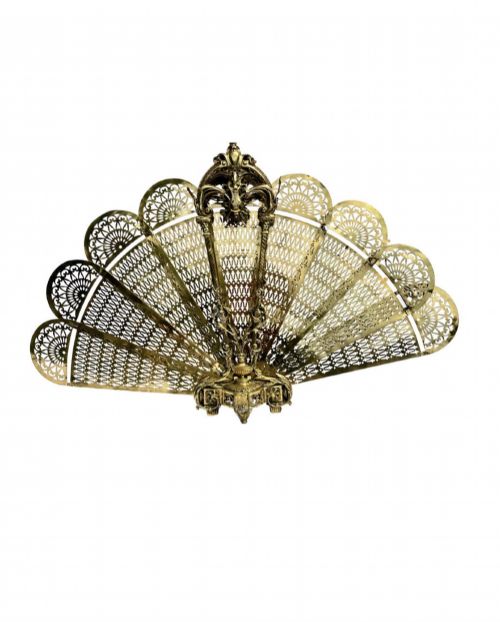
Many examples utilise folding sections or peacock fan configurations that expand to cover the grate space and retract when the fire dies down. Others take the form of heavy nursery fenders designed to enclose the hearth completely for safety.
Materials and construction methods
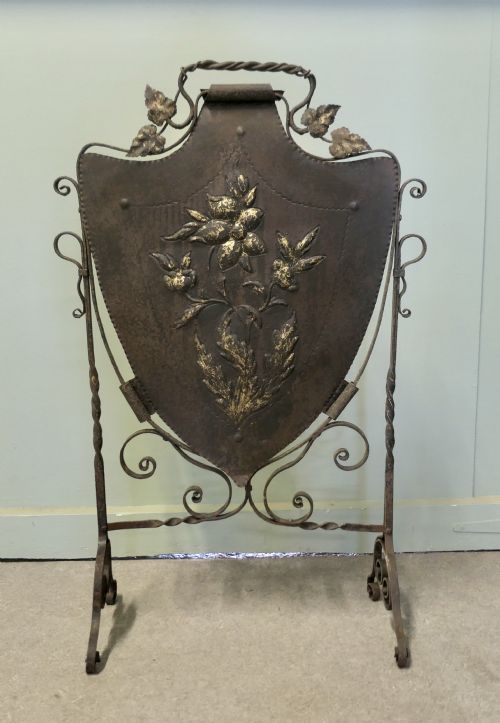
Metalwork forms the foundation of these pieces, utilising cast and sheet brass, wrought iron, copper and gilt bronze. Makers shaped brass into ornate frames and pierced panels, while durable iron and wire mesh provided sturdy barriers against sparks.
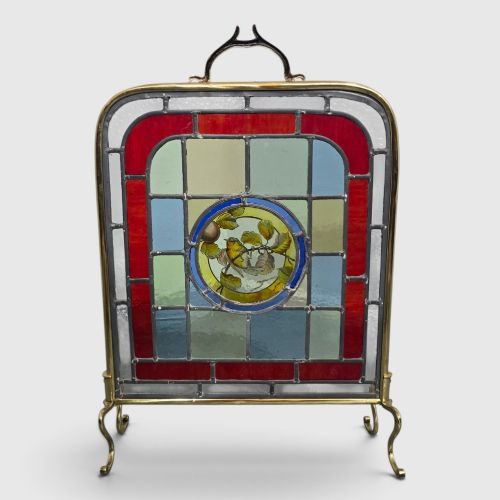
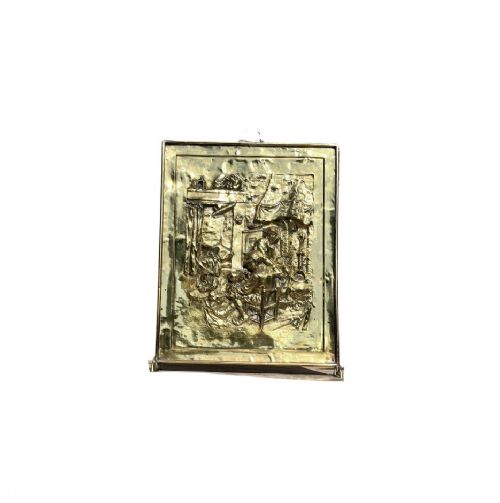
Decorative detailing involved embossing, chasing and applying gilt finishes to highlight classical motifs, coats of arms and floral trophies. Stained glass inserts and cut glass panels also appear, set securely into metal frames to catch the firelight.
Some folding brass fan guards expand like feathered tails, bringing flamboyant avian theatre straight to the hearthrug.
Differences in quality across the range
Quality shows in the weight of the metal and the crispness of the chased or pierced ornamentation on the brass and bronze frames. Finer pieces display careful articulation in folding mechanisms, sturdy mesh attachments and well-cast decorative motifs rather than stamped repetition.
The integration of materials dictates distinction, where hand-beaten copper panels, stained glass or heavy cast ormolu mounts elevate the hearth accessory beyond standard utility. Structural integrity in the hinges and stands marks the difference between everyday items and superior examples.
The Vintage Fireplace Spark Guard Glossary
- Spark guard
- A protective barrier of wire mesh or metal placed before a hearth to catch flying embers. These guards keep rooms safe while allowing heat to circulate.
- Nursery fender
- A tall, enclosed metal guard designed to prevent children from getting too close to the open fire. They often feature robust iron frames and wire mesh panels.
- Ormolu
- Gilt bronze or brass mounts applied to decorative objects and furniture. This technique imparts a rich golden finish to French revival frames.
- Repoussé
- Metalworking technique where the metal is hammered from the reverse side to form a raised design in relief. Embossed details on copper and brass screens often utilise this method.
- Firescreen
- A decorative panel placed in front of a fireplace when the hearth is not in use. Many double as spark guards during burning periods.
Vintage Fireplace Spark Guard: Frequently Asked Questions
How do I choose the right size spark guard?
Measure the width and height of your fireplace opening to ensure the guard covers the entire hearth area adequately. Folding sections and adjustable fan guards offer flexibility if you need to adapt to varying grate dimensions.
Consider whether you require a flat panel that sits flush against the fireplace or an enclosed nursery fender that projects outward into the room for greater safety coverage.
Can I use these guards with a working open fire?
Most of these pieces were built for active hearths, utilising robust materials like iron, brass and wire mesh that withstand regular heat exposure. Mesh panels and solid guards effectively trap sparks while maintaining visibility of the flames.
Ensure that folding or multi-section guards are placed securely on a level hearth so they remain stable while the fire burns.
How do I clean antique brass and copper?
Dust the metal regularly with a soft, dry cloth to prevent soot and grime buildup on the surface. Avoid harsh chemical cleaners that can strip away the aged patina accumulated over decades.
If polishing is necessary, use a mild, metal-safe cream applied sparingly, taking care not to get polish into the recessed chased or embossed details.
What is the difference between a firescreen and a fender?
A firescreen stands upright on feet or a base to block heat and sparks, often featuring decorative brass frames, glass or embroidery. They are easily moved when tending the fire.
A fender forms a low or high barrier around the perimeter of the hearth, sometimes incorporating a seat, clothes rail or integrated wire mesh to enclose the fireplace zone entirely.