


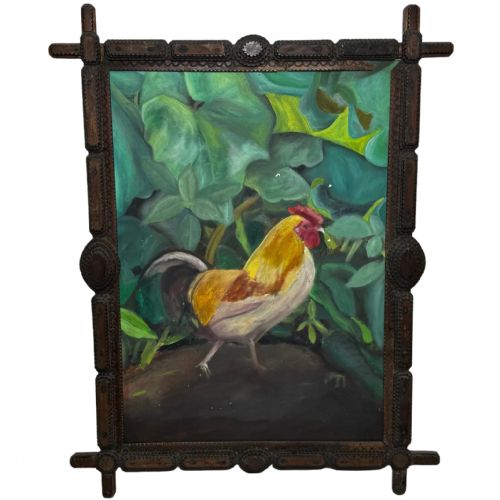


Vintage Farmyard Oil Painting
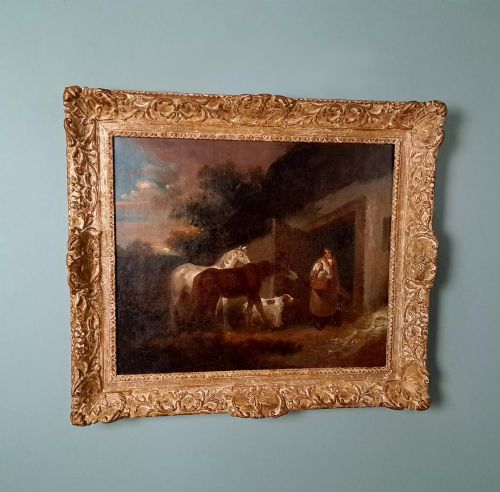
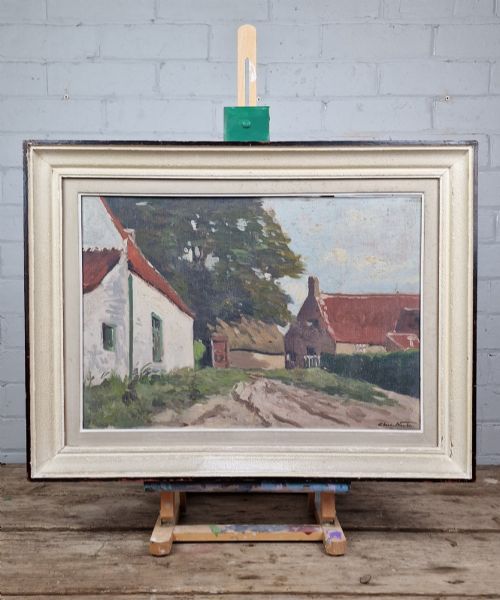
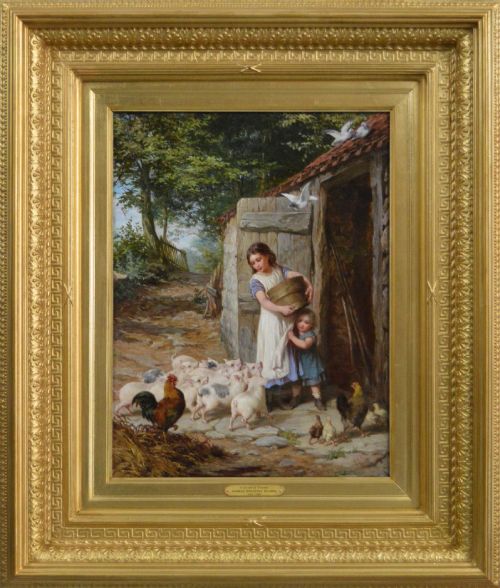
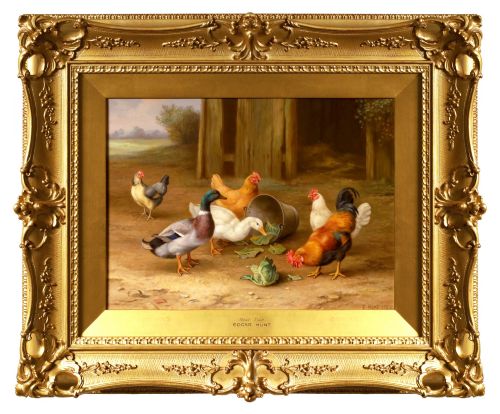
A vintage farmyard oil painting brings rural life into a room, capturing rustic buildings, poultry and livestock through traditional brushwork.
Vintage Farmyard Oil Painting
A vintage farmyard oil painting focuses on rural scenes involving livestock, poultry, barns and agricultural life. These works draw on traditions from the nineteenth century through to the mid-twentieth century, capturing domestic animals and rustic architecture with careful observation.
The selections available here range from Victorian pastoral works to British Impressionism and post-impressionist interpretations. Common subjects include hens, cockerels, horses and calves gathered near farm buildings or within pastoral landscapes.
Makers in this category encompass notable painters such as Edgar Hunt, William Joseph Shayer Senior, and John Frederick Herring Jnr alongside regional British and European artists. Buyers frequently encounter works executed on canvas, board or stretched fabric.
Markers of distinction
Quality rests upon the artist's ability to render animal anatomy and the play of light across rustic textures with conviction. Works by established nineteenth and twentieth-century painters demonstrate superior control over composition, colour harmony and atmospheric perspective.
The preservation of the original paint surface and the integrity of the canvas or board dictate the longevity of the piece. Subtle handling of tone and confident brushwork separate accomplished genre paintings from standard decorative examples.
Common substrate materials recorded include canvas, wood panels, giltwood frames and prepared boards.
William Joseph Shayer Senior·Charles Houben·George Augustus Holmes·Edgar Hunt·Herbert Royle·John Frederick Herring Jnr·Claude Cardon·Robert Russell MacNee·Owen Bowen·Thomas Blinks·James William Booth·Jack R Mould
The Vintage Farmyard Oil Painting Glossary
- Oil on Canvas
- A traditional painting medium where oil-based pigments are applied to a woven fabric surface stretched over a wooden frame. This combination allows for rich blending and textured impasto work.
- Oil on Board
- A technique where artists apply oil paint directly to a rigid wooden panel or stiff board rather than fabric. Boards offer a stable, flat support favoured for smaller plein air studies and detailed rural scenes.
- Giltwood
- Carved wood decorated with a thin layer of gold leaf or metallic gold paint. It frequently frames nineteenth-century oil paintings to enhance their visual presence.
- British Impressionism
- An artistic movement focusing on light, everyday subjects and loose brushwork adapted by British painters from French techniques. These works often depict outdoor rural scenes with vibrant atmospheric effects.
- Genre Painting
- The pictorial representation of scenes from everyday life, typically involving ordinary people engaged in common activities. In this context, it describes farmyard views with figures, poultry and livestock.
Vintage Farmyard Oil Painting: Frequently Asked Questions
What periods do these paintings cover?
The works span from the nineteenth century through the Victorian era and into the mid-twentieth century. Examples include pieces from the 1870s, 1900s, and 1930s.
This broad timeline encompasses various movements such as British Impressionism, post-impressionism and Victorian realism.
What surfaces were used?
Artists painted on stretched canvas, wooden panels and sturdy boards. Each surface provides a different texture for the oil pigments.
Frames often consist of giltwood or incorporate gold leaf to complement the pastoral subject matter.
How do I care for an oil painting?
Keep paintings away from direct sunlight, extreme temperature fluctuations and high humidity. Dust the canvas gently with a soft, dry brush.
Avoid using water or cleaning solutions on the paint surface to prevent damage to the historic pigments.
How are different art styles told apart?
Victorian realists focused on precise anatomical details of animals and narrative farmyard scenes. Post-impressionist works utilise looser brushstrokes and emphasis on light.
Examination of the signature, period framing and canvas support helps determine the specific artistic school.