



Vintage Fairground Art
Vintage fairground art brings bold movement and rich colour indoors through carved wooden animals and painted architectural fragments.
Vintage Fairground Art
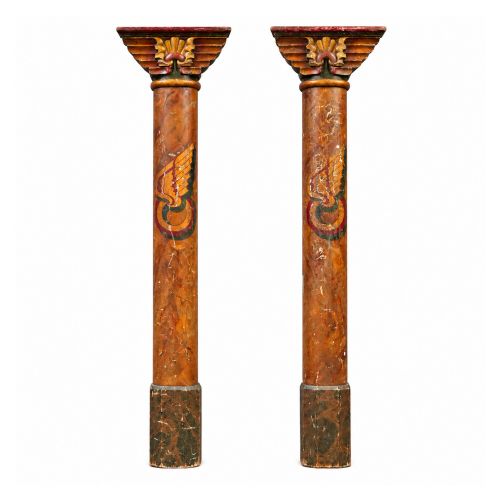
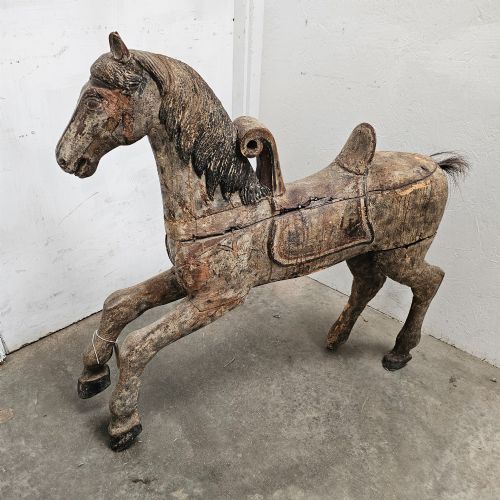
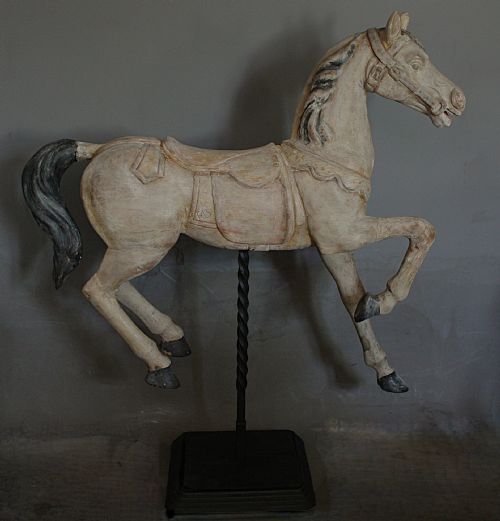
Vintage fairground art encompasses carved wooden figures, decorative panels, and architectural salvage created for amusement rides and carnival attractions during the nineteenth and early twentieth centuries. These pieces carry the vibrant atmosphere of historical pleasure grounds into domestic spaces through robust craftsmanship and expressive character.
The selection on this page relies heavily on early twentieth century and nineteenth century examples originating from English and Continental workshops. Carousel horses, ride panels, architectural columns, and fairground figures dominate the available forms, reflecting the golden age of amusement parks.
Wall art also appears in the form of period watercolours and lithograph posters depicting fairgrounds and local shows. Buyers encounter everything from carved carousel pigs and dragons to painted game panels and organ figures.
Materials and construction methods
Carvers shaped these figures predominantly from solid wood, utilising carved wood techniques to achieve dynamic postures and detailed anatomy on carousel animals and ride fragments. Iron components provide structural support in architectural salvage and columns, while horsehair occasionally completes the manes and tails of carousel figures.
Polychrome paint and standard paint layers bring these wooden sculptures and panels to life, often applied in multiple coats to withstand outdoor fairground environments. Paper surfaces appear on period lithograph posters, and watercolour paint captures lively scenes on paper and board.
Listings feature works spanning the nineteenth century through the 1950s, executed in carved wood, iron, and watercolour paint.
Assessing quality in fairground pieces
Quality rests primarily in the vigour of the carving and the preservation of original polychrome paint surfaces. Pieces carved with deep, expressive anatomical detail by skilled hands stand apart from simpler decorative work.
The historical integrity of the paint layer dictates the visual impact of panels and figures. Original untouched layers with authentic weathering show superior character compared to heavily restored or later repainted surfaces.
Bayol·Limonaire·Gavioli
The Vintage Fairground Art Glossary
- Carousel figure
- A carved wooden animal or representation designed to mount onto a rotating fairground platform. These most commonly take the form of horses, pigs, or mythical creatures.
- Architectural salvage
- Structural elements such as columns or panels rescued from dismantled fairground rides and buildings. They demonstrate the robust construction required for travelling amusements.
- Polychrome paint
- Multi-coloured paint decoration applied to wood or metal surfaces. This finish defined the vibrant aesthetic of early amusement park attractions.
- Fairground panel
- A flat or relief-carved board used to decorate the exterior or interior of a ride. These often feature painted scenes or decorative motifs.
- Organ figure
- An automated or static carved figure positioned upon a fairground organ housing. These figures frequently animate or complement musical mechanical displays.
Vintage Fairground Art: Frequently Asked Questions
How were carousel figures displayed historically?
Carousel figures were mounted on revolving platform rides using iron and wooden internal mechanisms to simulate galloping movement during operation.
Operators positioned them alongside intricate organ facades and painted panels to attract crowds at nineteenth and twentieth century fairs.
Can fairground art be hung on walls?
Flat panels, targets, and boards adapt readily to wall mounting using appropriate heavy duty fixings. Three-dimensional figures and architectural columns typically require sturdy floor plinths or bespoke brackets.
Wall art watercolours and posters frame easily for standard hanging.
How do I distinguish nineteenth century pieces from later ones?
Nineteenth century pieces often display heavier timber construction and deeper hand-carving techniques associated with early carousel workshops. Early twentieth century examples introduce brighter synthetic pigments and different styling conventions on panels and boards.
Examining the underlying wood and paint layering helps clarify the production period.
What maintenance do painted wooden panels require?
Painted wooden surfaces benefit from stable indoor humidity and protection from direct sunlight to preserve the original polychrome colours. Gentle dusting with a soft dry cloth maintains the surface without disturbing historic paint.
Avoid liquid cleaners and harsh chemical solvents entirely.