


Vintage Entryway Coat Rack
A vintage entryway coat rack welcomes visitors with practical storage, combining sturdy wood and metal hooks for daily use.
Vintage Entryway Coat Rack
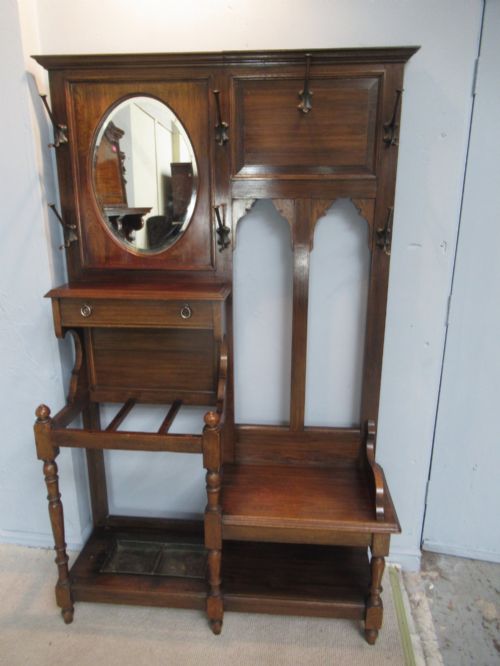
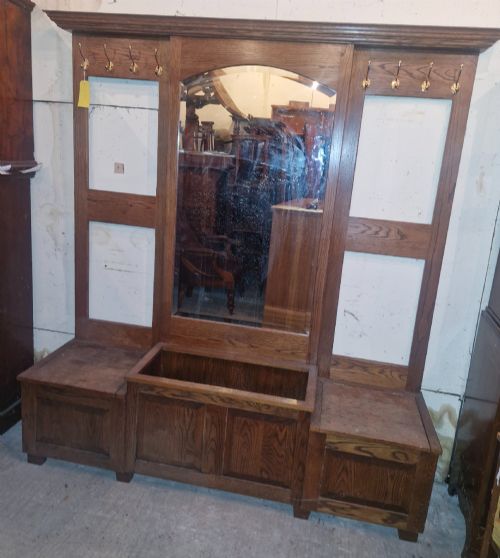
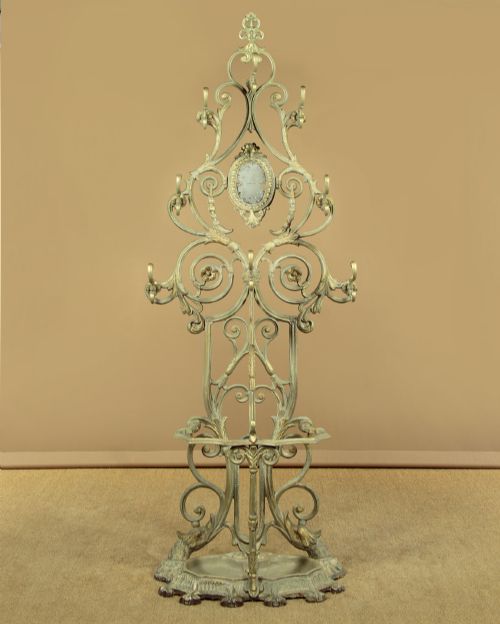
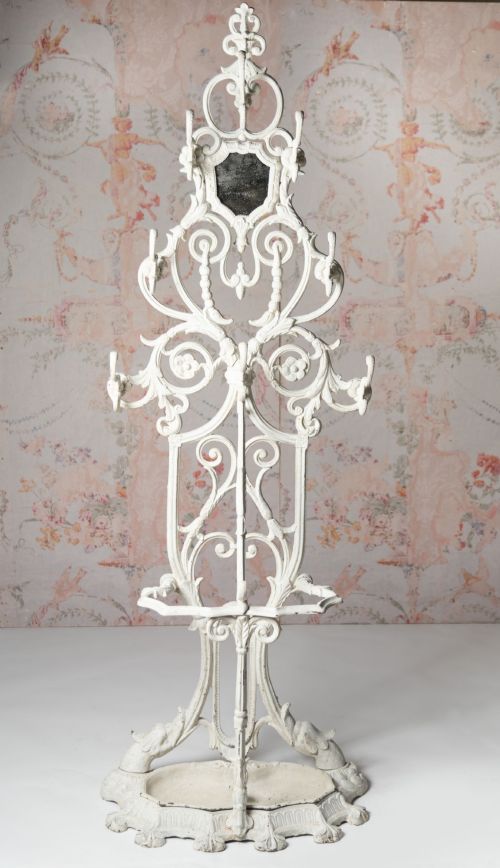
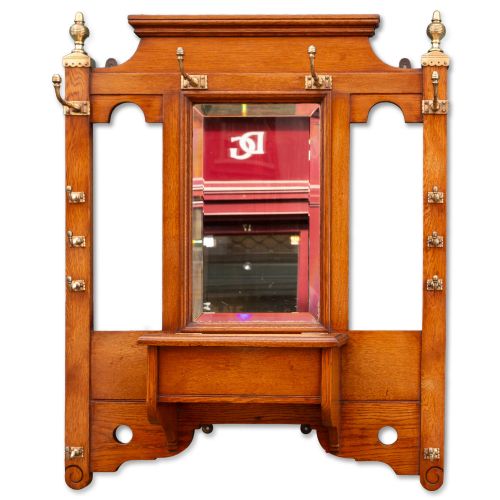
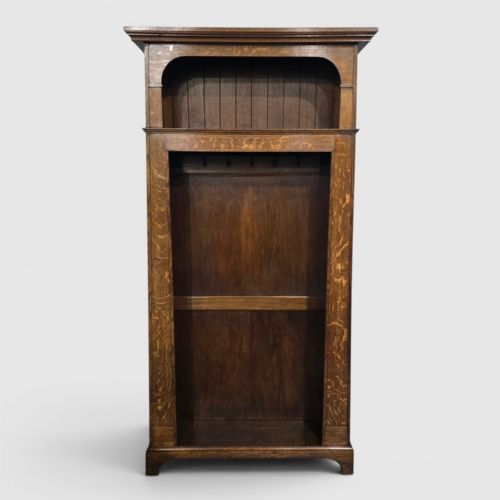
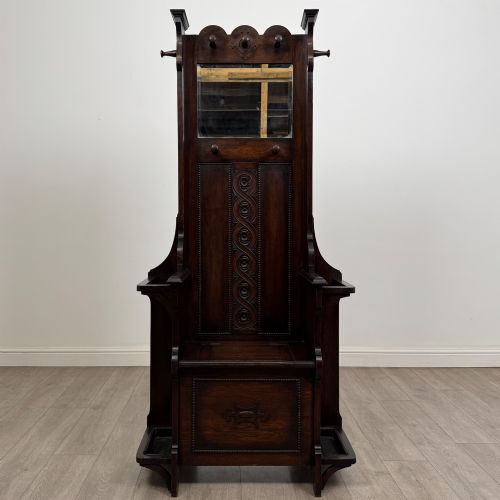
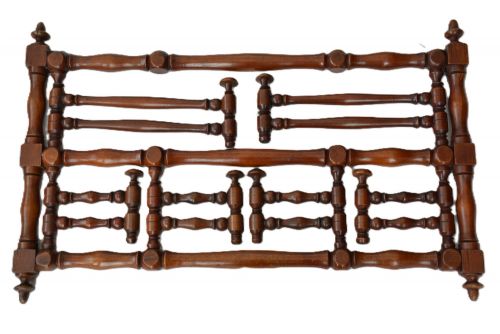
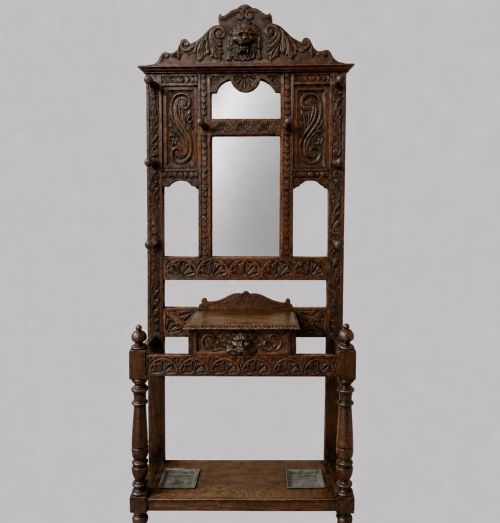
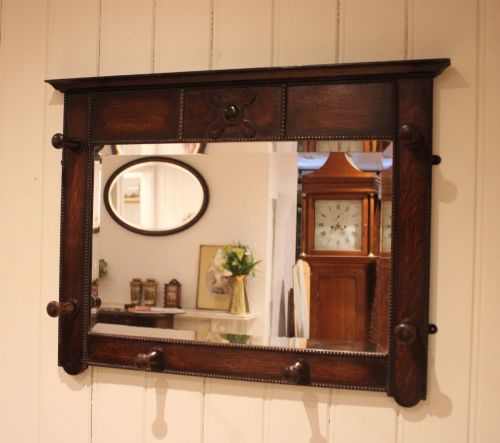
A vintage entryway coat rack serves as a practical focal point in a hallway, designed to hold hats, coats, and umbrellas close to the front door. These pieces range from substantial floor-standing hall furniture with integrated mirrors and seats to compact wall-mounted racks fitted with sturdy hooks.
The versions most commonly met on this page date from the Victorian and Edwardian periods, alongside turn-of-the-century designs. Oak and mahogany predominate among the larger floor-standing pieces, while metal and brass frequently appear in wall-mounted or French variations.
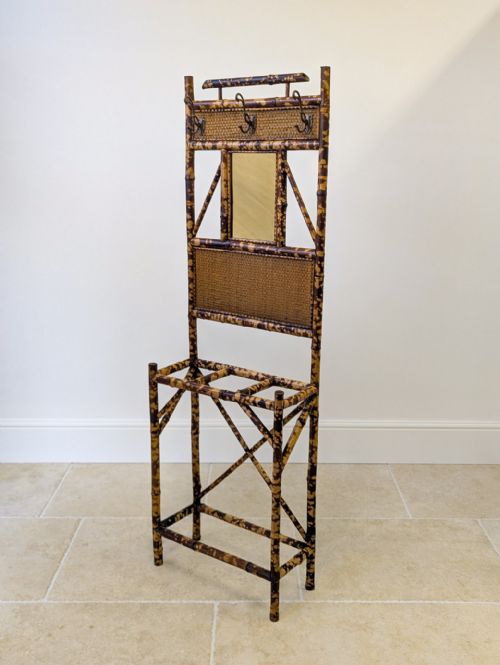
Buyers encounter diverse stylistic influences, including Arts and Crafts, Art Nouveau, and Aesthetic Movement designs. Many incorporate umbrella wells, drip trays, or central mirror panels intended to brighten narrow entrance spaces.
Materials and construction methods
Makers relied heavily on solid hardwoods like oak, mahogany, walnut, and beech to build durable frames capable of supporting heavy winter garments. Bentwood techniques also appear, utilising steam to shape flexible timber into curved structural elements for lighter stands.
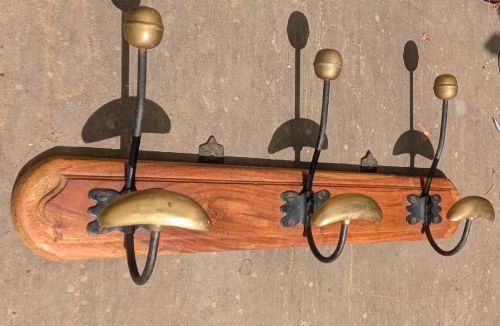
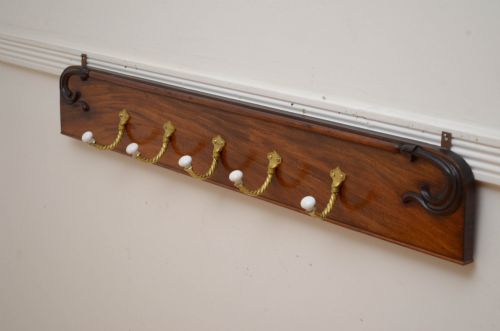
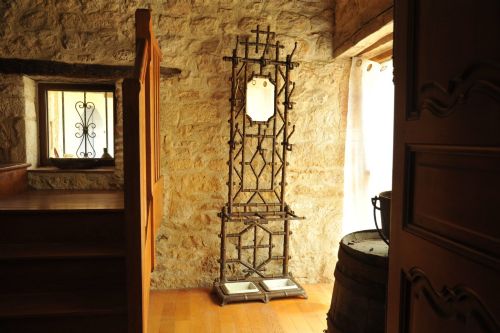
Metal components such as cast iron, brass, and wrought iron form the structural hooks, rails, and umbrella rings. Faux bamboo finishes, carved details like the Green Man motif, and applied ceramic or brass hooks complete the construction of these functional hall furnishings.
Carved wooden bears holding card trays stand ready in the hallway to mind your visiting cards.
Assessing quality in hall furniture
Quality rests upon the integrity of the timber selection and the robustness of the joinery used to anchor weight-bearing hooks. Finer examples display crisp hand-carving, well-fitted mirror plates, and original brass or cast iron hardware rather than modern replacements.
The structural stability of tall floor stands distinguishes superior pieces from lesser ones, particularly where umbrella wells and heavy timber panels meet the base. Original drip pans, intact bevelled mirrors, and signed maker elements further elevate a piece.
Fischel
The Vintage Entryway Coat Rack Glossary
- Hall stand
- A large piece of hallway furniture combining a coat rack, hat hooks, umbrella holders, and frequently a mirror and bench seat. These items served as the primary greeting point in traditional homes.
- Bentwood
- Wood that is shaped by being heated with steam until pliable, then bent into curves. This technique created lightweight yet resilient coat stands popular around the turn of the twentieth century.
- Faux bamboo
- Wood or cast iron carved, painted, or moulded to imitate natural bamboo stalks. This decorative finish gained popularity during the late nineteenth century under Asian design influences.
- Aesthetic Movement
- A late nineteenth-century design style that emphasised visual beauty over narrative or moral themes. Pieces from this movement often feature stylized natural motifs and dark polished woods.
Vintage Entryway Coat Rack: Frequently Asked Questions
How do I choose the right coat rack size?
Measure your hallway width and ceiling height carefully before selecting a floor-standing hall stand. Large oak and walnut pieces require adequate clearance so doors and umbrella wells remain fully accessible.
Compact wall-mounted racks suit narrower corridors where floor space is limited. Ensure the wall structure can support heavy garments and wooden backplates.
Were these racks used only for coats?
These versatile pieces functioned as complete entrance organizers for hats, walking sticks, umbrellas, and heavy outer garments. Many incorporated central mirrors for a final appearance check before leaving the house.
Lower sections often featured metal trays to catch rainwater from wet umbrellas and walking sticks. Some larger variations even included integrated seating with hidden storage compartments beneath.
How should I care for vintage wood?
Dust wooden surfaces regularly with a soft, dry cloth to prevent grime accumulation. Avoid placing antique furniture in direct sunlight or near heat sources that might dry out the timber.
Apply a quality beeswax periodically to nourish the polished oak or mahogany finish. Check hook screws occasionally to ensure they remain tightly anchored into the wooden backing.
How do I identify Victorian pieces?
Victorian hall stands typically feature dark timbers like oak and mahogany, often accompanied by elaborate carvings and heavy cast iron hooks. Stylistic markers include Aesthetic Movement details, carved animal motifs, and bevelled mirror plates.
Turn-of-the-century examples from this broader era may also showcase bentwood construction or Arts and Crafts simplicity. Examining the backboards, screw types, and joinery helps confirm the period of manufacture.