

Antique Oak Hat Rack
An antique oak hat rack organises hallway clutter with substance, bringing carved details, brass hooks and useful mirrors into daily entryways.
Antique Oak Hat Rack
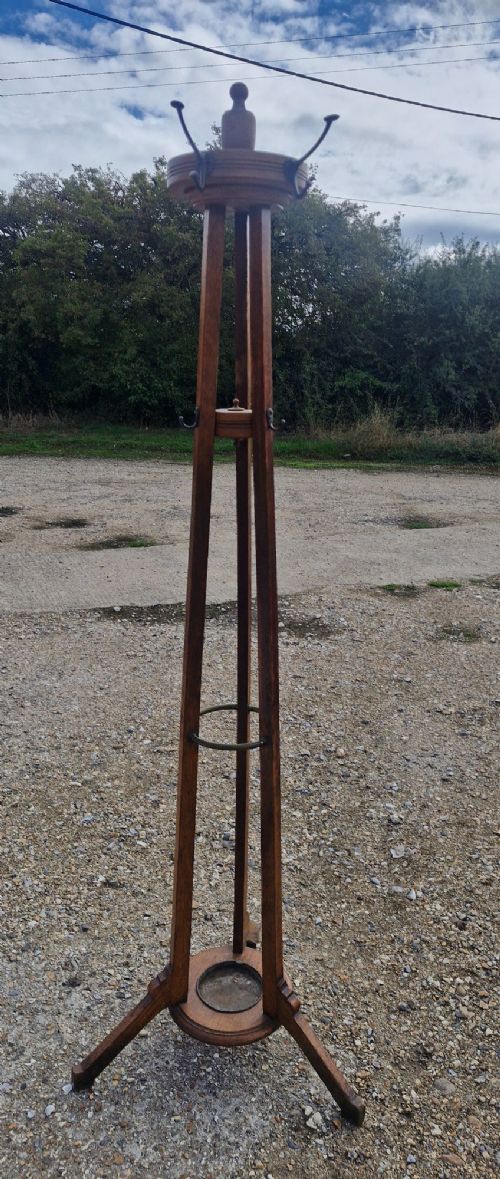
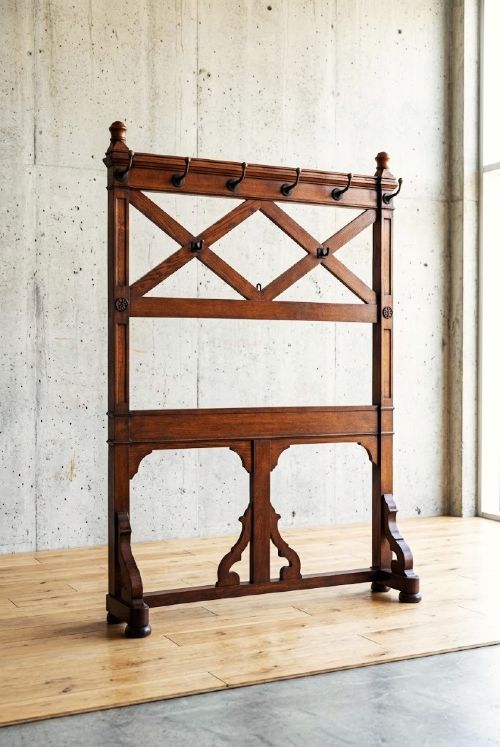
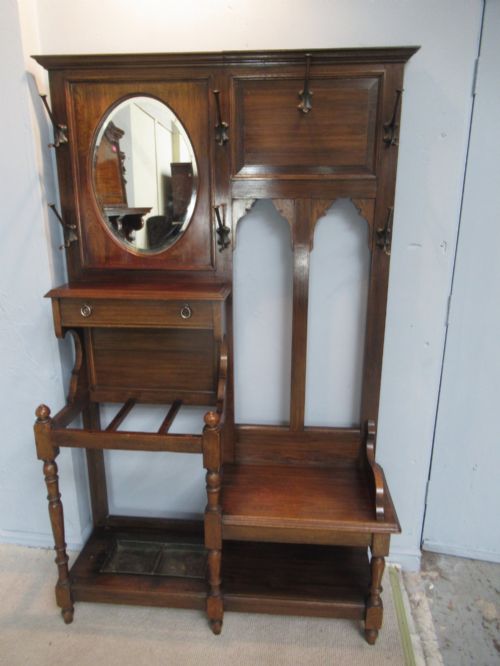
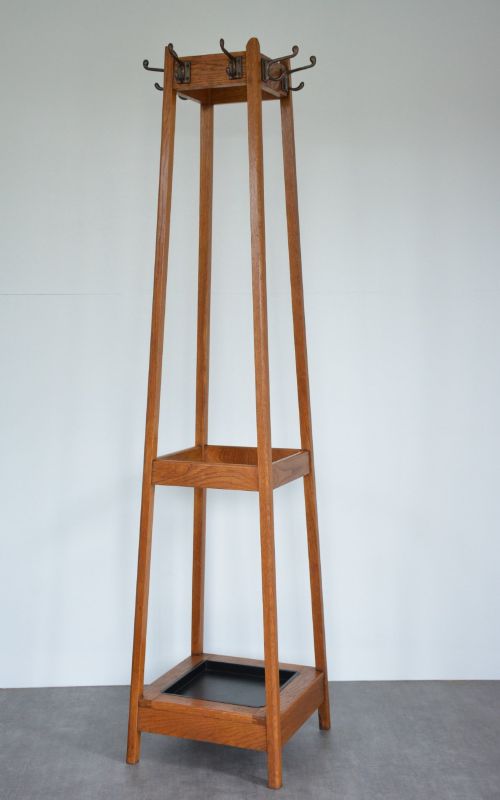
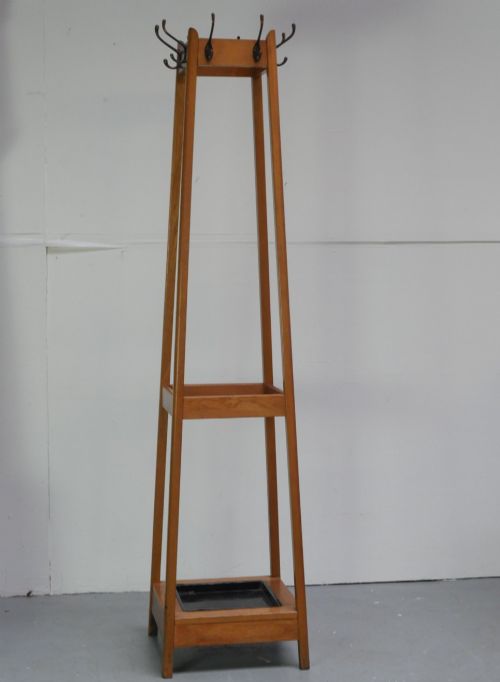
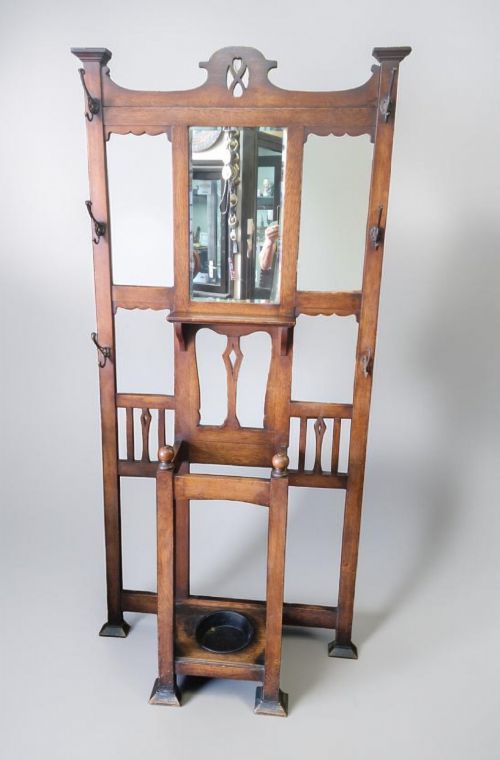
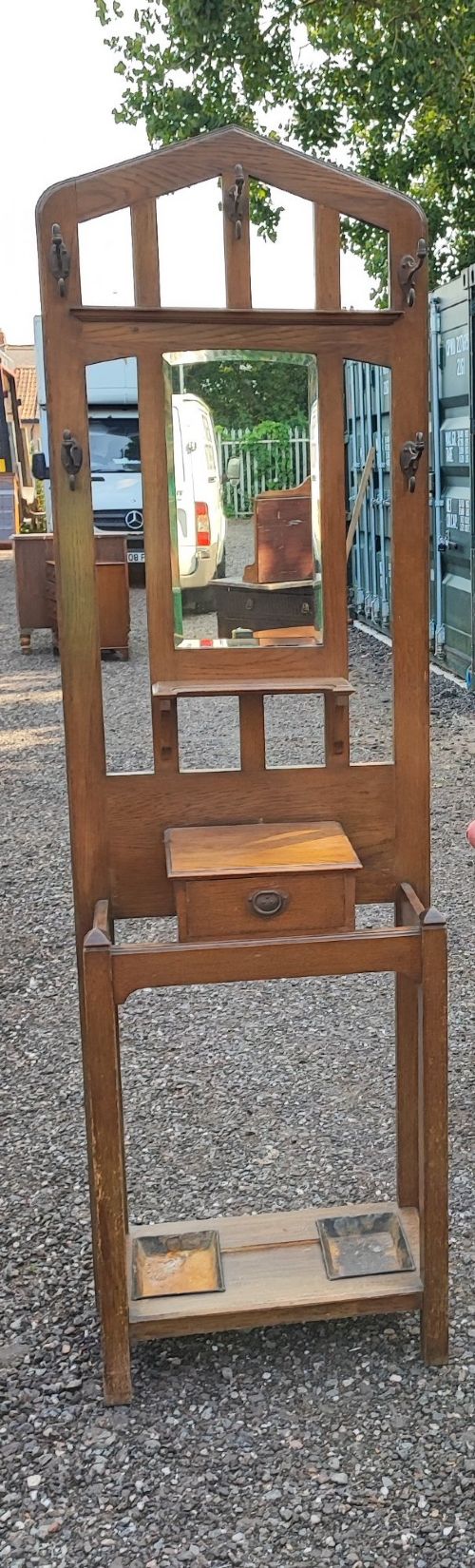
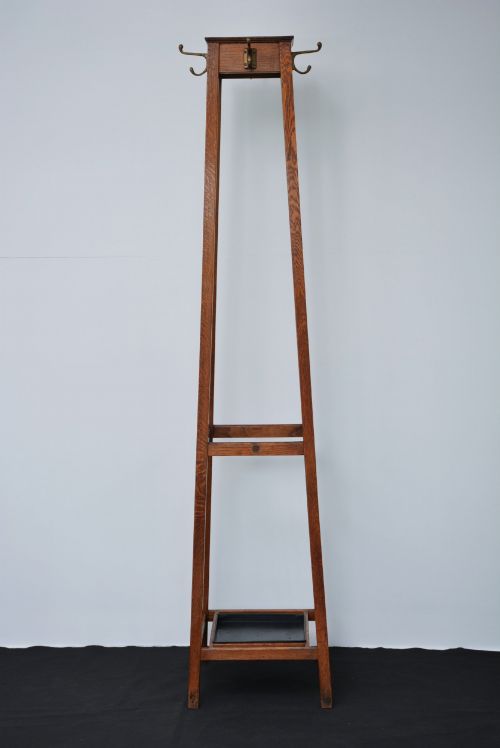
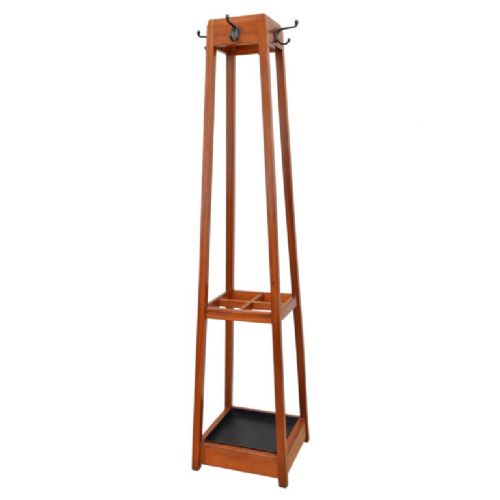
An antique oak hat rack appears in various configurations, ranging from simple wall-mounted rails with brass or iron hooks to substantial freestanding hall stands incorporating umbrella holders, drip trays and mirrors. Buyers seeking an antique oak hat rack most frequently encounter tall Victorian or Edwardian pieces designed for entrance halls, reception rooms and cloakrooms.
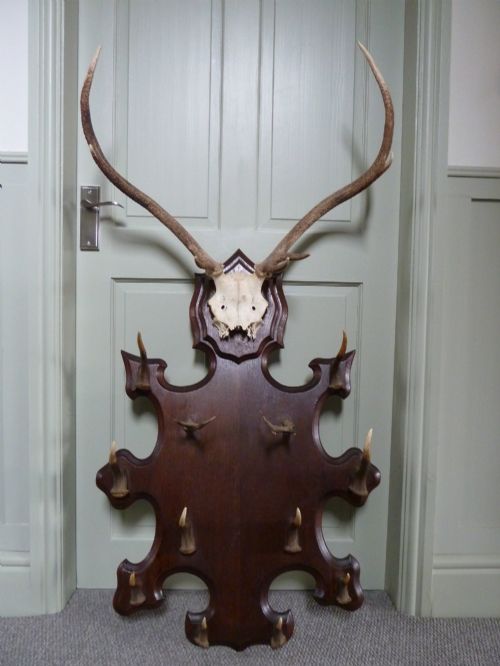
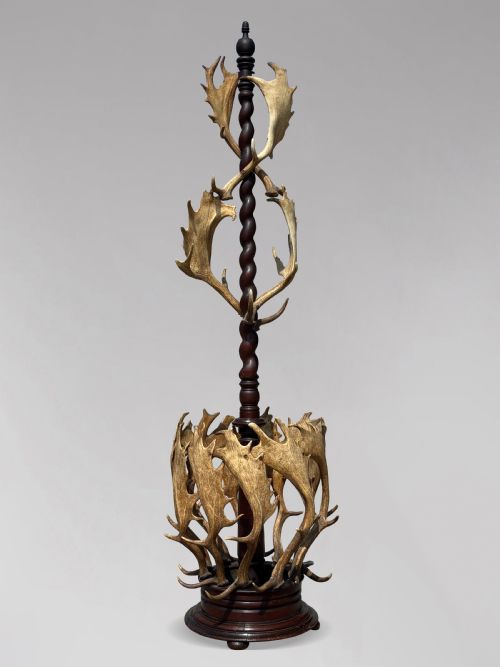
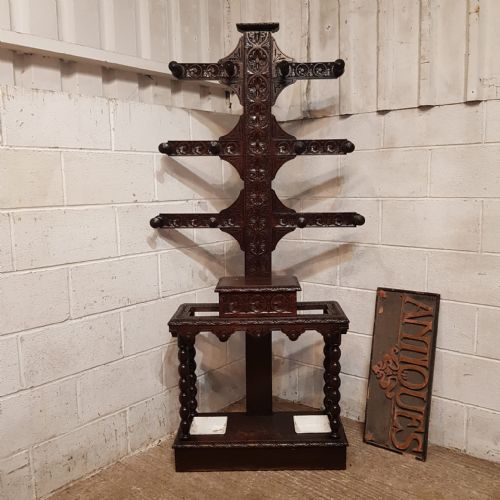
The selection extends from domestic English pieces to continental examples featuring regional styles like Black Forest carvings, Gothic Revival details, Arts and Crafts simplicity and Art Nouveau curves. Many of these larger pieces integrate seats, panelled backs and surfaces for hats, walking sticks and coats.
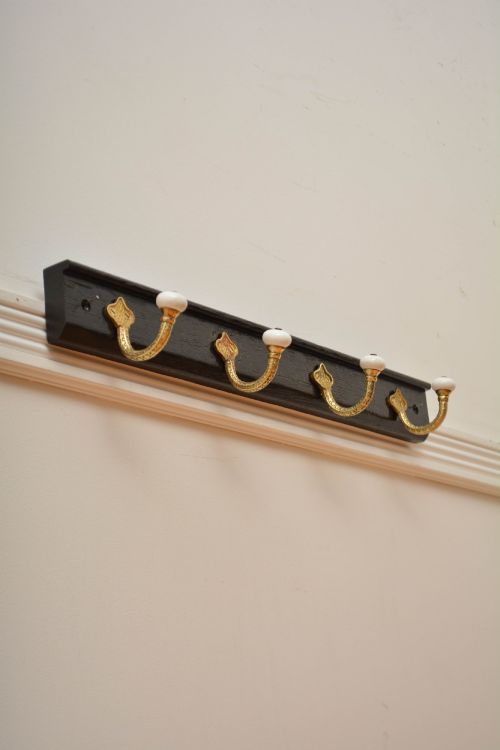
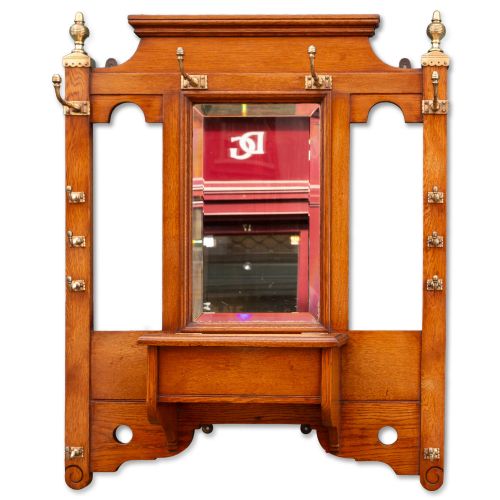
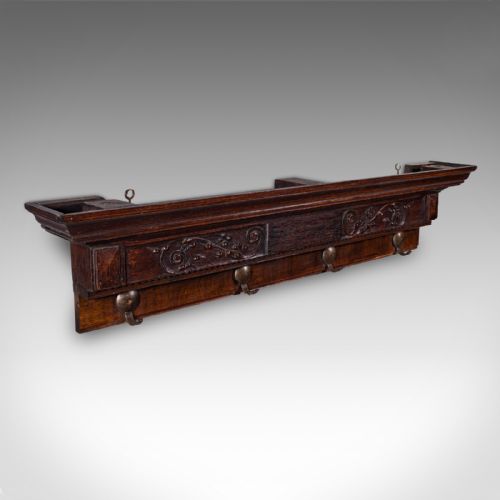
Wall-mounted versions typically combine a solid oak backplate with multiple metal hooks and occasionally a mirror or small shelf. Freestanding variants provide comprehensive hallway storage, combining hat hooks at the top with lower compartments for umbrellas and walking sticks.
Materials and construction
Makers utilised solid oak, often quarter-sawn to reveal rich figuring, combined with structural elements of metal, brass, cast iron and wrought iron for hooks and support bars. Many pieces integrate bevelled glass mirrors and ceramic or brass coat hooks secured to the wooden backplates.
Carving serves as a primary decorative technique, seen in elaborate motifs such as Greenman masks, foliage and geometric panels characteristic of Victorian and Arts and Crafts workshops. Bentwood techniques also appear on specific hat and coat stands, shaping the timber through steaming.
The listings show pieces constructed primarily from oak, paired with brass, iron, glass, ceramic, horn and marble across Victorian, Edwardian and Arts and Crafts styles.
Distinguishing quality
Superior pieces display depth and precision in hand-carved ornamentation, particularly on figural motifs like Greenman masks or heraldic details, alongside heavy-gauge brass or forged iron hardware. Poorer examples rely on shallow machine stamping or replaced hooks.
Construction methods separate standard production from exceptional workshops, with robust tenon joinery and integrated drip trays demonstrating durability. The presence of original mirrored glass, intact ceramic hook inserts and substantial golden or dark oak timber elevates the standing of a piece.
The Antique Oak Hat Rack Glossary
- Hallstand
- A freestanding hallway item combining coat hooks, a hat shelf, an umbrella holder and frequently a mirror and small seat. These pieces anchor larger entrance spaces.
- Greenman
- A sculptural architectural ornament depicting a human face disgorged from foliage or entirely made of leaves. This motif appears frequently on carved Victorian oak furniture.
- Bentwood
- Wood made pliable by steaming or boiling, allowing artisans to bend it into curved shapes for stands and racks. This method defines specific 19th-century designs.
- Arts and Crafts
- A design movement prioritising traditional craftsmanship, simple forms and visible construction methods over mass-produced ornamentation. Pieces from this style use plain oak and understated metalwork.
- Drip tray
- A metal or ceramic basin positioned at the base of a stand to catch water from wet umbrellas. These trays protect the lower wooden framework from moisture damage.
Antique Oak Hat Rack: Frequently Asked Questions
How do I mount a wall rack?
Wall-mounted racks require secure fixings into wall studs or solid masonry to support the weight of heavy coats and hats. Using appropriate brackets ensures the wooden backplate remains stable against the wall under daily use.
Position the rack at a height accessible for household members while leaving clearance beneath for hanging garments without dragging on the floor.
Were these used in homes?
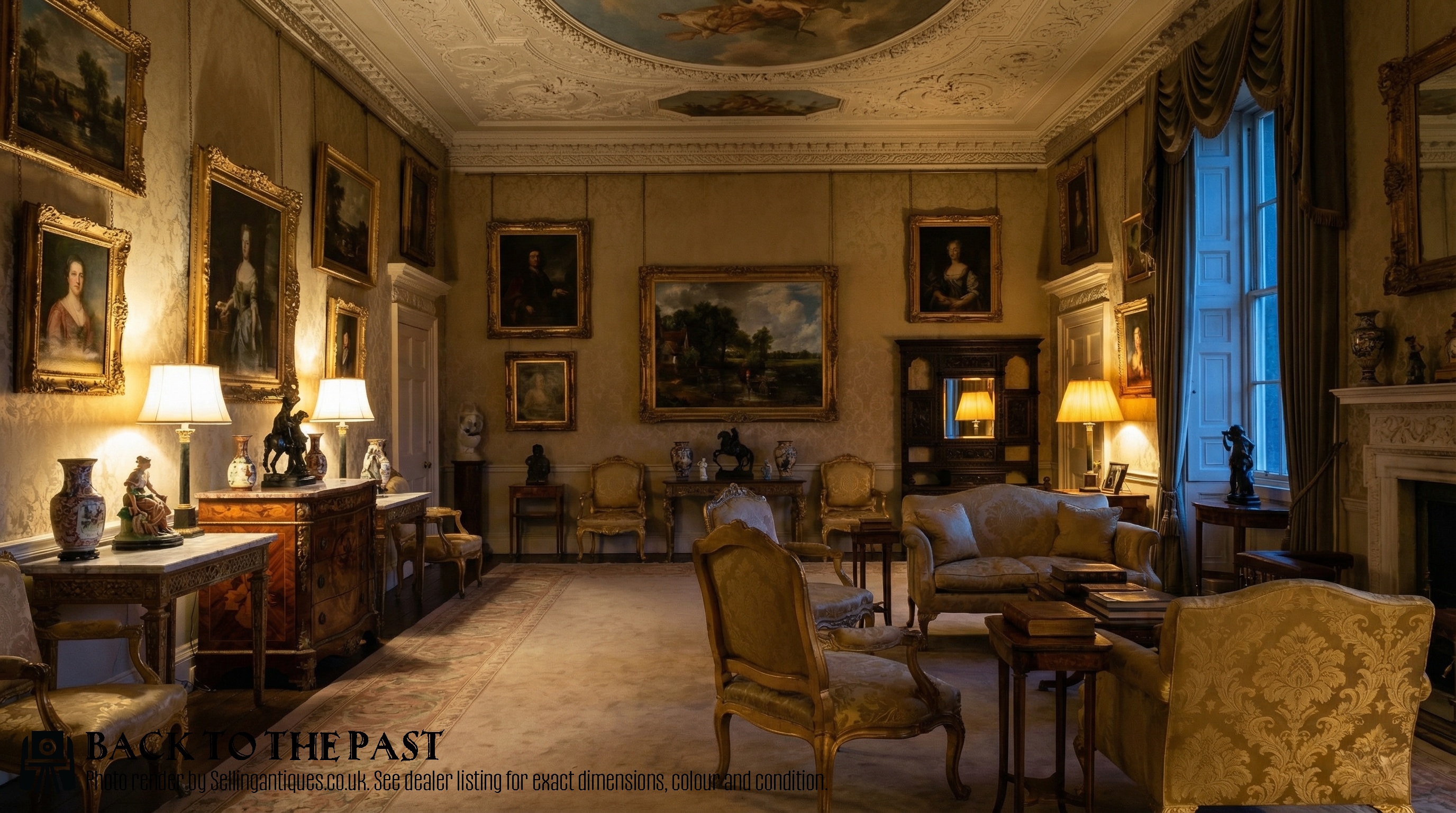
Entrance halls and reception rooms in Victorian and Edwardian houses relied on these stands to receive outdoor garments, hats and walking sticks upon entry. They served as both practical storage and decorative furniture for guests.
Larger versions with integrated mirrors and umbrella trays provided a central station for outdoor preparation before leaving the house.
How do I care for the oak?
Maintaining the wood involves dusting with a soft cloth and occasionally applying natural beeswax to nourish the antique surface. Avoid placing pieces near direct heat sources to prevent the timber from drying and splitting.
Inspect brass and iron hooks periodically to ensure fixings remain tight against the oak backplate.
How do I date the piece?
Stylistic indicators such as carved foliage, Gothic Revival arches, Arts and Crafts simplicity or Art Nouveau curves provide clear clues to the decade of manufacture. Victorian pieces often feature heavy, dark carved ornamentation, whereas Edwardian and later examples tend toward lighter oak tones and simpler profiles.
Hardware types, mirror bevelling techniques and maker labels further narrow down the production period.