



Oak Coat Rack with Mirror
An oak coat rack with mirror brings practical utility and striking entrance hall presence together in one handsome wall or floor piece.
Oak Coat Rack with Mirror
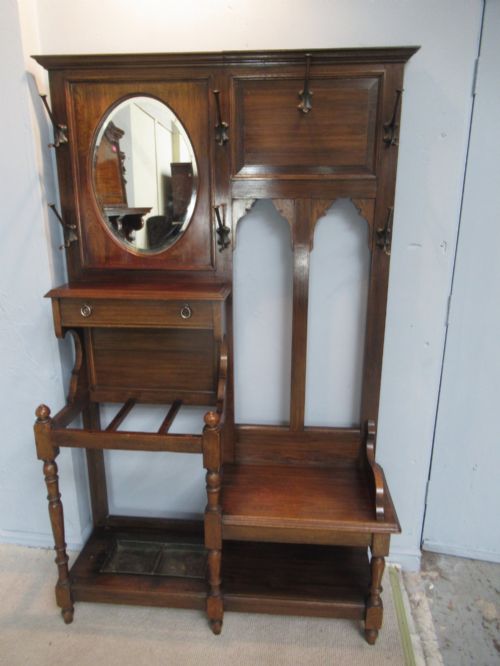
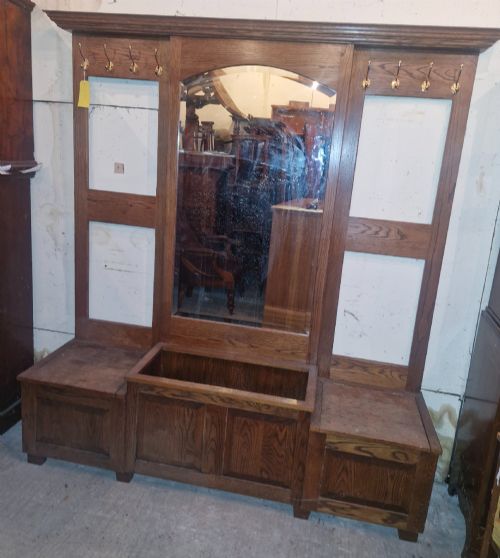
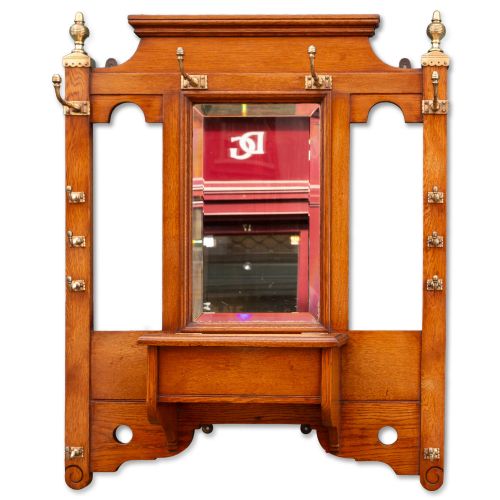
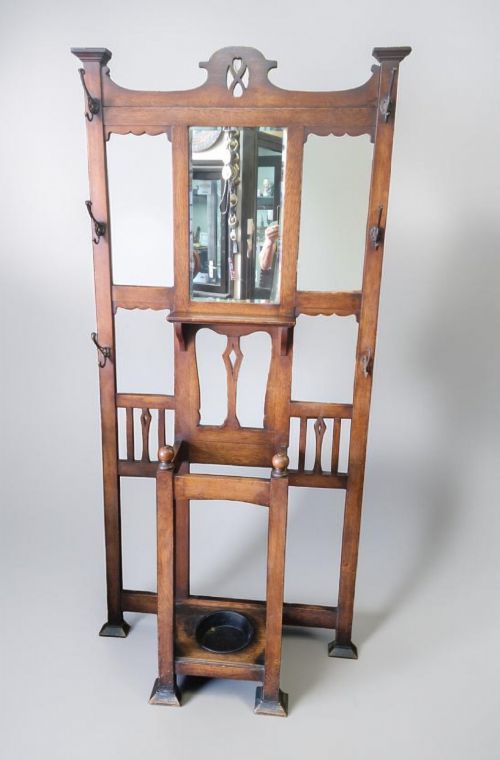
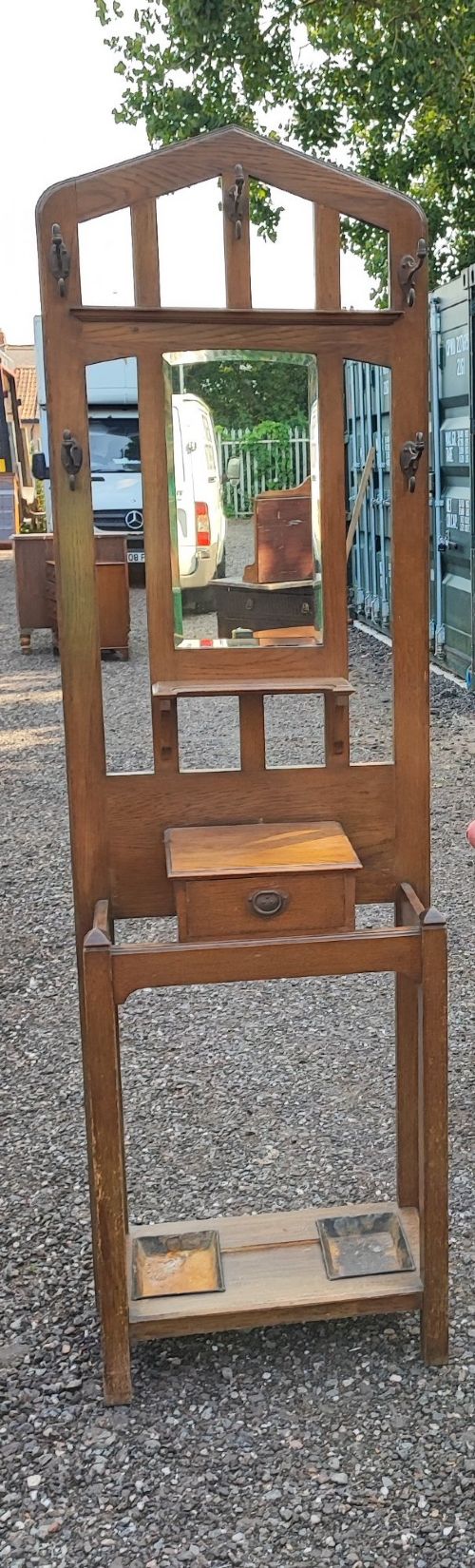
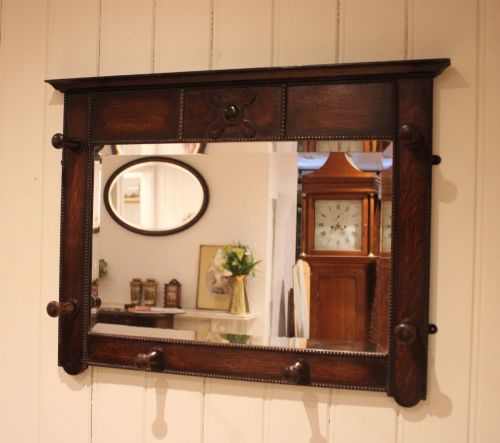
An oak coat rack with mirror serves as a traditional entrance hall fixture, combining hooks for outerwear with a central looking glass. Pieces range from compact wall-mounted boards to substantial freestanding hall stands incorporating umbrella wells and seats.
The selection here draws primarily from Victorian, Edwardian, and early twentieth-century periods. Forms span simple wall-hung panels to large multi-functional hall stands featuring intricate carvings and integrated brass fittings.
How they were made
Joinery relies heavily on solid oak, chosen for durability and rich grain patterns, sometimes enhanced by golden or dark finishes. Workshops integrated bevelled glass mirrors alongside cast iron or brass coat hooks, securing them to sturdy wooden backplates.
Formats vary from simple wall-mounted boards with glass mirrors to large freestanding hall stands incorporating seats.
What varies in quality
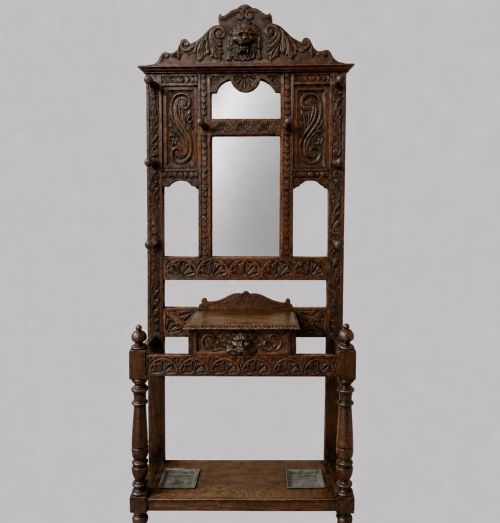
Distinction lies in the depth and execution of the woodwork, from plain functional boards to deeply carved panels featuring Green Man motifs or stylized floral designs. The calibre of the hardware, including heavy cast brass hooks and original bevelled mirror plates, elevates the piece.
Structural complexity also defines the range, separating straightforward wall racks from elaborate multi-functional hall stands with integrated seats, stick stands, and drip pans.
The Oak Coat Rack with Mirror Glossary
- Hall stand
- A freestanding piece of hallway furniture incorporating a mirror, coat hooks, a glove box, and umbrella stands. These often feature a central wooden or tiled back panel.
- Bevelled mirror
- A mirror glass pane with an angled, polished edge designed to catch the light. This detail indicates finer domestic manufacturing.
- Arts and Crafts
- A design movement emphasising handcraftsmanship and simple vernacular forms. Pieces from this tradition avoid excessive ornamentation in favour of honest construction.
- Art Nouveau
- A stylistic period characterised by flowing, organic lines and plant-inspired motifs. Such details frequently appear carved into the wooden frames of the mirrors.
- Gothic Revival
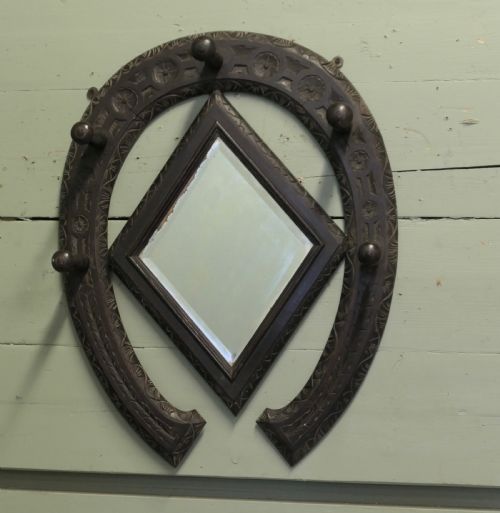
- An architectural and decorative style drawing inspiration from medieval forms. Characteristic elements include pointed arches, heavy moulding, and horseshoe motifs.
Oak Coat Rack with Mirror: Frequently Asked Questions
Where should I hang a wall-mounted rack?
A wall-mounted rack suits narrow hallways or entrance spaces where floor area is limited. Hang it securely at a height that allows easy access to the hooks while positioning the mirror at eye level.
Ensure the fixings engage properly with wall studs or use appropriate heavy-duty wall anchors to support the weight of wet coats and heavy timber.
How do I care for the oak and brass?
Dust the oak regularly with a soft, dry cloth and apply a quality beeswax periodically to nourish the grain. Avoid chemical sprays that can strip the historic finish.
Polish the brass hooks gently using a dedicated metal cleaner, taking care not to smear the surrounding wood or the glass mirror plate.
Are these pieces suitable for modern hallways?
These racks and stands offer practical storage solutions that integrate easily into contemporary interiors. Their warm wood tones and functional design complement modern minimalist or traditional decor alike.
The combination of a mirror and coat hooks provides a convenient spot for last-minute checks before heading out.
How do I distinguish Victorian from Edwardian pieces?
Victorian examples tend to feature darker finishes, heavier carvings, and elaborate detailing such as Gothic or Aesthetic movement influences. They often incorporate cast iron hooks and rich ornamentation.
Edwardian pieces generally present a lighter oak appearance with cleaner lines, reflecting the transition towards the simpler aesthetics of the Arts and Crafts movement.