


Brass and Oak Coat Rack
A brass and oak coat rack is a sturdy hall furnishing combining warm timber and polished metal, chosen for its practical function and period character.
Brass and Oak Coat Rack
A brass and oak coat rack bridges utilitarian hallway storage and decorative interior detail, drawing on periods from the Regency era through to the 1920s. Buyers searching for a brass and oak coat rack encounter wall-mounted hooks, narrow hall stands, and combined hat and coat furniture intended for entrance spaces.
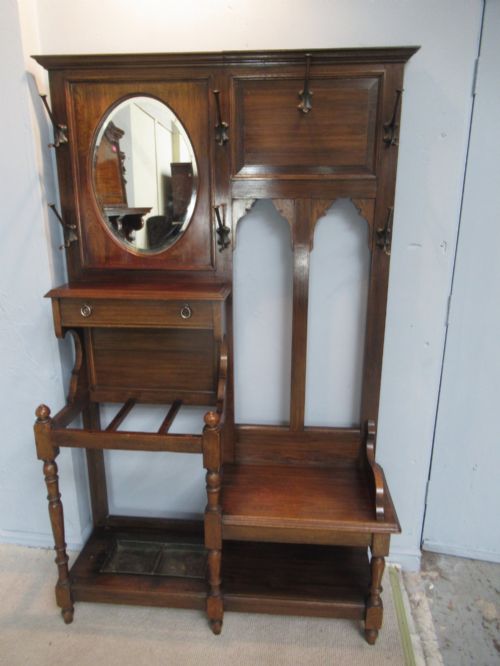
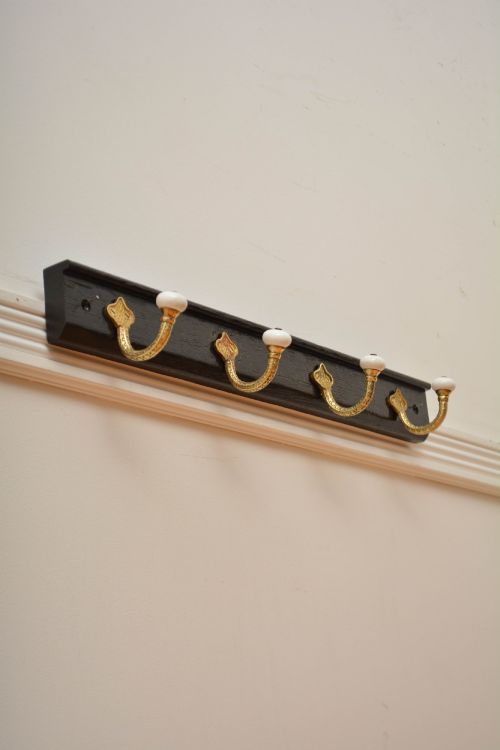
The versions most commonly met on this page span the Victorian and Edwardian years, alongside late nineteenth century examples and pieces from around 1910 to 1920. These range from simple wall-hanging racks with horse head crop hooks to substantial hall stands incorporating mirrors, ceramic elements, and stick stands.
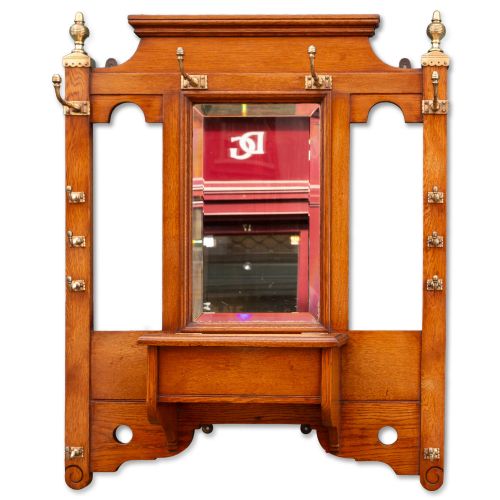
Makers and designers of the period utilised timber and metal to create both domestic items and specialised equestrian pieces, such as the brass bound oak barrel stick stand. Whether looking at a golden oak wall-mounted rack or a heavy Victorian hall stand, the combination of brass and oak remains the defining characteristic.
Materials and construction
Construction relies upon solid oak, sometimes ebonised or finished in golden tones, paired with heavy cast brass hooks and mounts. The timber provides a robust structural base for wall mounting or freestanding hall furniture, while the brass elements offer durable functional points for garments.
Secondary materials appear selectively across the range, including ceramic inserts on coat hooks, mirrored glass panels in hall stands, and marble trays for umbrella drips. These additions reflect the functional complexity of larger pieces produced during the Victorian and Edwardian periods.
The site listings feature oak and brass pieces spanning the Regency period, the Victorian era, Arts and Crafts designs, and the early twentieth century up to 1920.
Assessing quality and finish
Quality in these pieces is dictated by the weight and casting of the brass work, the selection of the oak timber, and the integrity of the joinery. Heavier brass fittings and solid construction separate substantial pieces from lighter, domestic utility items.
Finer examples show considered detailing such as decorative ceramic accents, specialised equestrian motifs, or integrated barometer mechanisms. The overall presence of the piece, from a narrow nineteenth century hall stand to a Gothic reform wall rack, depends on the balance between timber framing and metal hardware.
The Brass and Oak Coat Rack Glossary
- Hall stand
- A large freestanding hallway furnishing combining coat hooks, a hat shelf, a mirror, and umbrella or stick stands.
- Ebonised oak
- Oak timber treated with a dark stain or finish to imitate ebony, popular in Victorian decorative pieces.
- Crop hook
- A specialised wall hook featuring an equestrian riding crop or horse head motif, common in nineteenth century tack rooms and halls.
- Stick stand
- A receptacle integrated into hall furniture or made as a standalone barrel to hold walking sticks and umbrellas.
Brass and Oak Coat Rack: Frequently Asked Questions
Where should I hang a wall rack?
Wall-mounted racks suit narrow entrance halls, porches, or boot rooms where floor space is limited. They provide accessible hanging points for daily coats and hats without crowding the room.
Ensure the fixings are secured into solid wall studs or masonry to support the weight of heavy oak and brass construction when loaded with garments.
How do I care for the brass and oak?
Maintain the oak timber by feeding it occasionally with a traditional wax polish to preserve the grain and prevent the wood from drying out. Avoid harsh chemical cleaners that can strip the finish.
Dust the brass components gently, allowing the metal to retain its natural age and patina rather than scrubbing it to a bright modern shine.
What is the difference between a hall stand and a coat rack?
A coat rack is typically a compact, wall-mounted board fitted with hooks for hanging garments and hats. It is designed purely for vertical wall space.
A hall stand is a larger, freestanding piece of furniture that often includes a mirror, umbrella wells, glove boxes, and a bench seat alongside the coat hooks.
How do I identify a Victorian piece?
Victorian pieces often display heavier proportions, darker oak finishes, and decorative cast brass work sometimes paired with ceramic elements. Stylistic cues include Gothic Revival influences or elaborate carved details.
Construction methods such as hand-cut joints and heavy backboards further point to nineteenth-century manufacturing traditions.