

Antique Carved Coat Tree
An antique carved coat tree stands ready in the hallway, offering both practical hanging space and bold period character.
Antique Carved Coat Tree
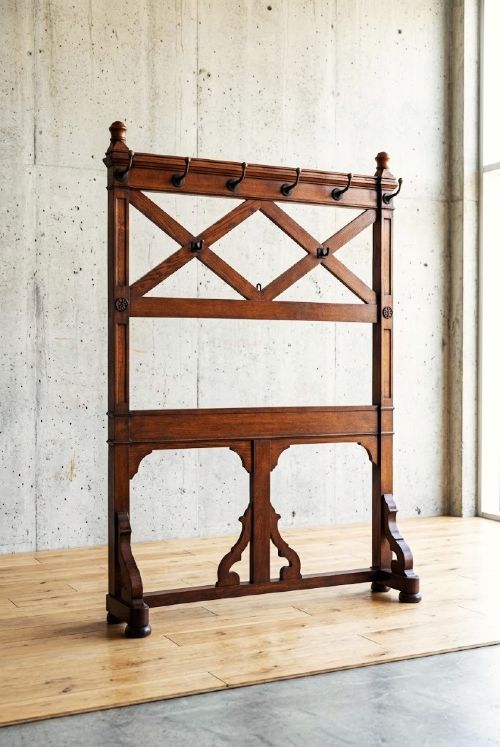
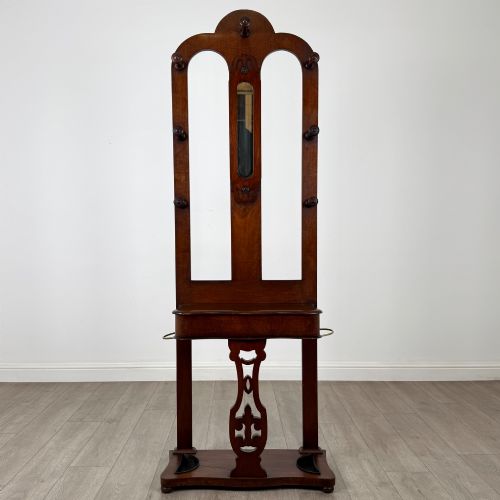
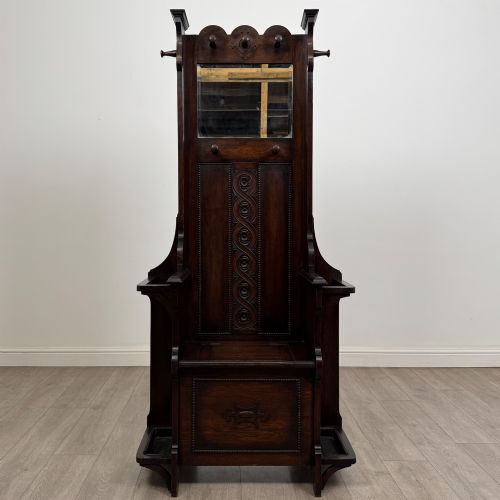
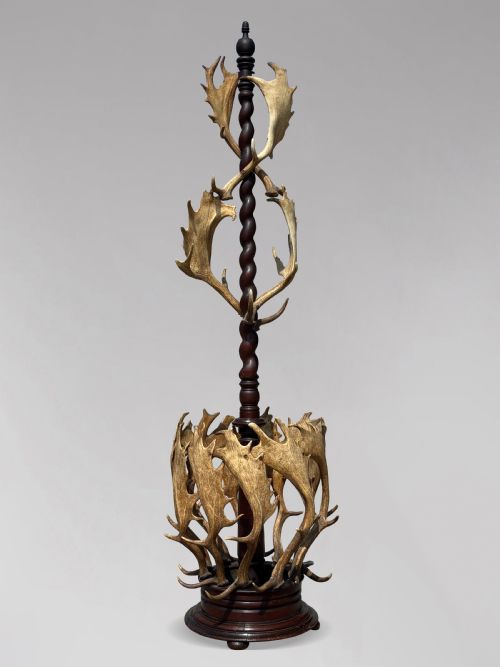
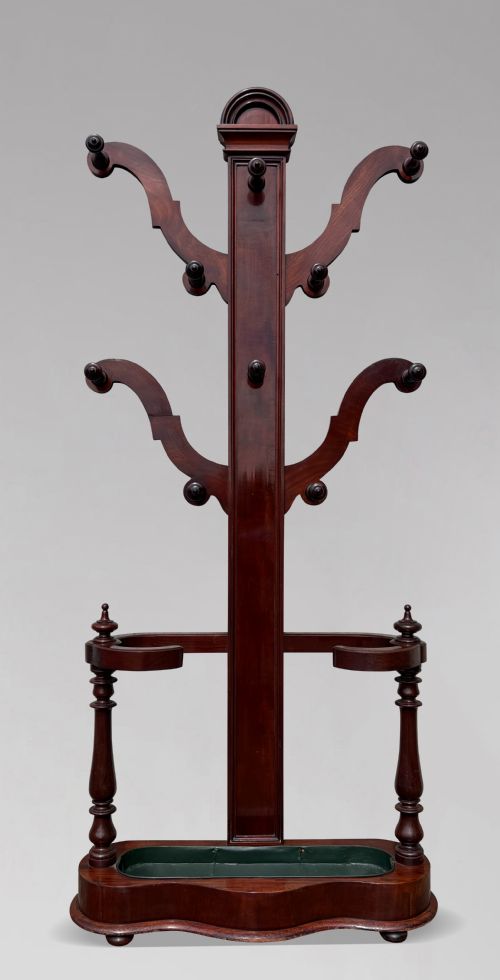
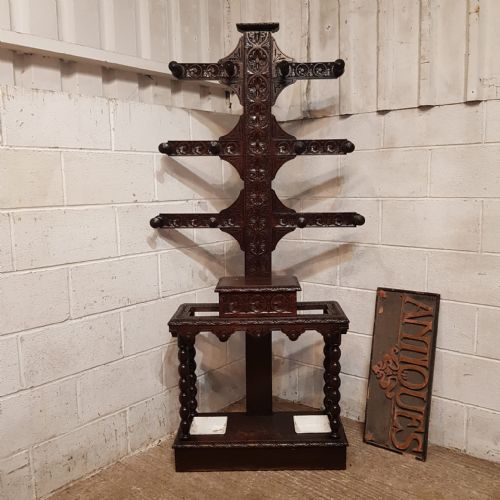
When you search for an antique carved coat tree, you encounter substantial hallway furniture designed to organise outerwear, hats, and umbrellas. These pieces combine structural woodwork with integrated hooks, mirrors, and sometimes seating or marble surfaces.
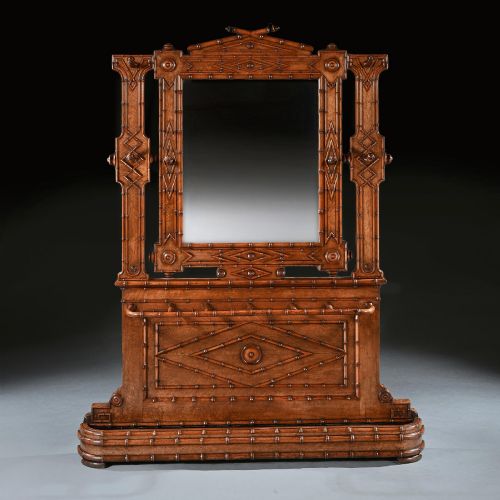
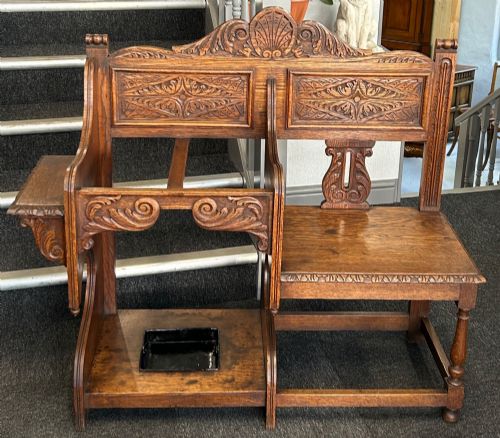
The selections on this page predominantly take the form of hall stands and coat stands originating from the Victorian, Edwardian, and Arts and Crafts periods. Oak and mahogany serve as the primary woods, often enriched by intricate carving in styles ranging from Gothic Revival to Black Forest.
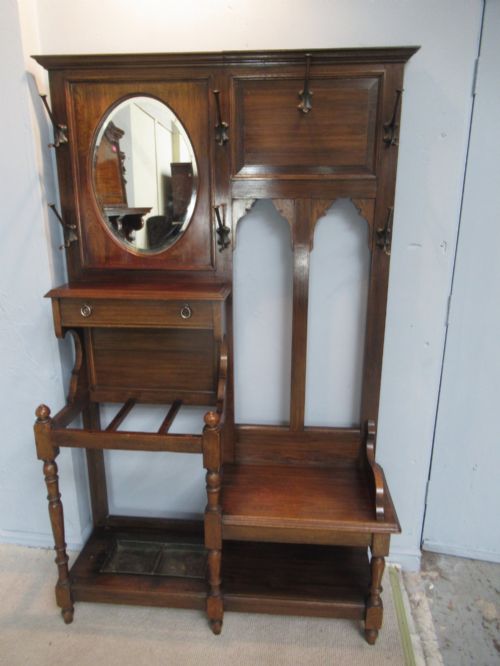
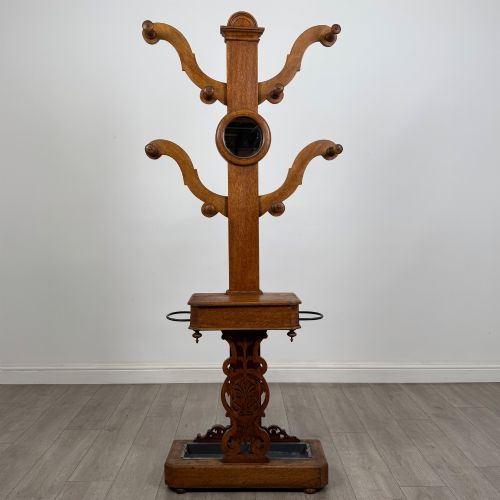
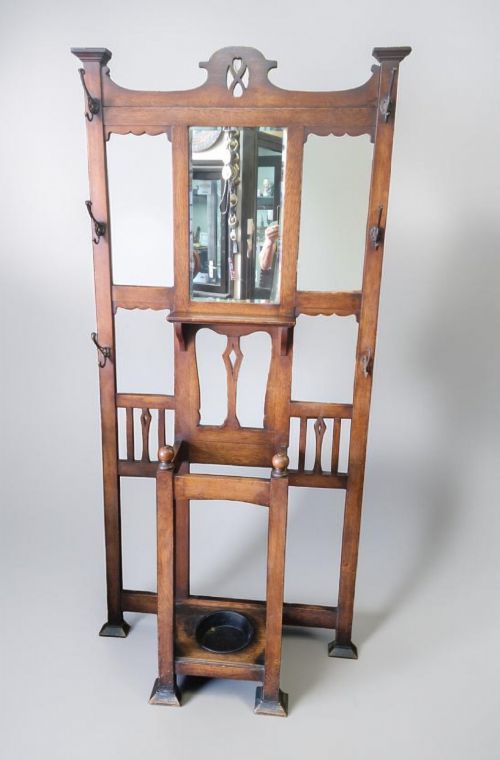
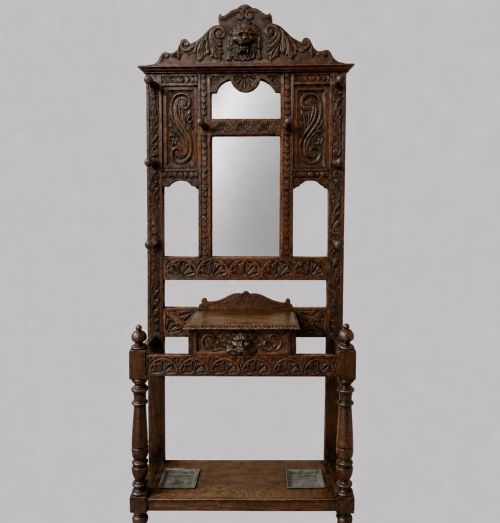
Many examples incorporate practical compartments for sticks and umbrellas alongside central mirror panels. This variety ensures that each piece functions as both a decorative focal point and a utilitarian entranceway fixture.
Materials and construction
Cabinet makers utilised dense hardwoods such as oak, mahogany, and walnut to construct sturdy frames capable of supporting heavy winter garments. Solid oak and mahogany frequently receive deep relief carving, displaying foliage, animal forms, or mythical motifs like the Green Man.
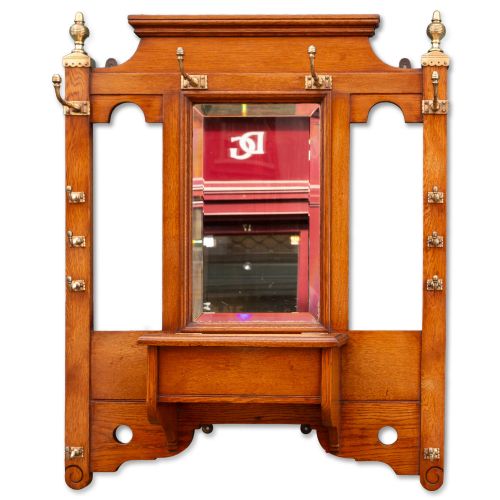
Metal elements play a functional role, featuring brass coat hooks and iron hardware that contrast with the dark wood tones. Glass mirrors and marble shelves are integrated into the upper and lower sections of larger hall stands to provide reflective light and durable surfaces.
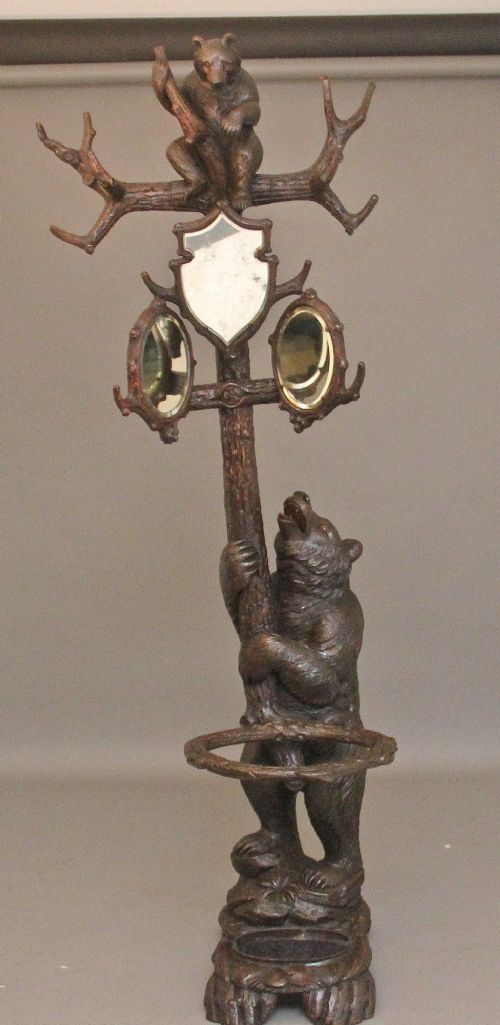
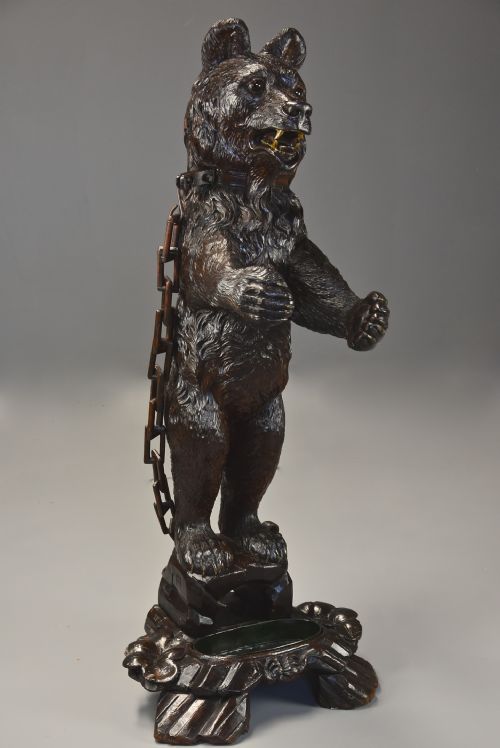
Several fierce Black Forest bears stand guard with outstretched paws, perfectly willing to hold your car keys.
What determines quality
The standard of carving sets the finest examples apart from standard workshop production. Deep, crisp hand-carving executed on Black Forest animal figures or architectural Gothic details indicates superior craftsmanship.
The choice of materials and the integrity of the joinery dictate longevity and presence. Golden oak, figured mahogany, and exhibition-grade walnut provide richer visual depth than plain utility timbers.
The Antique Carved Coat Tree Glossary
- Hall stand
- A large piece of entrance furniture incorporating coat hooks, a mirror, and umbrella stands. Many also feature a small shelf or a seat with storage beneath.
- Black Forest carving
- Highly detailed woodwork originating from Switzerland and Germany, famously depicting bears, foxes, and woodland motifs. These pieces often feature integrated branch-form hooks.
- Green Man
- A sculptural architectural ornament depicting a human face entwined with leaves, vines, or foliage. It appears frequently as a central carved motif on Victorian oak furniture.
- Japonisme
- A nineteenth-century artistic movement influenced by Japanese art and design. This aesthetic appears in exotic woods and faux bamboo finishes.
- Gothic Revival
- An architectural and decorative style drawing inspiration from medieval forms. Pieces in this manner display pointed arches, tracery, and heavy structural mouldings.
Antique Carved Coat Tree: Frequently Asked Questions
How were coat stands used?
These pieces stood in entrance halls and vestibules to receive outdoor garments, hats, and walking sticks as visitors and residents entered the home. The integrated mirrors allowed for a final appearance check before stepping out.
The lower umbrella stands and drip pans kept wet floors dry, while the central hooks managed heavy wool coats and capes.
Where should I place a hall stand?
An entrance hall or wide corridor provides the ideal setting, allowing the piece sufficient physical and visual space to anchor the room. Adequate clearance is necessary to ensure coat hooks remain accessible.
Positioning the furniture away from direct heat sources protects the timber panels and prevents the carved wood from splitting over time.
How do I care for carved oak?
Regular dusting with a soft, dry cloth keeps the deep recesses of the hand-carved details free from particle buildup. Applying a quality beeswax occasionally nourishes the timber and maintains a soft sheen.
Avoid liquid polishes containing silicone, which can build up within the carved crevices and dull the natural grain of the wood.
How can I tell Victorian pieces apart?
Victorian examples often display heavy proportions, dark mahogany or oak timbers, and elaborate ornamentation such as Green Man carvings or Gothic Revival motifs. They frequently incorporate bevelled mirror glass and cast-iron drip trays.
Later Edwardian and Arts and Crafts pieces tend to feature lighter golden oak finishes, simpler geometric lines, and a focus on straightforward construction without excessive ornamentation.