
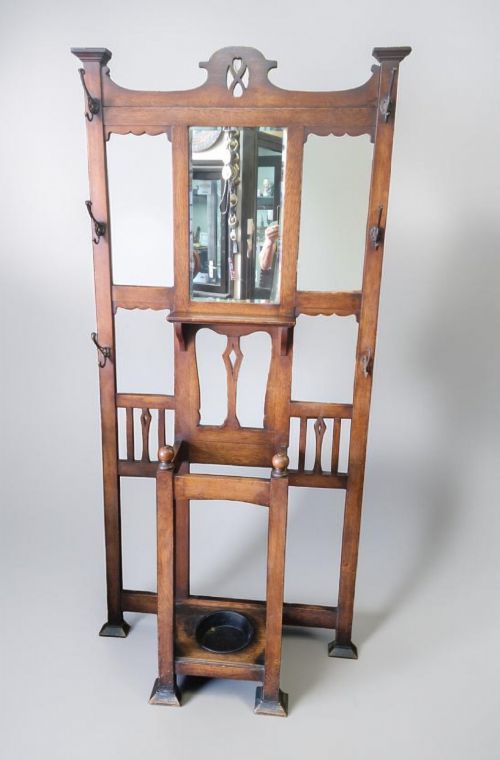
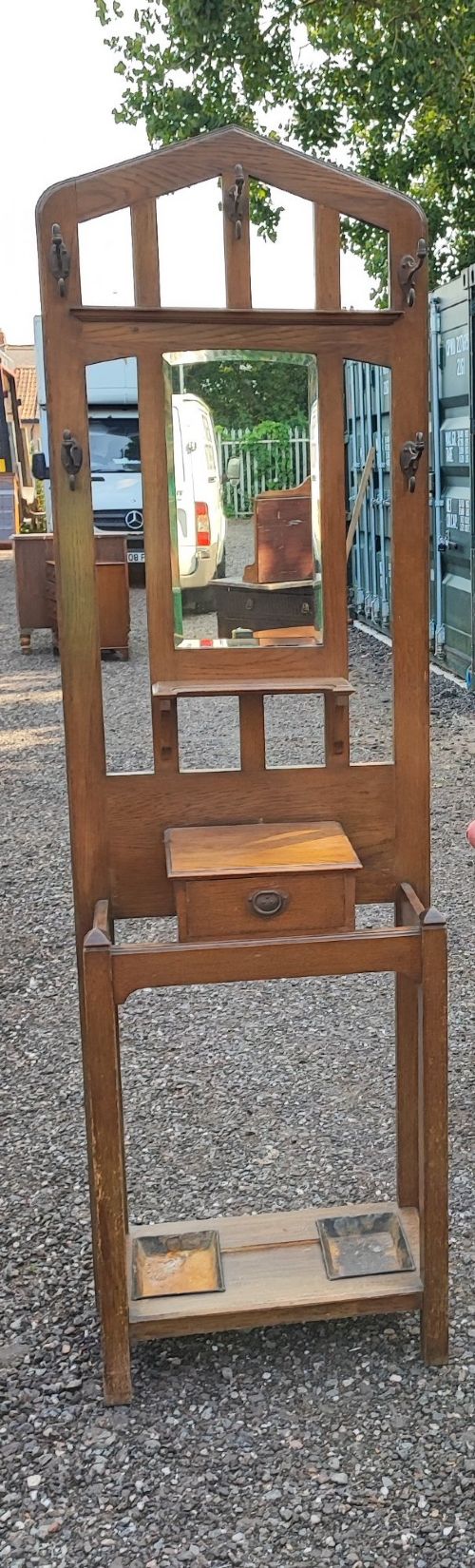
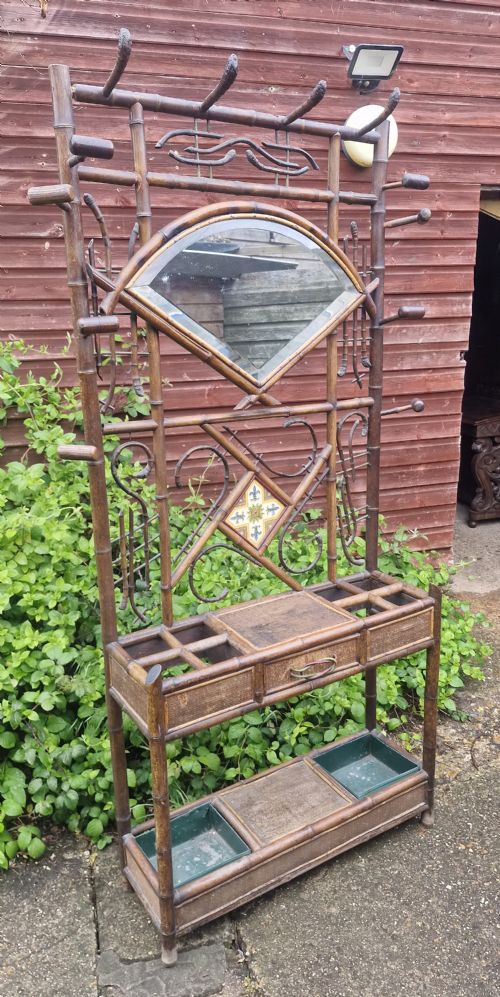


Vintage Entry Mirror
A vintage entry mirror brings immediate character to a hallway, combining reflective glass with practical hanging space or console support.
Vintage Entry Mirror
When searching for a vintage entry mirror, buyers encounter a diverse selection of hallway furniture spanning the nineteenth and early twentieth centuries.
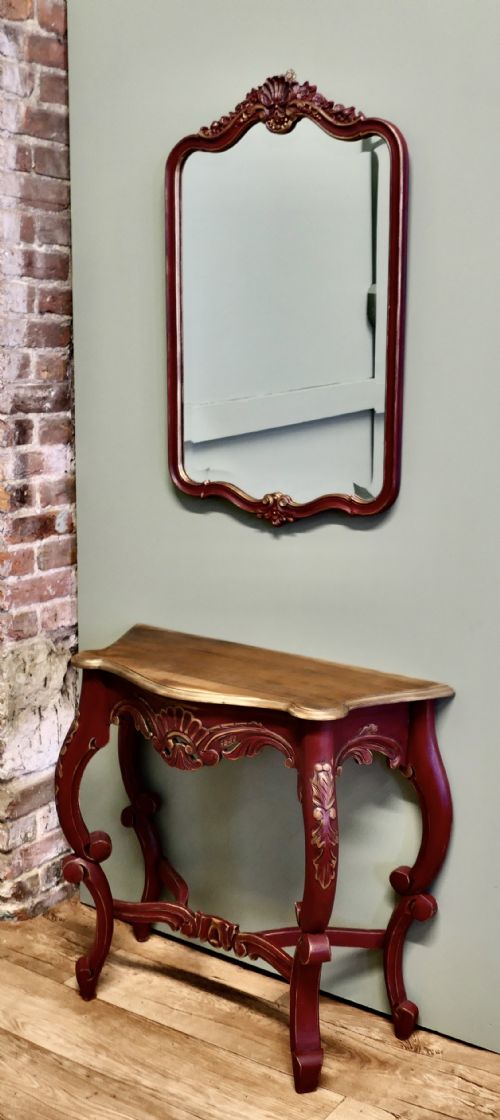
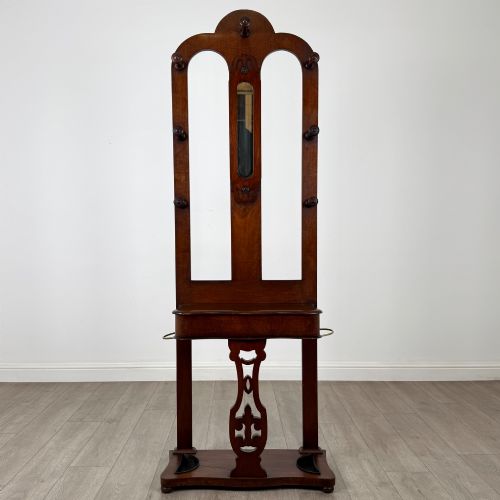
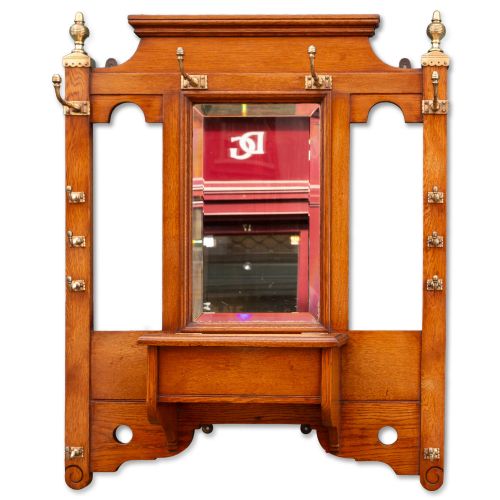
The most common forms on this page include substantial oak and mahogany hall stands, wall-mounted coat racks with integrated glass, and console tables paired with matching wall mirrors.
Pieces range from Victorian Gothic and Aesthetic Movement designs to Edwardian oak pieces and later Art Deco ironwork.
Materials and construction methods
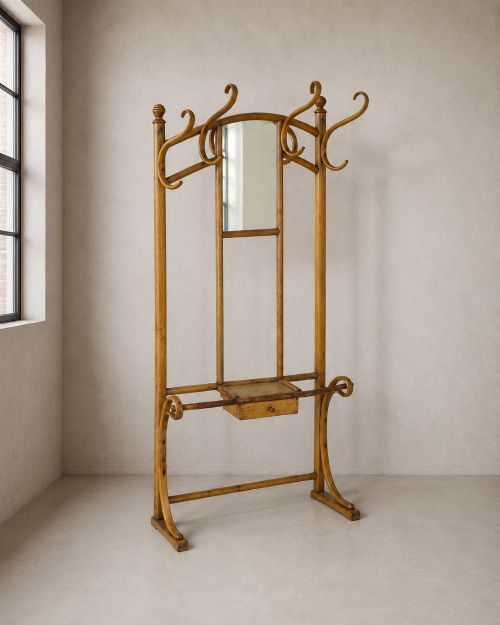
Carpenters utilised solid timbers like oak, mahogany, walnut, and rosewood, often featuring carved details, bentwood, or inlaid decoration.
Metal elements incorporate cast iron, brass, and wrought iron, frequently paired with bevelled mirror glass and marble tabletops.
Determining quality and craftsmanship
Quality rests in the crispness of the timber carving, the integrity of the original mirror plate, and the sturdiness of structural joints.
Finest examples display thoughtful integration of hardware such as brass coat hooks and marble surfaces, alongside balanced proportions suited for narrow spaces.
Coalbrookdale
The Vintage Entry Mirror Glossary
- Hall stand
- A multi-functional piece of hallway furniture combining a mirror, coat hooks, umbrella stands, and often a small glove drawer.
- Console table
- A table designed to fit flush against a wall, frequently topped with marble and paired with a matching hanging mirror.
- Bentwood
- Wood heated and bent into curved shapes, famously utilised by manufacturers like Thonet for lightweight yet sturdy frames.
- Portmanteau
- A large freestanding hallway piece incorporating a mirror, storage, and coat hanging facilities.
- Aesthetic Movement
- A late nineteenth-century design style focusing on visual and material quality rather than narrative subject matter.
Vintage Entry Mirror: Frequently Asked Questions
How do I choose the right size hall stand?
Measure your hallway width and ceiling height carefully, keeping in mind that pieces with umbrella wells and protruding coat hooks require adequate clearance.
Slimmer wall-mounted mirrors and narrow console tables work best in compact entryways without overwhelming the floor space.
Were these mirrors originally used in halls?
Yes, entrance halls in nineteenth and early twentieth-century homes served as reception spaces where visitors were greeted and outerwear was stored.
Mirrors allowed individuals to check their appearance before stepping outside, while integrated hooks and trays held hats, gloves, and walking sticks.
How do I care for antique mirror glass?
Clean the glass gently using a soft cloth and a mild glass cleaner sprayed onto the cloth rather than directly onto the mirror.
Avoid harsh chemicals that might seep behind the silvering and cause further degradation to original antique plates.
How do I distinguish Victorian from Edwardian pieces?
Victorian designs tend to feature heavier carved oak or mahogany, darker finishes, and ornate detailing influenced by Gothic or Rococo revivals.
Edwardian pieces often embrace lighter oak, simpler lines, and influences from the Arts and Crafts movement.