
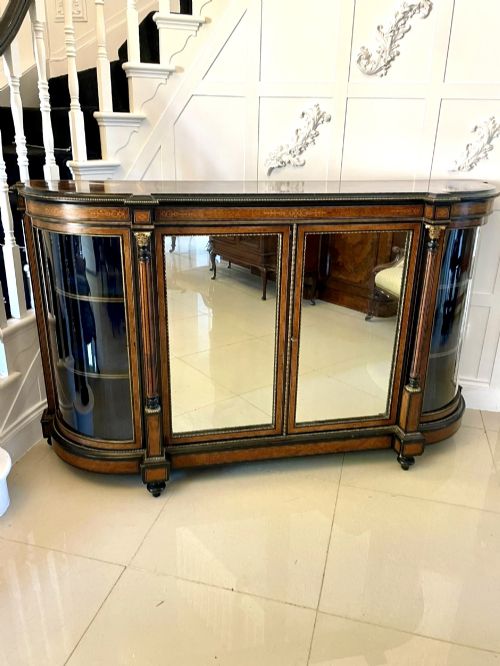
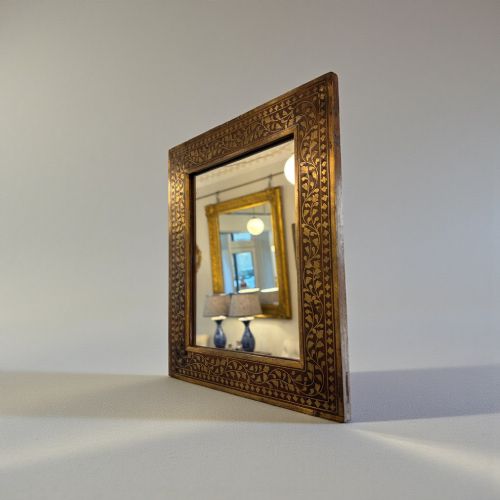
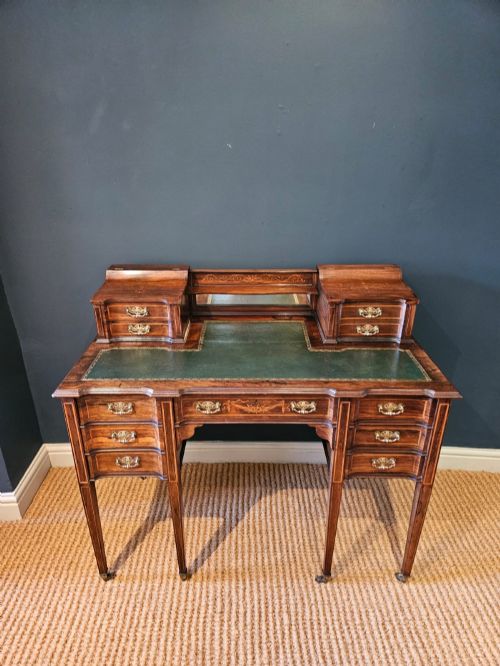
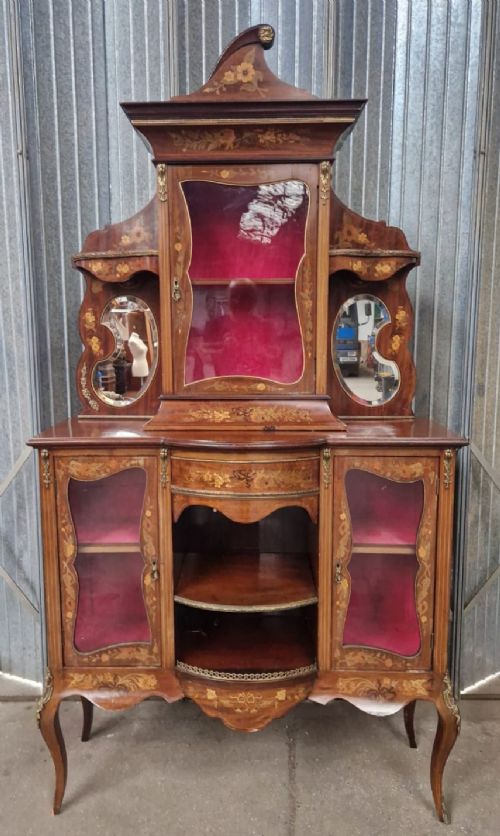
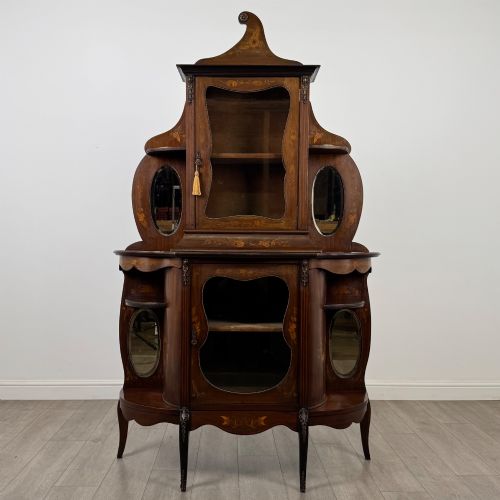
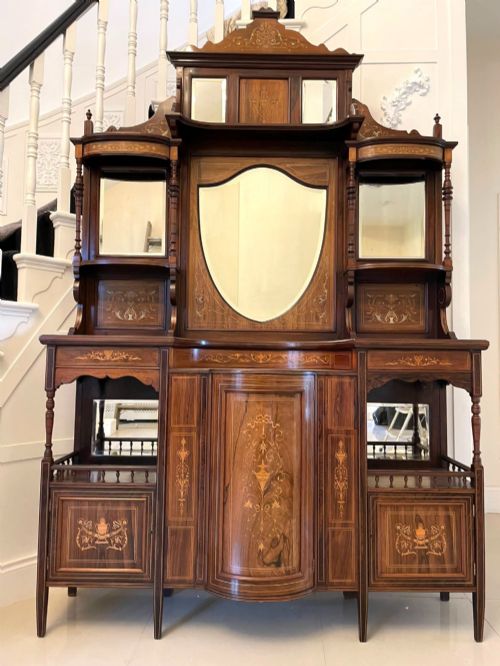
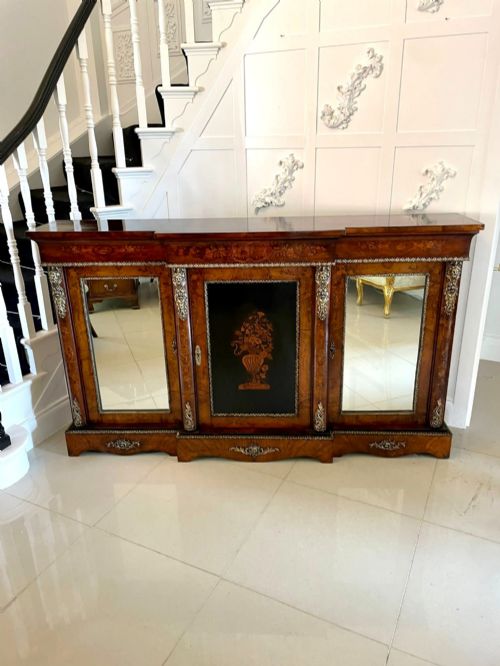
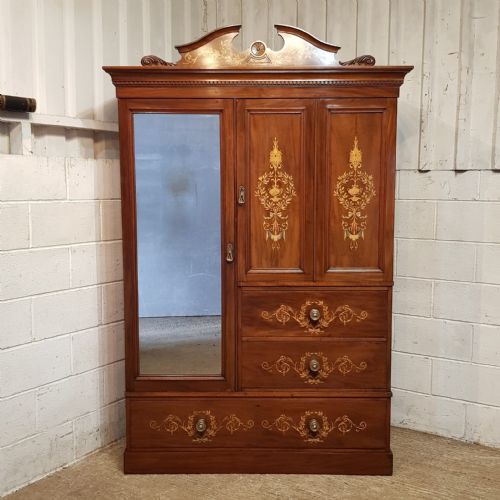
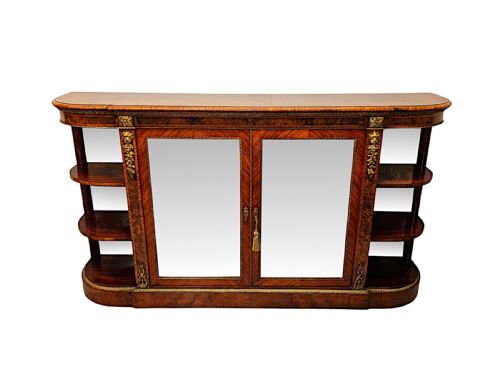
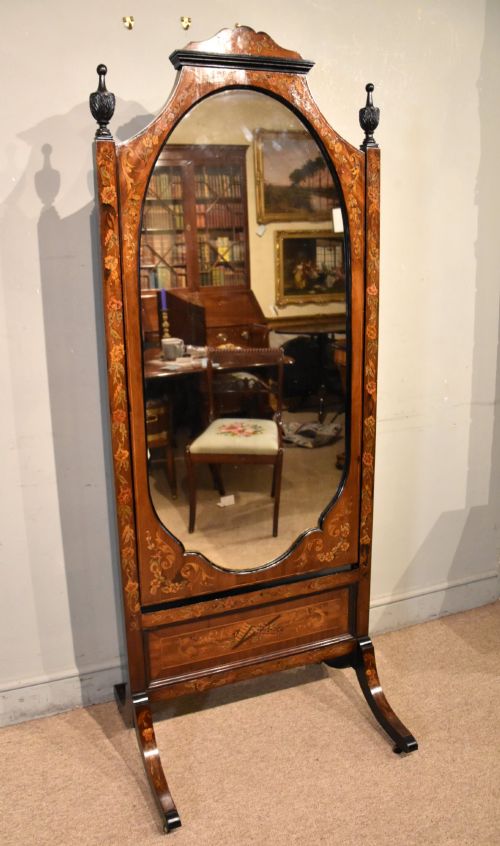
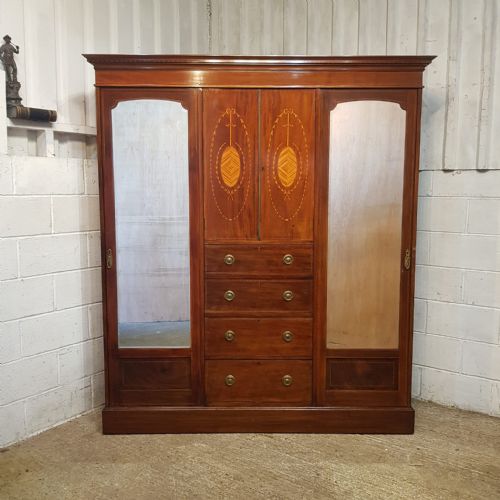
Marquetry Inlay Mirror
These marquetry inlay mirror pieces bring together precision woodwork and silvered glass across Victorian, Edwardian, and Georgian periods.
Marquetry Inlay Mirror
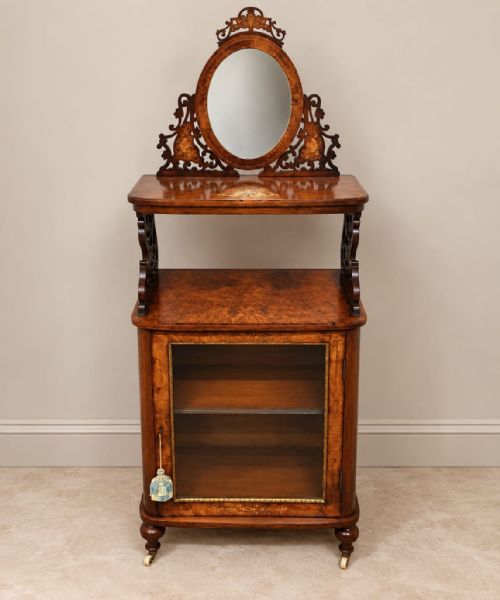
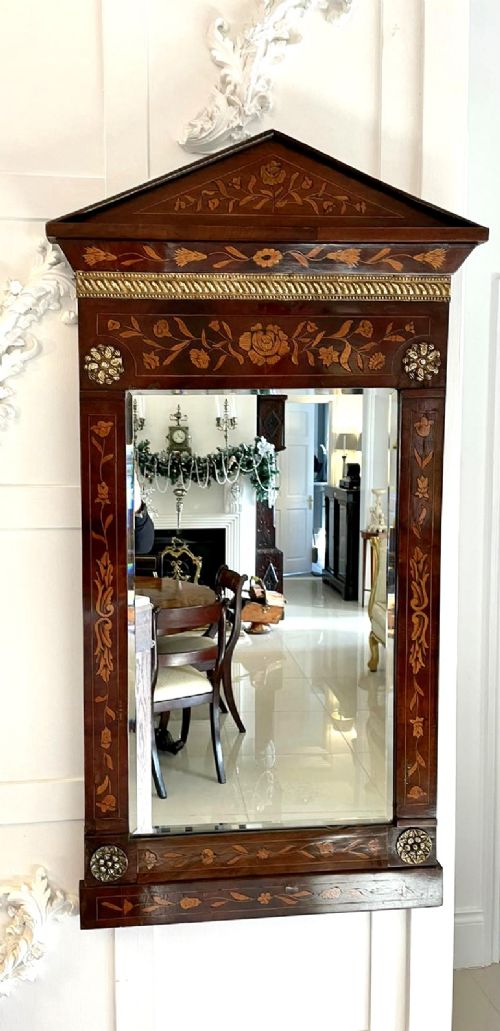
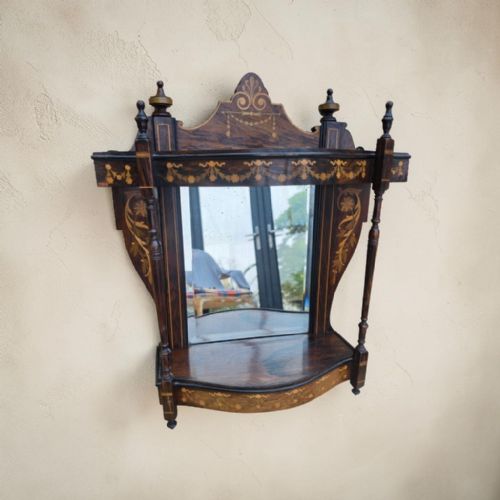
A marquetry inlay mirror combines functional glass with decorative wood veneers arranged in complex pictorial or geometric patterns. These pieces span wall-hung designs, dressing table mirrors, and overmantel formats originating from the Georgian era through to the Edwardian period.
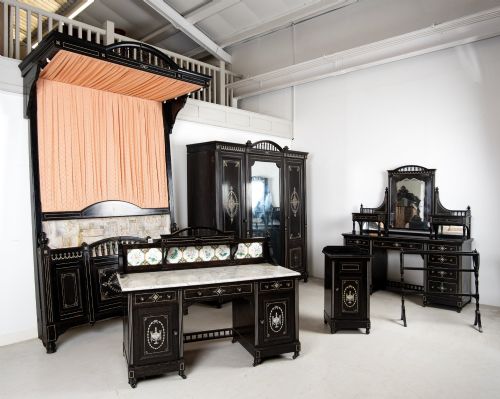
The most common examples encountered on this page date from the Victorian and Late Victorian periods, frequently executed in rosewood or mahogany. They range from small toilet swing mirrors to large overmantel and wall-mounted versions decorated with contrasting wood veneers.
Materials and construction methods
Cabinet makers utilised solid secondary timbers as foundations for decorative primary veneers such as mahogany, rosewood, burr walnut, and satinwood. Fine pieces incorporate intricate marquetry work where contrasting woods are cut and fitted together to form pictorial motifs before being applied to the frame.
Mirrors from the 19th Century and earlier frequently feature bevelled glass plates set within rebated frames secured by wooden backing boards. Brass hardware, including swing arms and hanging brackets, supports the structural integrity of dressing and wall-mounted formats.
Listings feature mahogany, rosewood, and burr walnut alongside satinwood veneers across Victorian, Edwardian, and Georgian periods.
Evaluating standard and craftsmanship
The division between standard and superior pieces rests upon the precision of the veneer work and the complexity of the botanical or geometric motifs. Finer examples display tight, seamless joins in the marquetry and judicious use of contrasting timber grains rather than superficial painted details.
Structural heft and timber selection dictate overall merit, with dense hardwoods like rosewood and mahogany outlasting softer beech frames. Original mirror plates showing light foxing alongside intact, unpolished timber surfaces indicate genuine period preservation.
Collinson & Lock·Gillows·Maple & Co·Edwards & Roberts
The Marquetry Inlay Mirror Glossary
- Marquetry
- Decorative veneer work applied to a furniture structure, forming pictorial patterns using various coloured woods. This technique requires exact cutting and fitting of thin timber sections.
- Overmantel mirror
- A large mirror designed specifically to hang on the wall directly above a fireplace mantelpiece. These pieces often feature extensive wood framing and decorative inlay.
- Toilet mirror
- A smaller mirror mounted on a pivoting frame supported by upright arms, traditionally placed on top of a dressing table or chest. Also known as a swing mirror.
- Satinwood
- A durable, lustrous hardwood with a yellowish sheen utilised extensively for contrasting inlay work and detailed stringing on 19th-century cabinetry.
- Burr walnut
- Timber taken from the abnormal growth of a walnut tree, yielding highly figured, swirling grain patterns highly prized for decorative furniture panels.
Marquetry Inlay Mirror: Frequently Asked Questions
How do I hang a heavy wall mirror safely?
Heavy wall-mounted mirrors require secure fixings anchored directly into structural wall studs or masonry using appropriate steel brackets.
Verify that the hanging wire or original brass rings on the back of the timber frame can support the combined weight of the wood and glass.
Can I clean the antique mirror glass safely?
Clean the glass surface using a soft microfiber cloth and a mild, ammonia-free glass cleaner sprayed onto the cloth rather than directly onto the mirror.
Avoid letting moisture seep behind the silvered backing or into the wooden frame joints, as dampness causes degradation and staining.
How do I distinguish Georgian from Victorian mirrors?
Georgian mirrors tend to feature simpler architectural proportions and architectural mahogany or walnut frames with restrained stringing.
Victorian and Edwardian variants frequently display busier marquetry patterns, ebonised surfaces, and exotic woods like rosewood or burr walnut.
Are dressing table mirrors fixed or adjustable?
Dressing table mirrors are built as swing mirrors, utilising side screw pivots that allow the glass frame to tilt at various angles.
Over time, these brass pivots may require gentle tightening to hold the mirror steady in the preferred viewing position.