



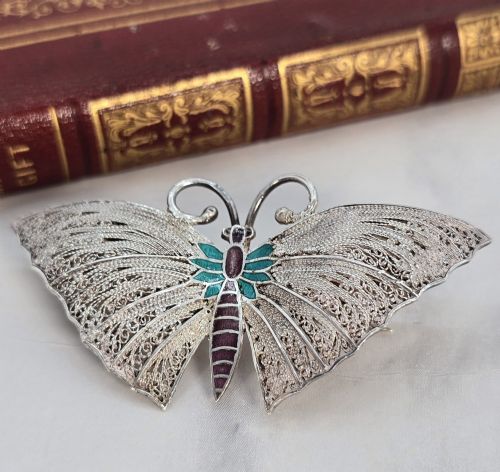
Vintage Enamel Pin
A vintage enamel pin brings together coloured glass paste and precious metal to create a small wearable work of art.
Vintage Enamel Pin
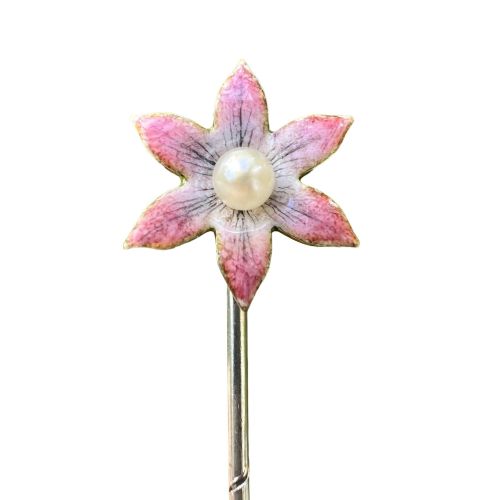
A vintage enamel pin encompasses small decorative brooches, stick pins, and badges produced across the nineteenth and twentieth centuries. These pieces take many forms, from naturalistic flowers and insects to geometric Art Deco motifs and heraldic crowns.
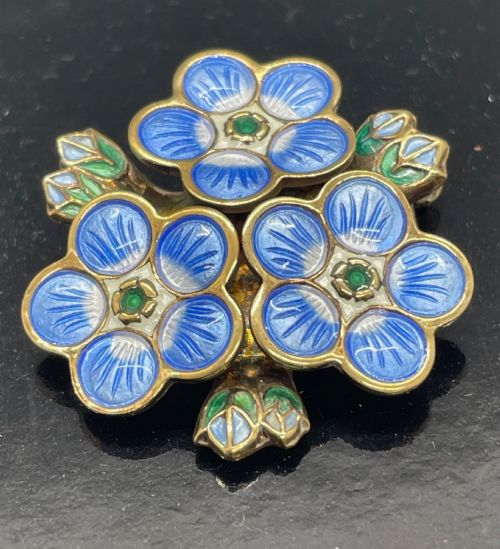
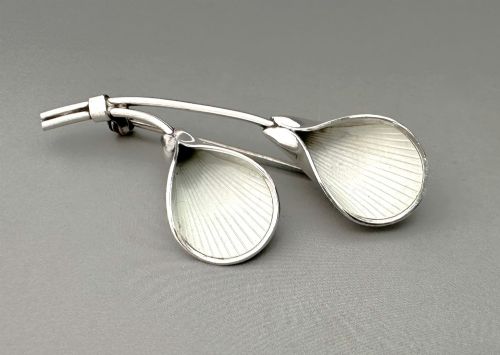
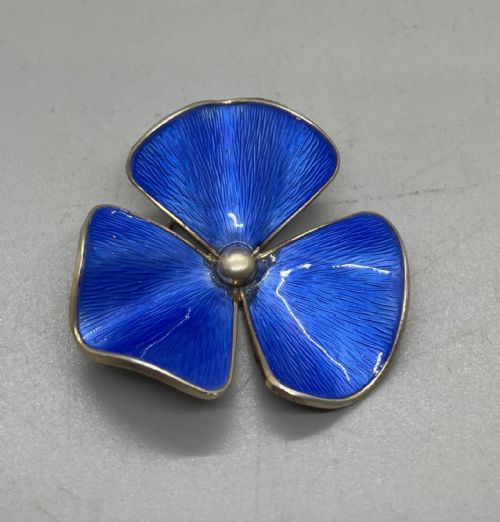
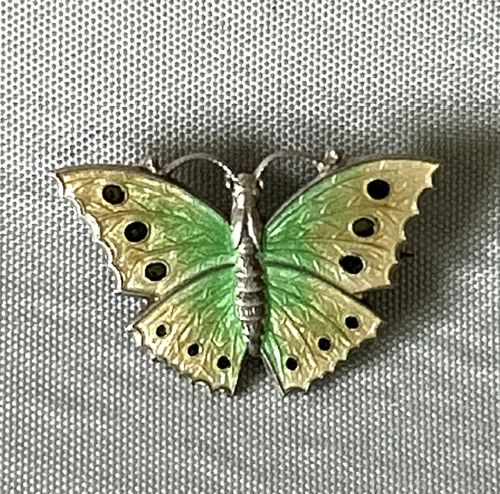
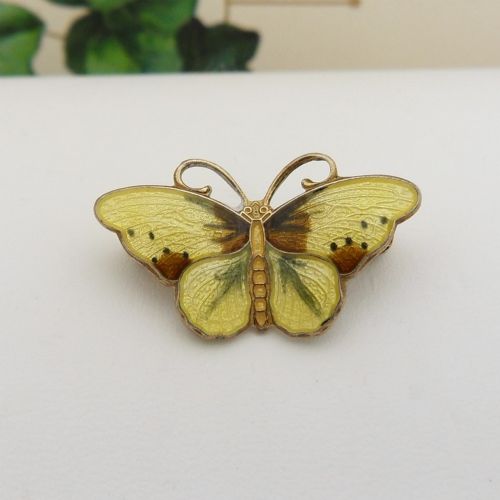
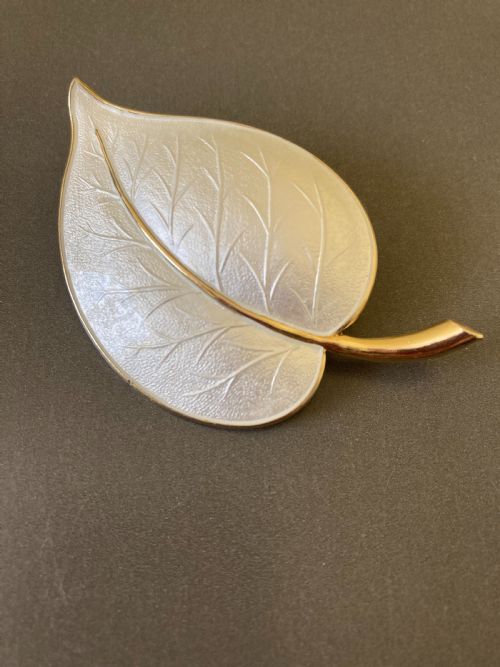
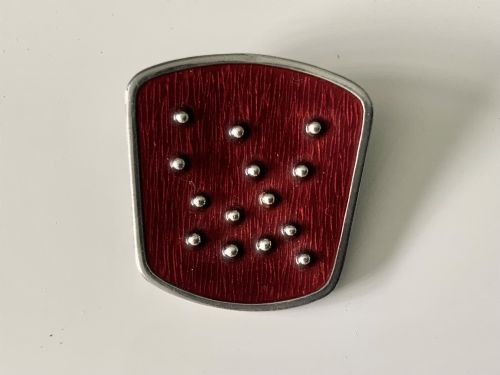
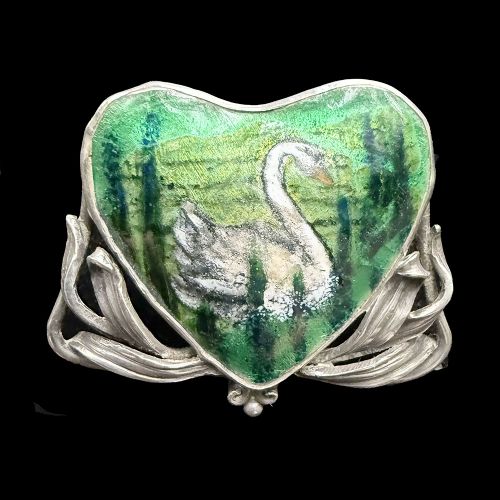
The pieces on this page lean heavily towards Scandinavian modernism and mid-century design, alongside earlier Edwardian and Arts and Crafts examples. Natural subjects such as butterflies, birds, and floral sprays dominate the selection.
Beyond standard dress clips and fastening brooches, the category extends to related small items like trinket dishes and trays set with vitreous enamel. Buyers encounter everything from delicate silver gilt butterflies to bold geometric silver work.
Materials and construction methods
Maker workshops fused powdered glass onto metal bases at high temperatures to create durable, glossy coloured surfaces. Silversmiths utilised sterling silver, silver gilt, and yellow gold as the primary structural foundations for these miniatures.
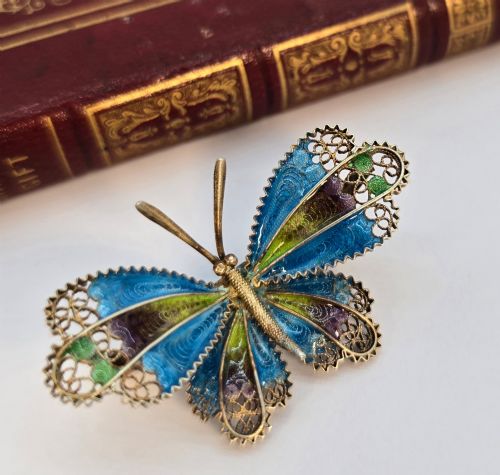
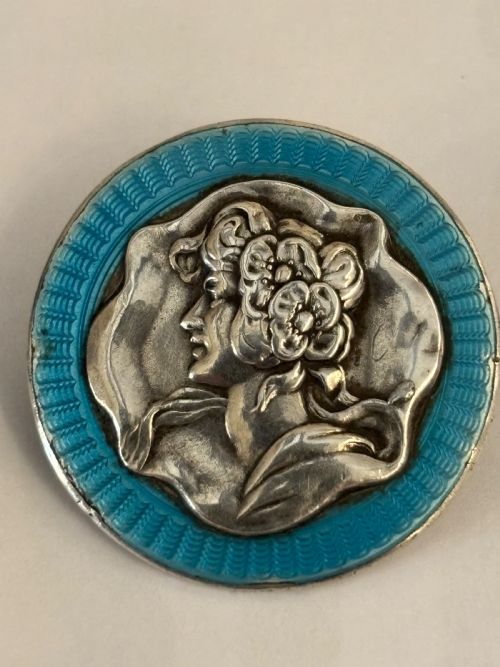
Techniques varied from standard champlevé and cloisonné to intricate guilloche engraving beneath translucent coloured enamels. Plique-à-jour work involved suspending translucent enamel within open wire frames to let light pass straight through.
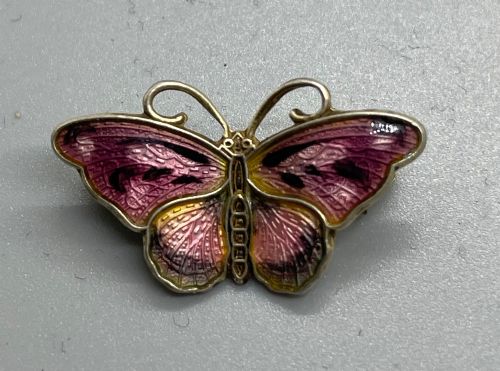
Butterflies flutter across multiple eras, appearing in silver filigree from the nineteen-thirties and guilloche enamel from the fifties.
Assessing craftsmanship and execution
Quality rests upon the precision of the metalwork and the control achieved during the enamel firing process. Superior examples show even colour distribution without surface pitting, bubbling, or shrinkage around the metal partitions.
The fineness of the underlying engine-turned guilloche patterns separates standard production pieces from exceptional items. Stronger pieces retain crisp gilding, secure pin mechanisms, and well-preserved structural integrity in delicate wire filigree.
Aksel Holmsen·A H Darby And Son·Hroar Prydz·David Andersen·Volmer Bahner·Murrle Bennet And Co
The Vintage Enamel Pin Glossary
- Guilloche
- A decorative mechanical engraving technique that etches precise geometric patterns into metal before a translucent enamel layer is applied.
- Vitreous enamel
- A material made by fusing powdered glass to a metallic substrate through high-temperature firing, creating a smooth and permanent coloured coating.
- Silver gilt
- Silver that has been coated with a thin layer of gold on its exterior surface.
- Plique-a-jour
- An enamelling technique that resembles miniature stained glass, lacking a solid backing metal so that light shines directly through the translucent enamel cells.
- Cloisonne
- A decorative work in which enamel is applied within small cellular compartments formed by soldered metal wires.
Vintage Enamel Pin: Frequently Asked Questions
How do I date a vintage enamel pin?
Dating relies on stylistic markers, metal hallmarks, and the specific enamelling techniques deployed by the workshop. Art Deco and Edwardian pieces display distinct geometric or organic motifs characteristic of those decades.
Mid-century Scandinavian pieces often feature clean minimalist lines paired with bright guilloche colourways. Hallmarks stamped onto the reverse of the metal provide definitive maker marks and assay office dates.
How should I store my enamel pins?
Store pins in a dry environment away from direct sunlight to prevent the metal backing from tarnishing and the enamel from fading. Padded boxes or lined display trays protect delicate protruding pins and fragile filigree work.
Keep pieces separated to avoid metal components scratching the glossy glass surfaces of neighbouring items.
Can I clean silver and enamel brooches safely?
Clean silver components gently using a soft microfibre cloth designed for precious metals. Avoid dipping enamel pieces into harsh chemical silver dips, as these liquids can seep beneath the glass or damage delicate gilt surfaces.
Use a dry cotton bud to remove dust from tight crevices around the metal cloisons.
What is the difference between guilloche and cloisonne?
Guilloche involves machine-engraving a pattern directly into a solid sheet of metal before applying translucent enamel over the top. The underlying carved texture creates shifting light effects beneath the glossy finish.
Cloisonne builds up designs by soldering thin flat metal wires onto a solid metal base to form separate compartments, which are then filled with opaque or translucent coloured pastes.