



Vintage Embroidered Screen
A vintage embroidered screen brings texture and colour to a room, offering both practical division and needlework artistry.
Vintage Embroidered Screen
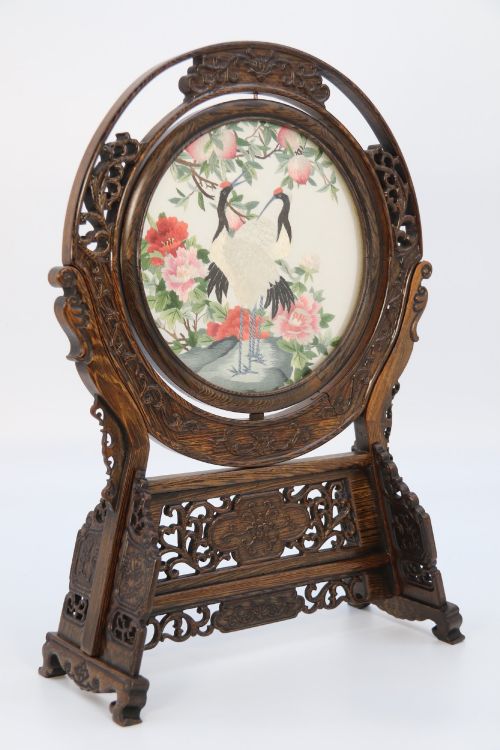
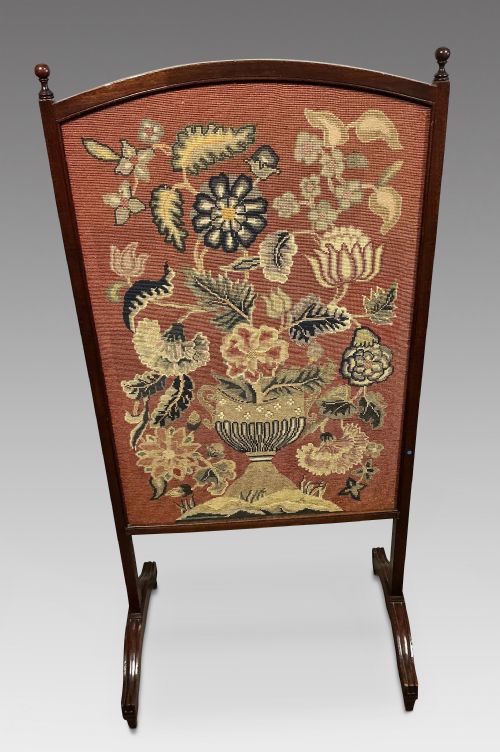
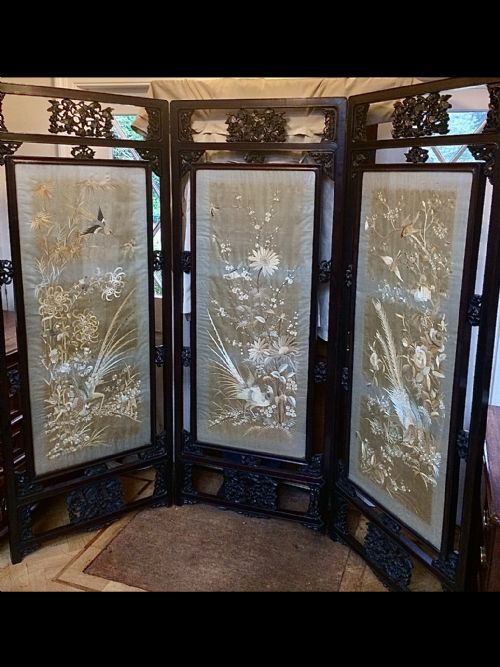
A vintage embroidered screen covers a range of functional objects designed for interiors, predominantly taking the form of fire screens, folding room dividers, and smaller table screens. These pieces serve to block hearth heat or divide spaces while displaying decorative needlework.
The selections available span multiple periods including Regency, Victorian, William IV, Edwardian, and Chinese Republic periods. Buyers most frequently encounter folding room panels and adjustable fireside pole screens featuring needlepoint, silk embroidery, or tapestry work.
Materials span hardwoods like mahogany and rosewood alongside brass frames, supporting panels made of silk, wool, and textile threads. Structural formats vary from single adjustable shields on stands to multi-panel folding dividers.
What varies in quality
Quality rests in the execution of the woodwork and the density of the needlework. Finely carved timber bases, sophisticated turning, and robust brass fittings distinguish superior frames from simpler constructions.
The complexity and condition of the textile panel determine the overall distinction of the piece. Tightly worked silk embroidery, detailed tapestry, and protected double-sided stitching show greater skill than basic needlework samplers.
Materials documented across the pieces include mahogany, rosewood, brass, silk, wool, and hard hardwoods.
The Vintage Embroidered Screen Glossary
- Pole screen
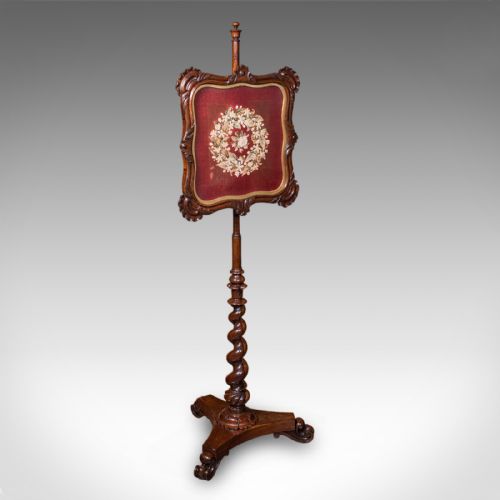
- A fireside screen with an adjustable vertical panel mounted on a slender wooden pole and weighted base. This design allowed the shield to be moved up or down to deflect heat from an open hearth.
- Needlepoint
- A type of canvas work embroidery stitched with yarn or thread in a counted grid pattern. It provides a dense, durable surface commonly seen on antique fire screens.
- Giltwood
- Timber treated with a thin layer of gold leaf or gold paint applied over a prepared surface. This finish appears on decorative frames and carved room dividers.
- Table screen
- A smaller decorative screen designed to sit on a desk or table rather than stand on the floor. These often feature intricate carved stands and detailed silk panels.
Vintage Embroidered Screen: Frequently Asked Questions
How were pole screens used?
Pole screens stood near fireplaces to shield occupants from the intense heat radiating from an open coal or wood fire. The adjustable panel could be raised or lowered to protect a person's face from the flames.
Over time, these pieces also functioned as decorative room accents, displaying fine needlework when the hearth was unlit during warmer months.
How do I care for silk embroidery panels?
Silk embroidery requires protection from direct sunlight to prevent the coloured threads from fading and becoming brittle. Keeping the textiles away from excessive moisture and dust preserves the integrity of the fibres.
Many antique screens feature glass front panels that protect the delicate needlework from everyday wear and airborne soot.
How do I date a wooden screen?
Dating relies on examining the timber species, joinery methods, and the style of the carved base or legs. Regency and William IV pieces often display turned mahogany poles and heavy circular or tripod bases, while later Edwardian examples show different decorative carving.
Matching the textile style and mounting hardware to documented periods helps confirm the age of the complete assembly.