
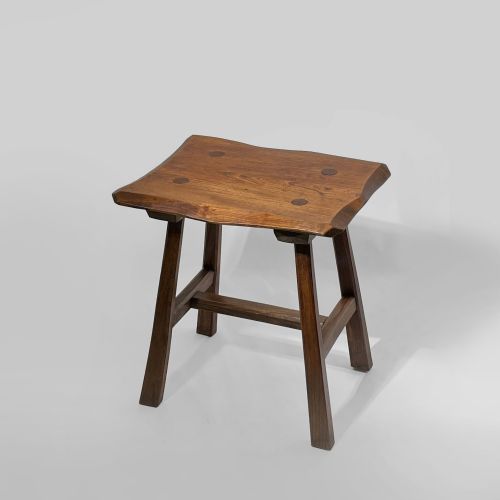
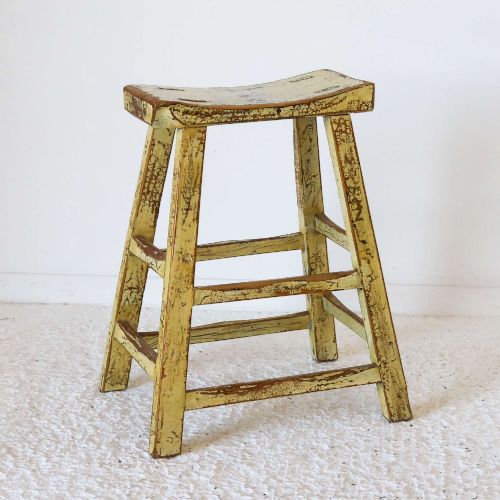
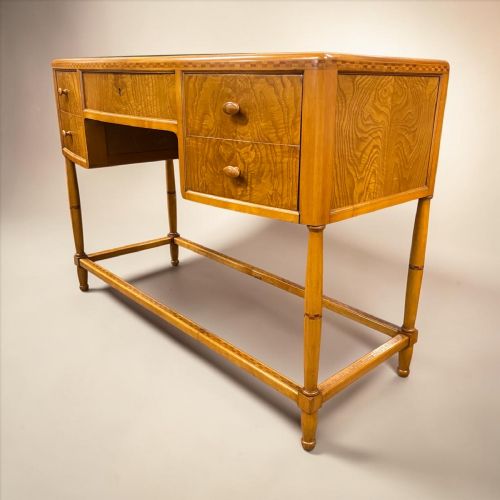
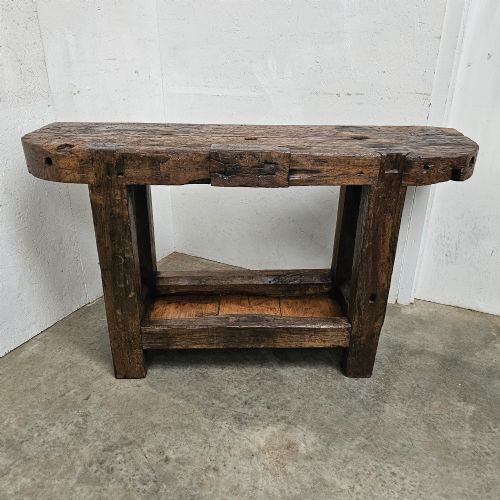


Vintage Elm Side Table
A vintage elm side table offers the rich, dense grain and honest utility found in vernacular furniture from European and Asian traditions.
Vintage Elm Side Table
Every vintage elm side table on this page brings together utilitarian forms and domestic history, spanning simple farmhouse pieces to provincial tables. Buyers find everything from low tea tables and small stools to drop-leaf occasional pieces.
The selection ranges across the nineteenth century, Edwardian era, and the nineteen-thirties, incorporating French, Chinese, and Scandinavian vernacular styles. These objects serve as functional small surfaces with strong local character.
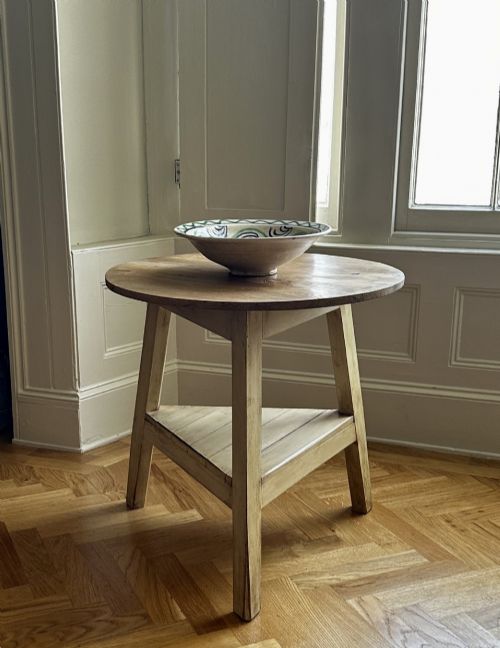
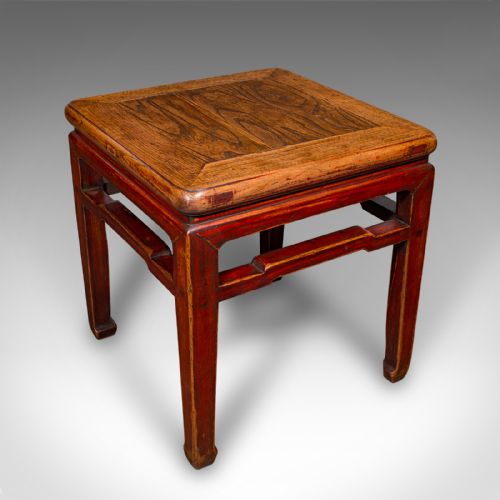
Chinese provincial pieces, French country workbenches, and rustic English cricket tables dominate the forms available here. Each piece reflects the everyday needs of past workshops, kitchens, and parlours.
Construction and materials
Makers utilised solid elm timber, often combined with burr elm, sycamore, oak, or brass fittings to build these surfaces. Elm provides a tough, interlocking grain that resists splitting under heavy daily use.
Traditional joinery methods unite plank tops with pegged legs, trestle supports, or crossed bases without relying on modern fasteners. Original lacquer finishes appear on Asian pieces, while European examples often display scrubbed or bare timber.
Listings feature elm alongside secondary materials including brass, lacquer, hardwood, sycamore, burr elm, timber, and oak.
Assessing quality in elm furniture
Structural honesty and minimal intervention separate superior examples from heavily restored ones. Retaining authentic wear marks and original hardware maintains the historical character of each piece.
The Vintage Elm Side Table Glossary
- Burr elm
- A growth distortion on the elm tree that produces highly figured, swirling wood grain patterns. Cabinet makers prize this timber for decorative occasional tables and consoles.
- Cricket table
- A small, lightweight circular table supported by three splayed legs. This design provided stability on uneven seventeenth and eighteenth-century cottage floors.
- Guéridon
- A small French occasional table supported by a central column or legs. These tables appeared in various woods including burr elm during the nineteenth century.
- Chabudai
- A traditional short-legged Japanese table used for sitting on tatami mats. Examples often utilise elm for the top surface.
- Drop leaf
- A table featuring hinged flaps on one or both sides that fold down to save space. Edwardian and nineteenth-century makers applied this mechanism to country occasional tables.
Vintage Elm Side Table: Frequently Asked Questions
How do I use a low elm table at home?
These low surfaces work well beside seating as a resting place for books or lamps. Japanese chabudai and milking stools function effectively as decorative plant stands.
Their modest scale allows them to fit easily into smaller rooms without crowding the floor space.
Are these tables suitable for daily use?
Elm is a remarkably tough hardwood that handles everyday wear with resilience. The dense grain resists impact, making these pieces practical for active living areas.
Simple cleaning with a dry cloth keeps the historic timber surfaces safe from moisture damage.
How do I distinguish French provincial from Chinese elm tables?
French country pieces typically feature scrubbed timber, trestle bases, or pegged stretcher frames. They often show the utilitarian origins of a farmhouse or workbench.
Chinese pieces frequently display red or black lacquer finishes, recessed leg construction, or altar table proportions.
What is burr elm?
Burr elm comes from a knot or excrescence on the tree where the grain grows in a chaotic, swirling pattern. This timber yields dramatic, highly decorative surfaces for occasional tables and cabinets.
It is heavier and more visually complex than straight-grained elm.