




Vintage Dutch School Artwork
Vintage dutch school artwork brings traditional northern European landscapes, maritime scenes and intimate interiors into domestic spaces through enduring oil and watercolour mediums.
Vintage Dutch School Artwork
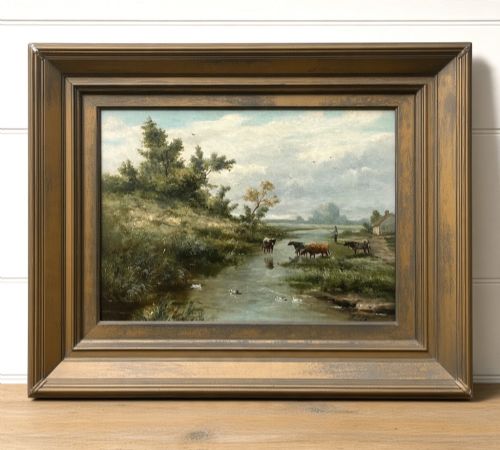
When you search for vintage dutch school artwork, you encounter oil paintings and watercolours rooted in centuries of northern European painting traditions. These works range from bright impressionist canvases to darker realist scenes depicting figures, domestic interiors and coastal views.
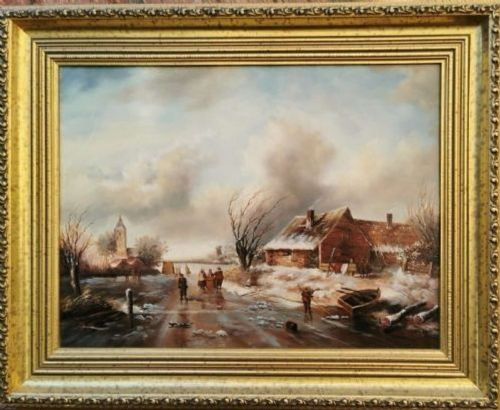
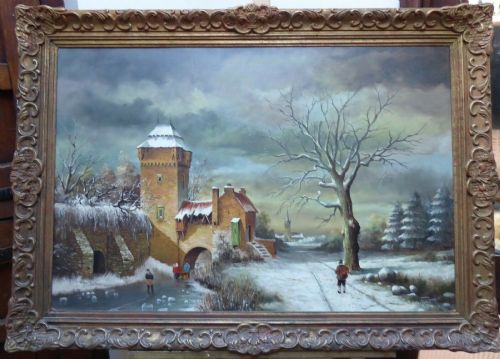
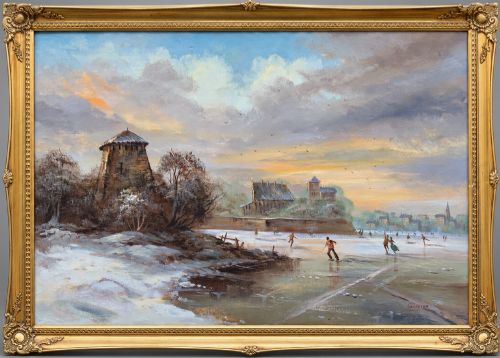
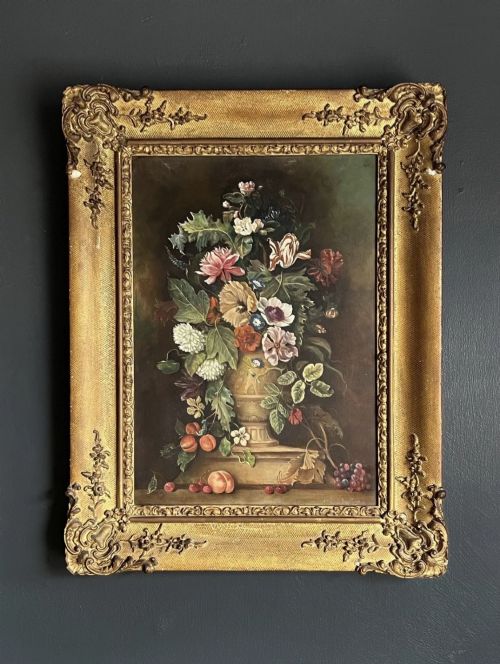
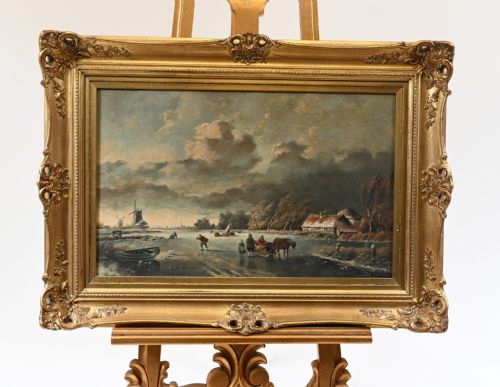
The most common examples on this page date from the nineteenth and twentieth centuries, often utilising traditional formats such as winter landscapes with ice skaters, maritime shipping views and floral still lifes. Painters worked within established idioms, following the stylistic paths set by earlier generations of Dutch masters.
Many of these pieces bear signatures or attributions pointing to specific regional movements like the Hague School or specific historic manners. Buyers find everything from intimate panels depicting solitary figures to large canvas landscapes framed in gilt gesso.
Materials and construction
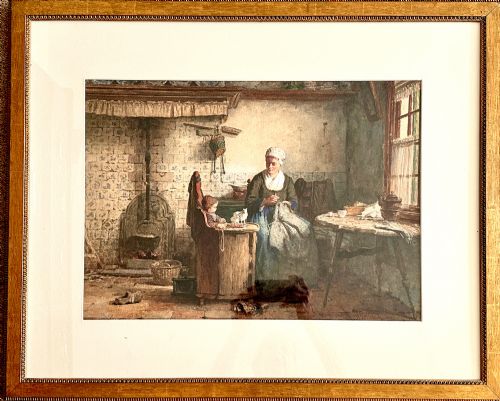
Painters of these works relied primarily on oil paint applied to stretched canvas, wooden panels or paper supports, building up rich textures and deep tones. Watercolours on paper also appear frequently, capturing lighter atmospheric effects in landscapes and river scenes.
Frames form an integral part of these pieces, particularly gilded gesso frames that complement the traditional character of the oil paintings. The combination of sturdy wooden supports, quality pigments and ornate framing ensures the survival of these artworks across generations.
Vintage Dutch School Artwork Retail Price Guide 2026
Typical asking prices for vintage dutch school artwork among the pieces listed under this phrase on Sellingantiques today, from the lower quarter to the upper quarter. They describe what is for sale here now, not the wider market.
The listings here span the eighteenth, nineteenth, and twentieth centuries, encompassing oil paintings, watercolours, and panel works.
Distinctions in quality
Quality in these artworks rests upon the surety of the brushwork, the handling of light and shadow, and the compositional balance within the landscape or portrait. Stronger pieces display confident handling of pigment that creates genuine depth and atmospheric presence.
The sophistication of the framing also contributes to the overall merit of a piece, with period gilt gesso frames adding substantial visual weight and historical context. Works that demonstrate a clear stylistic connection to established movements or identifiable artists tend to command greater attention.
Pieter Cornelis Steenhouwer·Hendrik Valkenberg·Abraham Hulk I·David Teniers·Hendrik Willebrord Jansen·Quirijn Van Brekelenkamp·Jozef Israëls·Fred Mayor·Andreas Schelfhout·Louis Smets·Pieter Cornelis Dommersen·E Van Drielst·David Adolph Constant Artz·Hermanus van Brussel
The Vintage Dutch School Artwork Glossary
- Oil paint
- A slow-drying paint made from pigment suspended in a drying oil, typically linseed oil. This medium allows artists to blend colours smoothly and build rich surface textures.
- Gesso
- A traditional paint mixture consisting of a binder mixed with chalk, gypsum, or pigment, used to prepare wooden substrates or create moulded ornament on picture frames. Gilding is often applied over this base layer.
- Hague School
- A group of artists working in The Hague during the second half of the nineteenth century who painted in a realistic style, heavily influenced by the French Barbizon school. Their works often feature subdued grey and earthy tones.
- Watercolour
- A painting method in which the paints are made of pigments suspended in a water-soluble vehicle. Artists utilise this medium on paper to achieve translucent washes of colour.
Vintage Dutch School Artwork: Frequently Asked Questions
What subjects appear most often?
Landscapes and winter scenes dominate these listings, frequently featuring ice skaters on frozen rivers or figures navigating rural paths. Maritime views with fishing boats and shipping vessels also occur regularly alongside floral still lifes and interior portraits.
Purchasers frequently encounter these traditional themes because nineteenth and twentieth-century painters continually returned to the motifs established during earlier centuries of northern European art.
How should I care for these paintings?
Keep oil paintings and watercolours away from direct sunlight and steady sources of artificial heat to prevent the canvas from drying out or the paper from fading. Stable indoor humidity levels protect both the wooden supports and the gesso frames from cracking.
Dust surfaces gently with a soft, dry brush rather than using liquid cleaners or damp cloths, which can damage aged pigments and varnishes.
Are these works signed by the artists?
Many pieces carry visible signatures or inscriptions left by the original creator, while others are attributed to particular followers or circles of well-known painters. Unsigned works frequently reflect the broader stylistic manners of specific regional schools.
Documentation on the reverse of the canvas or panel often provides additional clues regarding the origin and date of the artwork.
How do I identify a gesso frame?
Gesso frames feature moulded surface ornamentation built up over a wooden base and traditionally covered in gold leaf. These frames feel heavy and display crisp detailing that complements the style of the enclosed painting.
Inspect the corners and edges to observe the layered buildup of the preparation material beneath the metallic finish.