


Signed Winter Oil Painting
A signed winter oil painting brings frost, snow and quiet country light directly into your room.
Signed Winter Oil Painting
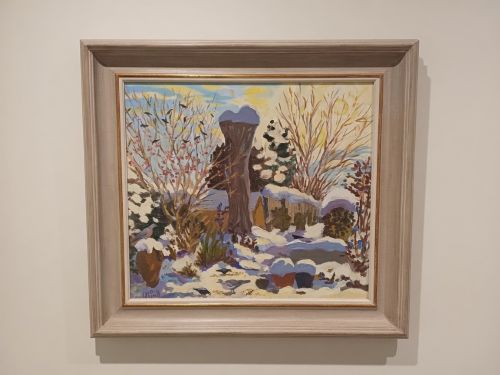
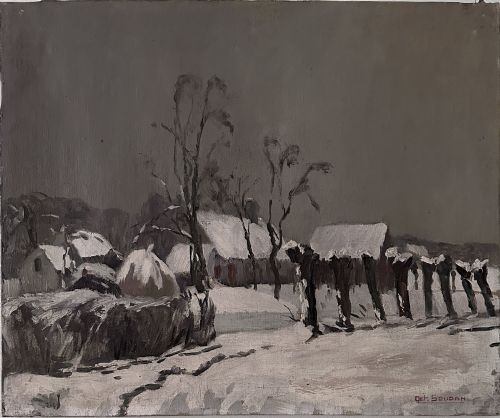
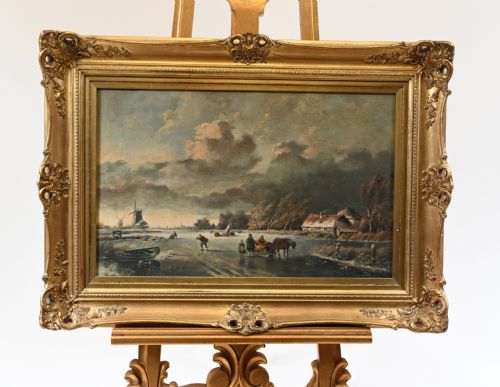
When you search for a signed winter oil painting, you find works capturing cold weather, snow scenes and frozen landscapes. These paintings depict rural cottages, village streets, woodland paths and figures in the snow.
The pieces on this page span several periods, reaching from the nineteenth century through the 1910s, 1920s, 1930s, 1940s, 1950s and 1960s to later works. You encounter British Impressionism, Dutch School, German Expressionism and traditional landscape styles.
Makers and artists sign these canvases, boards and wood panels, identifying individual hands behind each frozen view. Subjects range from Yorkshire Dales and Wharfedale to Canadian scenes and Dutch frozen landscapes.
Materials and techniques
Artists painted these winter scenes primarily with oil paint on stretched canvas, wood panels, wood boards and canvas laid over support. Oil paint allowed workers to build thick, textured layers representing snowdrifts and frozen ground.
Frames made from wood, gilded wood and plaster enclose many of the works, often matching the period of the painting. Canvases received brushwork from British Impressionists, German Expressionists and traditional landscape painters.
Several artists braved the freezing cold to paint figures collecting firewood and sheep huddled in Yorkshire snow.
What separates the work
Quality rests in the handling of light and shadow across snow, where subtle tones separate a flat record from a convincing atmosphere. Strong brushwork gives texture to frozen rivers, bare branches and snow-covered roofs.
The clarity of the artist's signature and the preservation of the original wood frame or stretcher contribute to the integrity of the piece. Works by recognised painters display a stronger command of composition within the Yorkshire landscape or Dutch School traditions.
Lucy Pratt·T Bergman·Herbert Royle·William Greaves·Wilson·William Burns·Fred Cecil Jones·David R Anderson·Walter Cecil Horsnell·Harry Foster Newey·F Winterhalter·Angus Rands·Herbert St John-Jones
The Signed Winter Oil Painting Glossary
- Canvas
- A heavy woven fabric stretched across a wooden frame to form a rigid support for oil painting. It provides a textured surface that holds thick applications of paint well.
- Wood Panel
- A flat wooden board utilised as a sturdy support for painting before canvas became standard. Panels offer a rigid, smooth base for detailed brushwork.
- Impressionism
- An art movement focusing on accurate depiction of light and its shifting qualities. Artists utilised small, thin yet visible brush strokes.
- Gilded Wood
- Wood covered with a thin layer of gold leaf or gold-coloured pigment. It forms ornate frames designed to complement traditional oil paintings.
Signed Winter Oil Painting: Frequently Asked Questions
What periods do these paintings cover?
The works span from the nineteenth century through the early decades of the twentieth century, including the 1910s, 1920s, 1930s and 1940s. Later examples extend into the 1950s, 1960s and beyond.
Styles range from traditional landscapes and British Impressionism to German Expressionism and Dutch School interpretations of frozen views.
What materials support the paint?
Artists utilised canvas, wood panels and wood boards as primary supports for their oil paint. These materials were frequently housed in wood, gilded wood or plaster frames.
Different supports provided distinct surface textures, from the woven grain of canvas to the rigid smoothness of wood.
Where do the landscape settings originate?
Many scenes depict specific English locations such as Yorkshire, Wharfedale, the Derwent Valley and the Yorkshire Dales. Other compositions record Canadian winter landscapes and Dutch frozen waterways.
Rural cottages, river banks, and farming countrysides form the recurring subjects across these regional depictions.
How should I care for a winter oil painting?
Keep oil paintings away from direct sunlight and dramatic shifts in room temperature or humidity to protect the canvas and paint layers. Dust the surface and frame gently with a soft, dry cloth.
Avoid hanging pieces in damp spaces to preserve both the wooden stretcher and the original frame.