




Vintage Drinking Glass Stemware
These vintage drinking glass stemware selections bring centuries of English and European tavern and dining history directly to your table.
Vintage Drinking Glass Stemware
Vintage drinking glass stemware encompasses drinking vessels designed for wine, ale, beer, and spirits, spanning centuries of production. When you search for vintage drinking glass stemware, you meet everything from delicate Georgian twist stems to robust Victorian coloured sets.
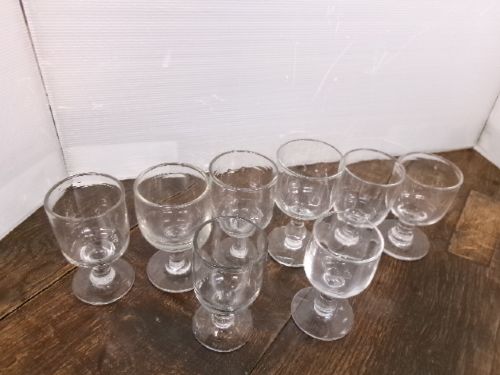
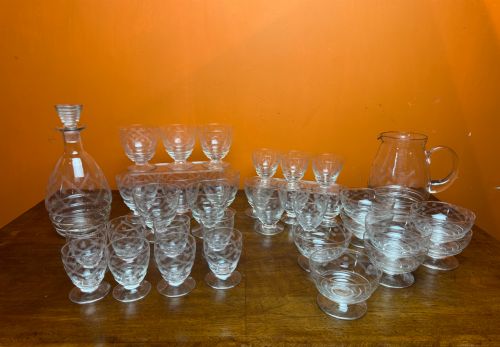
The selections range from individual tavern rummers and jelly glasses to large suites of matching dining glasses. English Georgian pieces sit alongside French Art Deco suites, Italian Murano glass, and Biedermeier cut vessels.
Most examples function effectively for modern dining while serving as historical display pieces. Forms include wine glasses, goblets, pitchers, and services with engraved or etched bowls.
How they were made
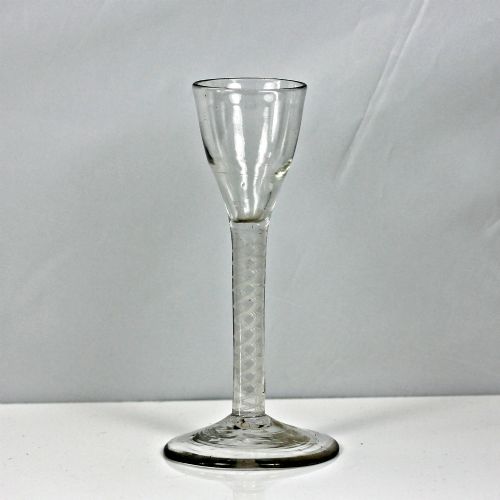
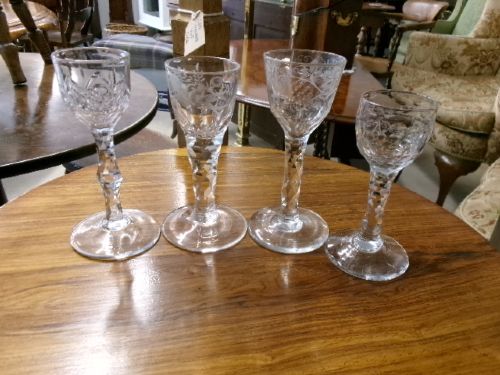
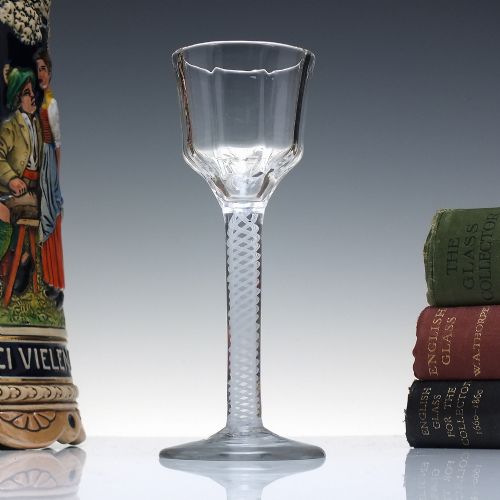
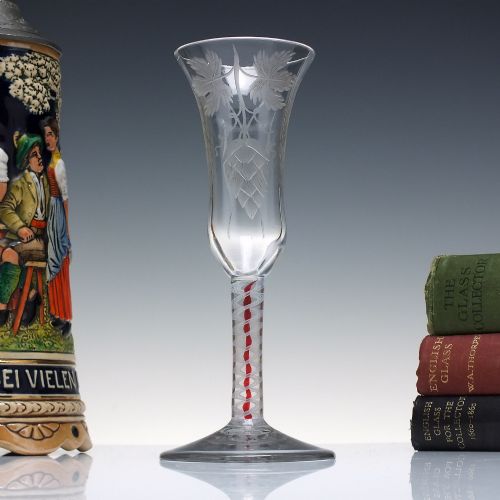
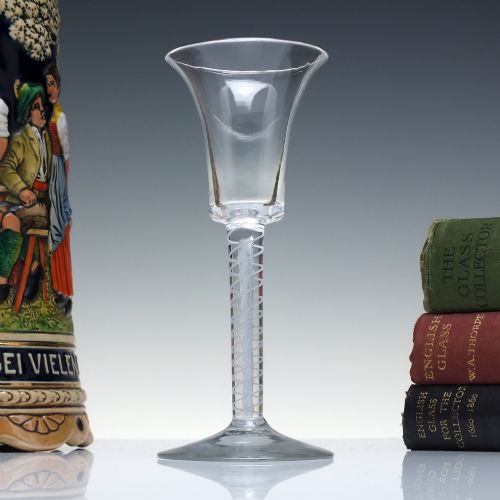
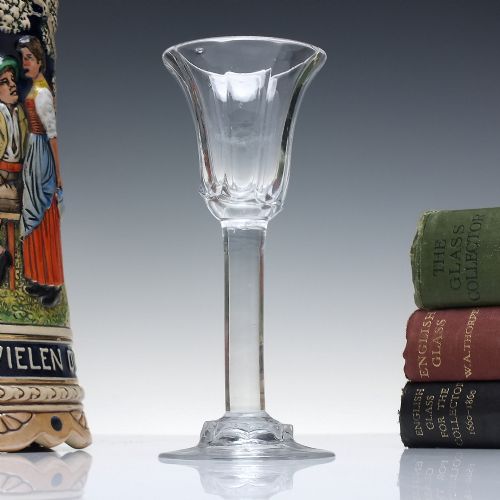
Maker operations utilised lead glass, flint glass, and clear crystal, shaped through hand-blowing and mould-blowing techniques. Artisans formed stems using intricate air twists, opaque twists, and faceted cuts.
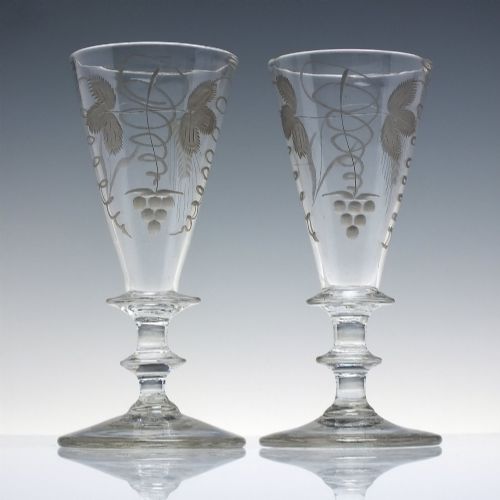
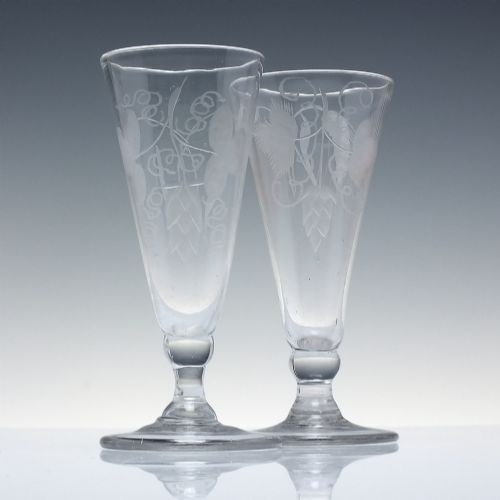
Decoration involved wheel engraving, etching, acid-cutting, and enamel painting applied directly to the bowls. Foot bases were often folded, ribbed, or panel-moulded for stability and visual weight.
Forms span from single balustroid wine glasses to multi-piece dining services with matching pitchers.
What varies in quality
Quality rests upon the clarity of the metal, the precision of the stem twist, and the crispness of the wheel engraving. Finer twist stems display regular bubbles in air spirals or clean opaque threads without distortion.
The depth and hand-cut definition of surface decoration separate standard tableware from superior studio output. Intaglio work and cameo carving demand advanced skill that alters the weight and tactile feel of the vessel.
Webb Corbett·Stevens and Williams·Salviati
The Vintage Drinking Glass Stemware Glossary
- Air Twist
- A stem formation created by drawing out trapped air bubbles during the glass-pulling process into spirals.
- Opaque Twist
- A stem style incorporating white or coloured enamel glass rods twisted within a clear glass casing.
- Rummer
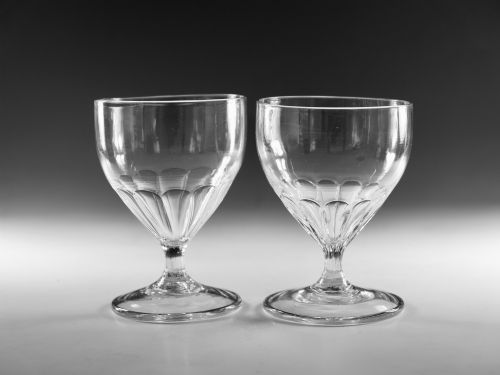
- A capacious, heavy drinking glass popular in the eighteenth and nineteenth centuries for ale or wine.
- Ogee Bowl
- An S-curve bowl profile curving outward at the rim and inward toward the stem.
- Intaglio
- A technique where designs are carved into the glass surface by abrasive wheel engraving, leaving recessed details.
Vintage Drinking Glass Stemware: Frequently Asked Questions
How do I clean antique stemware?
Wash these pieces by hand using warm water and mild detergent without abrasive sponges. Avoid sudden temperature shifts to protect old glass from thermal shock.
Dry them immediately with a lint-free cloth to maintain the clarity of the lead crystal and prevent water spots.
Can I use these glasses daily?
Many sturdy Victorian and Edwardian services handle regular use well if handled with care. Keep in mind that delicate eighteenth-century twist stems warrant more careful handling.
Hand wash them strictly and store them securely away from edge-of-shelf hazards.
What is an air twist stem?
An air twist is a decorative stem containing elongated air bubbles drawn into a spiral pattern during manufacture. Glassmakers twisted the molten metal before cooling to trap and stretch the air.
This technique was particularly popular during the mid-eighteenth century for fine wine glasses.
How do I date a wine glass?
Dating relies on bowl shapes, stem construction, pontil marks, and the chemical composition of the glass. Georgian pieces often feature folded feet and heavy metal weights, while Victorian examples introduce vibrant colours like cranberry and vaseline.
Compare the silhouette and engraving style against documented examples from specific periods.