

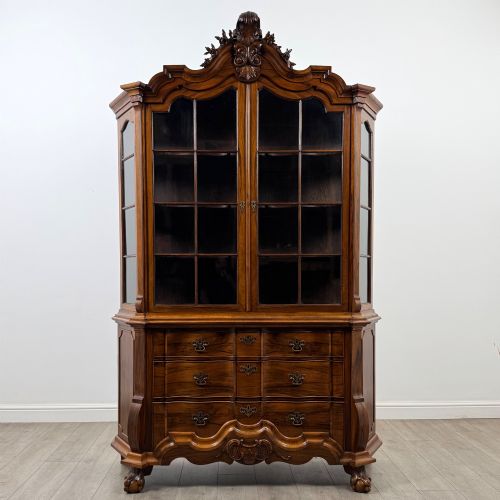
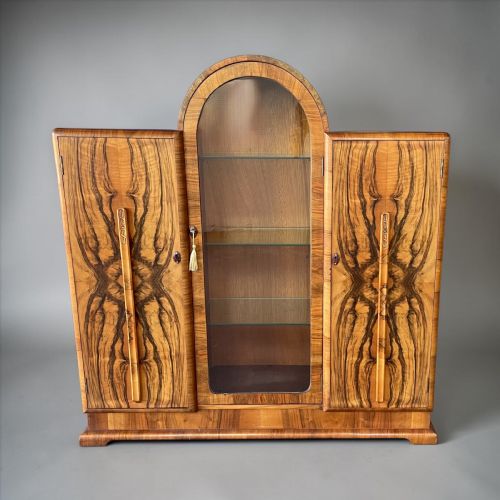
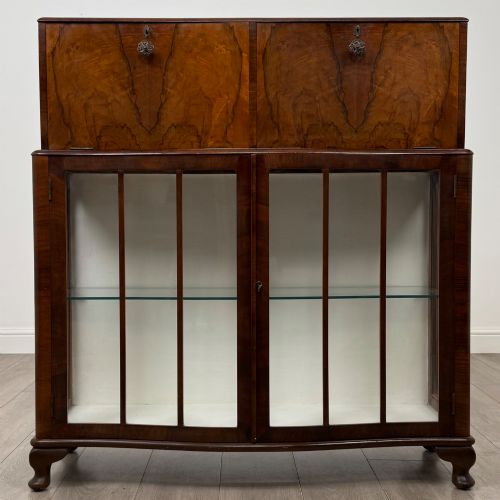
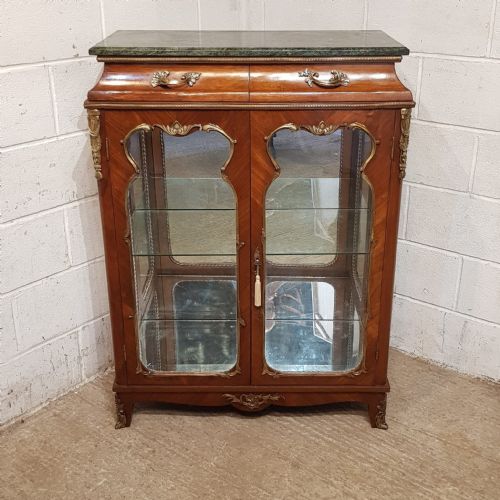
Vintage Display Cabinet Walnut
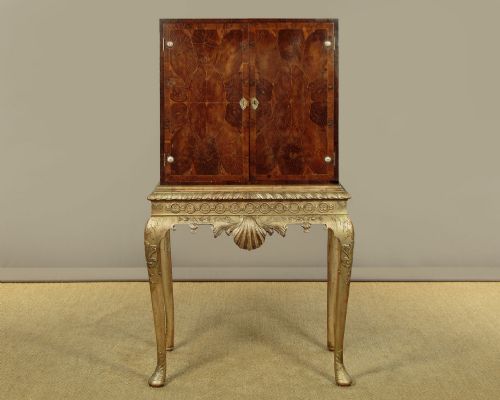
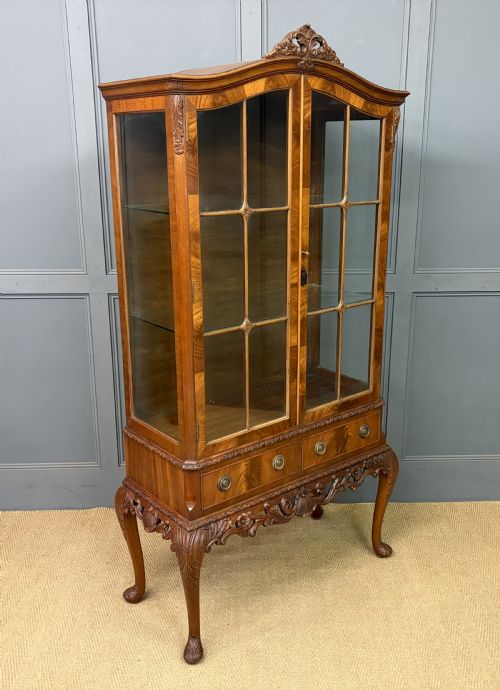
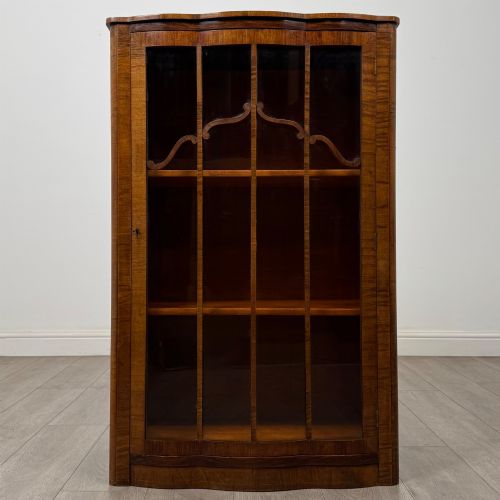
These vintage display cabinet walnut pieces bring figured grain and glazed frontage together to hold objects.
Vintage Display Cabinet Walnut
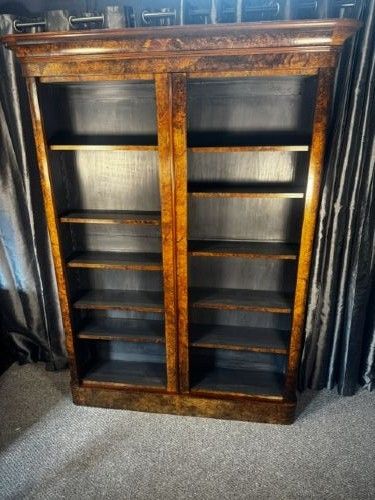
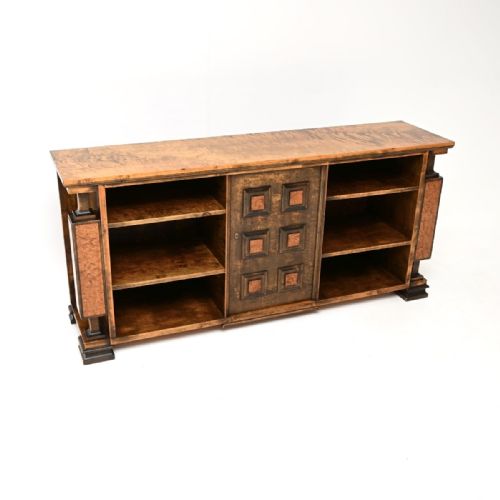
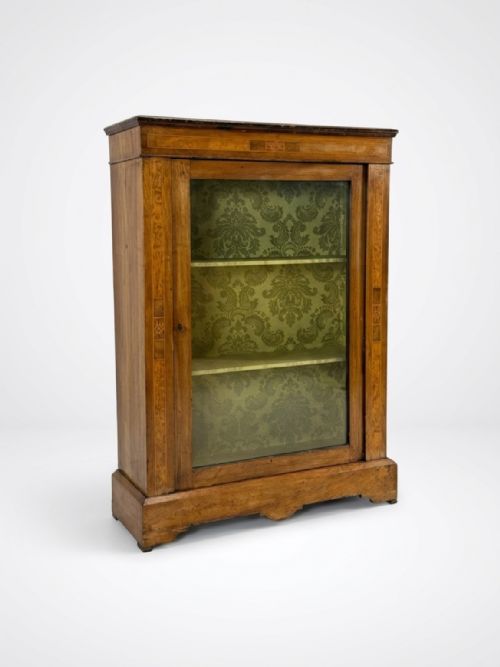
A vintage display cabinet walnut piece serves to house and exhibit collections behind glass panels while introducing rich timber tones to a room. Buyers searching for a vintage display cabinet walnut will encounter varied forms ranging from upright vitrines and corner units to long side cabinets.
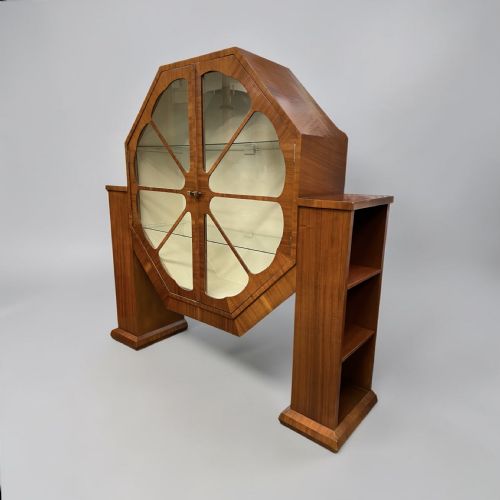
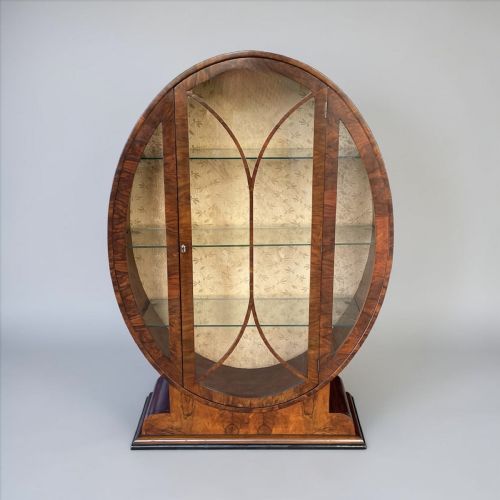
The selection encompasses Victorian and Edwardian examples alongside numerous Art Deco designs from nineteen thirty. Makers utilised distinct silhouettes such as circular, oval, stepped, and clove shapes to give these glazed cabinets architectural presence.
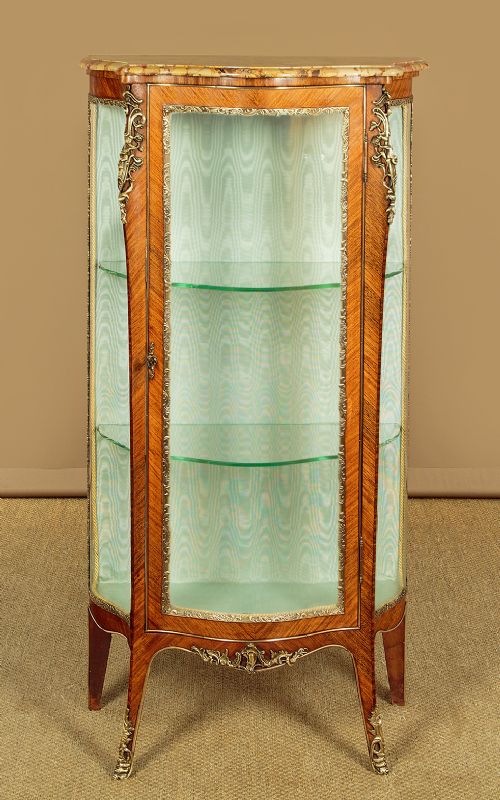
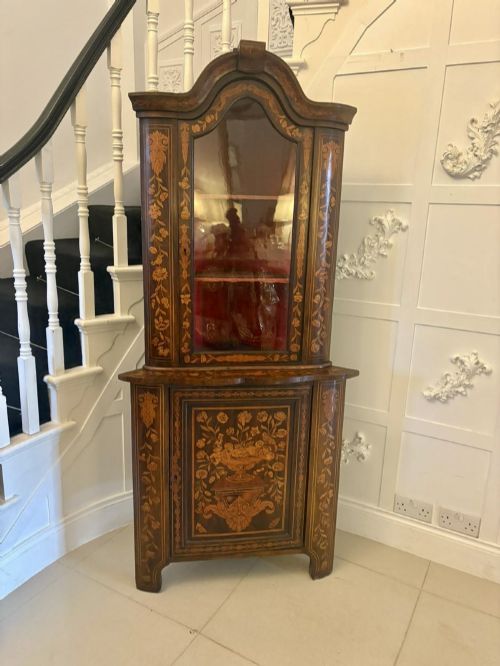
Earlier nineteenth century iterations lean towards revival styles including Queen Anne, Dutch Baroque, and Louis XV, featuring elaborate marquetry and carved details. Twentieth century pieces rely more on the natural figure of the timber and geometric lines.
What varies in quality
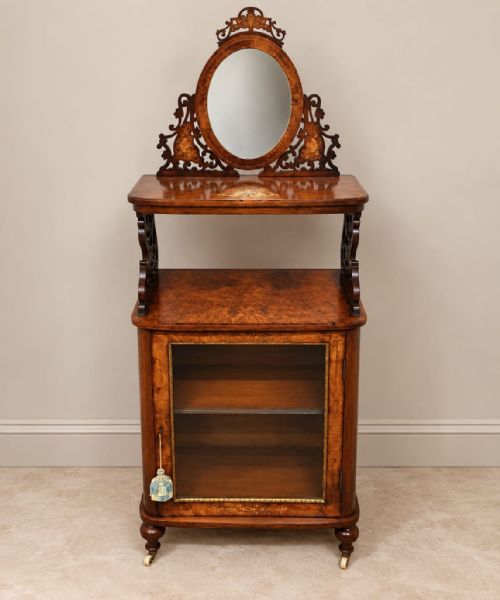
Quality separates through the selection and matching of the timber veneer, particularly where burr or figured walnut creates complex patterns across multiple doors. Finer examples display continuous grain alignment and precise marquetry inlay rather than repetitive printed motifs.
The sophistication of the joinery and the execution of carved or mounted details dictate the standing of a piece. Robust internal shelving, well-fitted glazed doors, and substantial brass or gilt metal hardware distinguish superior construction from utilitarian cabinet work.
Listings feature walnut, burr walnut, glass, brass, fabric, marble, and mirror across Victorian, Edwardian, and Art Deco periods.
Maple & Co.·Maurice Adams
The Vintage Display Cabinet Walnut Glossary
- Burr walnut
- A wood derived from growths on walnut trees that produces dense, swirling grain patterns. Cabinet makers prized this timber for high-status veneer work.
- Marquetry
- The art of applying pieces of veneer to a structure to form decorative patterns. Artisans used various coloured woods to create pictorial designs on cabinet doors.
- Vitrine
- A glass-fronted cabinet designed for displaying fine objects or porcelain. These cases feature full glass doors or glazed side panels to maximise light inside.
- Veneer
- A thin layer of superior wood glued to a base timber foundation. This technique allowed makers to utilise striking grain figures efficiently.
- Serpentine
- A furniture front curved in a wave shape with a convex centre flanked by concave ends. This contour requires precise woodworking skill.
Vintage Display Cabinet Walnut: Frequently Asked Questions
What is a walnut vitrine?
A walnut vitrine is a glass-fronted display case constructed primarily from walnut timber or walnut veneer. These pieces were designed to showcase porcelain, glassware, and small ornaments while protecting them from dust.
They appear in various forms including tall upright cabinets, low side pieces, and corner units. The glass panels on the front and sides allow light to enter and illuminate the interior shelves.
How do I date a walnut cabinet?
Dating a walnut cabinet involves examining the overall style, construction methods, and hardware. Pieces from the nineteenth century often feature revival styles, heavy mouldings, and hand-cut dovetails.
Twentieth century examples, particularly those from nineteen thirty, typically display Art Deco geometry, streamlined silhouettes, or figured walnut veneers without heavy ornamentation.
Where should I place a display cabinet?
A display cabinet suits principal reception rooms, dining areas, or hallways where collections can be viewed easily. Placing the unit away from direct sunlight protects the timber finish and interior fabrics from fading.
Ensure the floor is level so the glazed doors hang true and open without binding against the frame.
What is burr walnut?
Burr walnut comes from a tree growth that creates highly intricate, swirling grain patterns. Cabinet makers sliced this wood into thin veneers to cover prominent surfaces like doors and drawer fronts.
This decorative wood was reserved for superior quality furniture due to its distinct visual appeal and rarity.