



Vintage Dining Suite Six Chairs
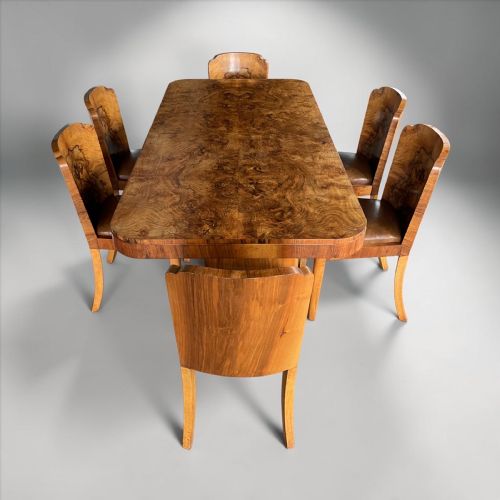
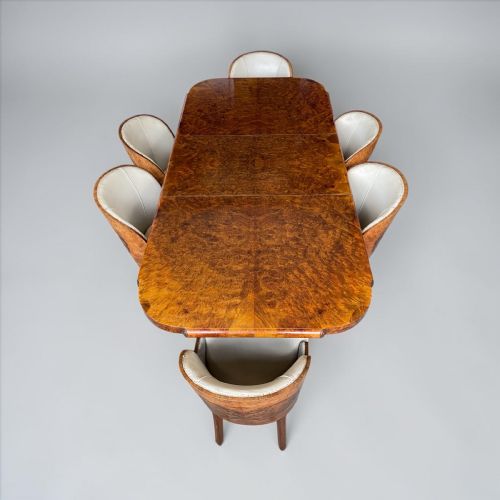
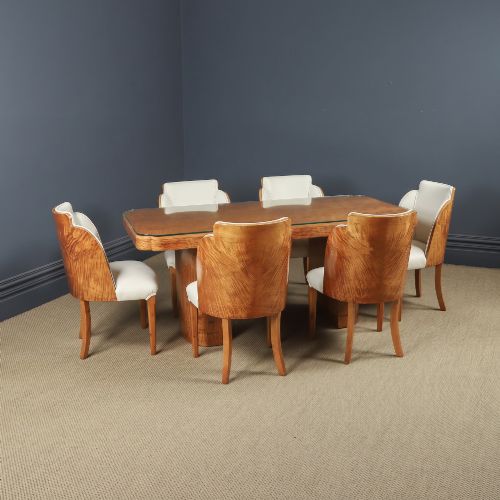
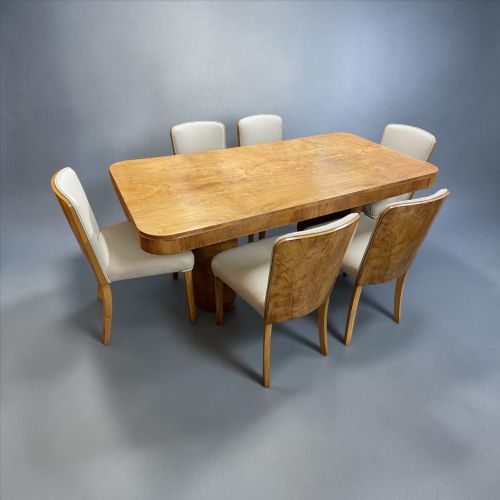
A vintage dining suite six chairs setup brings period presence to the room, offering matched seating for a gathering.
Vintage Dining Suite Six Chairs
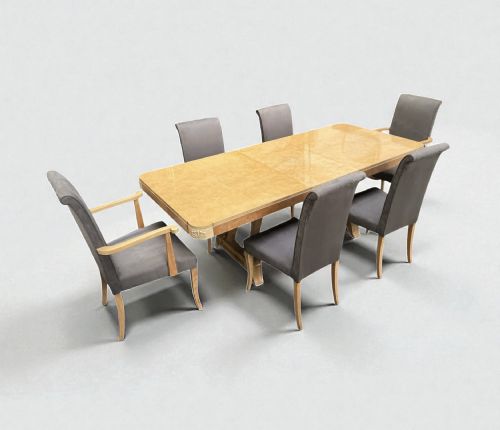
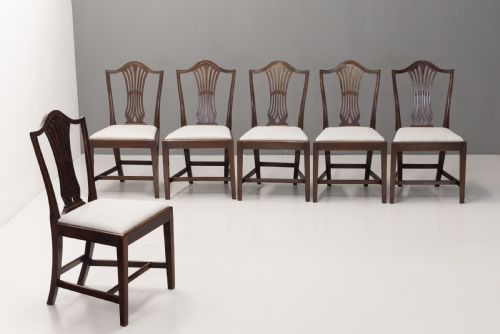
When you search for vintage dining suite six chairs options, you encounter complete dining sets comprising a table accompanied by six chairs. The evidence shows these sets emerge predominantly from the Art Deco period of nineteen thirty and nineteen twenty, alongside earlier Georgian influences.
You are most likely to meet striking Art Deco dining suites featuring a central table paired with six chairs. The offerings range from British workshops to American production, spanning walnut, mahogany, and maple.
The configurations include matching sets where the six chairs echo the geometric lines or period styling of the table. Individual sets of six chairs also appear independently without the corresponding dining table.
Materials and construction methods
The pieces utilise rich timbers such as burr walnut, black walnut, mahogany, maple, and satinwood. Cabinetmakers frequently employed these woods for their grain patterns, particularly across table tops and chair splats.
Seating components integrate leather, fabric, and general upholstery to provide comfort. Workshops combined traditional hardwood frames with padded seating surfaces suited to daily dining use.
Vintage Dining Suite Six Chairs Retail Price Guide 2026
Typical asking prices for vintage dining suite six chairs among the pieces listed under this phrase on Sellingantiques today, from the lower quarter to the upper quarter. They describe what is for sale here now, not the wider market.
Listings span three distinct decades: eighteen hundred, nineteen twenty, and nineteen thirty.
Assessing quality and craftsmanship
The distinction between tiers rests upon timber selection and attribution to known makers. Sets bearing documented workshop provenance command greater attention than anonymous production.
Execution of period details, from Art Deco veneers to Chippendale or Queen Anne style carving, dictates the refinement of the suite. Cohesion between the six chairs and the table remains central to the integrity of the ensemble.
Maurice Adams·Harry and Lou Epstein·Hille
The Vintage Dining Suite Six Chairs Glossary
- Art Deco
- A design style from the nineteen twenties and thirties characterised by sleek geometric shapes and stylised motifs. It dominates the dining suites seen in this category.
- Chippendale Style
- An eighteenth century revival aesthetic known for ornate carved details and ball and claw feet. The listings include mahogany chairs reflecting these traditional patterns.
- Queen Anne Style
- A traditional British furniture style distinguished by pad feet and vase shaped splats. Sets in this idiom appear in mahogany.
- Burr Walnut
- A wood harvested from the abnormal growth of a walnut tree, yielding intricate swirling grain patterns. It is utilised on prominent table and cabinet surfaces.
Vintage Dining Suite Six Chairs: Frequently Asked Questions
What periods do these dining suites date from?
The available pieces span the early twentieth century, particularly the nineteen twenties and nineteen thirty Art Deco eras. Earlier eighteenth century revivals also appear.
Buyers find both modern modernist designs and traditional period revival suites within the current selection.
Are the chairs always included with a table?
Most entries combine a dining table with six matching chairs as a complete suite. Separate sets of six chairs also exist independently without tables.
Review individual listings to confirm whether the table forms part of the offering alongside the seating.
Which timbers appear most frequently?
Walnut, mahogany, and maple form the primary structural and decorative woods across the inventory. Exotic veneers such as burr walnut and satinwood also feature prominently.
Upholstery materials typically consist of leather or woven fabric fitted to the chair pads.
Where were these dining suites manufactured?
The evidence points to British workshops alongside American production originating in Boston. Maker attributions trace specific suites to London design houses and cabinetmakers.
Regional stylistic traits help distinguish between domestic production and international workshop origins.