

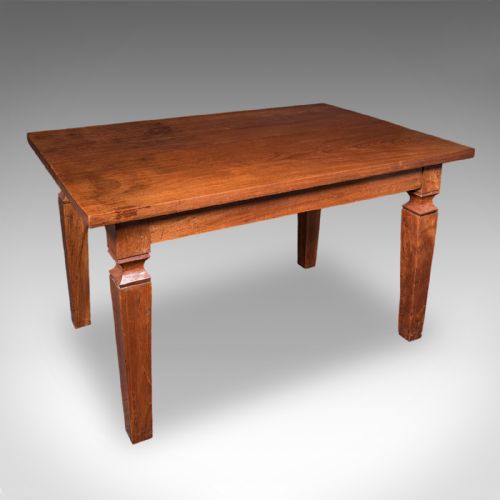
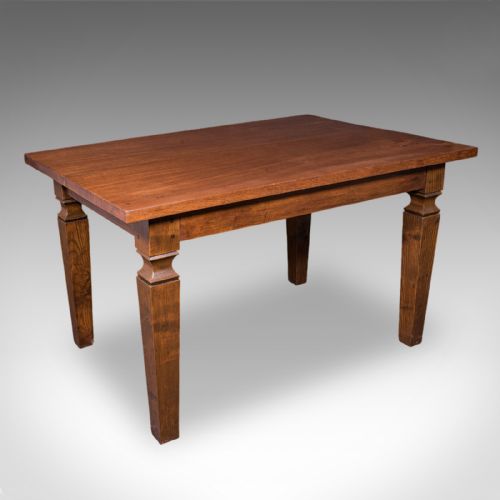
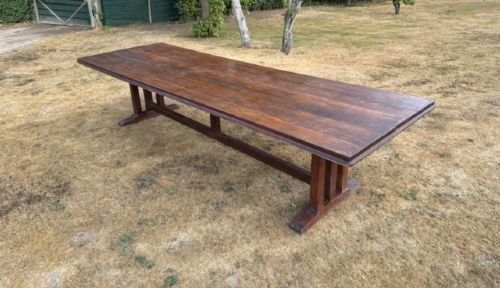
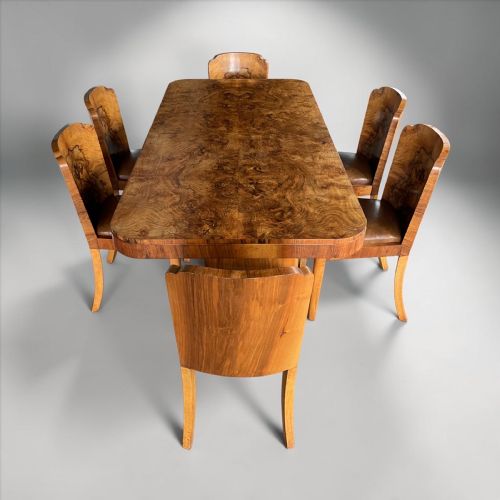


Rectangular Walnut Table
A rectangular walnut table brings warmth and grain to a room, offering functional surface area through centuries of craft.
Rectangular Walnut Table
A rectangular walnut table serves various domestic purposes, appearing across periods from the sixteenth century to nineteen-thirty. Buyers encounter forms ranging from large dining sets and refectory pieces to smaller coffee tables, side tables, and occasional tables.
The material selection spans solid timber, burr walnut, and walnut veneer, often enriched by styles like Art Deco, Edwardian, Victorian, and Italian Renaissance Revival. Simpler side and coffee tables dominate daily availability, alongside specialised games and centre tables.
Earlier examples show architectural detail, such as bone inlay on sixteenth-century tables or Aesthetic Movement two-tier designs from the late nineteenth century. Later twentieth-century items lean towards Queen Anne style burr walnut coffee tables and clean Art Deco lines.
Materials and construction
Makers utilise walnut and burr walnut, prized for deep natural colour and rich figure, frequently applying walnut veneer to create expansive patterned surfaces on tabletops. Solid timber provides structural integrity for legs and frames, while veneer showcases decorative swirling grain patterns.
Craftsmen integrate additional materials for utility and ornament, including leather inserts on dressing table stools, brass hardware, and bone inlay. Boxwood stringing and painted decoration appear on specific Victorian and nineteen-thirty pieces to delineate borders and panels.
Rectangular Walnut Table Retail Price Guide 2026
Typical asking prices for rectangular walnut table among the pieces listed under this phrase on Sellingantiques today, from the lower quarter to the upper quarter. They describe what is for sale here now, not the wider market.
Some nineteenth-century tables served multiple household duties, doubling as sewing boxes, map surfaces, and games boards.
Assessing quality in construction and finish
Superior examples display careful selection of burr walnut veneer, where grain patterns match symmetrically across the surface. Finer pieces maintain crisp carving on cabriole legs or structural frames, avoiding excessive wear to the timber.
The integration of secondary materials, such as neat boxwood inlay, flush leather tops, and secure joints, separates standard utility tables from exceptional decorative pieces. Finish application preserves the natural warmth of the walnut without obscuring the grain.
Maple
The Rectangular Walnut Table Glossary
- Burr walnut
- A prized timber harvested from growth excrescences on walnut trees, yielding highly figured, swirling veneer patterns. It appears frequently on tabletops from the Victorian era onwards.
- Refectory table
- A long, narrow dining table traditionally used in communal dining halls. Edwardian interpretations adapt this sturdy form for domestic spaces.
- Sutherland table
- A narrow drop-leaf table with hinged flaps supported by pivoting legs. Small burr walnut versions function efficiently as coffee or side tables.
- Centre table
- A freestanding piece designed to be viewed from all sides rather than pushed against a wall. Victorian examples often incorporate drawers or tiered shelving.
Rectangular Walnut Table: Frequently Asked Questions
How do I date a rectangular walnut table?
Dating relies on stylistic clues, construction methods, and materials present in the piece. Sixteenth-century examples show bone inlay, while Victorian and Edwardian pieces feature distinct revival styles.
Twentieth-century items often adopt Art Deco lines or Queen Anne Revival shapes with burr walnut veneer. Comparing the hardware and leg profiles to known historical periods confirms the age.
Are walnut tables suitable for daily use?
Walnut is a durable hardwood that withstands regular domestic use when maintained properly. Coffee tables, side tables, and dining versions handle everyday placement of items without issue.
Using coasters and avoiding direct heat protects the timber finish and veneer. Regular dusting preserves the natural lustre of the wood.
What is the difference between solid walnut and walnut veneer?
Solid walnut uses thick timber throughout the frame and top of the table. Walnut veneer applies a thin slice of highly figured wood over a stable secondary timber.
Veneer allows makers to display decorative burr patterns that would be unstable or unavailable in solid planks. Both methods have historical precedent across different eras.
Where should I place a walnut side table?
A side table functions well beside a sofa, armchair, or bed to hold lighting and small objects. Smaller rectangular variants fit neatly against walls or between seating units.
Keeping the table away from direct sunlight prevents the walnut timber from fading. A stable indoor environment protects the joints and veneer.