


Vintage Demilune Side Table
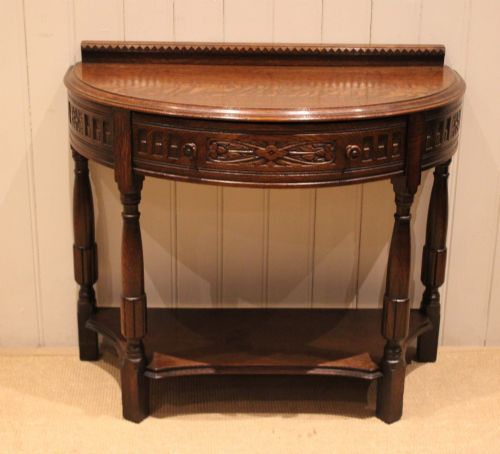
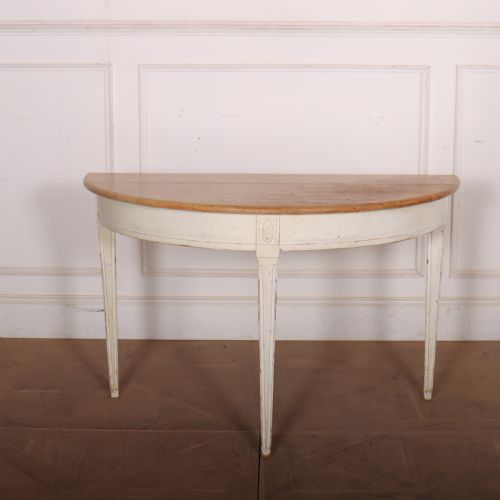
A vintage demilune side table saves space against a wall while offering a graceful half-moon shape.
Vintage Demilune Side Table
A vintage demilune side table is a semi-circular piece designed to stand flush against a wall, making it practical for narrow hallways and compact rooms. These tables appear across multiple periods, including the eighteenth and nineteenth centuries, as well as the Edwardian era and the nineteen-twenties.
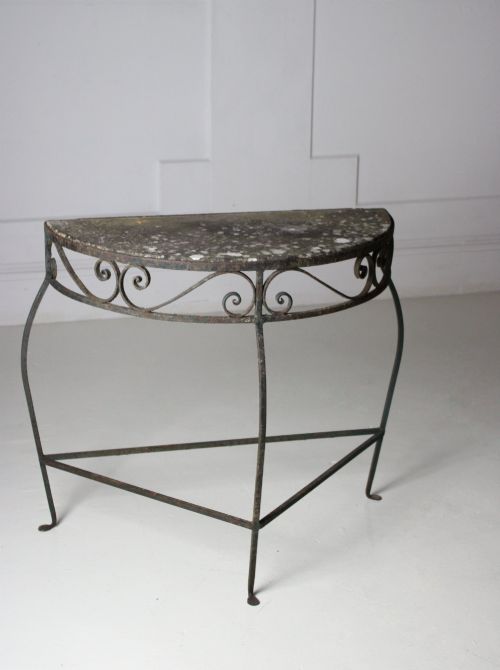
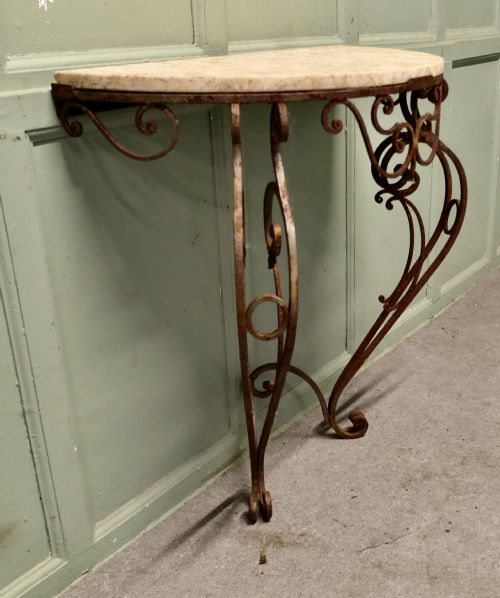
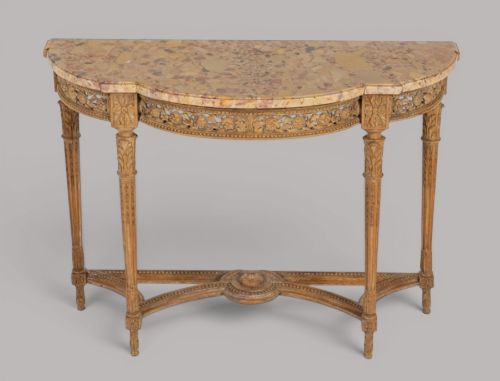
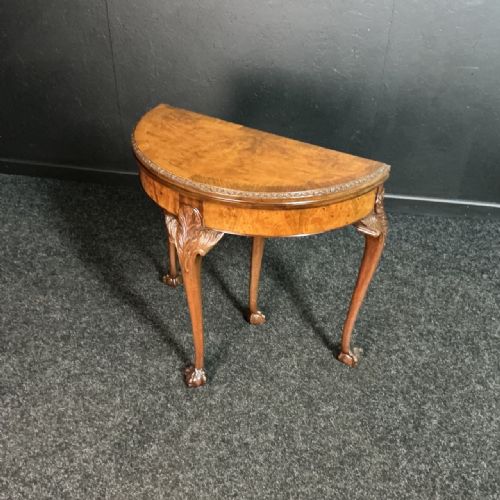
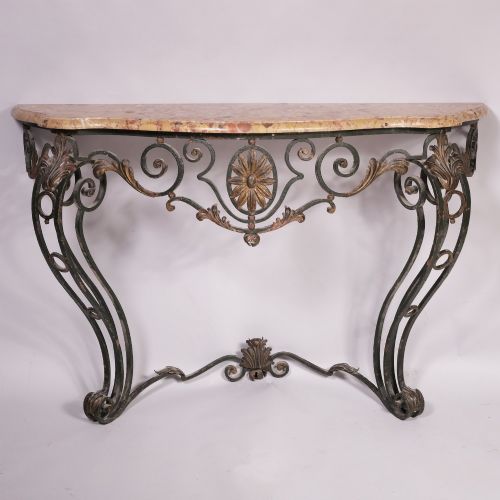
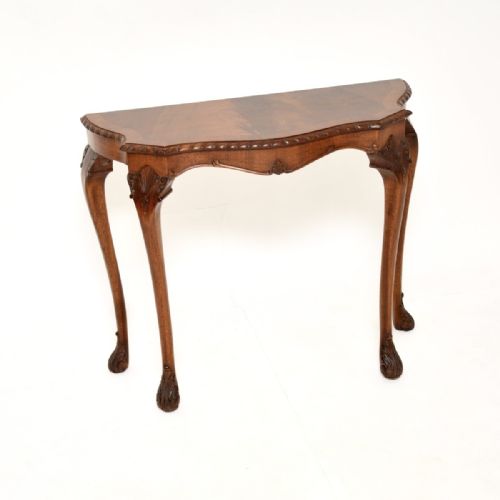
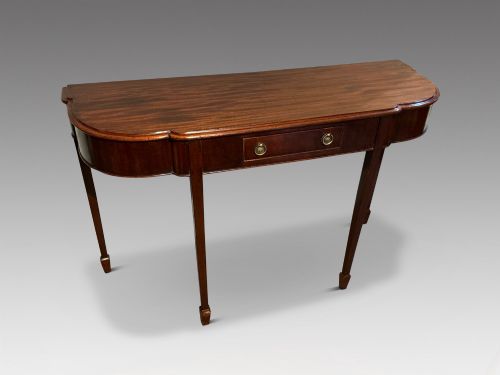
The versions most common on this page are mahogany, walnut, and burr walnut console and card tables, often featuring inlaid details or marble tops. You will also find painted French designs and wrought iron iterations with marble surfaces from the nineteenth century.
Object types span simple console tables, fold-over card tables, and occasional side cabinets sharing the same characteristic flat back and curved front. They serve as functional surface areas for lamps and ornaments while introducing classical proportions to an interior.
Materials and construction
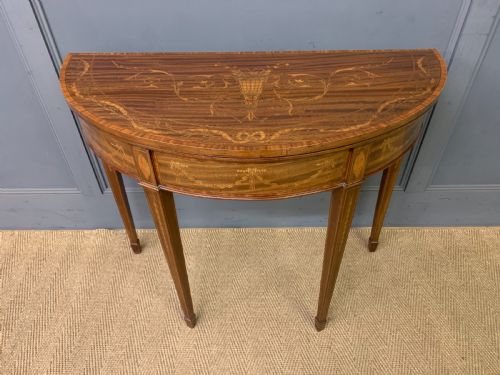
Cabinetmakers built these tables using dense timbers such as mahogany, walnut, and satinwood, frequently applying burr walnut veneers to curved aprons and tops for visual grain patterns. Inlay work in contrasting woods defines many of the Edwardian and Georgian revival pieces.
Many classical console variations pair wooden frames with heavy marble slabs, while others incorporate wrought iron or brass mounts for structural support and decorative contrast. Fold-over mechanisms on card tables rely on precise wooden hinges and rotating rear legs to support the opened leaf.
Some nineteenth-century tables cleverly double as supper and games stations, hiding felt-lined secrets beneath their polished wooden lids.
Distinctions in quality
Quality rests in the crispness of the timber carving, the selection of figured veneers, and the integrity of the joinery along the curved rails. Superior examples display seamless veneer matching across the half-moon top and precise inlay without gaps.
The weight and finish of integrated materials dictate the tier of a piece, such as the thickness of a marble slab or the hand-chiselled detail on brass mounts. Tables that retain their original hinges, polished surfaces, and stable structural frames command greater regard.
The Vintage Demilune Side Table Glossary
- Demilune
- A half-moon shape used for tables designed to fit flat against a wall. This profile maximises floor space in tight areas.
- Console table
- A table supported by wall brackets or console legs, traditionally placed beneath mirrors or against blank wall spaces. They are primarily decorative and functional surface furniture.
- Card table
- A fold-over table designed for gaming, featuring a hinged top that opens to double the surface area. They often conceal a well for storing cards and counters.
- Marquetry
- The art of applying pieces of veneer to a structure to form decorative patterns and pictures. It appears frequently on the tops of Edwardian and Georgian revival pieces.
- Burr walnut
- Timber taken from a tree growth that produces intricate and swirling grain patterns. Cabinetmakers prize this wood for decorative table surfaces and drawer fronts.
Vintage Demilune Side Table: Frequently Asked Questions
Where should I place a demilune table?
These tables suit narrow entrance halls, landings, or living room walls where a rectangular table would project too far into the walkway. Their flat backs allow them to sit securely against plaster.
They also pair well beneath wall mirrors or artwork, serving as a slim surface for keys, small lamps, or decorative bowls.
Are marble top tables heavy?
Marble top console tables carry considerable weight due to the solid stone slab fitted into the wooden or wrought iron frame. The stone usually lifts off the base independently to make transport and positioning easier.
Ensure the supporting frame remains rigid and level to distribute the weight evenly.
How do I identify a Georgian style piece?
Georgian style tables often display mahogany construction, straight tapered legs, and subtle satinwood stringing or inlay along the apron. The proportions lean toward classical symmetry and restrained ornamentation.
Many examples on the market are later revivals from the early twentieth century rather than eighteenth-century originals.