




Vintage Decorative Shelf Clock
These vintage decorative shelf clock pieces bring domestic timekeeping to mantelpieces and walls, combining rich materials with period mechanics.
Vintage Decorative Shelf Clock
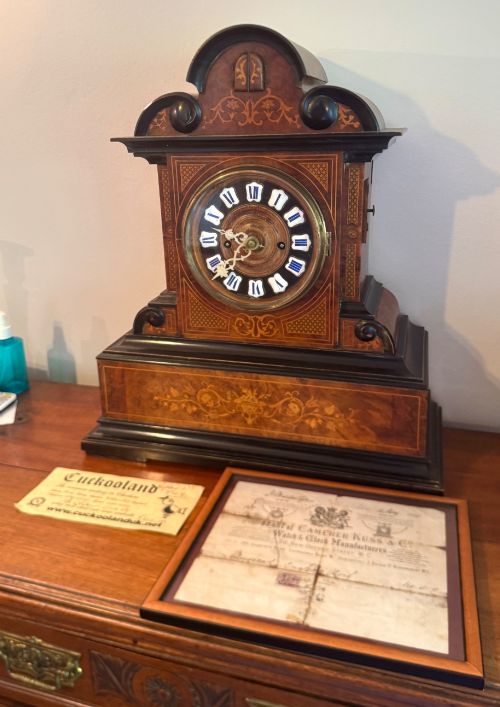
When buyers search for a vintage decorative shelf clock, they encounter an array of mantel clocks, bracket clocks, and wall brackets spanning the nineteenth century, Victorian era, and early twentieth century. The selections available on this page lean heavily towards French mantel clocks alongside English bracket designs, reflecting the domestic horology of the eighteen-hundreds up to nineteen hundred.
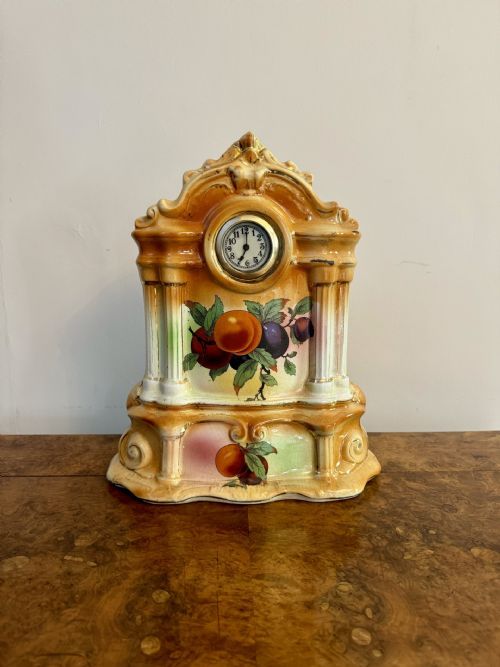
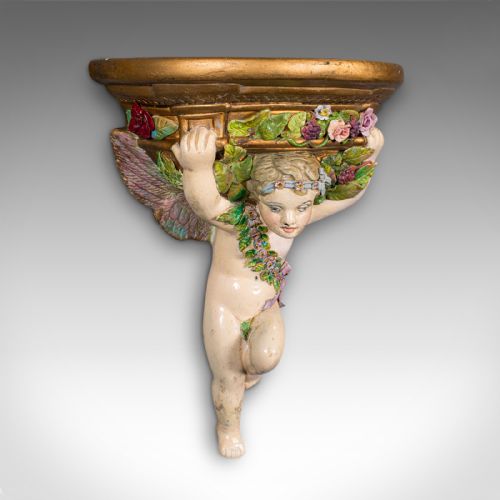
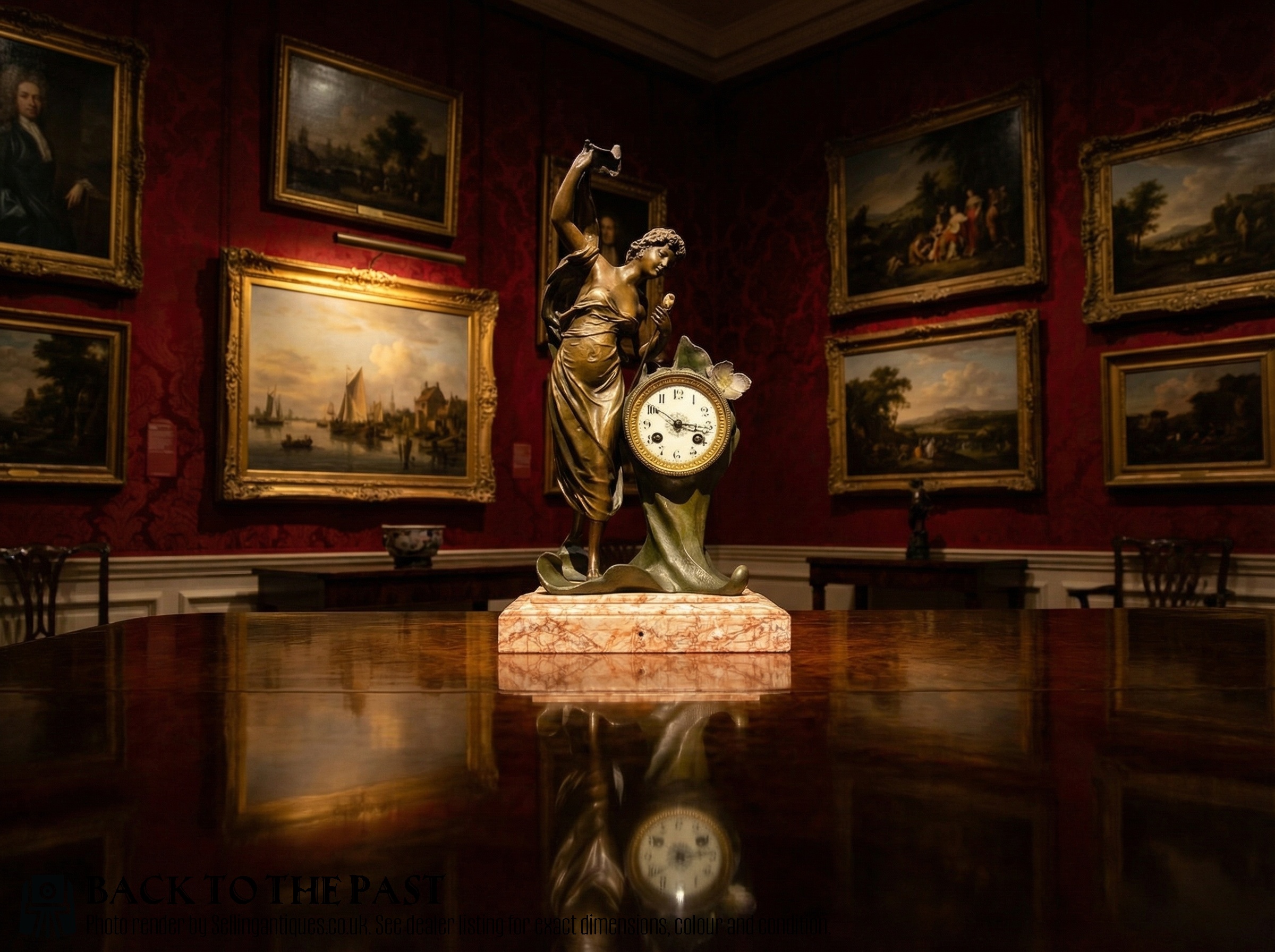
The objects take many forms, from simple Staffordshire and porcelain models to grander architectural pieces featuring marble, ormolu, and figural bronzes. Certain examples are paired with wall brackets or present specialised designs such as double-sided carriage clocks and boule work, offering varied scales for different interior spaces.
How they were made
Maker workshops utilised a dense assortment of metals and minerals, pairing cast brass, gilt bronze, and solid ormolu with polished marble, porcelain, and glass. Wood elements frequently feature marquetry in walnut, ebonised finishes, and faux or genuine tortoiseshell veneers that require precise cabinetmaking skills.
Surface ornamentation relies heavily on applied gilt metal mounts, hand-painted porcelain panels, and intricate brass inlays. Metal components cast in bronze or brass received mercury gilding or modern electroplating to achieve the bright, reflective finishes seen across French Empire and revival styles.
The inventory includes several French Empire and Louis XIV style bracket clocks alongside English Regency rosewood pieces.
What varies in quality
The distinction between ordinary and superior pieces rests upon the crispness of the bronze casting and the depth of the mercury gilding or ormolu work. Better examples exhibit hand-chased surface details on the metal mounts rather than softened, mass-produced textures.
Horological and cabinetwork standards also diverge sharply, separating standard timber cases from those featuring complex boule marquetry, tortoiseshell veneer, or signed movements by known makers like Japy Freres and P.H Mourey.
Seller of Reading·Japy Freres·P.H Mourey
The Vintage Decorative Shelf Clock Glossary
- Ormolu
- A gilded bronze technique utilising a mercury amalgam to apply gold to a cast brass or bronze object, creating a durable golden lustre. This finish is typical of high-end French mantel clocks from the nineteenth century.
- Boule
- A style of ornate marquetry incorporating tortoiseshell and brass inlay, named after the famous cabinetmaker André-Charles Boulle. Pieces utilising this method show remarkable dexterity in matching contrasting materials.
- Bracket clock
- A portable spring-driven clock originally designed to sit upon a dedicated wall bracket to project sound more effectively. Many survivors retain their matching wall shelf.
- Japy Freres
- A prominent nineteenth-century French clockmaking firm known for producing quality movements supplied to numerous retailers and cabinetmakers. Their stamped marks denote volume production of reliable mechanisms.
Vintage Decorative Shelf Clock: Frequently Asked Questions
Where should a shelf clock go?
These clocks are proportioned for mantelpieces, sideboards, and dedicated wall brackets where their decorative cases can be viewed from multiple angles. Ensuring a stable, level surface is essential for the mechanical pendulum or balance wheel to operate correctly.
Placement should avoid areas of high humidity or direct sunlight to protect vulnerable materials such as tortoiseshell veneer, gilt bronze, and delicate painted porcelain dials.
How do I wind an antique clock?
Winding requires a dedicated key matched to the square arbors on the dial face, turning gently until a firm resistance indicates the spring is fully tensioned. Care must be taken not to overwind the movement, as this can strain the internal springs.
Many nineteenth-century movements require professional setting up or calibration after transport to ensure accurate timekeeping throughout the week.
What is the difference between an English and French clock?
English bracket clocks from the Regency era often prioritise dark wood cases like rosewood or mahogany with subtle brass inlay and architectural proportions. They were built for understated domestic interiors and precise timekeeping.
French mantel clocks of the same period lean towards exuberant ormolu, figural bronzes, marble, and gilt metal, focusing heavily on decorative presence and sculptural luxury.
How do I identify a Victorian mantel clock?
Victorian examples span a broad stylistic range from simple ebonised wood cases to heavy marble designs incorporating sculptural elements like porcelain dials and bronze figures. They frequently date from the mid to late nineteenth century.
Examining the backplate of the movement often reveals maker stamps, serial numbers, or country of origin indicators that confirm the production era.