
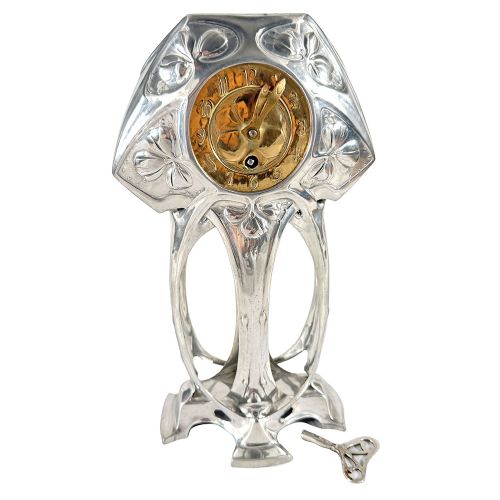


Art Nouveau Mantel Timepiece
An art nouveau mantel timepiece brings sinuous organic lines and domestic grace to a room, carrying the distinctive decorative energy of the turn of the twentieth century.
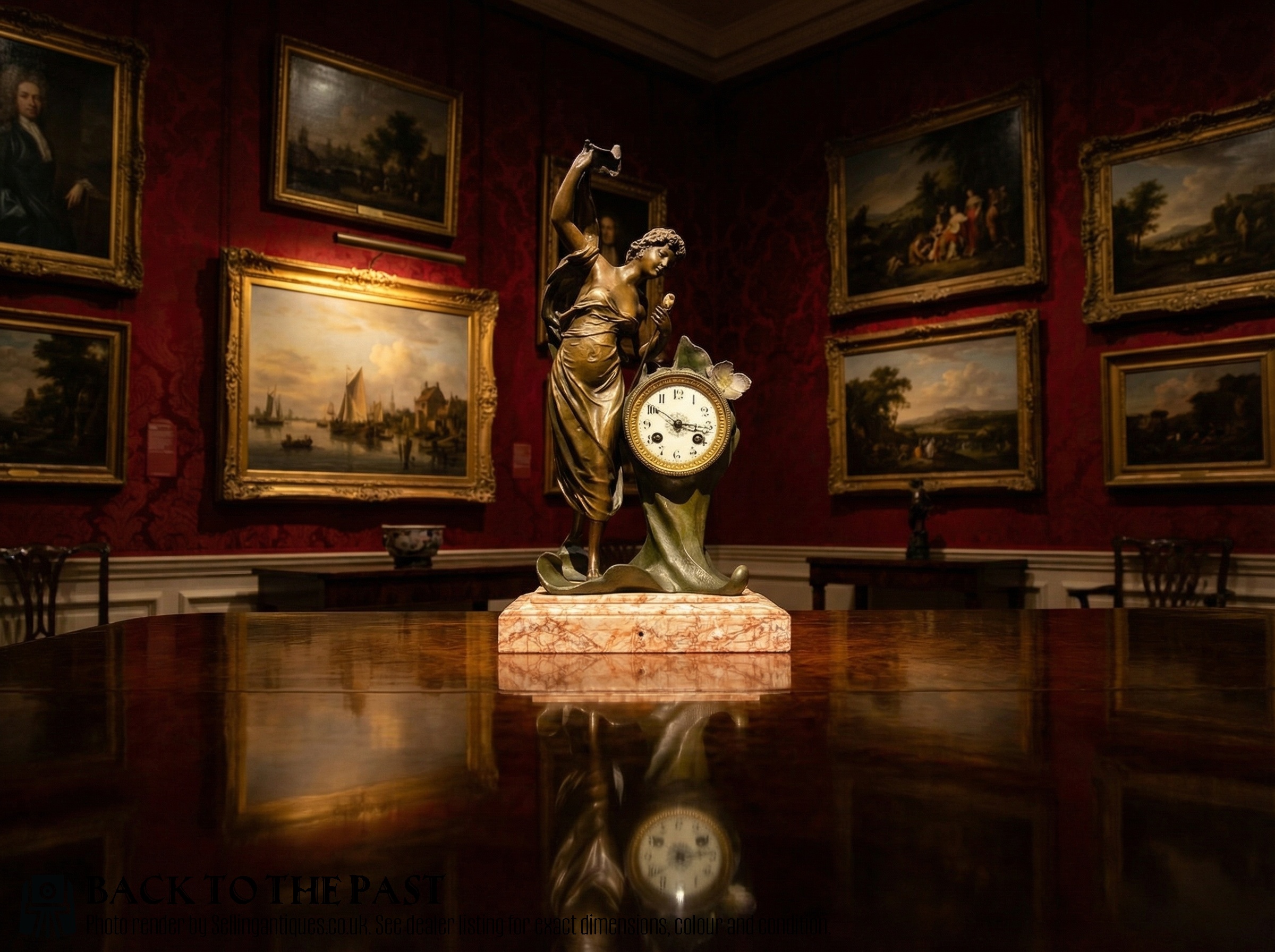
Art Nouveau Mantel Timepiece
An art nouveau mantel timepiece gathers diverse domestic timekeepers from the Edwardian era, nineteen hundred, and the nineteenth century. These objects include wooden mantel clocks, desk clocks, and carriage clocks designed to sit on a shelf or surface.
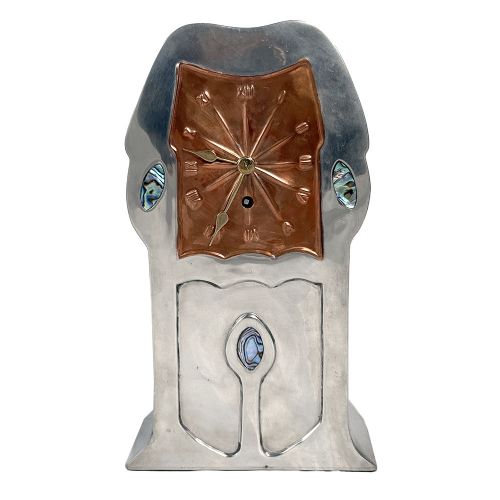
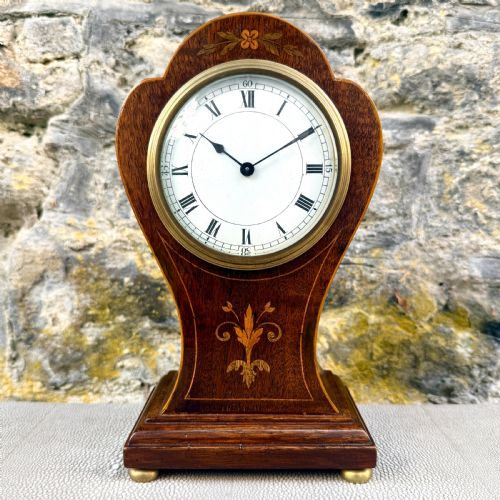
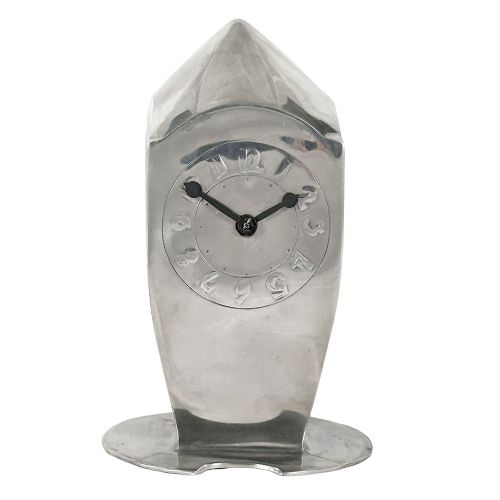
The most common examples encountered on this page combine mahogany or oak cases with stylized floral motifs, alongside notable pieces rendered in pewter, silver, and brass. Influences range from British Arts and Crafts and Jugendstil to continental French production.
How they were made
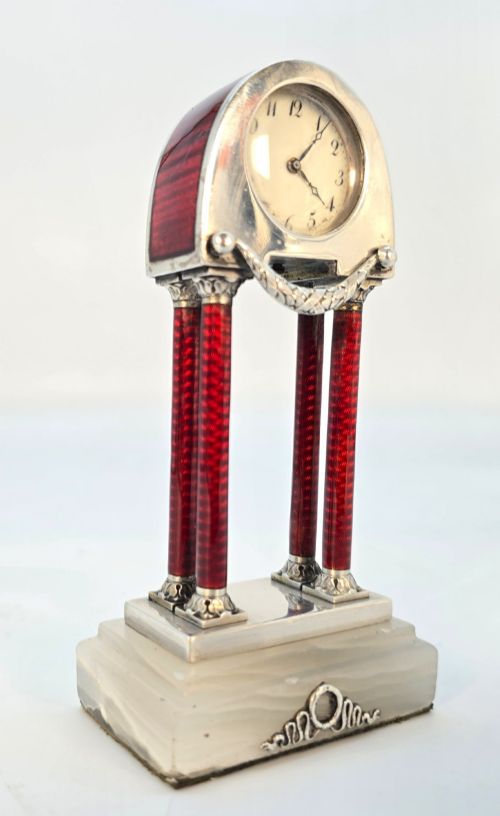
Maker workshops utilised cast metals such as pewter, silver, and brass alongside carved and inlaid hardwoods including mahogany, oak, and satinwood. Many surfaces incorporate decorative additions like enamel, mother-of-pearl abalone, and glass.
Makers applied specialised metalwork techniques, casting complex organic shapes and integrating hand-hammered details with applied enamel plaques. Woodworkers relied on marquetry inlay and careful polishing to highlight the natural grain of mahogany and satinwood cases.
Listings feature works from British, French, and Austrian makers spanning the nineteenth century, nineteen hundred, and the Edwardian period.
What varies in quality
The distinction between standard production and exceptional work rests on the clarity of the design and the pedigree of the maker or metalwork firm. Pieces designed by recognised artists and produced by notable foundries exhibit superior handling of form and material.
Attention to detail in the secondary materials, such as the depth of a fired enamel dial or the precision of an abalone inlay, elevates the status of a timepiece. The harmonious integration of the clock face into the overall organic silhouette marks the upper tier of the range.
Archibald Knox for Liberty & Co·Friedrich Adler for Osiris·Georg Adam Scheid·David Veasey for Liberty & Co·WMF
The Art Nouveau Mantel Timepiece Glossary
- Jugendstil
- The German and continental manifestation of the art nouveau movement, characterised by fluid, plant-inspired lines. It appears frequently on metal-cased clocks from the period.
- Tudric
- The trade name used by Liberty & Co for their range of pewter ware, often associated with distinctive organic designs. Pieces bearing this mark frequently feature stylized plant motifs.
- Portico desk clock
- A small architectural timekeeper designed for domestic desk use, often framed by upright supports and a pediment. Examples from Vienna showcase fine metal and enamel work.
- Timepiece
- A clock that indicates the time without striking the hours on a bell or gong. Most domestic examples of this type are driven by a spring-wound movement.
Art Nouveau Mantel Timepiece: Frequently Asked Questions
What is an art nouveau mantel timepiece?
An art nouveau mantel timepiece is a domestic clock created around nineteen hundred that utilises the flowing, organic design motifs characteristic of the movement. These objects were placed on mantelpieces and desks to serve both a practical and decorative purpose in the home.
They appear in various materials ranging from inlaid mahogany and oak to cast pewter and silvered metals. Each piece reflects the stylistic preferences of makers across Britain and continental Europe during the Edwardian period.
How do I date these clocks?
Dating relies on stylistic markers, materials, and any visible hallmarks or maker signatures stamped on the metal cases or clock movements. Pieces styled in the height of the international movement generally date from around nineteen hundred.
Comparison with documented designs from firms like Liberty & Co or continental makers helps narrow the period of manufacture. Surviving examples span from the late nineteenth century through the Edwardian decade.
Were these clocks used daily?
These timepieces served as functional domestic objects placed in sitting rooms, studies, and boudoirs to keep track of the hours. Their movements required regular winding by hand to maintain accurate time.
While decorative in intent, they were built to occupy a central position in daily household life. Many retain their original working mechanisms designed for domestic interiors.
How do I care for an antique timepiece?
Caring for these objects involves placing them on a stable, level surface away from direct sunlight and damp conditions. Regular gentle dusting of the wood, glass, and metal components preserves the exterior finish.
Mechanical movements benefit from professional servicing by a specialist clock restorer every few years. Avoid using harsh chemical cleaners on sensitive surfaces such as enamel or pewter.