


Vintage Decorative Mantel Clock
A vintage decorative mantel clock brings architectural presence and mechanical life to a room, offering both traditional timekeeping and striking period design.
Vintage Decorative Mantel Clock
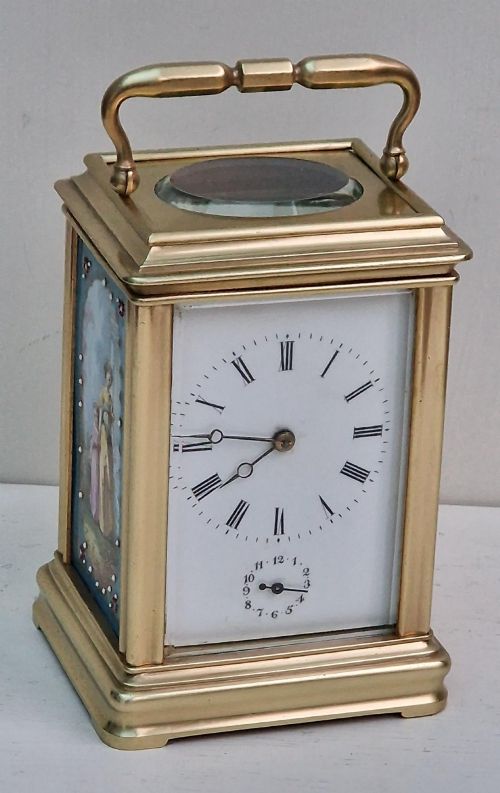
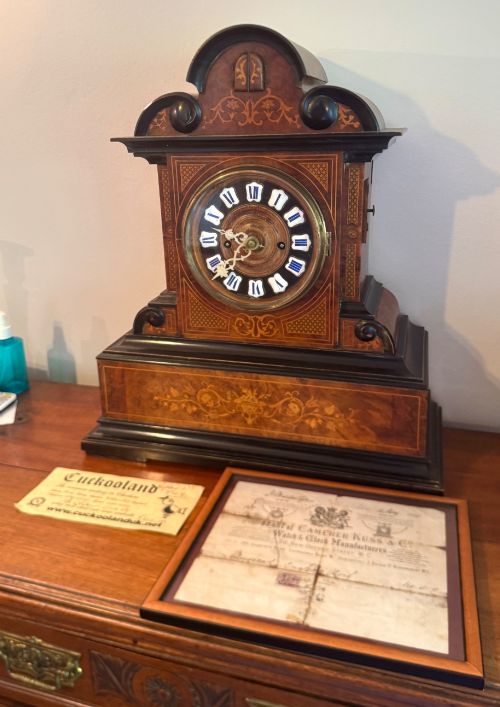
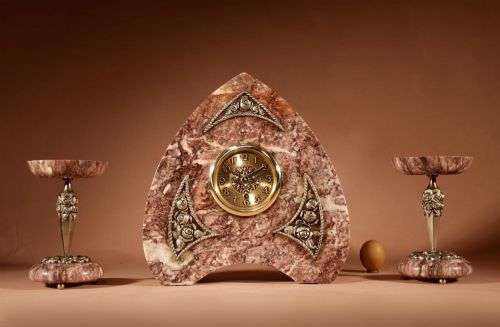
A vintage decorative mantel clock encompasses timepieces designed to sit on a shelf, bracket, or mantelpiece, drawing from styles such as Victorian, French Empire, Art Deco, and Edwardian. Buyers searching this phrase encounter a rich mix of formats, ranging from architectural marble garnitures and gilt bronze Rococo designs to brass carriage clocks and wooden bracket clocks.
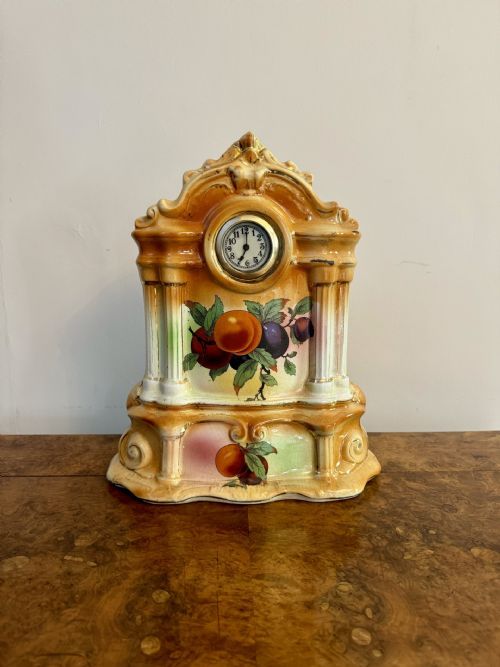
The objects span periods from the mid-nineteenth century through the early twentieth century, reflecting varied European traditions predominantly rooted in French and British craftsmanship. Forms vary from glass-cased crystal regulators and skeleton clocks to robust earthenware Staffordshire pieces and inlaid mahogany or walnut cases.
Materials and construction
Cases combine heavy structural elements like marble, slate, and hardwoods - such as rosewood, walnut, and oak - with ornamental metals including brass, ormolu, and gilt bronze. Many feature decorative surface treatments like faux tortoiseshell, boulle marquetry, ebonised finishes, and hand-carved details.
Dials and visual accents frequently incorporate enamel paintings, porcelain panels, and intricate glass enclosures, alongside metal filigree masks and cast columns that highlight the precise mechanical work housed within.
Clocks range from small portable carriage clocks and desk accessories to large architectural bracket clocks and heavy marble garniture sets.
Judging the work
Quality rests in the crispness of cast ormolu and bronze mounts, the depth of hand-carved wood or inlay, and the integrity of delicate enamel dials and painted porcelain panels. Finer examples maintain original matching garnitures or glass cases that complement the central timepiece without compromise.
The standard of internal restoration and the retention of signed movements, repeater functions, or complex passing strikes distinguish exceptional pieces from standard production items of the period.
Seller of Reading·Delépine-Barrois·Paul Garnier·Winterhalder & Hofmeier·Payne London
The Vintage Decorative Mantel Clock Glossary
- Garniture
- A set consisting of a central clock flanked by matching decorative objects such as urns or vases designed to display together on a mantelpiece. These matched groupings create a balanced, symmetrical arrangement on a shelf.
- Carriage clock
- A small, portable spring-driven clock originally built for travelling, typically featuring a brass frame with glass panels and a swing handle on top. They frequently include sophisticated escapements and striking mechanisms.
- Skeleton clock
- A timepiece with an open framework that exposes the brass gear train and movement to view from the side, often protected by a glass dome. This design showcases the intricate mechanical operation of the gears.
- Boulle
- A style of marquetry utilising tortoiseshell and brass inlay, popularised in seventeenth-century France and revived in later periods. It creates a striking pattern of contrasting metallic sheen and dark organic material.
- Crystal regulator
- A French mantel clock housed in a brass-framed case with bevelled glass panels on all sides. The transparent construction allows light to pass through and reveals the pendulum and movement from multiple angles.
Vintage Decorative Mantel Clock: Frequently Asked Questions
How do I wind a mechanical mantel clock?
Most mechanical clocks utilise a dedicated winding key inserted into specific arbors on the dial face to tension the internal springs. Care must be taken not to over-wind the mechanism, stopping as soon as firm resistance is felt.
Different movements require winding at weekly or daily intervals depending on whether they are time-only, striking, or repeater models.
What is a clock garniture set?
A clock garniture is a decorative ensemble featuring a central mantel clock accompanied by two matching side pieces, such as urns, vases, or figural ornaments. These sets were designed to create a unified focal point on a fireplace mantel or sideboard.
The matching side pieces share the exact materials, motifs, and decorative finishes of the main clock, often utilising marble, bronze, or porcelain.
How do I tell an Art Deco clock from a Victorian one?
Victorian clocks tend to feature ornate, historic revival styles such as Rococo, Gothic, or French Empire, employing heavy marble, carved wood, and elaborate gilt bronze casting. Their decoration leans towards classical symmetry, floral motifs, and detailed figurative elements.
Art Deco clocks embrace geometric forms, streamlined silhouettes, and modern materials like sleek black marble, contrasting metals, and stylized numbers that reflect twentieth-century design.
Where should I place a heavy marble mantel clock?
A heavy marble or slate clock requires a deep, sturdy surface capable of supporting considerable weight, such as a sturdy fireplace mantel, a low heavy sideboard, or a reinforced wall bracket. The supporting furniture must remain entirely level to ensure the pendulum swings freely and keeps accurate time.
Avoid placing these heavy timepieces near direct heat sources or in areas subject to heavy vibrations that might disturb the delicate escapement.