
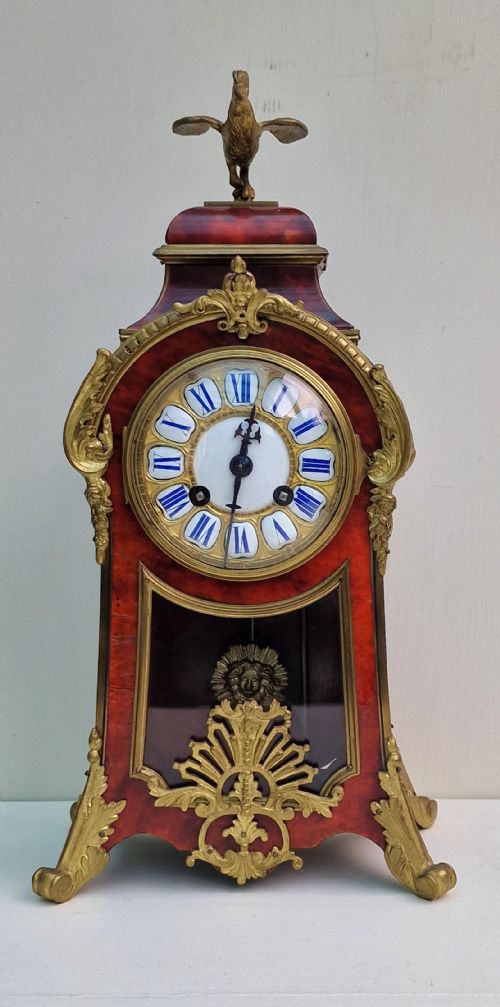


Brass Boulle Mantel Clock
A brass boulle mantel clock brings dramatic tortoiseshell and metallic marquetry into a room, anchoring a mantelpiece with nineteenth-century French craftsmanship.
Brass Boulle Mantel Clock
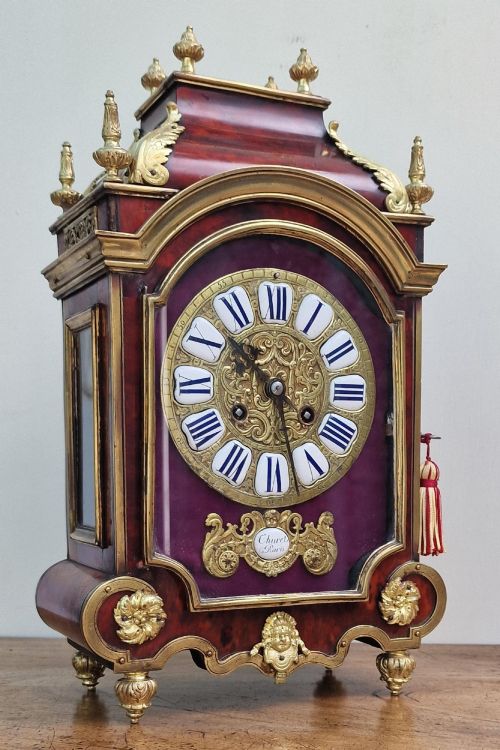
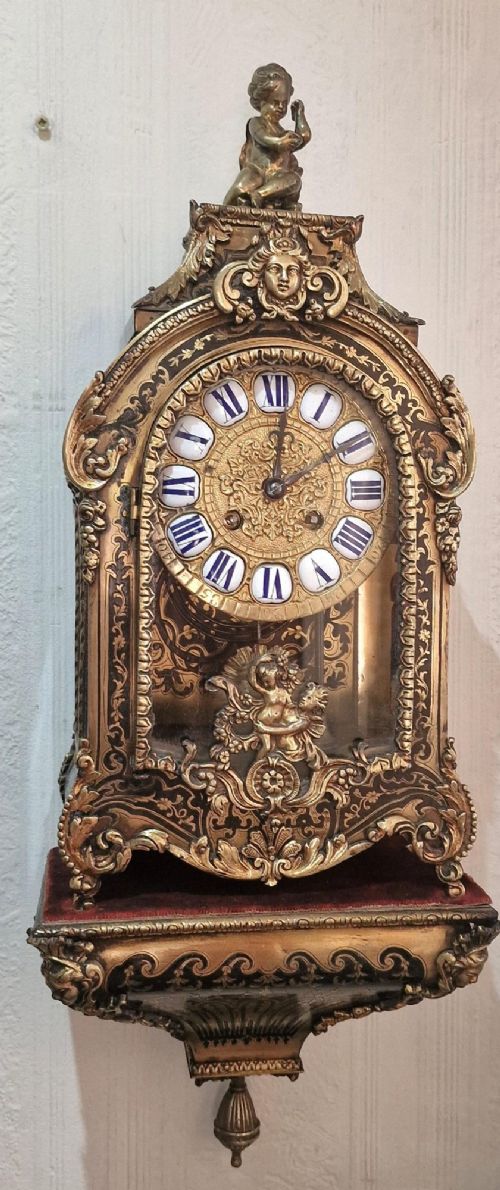
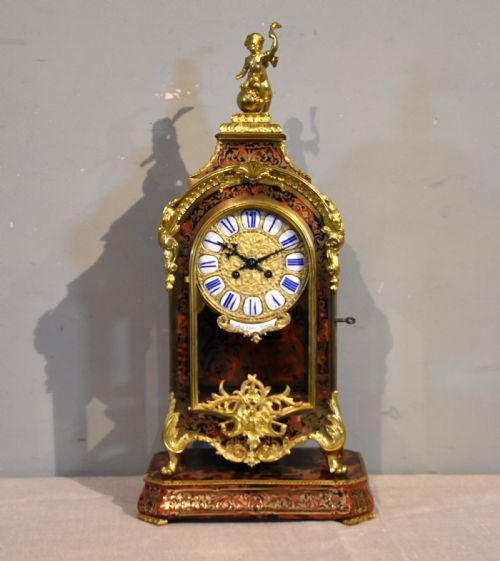
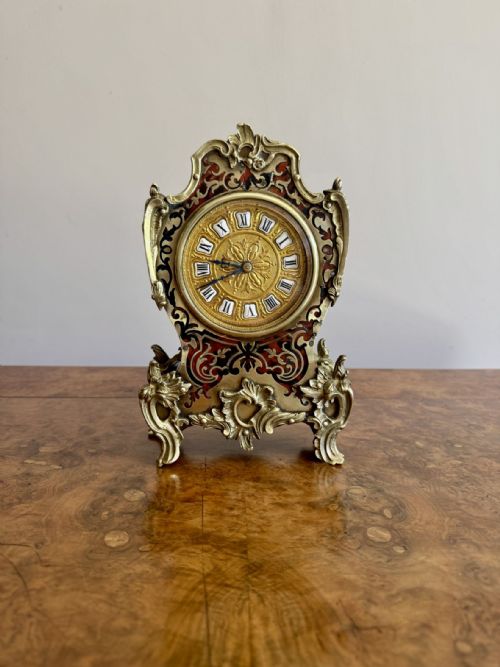
A brass boulle mantel clock combines sculptural timekeeping with elaborate surface decoration, typically originating from nineteenth-century French workshops. These pieces range from compact tabletop mantel models to substantial bracket clocks complete with matching wall supports or pedestals.
Most examples encountered on this page date from the Victorian era, spanning the mid to late nineteenth century. Makers applied intricate brass inlay onto tortoiseshell grounds, following Louis XIV, Louis XV, and Rococo revival styles that prioritize ornamentation and symmetry.
Materials and construction
Craftsmen built these clocks using a foundation of ebonised or stained wood, overlaid with panels of genuine or faux tortoiseshell. Fine sheets of brass were meticulously cut alongside the shell using tortoiseshell marquetry techniques, creating contrasting patterns of dark ground and golden metal.
Cast ormolu and gilt bronze mounts frame the dials and edges, adding three-dimensional relief to the cases. Enamel cartouches or chapter rings indicate the hours, while glass panels protect the internal mechanical movements.
Listings feature nineteenth-century French pieces utilising brass, tortoiseshell, enamel, ormolu, and ebonised wood in Louis XIV and Rococo styles.
Distinctions in quality
Quality rests primarily in the precision of the brass and tortoiseshell cutting, where tighter joints between the metal and shell indicate superior workshop execution. The crispness of the cast ormolu mounts and the depth of their chasing further separate standard production from finer pieces.
The sophistication of the internal movement also dictates value, with eight-day movements and quarter-striking mechanisms representing higher technical ambition. Complete sets retaining their original matching wall brackets or pedestals command greater architectural presence.
Thuret Paris·Samuel Marti·A.D. Mougin·Payne London
The Brass Boulle Mantel Clock Glossary
- Boulle
- A marquetry technique using contrasting sheets of brass and tortoiseshell, developed in France and widely revived during the nineteenth century. It creates an ornate, two-tone metallic pattern across the clock case.
- Ormolu
- Gilded bronze mounts applied to the exterior of the clock for decorative emphasis. These cast elements provide sculptural contrast to the flat marquetry surfaces.
- Bracket clock
- A portable timekeeper originally designed to sit on a wall bracket rather than a floor or mantel. Many surviving examples retain their matching wooden supports.
- Cartouche
- Enamelled plates bearing individual numerals on the clock dial. They replace a single painted face with segmented white panels.
- Fusee
- A conical pulley inside the clock movement that equalises the mainspring's pull as it unwinds. This mechanism improves timekeeping accuracy across the power reserve.
Brass Boulle Mantel Clock: Frequently Asked Questions
How do I wind a brass boulle mantel clock?
Use the designated winding key provided with the movement, turning it gently until resistance is felt. Care should be taken not to overwind the mainspring.
Consult the pendulum lock before moving the clock to prevent internal damage during transit.
What is the difference between a mantel clock and a bracket clock?
Mantel clocks sit directly on flat surfaces like fireplace shelves using flat bases. Bracket clocks historically hung on dedicated wall shelves, though many now rest on tabletops.
Bracket versions often include matching wall supports in the evidence.
How can I tell the period of a boulle clock?
Examine the style of the mounts and the colour of the tortoiseshell ground. Nineteenth-century pieces frequently adopt Louis XIV or Napoleon III revival designs.
Signatures on the movement backplate or dial often provide specific maker attributions and dates.
How should I clean tortoiseshell and brass inlay?
Dust gently with a dry, soft microfiber cloth to prevent surface scratching. Avoid chemical polishes, water, or abrasive cleaners that degrade shell and gilt bronze.
Professional clock conservators should handle any deep cleaning of the marquetry or mechanical movement.