

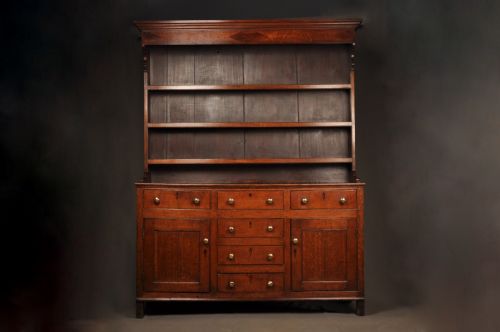
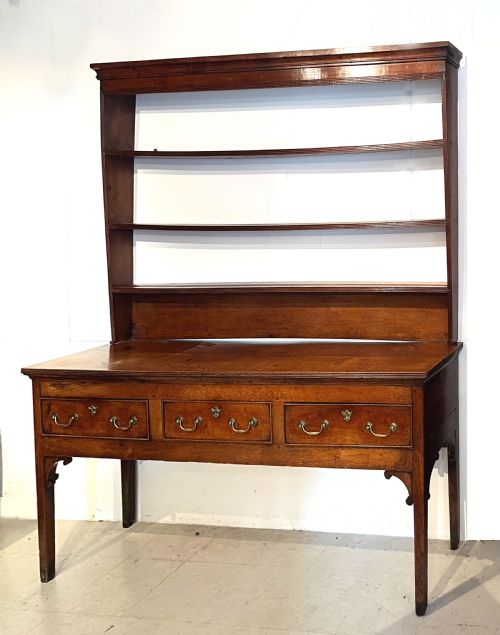


Vintage Dark Oak Hutch
A vintage dark oak hutch brings deep timber grain and practical storage into a room, offering sturdy shelves and enclosed cupboards built to last.
Vintage Dark Oak Hutch
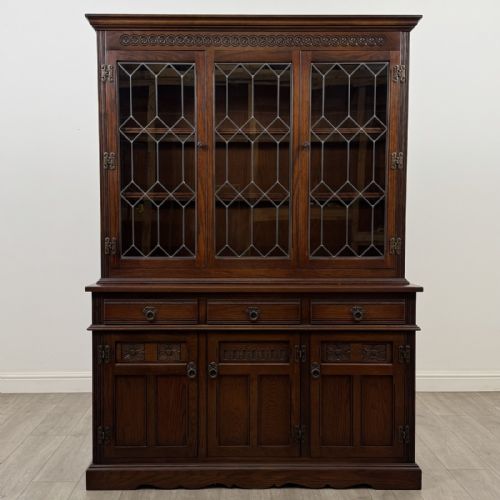
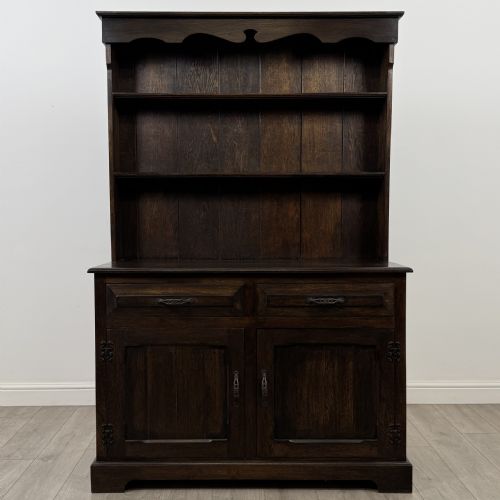
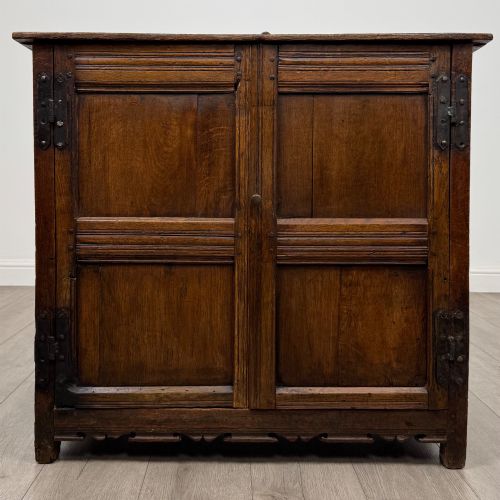
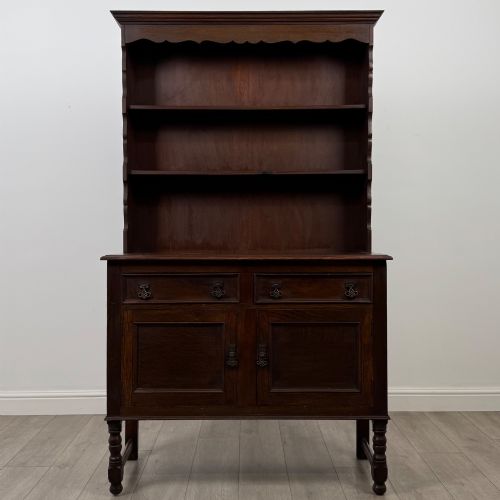
A vintage dark oak hutch encompasses heavy timber cupboards, dressers, and display units found across various historical periods. When searching for a vintage dark oak hutch, buyers typically encounter sturdy dressers with plate racks, enclosed cupboards, and multi-tier storage units originating from the eighteenth, nineteenth, and early twentieth centuries.
The forms range from compact farmhouse dressers and cottage cupboards to grand bookcases and two-part Welsh dressers. Regional styles such as Cornish and Ipswich variants appear alongside revival designs mimicking seventeenth-century Jacobean aesthetics.
Makers utilised solid oak to construct these robust pieces, often combining an open display tier on top with panelled doors below. They serve as functional storage for dining ware while anchoring a room with rich, dark timber tones.
Materials and construction methods
Construction relies heavily on solid oak, selected for its durability and strong grain pattern. Workshops utilised traditional joinery techniques, including pegged joints and hand-carved panels, to assemble heavy frames that withstood generations of daily domestic use.
Secondary materials such as brass, glass, iron, and wrought iron appear in hardware, hinges, and glazed cabinet doors. Metal fixtures often show hand-hammered or cast details, complementing the dark patination of the aged timber.
Monks benches double as makeshift tables when the solid back flips forward, saving space in cramped historic cottages.
Markers of quality and craftsmanship
Quality rests upon the depth of timber selection and the integrity of the joinery rather than surface ornamentation alone. Superior examples display tightly fitted tongue-and-groove boards, hand-carved motifs that remain crisp, and original brass or iron hardware.
The structural balance between the upper plate rack and the heavy lower cupboard base dictates the stability of the piece. Untouched patination on the oak surface distinguishes pieces with honest age from those heavily altered or refinished later.
The Vintage Dark Oak Hutch Glossary
- Welsh dresser
- A traditional kitchen unit featuring lower cupboards or drawers surmounted by open plate racks. These pieces were originally utilised for storing and displaying everyday earthenware.
- Plate rack
- The upper tiered section of a dresser designed to hold plates upright against a timber backing. This open display area allows ceramic collections to remain visible and accessible.
- Joined oak
- A method of framing furniture using mortise and tenon joints secured with wooden pegs. This technique provided structural rigidity before the widespread use of industrial metal fasteners.
Vintage Dark Oak Hutch: Frequently Asked Questions
How do I clean a dark oak hutch?
Maintain the timber by dusting regularly with a soft, dry cloth to prevent grit accumulation on the carved surfaces.
Apply a traditional beeswax polish sparingly once or twice a year to nourish the dark oak and preserve its natural patination.
Where should I place a heavy oak dresser?
Position the unit against a structurally sound wall away from direct heat sources such as radiators, which can cause the timber to dry and split.
Ensure the floor level is even, and utilise wall fixings for taller two-part dressers or bookcases to guarantee stability.
How do I date an older oak hutch?
Examine the construction marks, tool traces on the timber, and the style of the panel joinery to determine the period of origin.
Older pieces from the eighteenth century often display hand-sawn boards and pegged joinery, whereas twentieth-century revivals exhibit more uniform machine processing.
What is the difference between a dresser and a hutch?
In British terminology, a dresser typically combines base storage cupboards with an open wooden rack for displaying plates and ceramics.
A hutch often refers more specifically to an enclosed cabinet or shelving unit placed atop a sideboard or desk base.