
Vintage Damask Chair
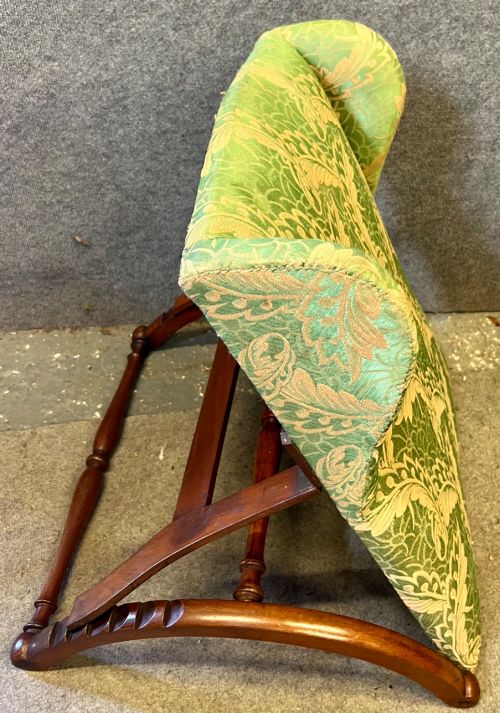
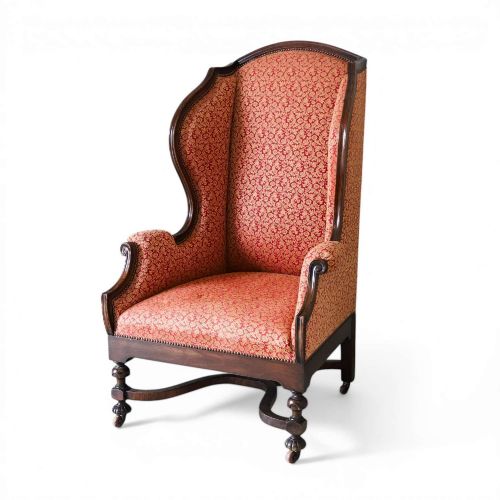
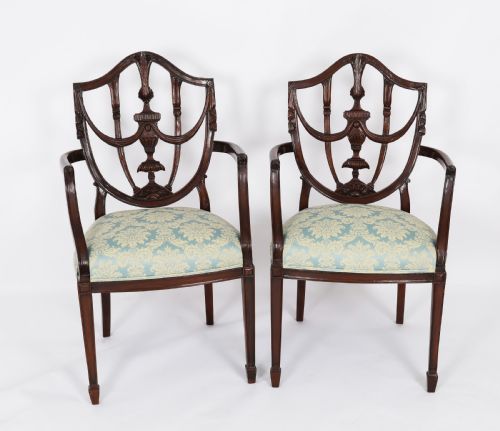
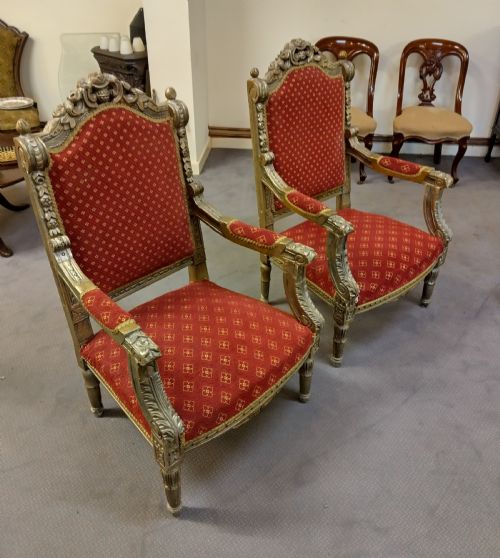
A vintage damask chair brings rich pattern and traditional seating into a room, offering both historic character and tactile upholstered comfort.
Vintage Damask Chair
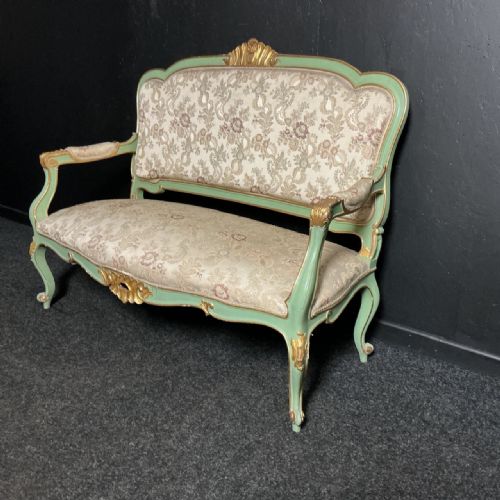
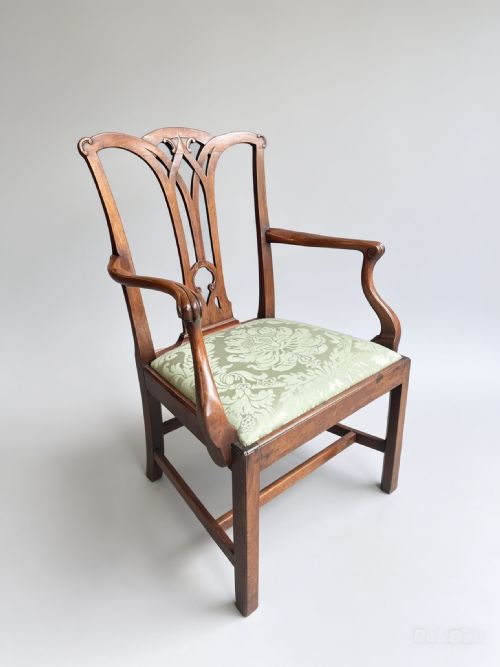
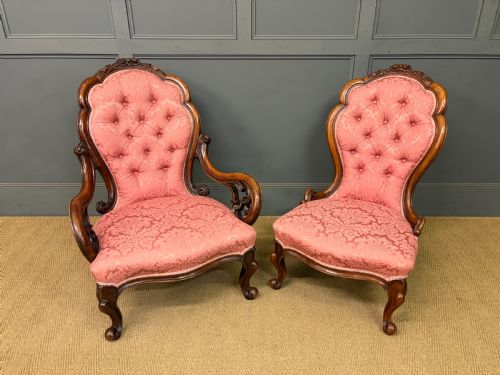
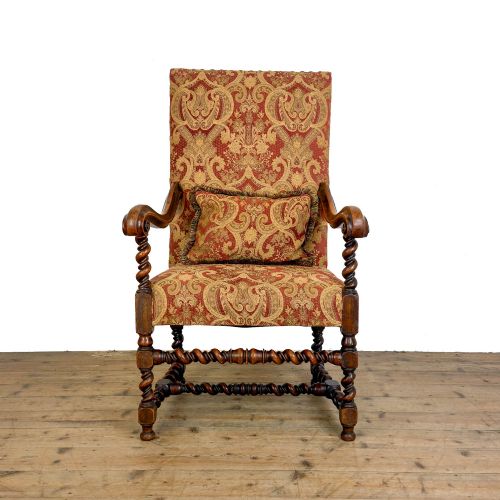
A vintage damask chair draws together diverse historical periods, appearing across Victorian, Edwardian, and early twentieth-century selections alongside revival styles like Carolean and Queen Anne. Buyers searching for a vintage damask chair encounter various seating forms, including salon chairs, nursing chairs, library chairs, and dining sets.
The most common examples on this page date from the nineteenth and early twentieth centuries, constructed in mahogany, walnut, or painted wood frames. These pieces combine wooden structural frames with patterned textile upholstery to create functional seating with distinct period presence.
Materials and construction
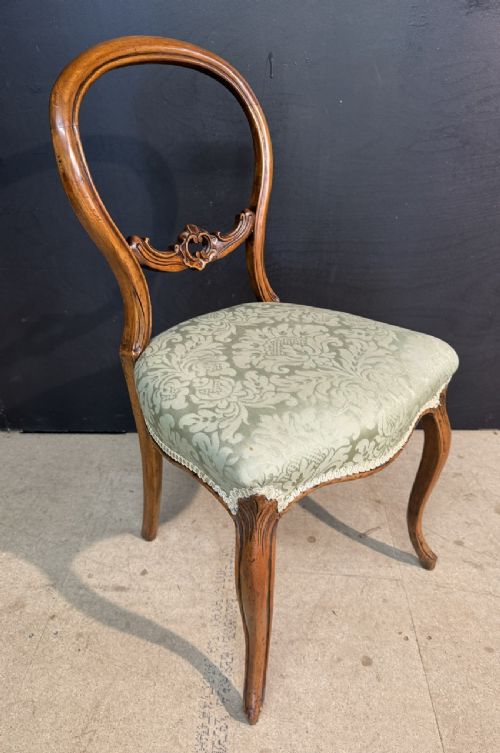
Frames are constructed from hardwoods such as mahogany and walnut, frequently shaped with carved details, cabriole legs, or turned supports like barley twist designs. Brass components and gilt finishes appear on specific frames, adding metallic contrast to the exposed woodwork.
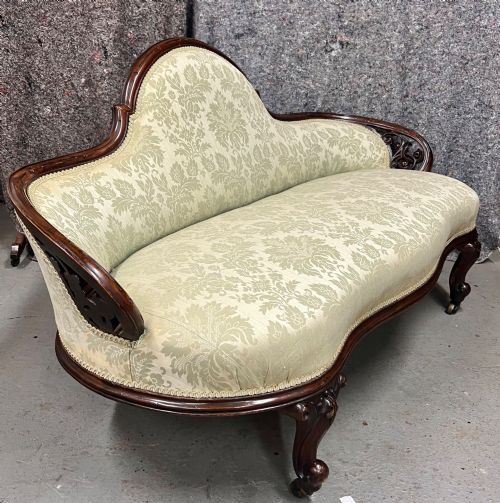
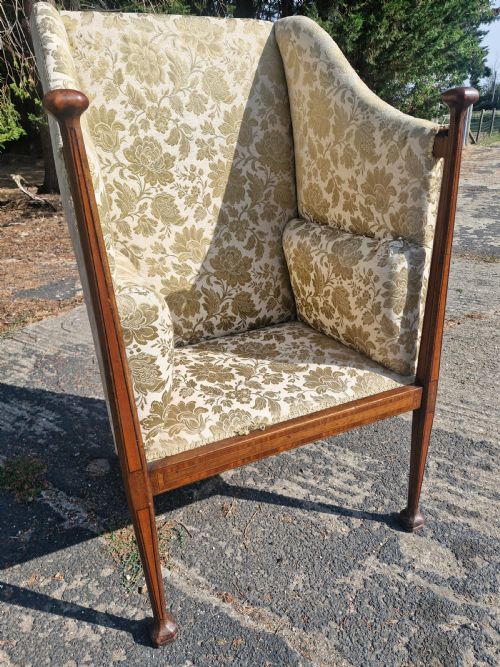
Upholstery relies on textiles including damask fabric and button-tufted treatments, supported internally by traditional filling materials such as feathers. Wood joinery and hand-carved elements anchor the fabric bodies, uniting textile design with solid timber craftsmanship.
Listings feature mahogany, walnut, and painted wood frames upholstered in damask fabric, textiles, and button-tufted treatments.
Distinctions in quality
Quality rests in the precision of the woodwork and the depth of carved detail on the frame, where sharp mouldings and well-defined cabriole legs separate standard items from finer productions. The integration between the timber structure and the upholstered textile determines the overall coherence of the piece.
The selection of framing timber, such as figured mahogany or walnut, alongside the crispness of applied gilding or turned elements, marks the higher tiers of the range. Upholstery finish, including buttoning and fabric execution, dictates how successfully the textile complements the underlying period style.
Harrods, London·White, Allom & Co.
The Vintage Damask Chair Glossary
- Damask
- A reversible figured fabric traditionally woven on a jacquard loom with patterns formed by contrasting warp and weft threads. This textile provides the characteristic surface pattern seen on upholstered panels.
- Cabriole leg
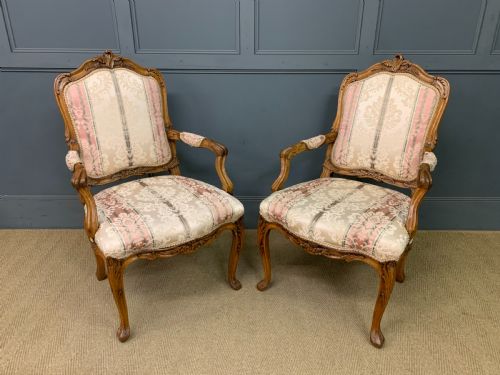
- A furniture leg that curves outward at the knee and tapers inward at the ankle, finishing in a pad or scroll foot. This form is common on eighteenth-century and revival seating.
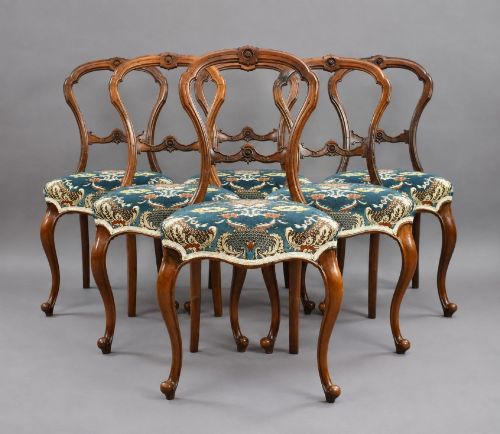
- Balloon back
- An open oval chair back shaped like a balloon, popular during the Victorian period. The curved timber creates a rounded silhouette above the seat.
- Barley twist
- A turned wooden furniture support shaped in a spiral resembling a stalk of barley. This decorative woodworking technique appears on legs and stretchers.
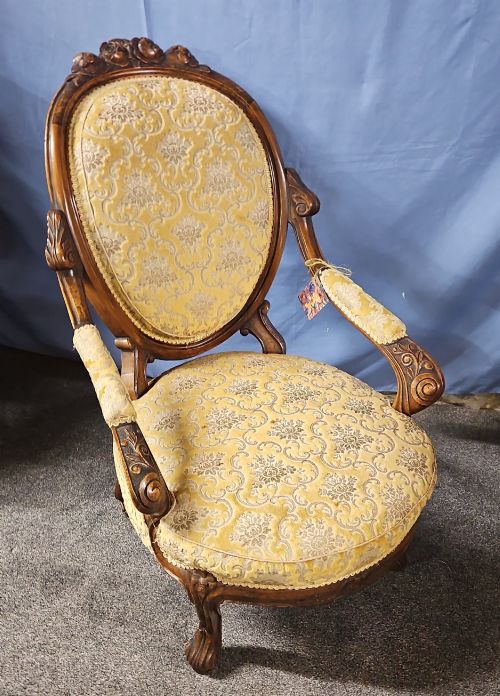
- Fauteuil
- An open-armed upholstered armchair with exposed wooden armrests originating in France. The arms typically feature padded elbow rests supported by curved uprights.
Vintage Damask Chair: Frequently Asked Questions
How do I date a vintage damask chair?
Dating relies on identifying the underlying timber, frame silhouette, and stylistic revival markers present in the woodwork. Victorian pieces often display balloon backs or barley twist supports, whereas Edwardian and later examples show different proportions and carving styles.
Upholstery fabrics may have been replaced during restoration, so the wooden frame and construction methods provide the most reliable chronological indicators for the piece.
Are these chairs suitable for daily seating?
Many of these pieces function well for everyday use, particularly library chairs, armchairs, and dining sets designed for comfortable support. Feather filling and sturdy mahogany or walnut frames provide structural durability for regular living spaces.
Care should be taken with delicate salon chairs or antique textiles, which may suit lighter use or decorative placement rather than heavy daily wear.
How do I identify different furniture styles?
Styles are recognised through specific structural motifs, such as cabriole legs for Queen Anne or Georgian revival forms, and carved scrolling details for Carolean or French inspired designs. Examining the stretcher arrangement, arm shape, and backrest profile reveals the stylistic lineage.
Comparing the woodwork details against known historical design periods helps clarify whether a piece is original period or a later revival.