

Vintage Cylinder Top Desk
A vintage cylinder top desk provides a private workspace through a curved wooden shutter that rolls down to hide your papers.
Vintage Cylinder Top Desk
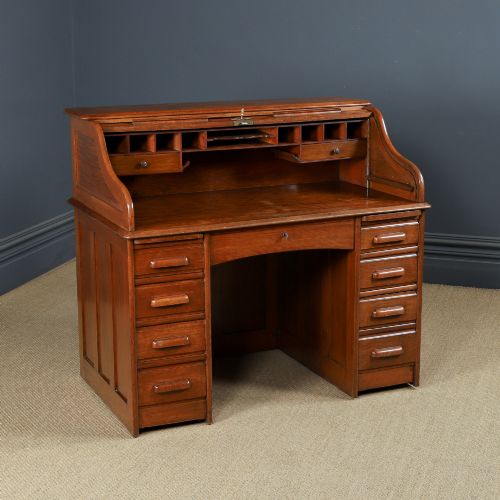
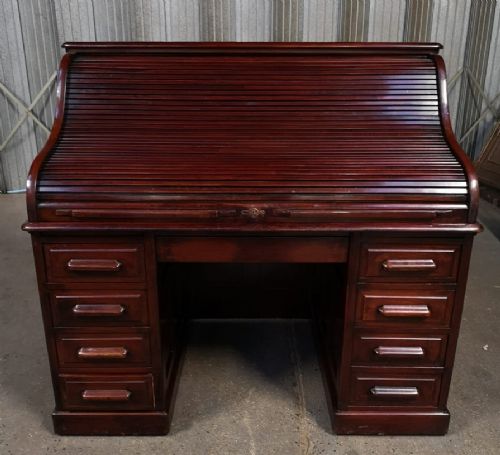
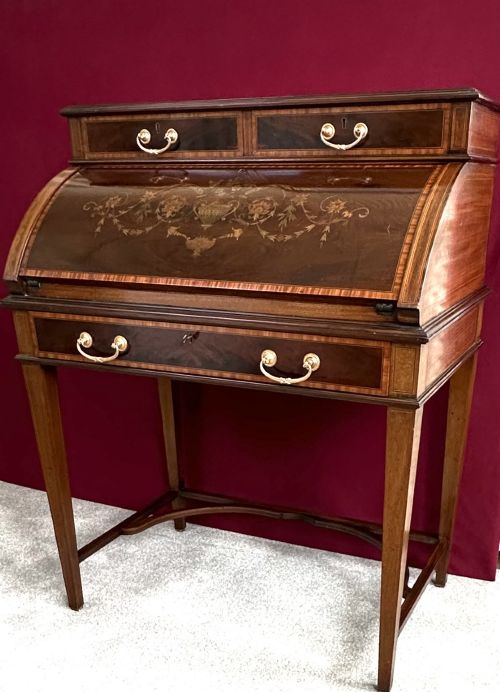
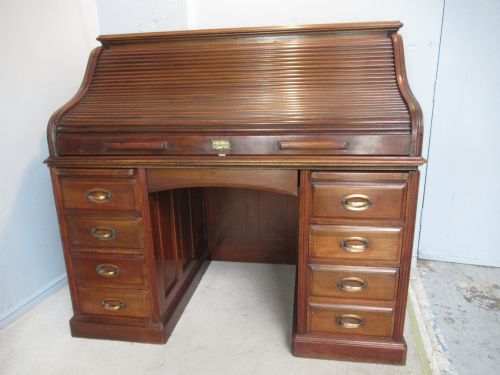
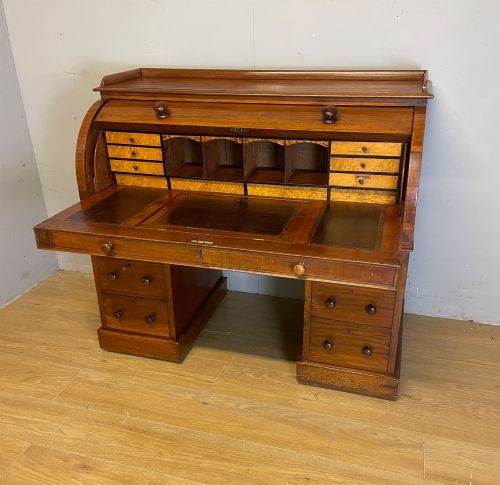
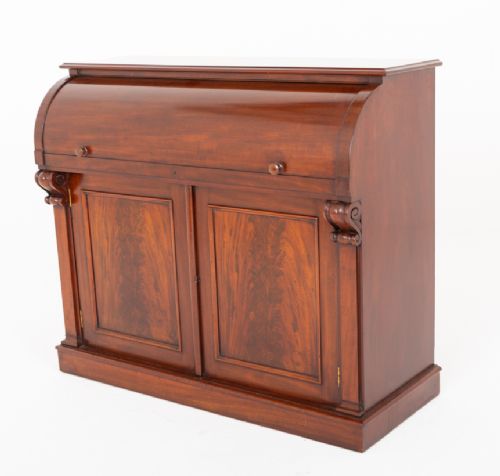
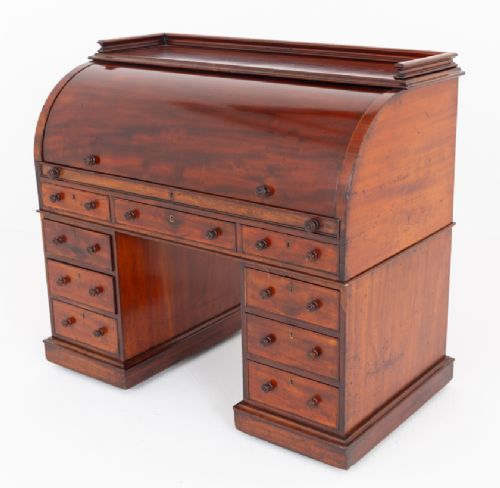
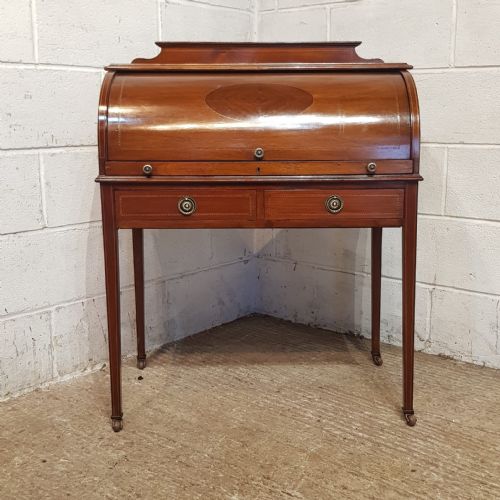
A vintage cylinder top desk is a dedicated writing piece defined by its curved enclosing shutter, appearing across periods from the nineteenth century into the twentieth century. These pieces emerge in formats ranging from substantial twin pedestal office furniture to refined freestanding ladies writing tables and miniature examples. Visitors will encounter variations spanning Victorian, Edwardian, and Georgian eras alongside Continental revivals.
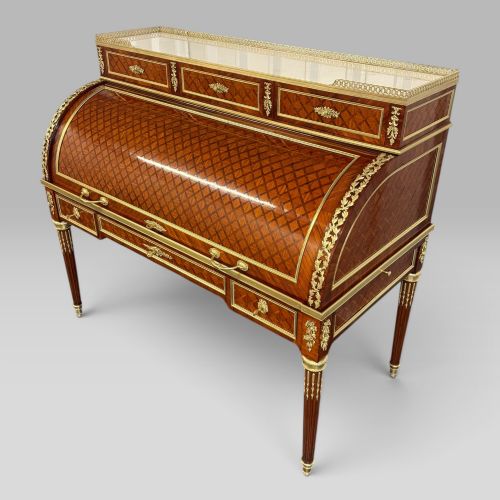
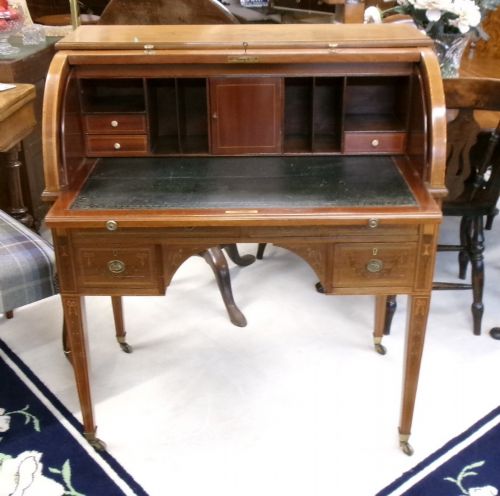
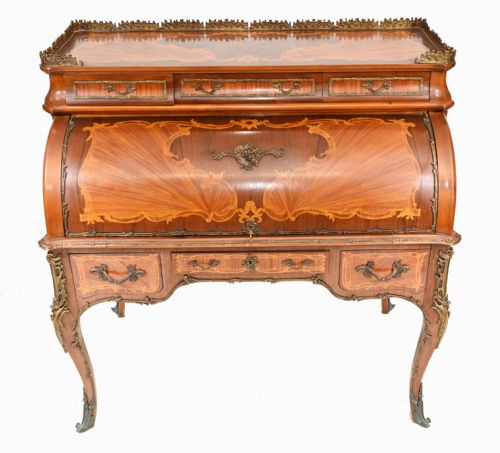
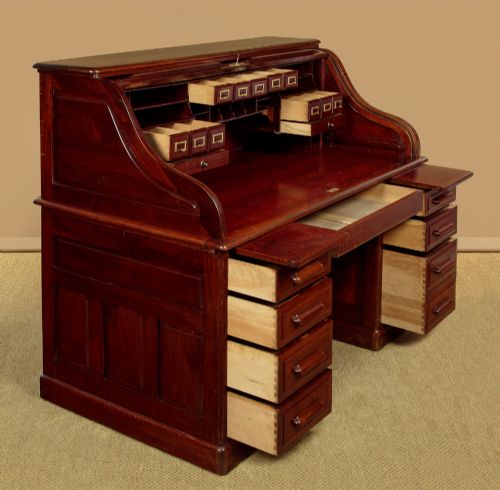
The working surface usually pulls forward from beneath the enclosing barrel front, revealing internal compartments, pigeonholes, and small drawers for correspondence. Oak and mahogany serve as the primary timber choices, frequently augmented by satinwood or walnut veneers. Certain examples adopt French styling with parquetry surfaces and ormolu mounts.
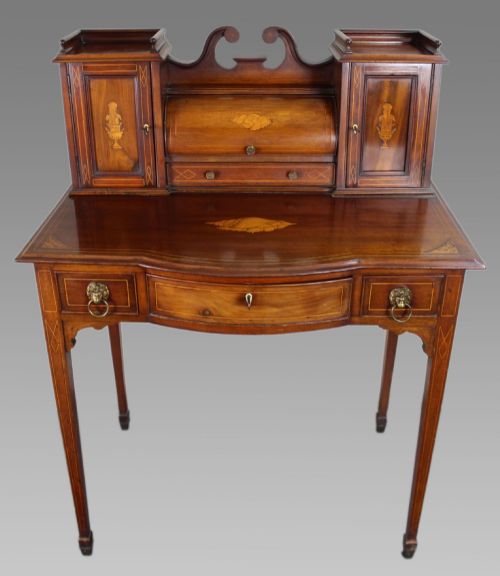
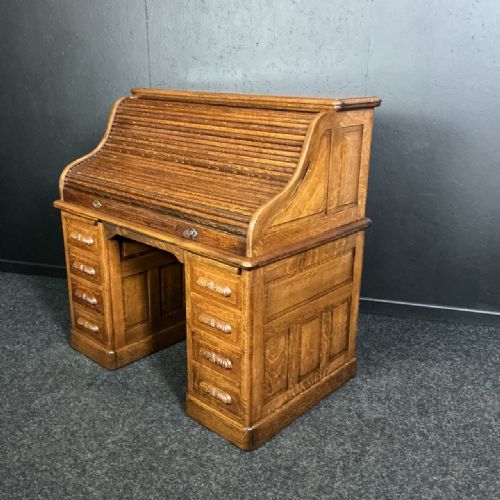
Office variants often manifest as large oak roll top desks intended for heavy administrative use, complete with internal pedestals. Domestic versions tend toward lighter mahogany and satinwood construction featuring delicate inlay work. Bureau bookcases and tambour top cabinets extend this form upward to incorporate integrated shelving.
Evaluating quality and execution
The smoothness of the cylinder mechanism dictates the mechanical success of the piece, requiring a rolling shutter that travels effortlessly along its track without binding. Superior examples conceal complex internal linkages where pulling the writing slide automatically retracts the cylinder. Timber selection also separates standard utility office furniture from finely figured domestic writing tables.
Cabinetmaking standards reveal themselves in the precision of the dovetail joints within the internal drawers and the crispness of any inlaid stringing or parquetry. The visual balance of the grain across the curved cylinder front indicates careful timber selection by the original maker. Heavy office desks rely on sturdy structural framing, whilst refined ladies desks depend on delicate proportions and harmonious veneer matching.
Miniature nineteenth-century parquetry models offer fully functioning cylinder shutters on a scale built for dollhouses or apprentice displays.
The Vintage Cylinder Top Desk Glossary
- Cylinder top
- A curved wooden shutter that slides vertically or rotationally to enclose the writing surface and pigeonholes of a desk. This mechanism protects private correspondence and keeps working materials concealed when not in use.
- Tambour
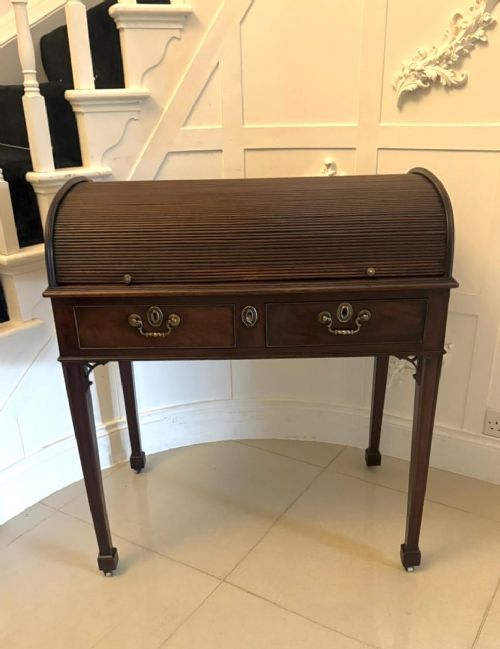
- A flexible surface composed of narrow wooden slats glued to canvas or leather, allowing the shutter to follow a curved track. It performs a similar enclosing function to a solid cylinder top but utilises a ribbed construction.
- Ormolu
- Gilt bronze mounts applied for decorative effect on furniture, frequently found on French revival pieces. The technique involves coating bronze in a mixture of mercury and gold.
- Pedestal desk
- A form comprising two freestanding stacks of drawers supporting a central writing surface. These heavy pieces typically provide substantial storage beneath an enclosed top.
- Parquetry
- Geometric patterns formed by fitting small pieces of veneer together on a surface. Makers utilise contrasting timbers to create repeating motifs across drawer fronts and cylinder shutters.
Vintage Cylinder Top Desk: Frequently Asked Questions
What is a cylinder top desk?
A cylinder top desk is a writing table featuring a rounded wooden shutter that rolls back to reveal drawers, pigeonholes, and a pull-out writing surface. This design keeps documents secure and out of sight when closed.
The enclosing mechanism distinguishes these pieces from standard flat-top writing tables and fall-front bureaus. They range from compact domestic ladies writing desks to massive institutional pedestal furniture.
Where were these desks placed?
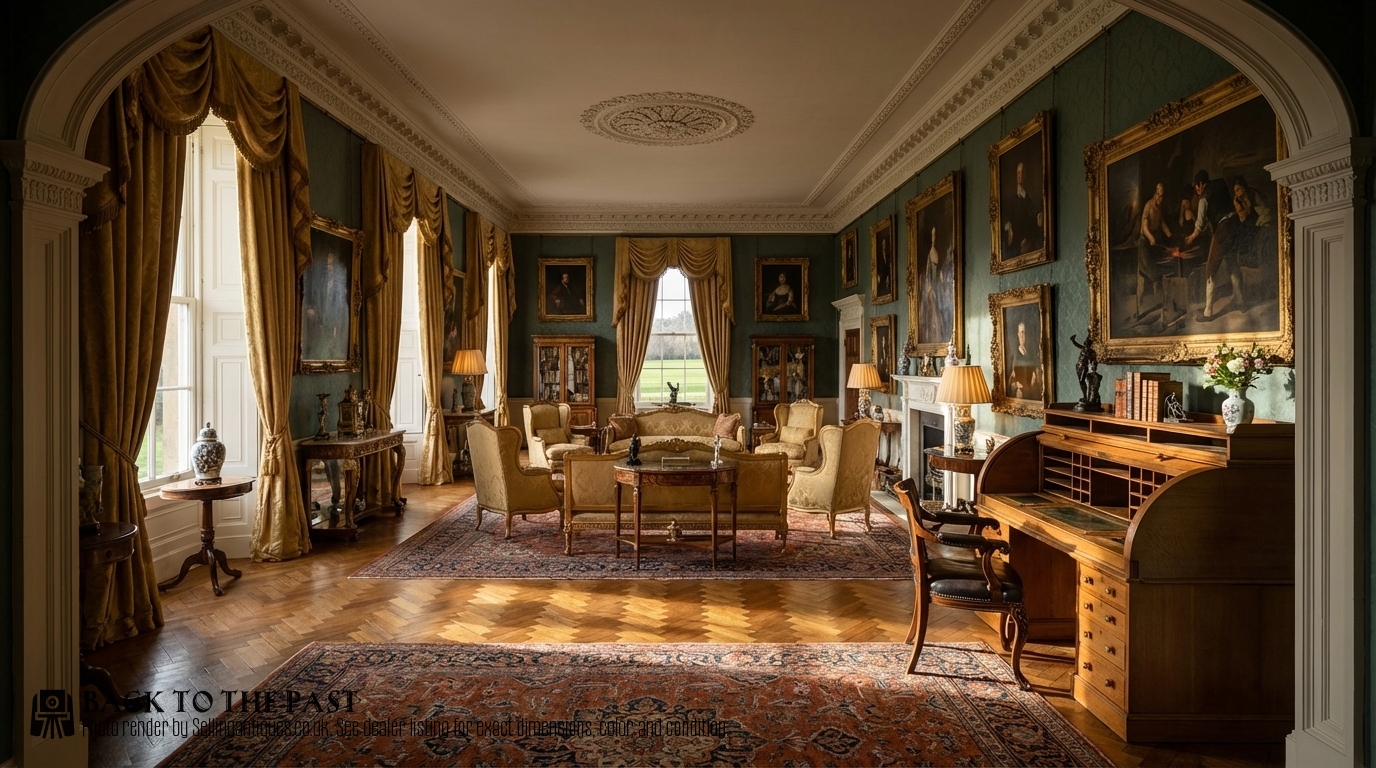
These desks served private studies, libraries, and commercial offices where correspondence required organisation and confidentiality. Freestanding varieties occupied the centre of rooms, whilst pedestal formats stood against walls.
Domestic variants often suited drawing rooms or private boudoirs for writing letters. Office versions anchored commercial spaces as primary administrative hubs.
How do I tell Victorian from Edwardian desks?
Victorian examples generally display darker, heavier mahogany construction with robust proportions and minimal inlay. Edwardian pieces frequently showcase lighter satinwood and mahogany inlays, reflecting Sheraton revival influences.
Oak roll top desks from the Edwardian period often catered to commercial offices with extensive internal filing systems. Mid-nineteenth century versions tended toward formal domestic and library environments.
Are these desks suitable for modern computers?
Compact laptops can fit on the pull-out writing slides, though the enclosed nature of the desk limits vertical clearance when the cylinder is closed. Many pieces include traditional pigeonholes designed for paper rather than modern technology.
Careful measurement of the interior kneehole and writing surface ensures compatibility with modern office equipment. Preserving the historic timber surfaces often requires protective desk pads.