


Oak Rolltop Writing Desk
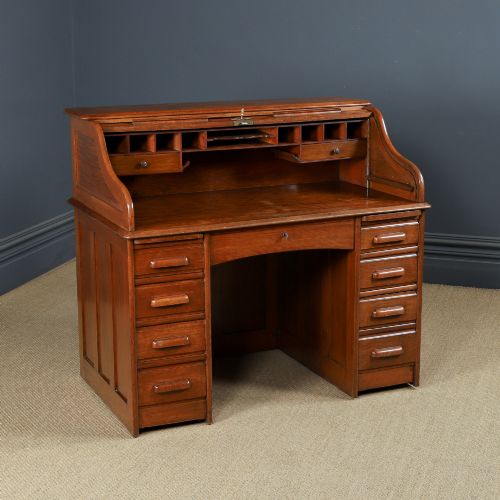
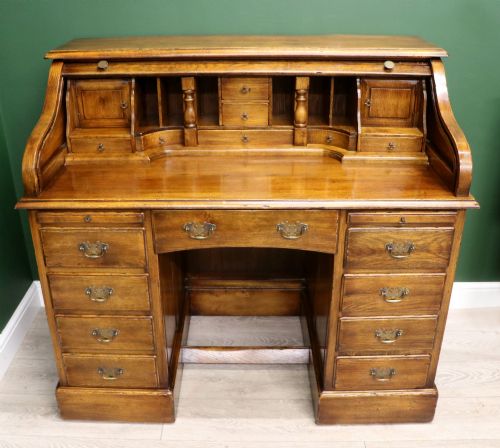
An oak rolltop writing desk brings heavy timber work and private storage together, making it a solid working station for any study.
Oak Rolltop Writing Desk
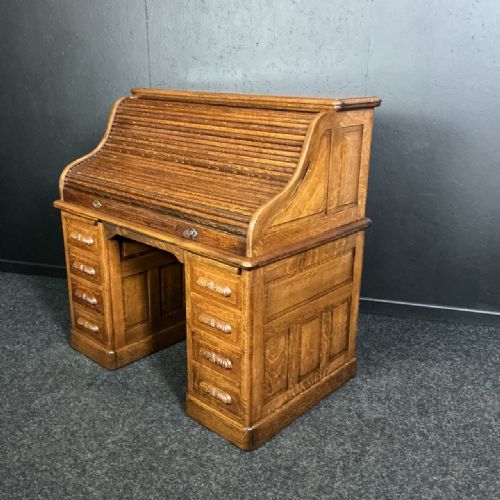
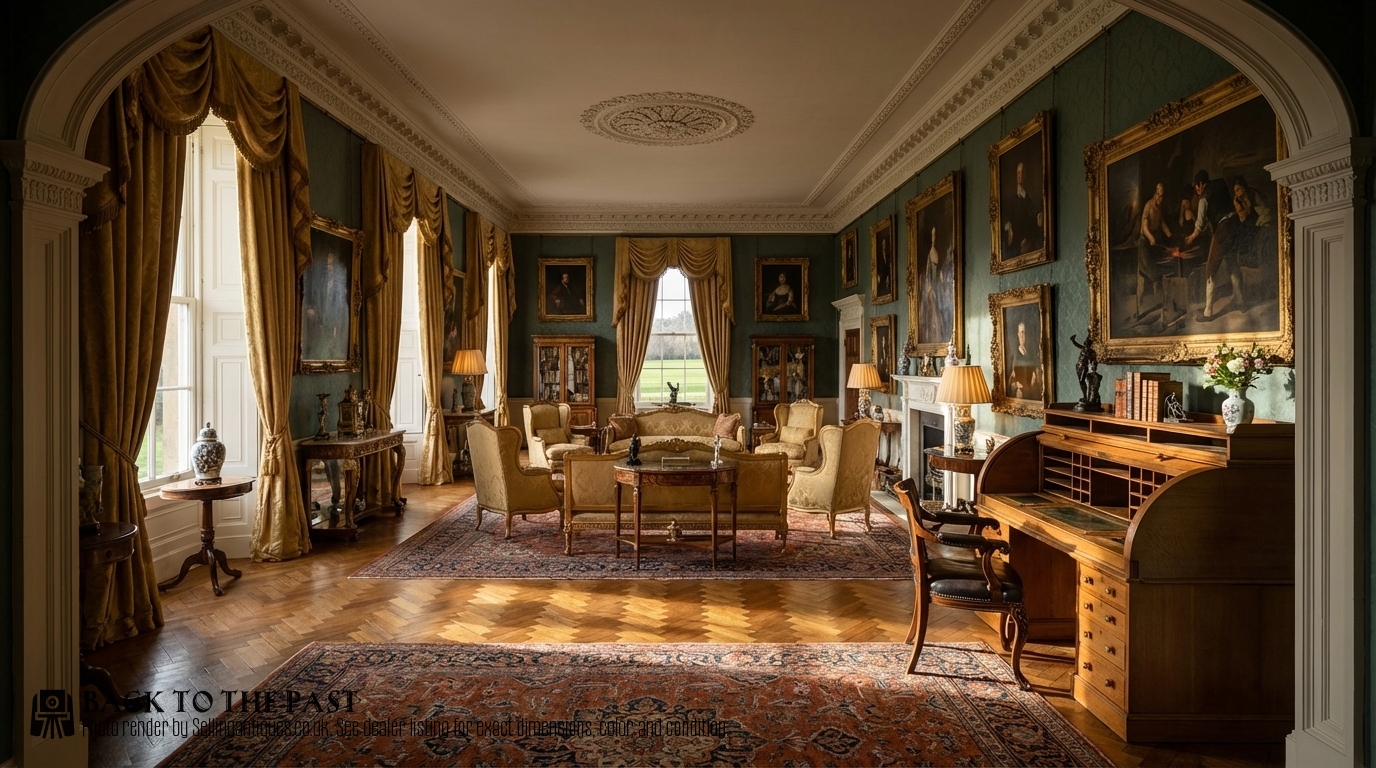
An oak rolltop writing desk provides a private workspace through a slatted tambour shutter that draws down to conceal the writing surface and pigeonholes. When buyers search for an oak rolltop writing desk, they encounter substantial office and study furniture dating mainly from the Edwardian and Victorian eras.
The pieces listed on this page run from compact bureau bookcases to large pedestal desks and typewriter tables. Edwardian examples dominate the selection, alongside items from the 1920s and 1930s, and a smaller number of Victorian cylinder desks.
Forms vary between kneehole writing desks, bureau bookcases with upper shelving, and wide pedestal formats. Most pieces rely on solid oak or panelled oak construction, often incorporating clever internal compartments beneath the slatted roll.
Distinguishing quality in construction
Quality rests on the precision of the tambour mechanism and the weight of the timber. A smooth, silent roll across the tracks indicates careful initial joinery and minimal warping in the oak slats.
The interior arrangement also sets pieces apart, with superior desks offering finely dovetailed small drawers, integrated letter racks, and solid brass locks. The exterior finish and the presence of makers' stamps further separate standard utility office desks from finer workshop output.
The recorded listings cover Victorian, Edwardian, and interwar periods, utilising oak alongside brass, glass, lead, canvas, and leather.
Maples of London and Paris·Globe Wernicke
The Oak Rolltop Writing Desk Glossary
- Tambour
- A flexible shutter made from narrow strips of wood glued to canvas, allowing it to slide around a curve.
- Pedestal desk
- A heavy writing table supported by two banks of drawers that sit directly on the floor.
- Bureau bookcase
- A writing cabinet featuring a lower desk compartment and upper enclosed shelving for books.
- Kneehole
- The central recessed space beneath a desk designed to accommodate the user's legs.
- Cylinder desk
- A writing desk with a solid curved wooden roll that rotates upwards rather than running on slatted tracks.
Oak Rolltop Writing Desk: Frequently Asked Questions
How do I maintain the tambour shutter?
Keep the wooden tracks clean and free from dust so the canvas backing moves smoothly without catching.
Apply a light wax occasionally to the running grooves if the slats begin to stick during operation.
What is the difference between a rolltop and a cylinder desk?
A rolltop desk uses flexible wooden slats attached to canvas, which bend around a track to cover the desk interior.
A cylinder desk uses a single solid curved piece of wood that rotates on a pivot mechanism rather than bending along slats.
Where were these desks typically used?
These pieces served primarily in professional offices, legal chambers, and private home studies during the late nineteenth and early twentieth centuries.
The lockable shutter allowed clerks and owners to secure sensitive documents without clearing the desktop.
How do I date an oak rolltop desk?
Examine the hardware, internal construction methods, and overall styling to distinguish between Victorian, Edwardian, and later interwar periods.
Edwardian examples often display lighter oak tones and simpler panel details compared to heavier Victorian predecessors.