
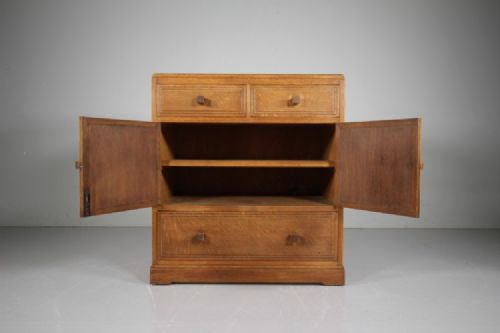
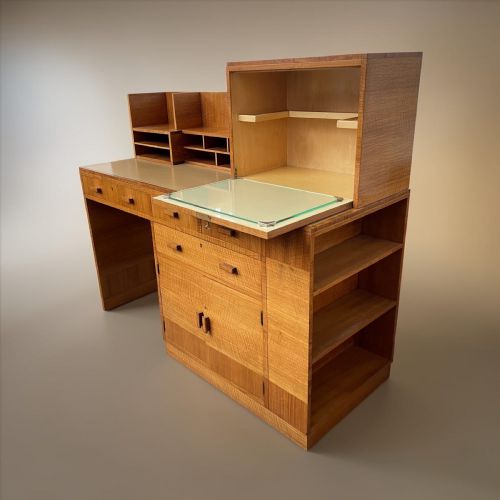


Light Oak Bureau
A light oak bureau is a practical writing desk with a fall-front flap, offering fitted interior compartments and sturdy timber construction for daily study or correspondence.
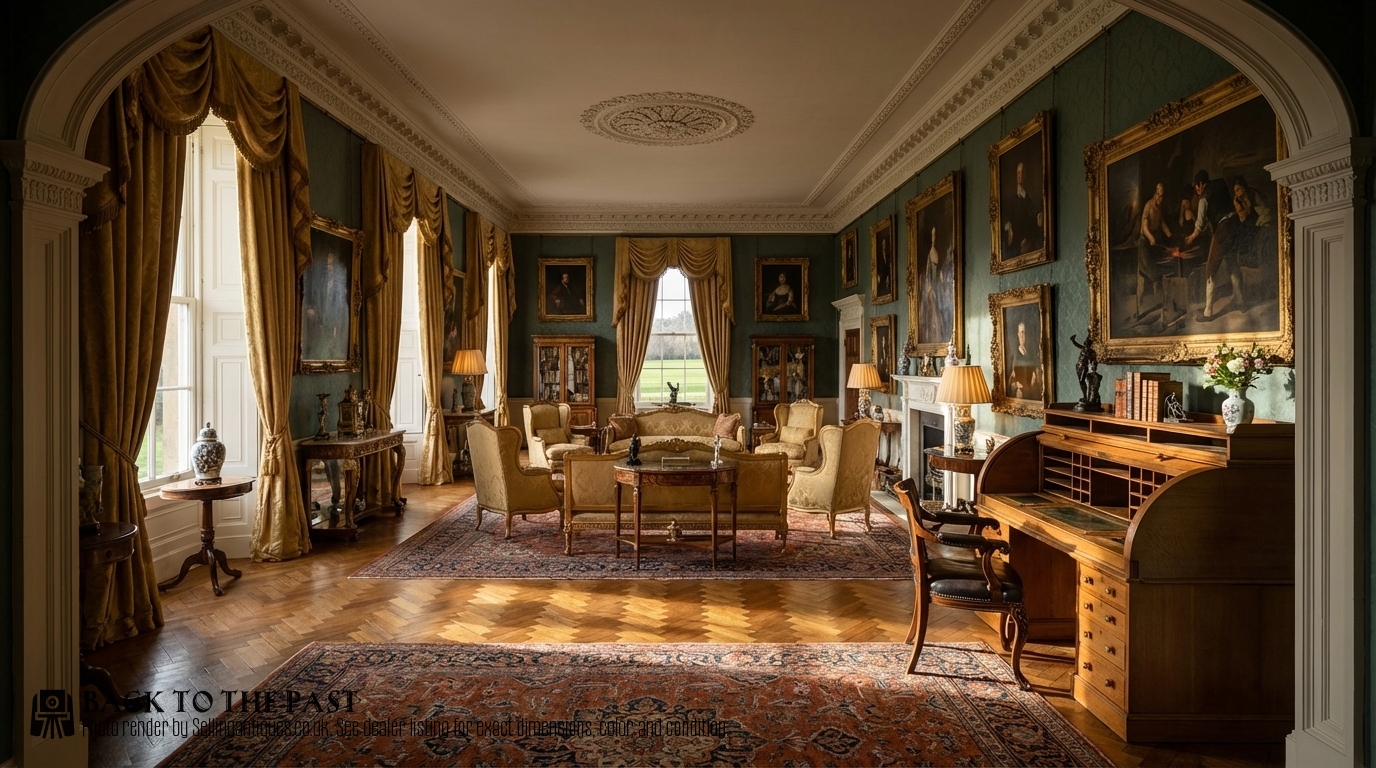
Light Oak Bureau
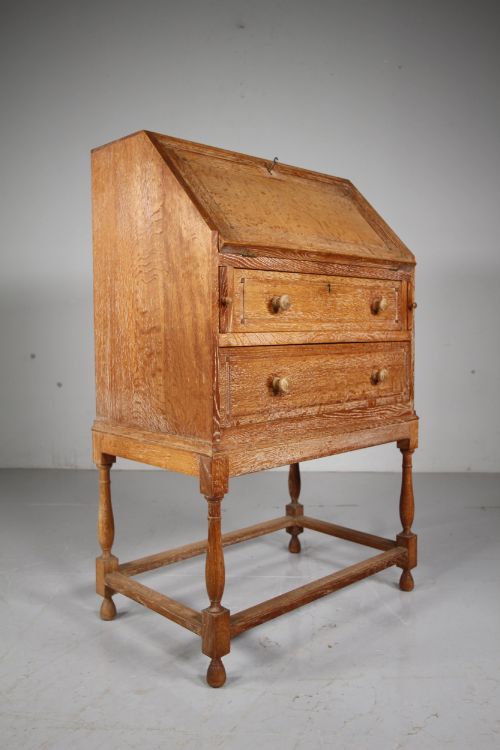
A light oak bureau combines a fall-front writing surface with drawers or shelving, appearing in styles from the Victorian period through the Edwardian era and into the 1930s. These desks frequently incorporate fitted pigeonholes and small internal drawers behind the sloping writing flap.
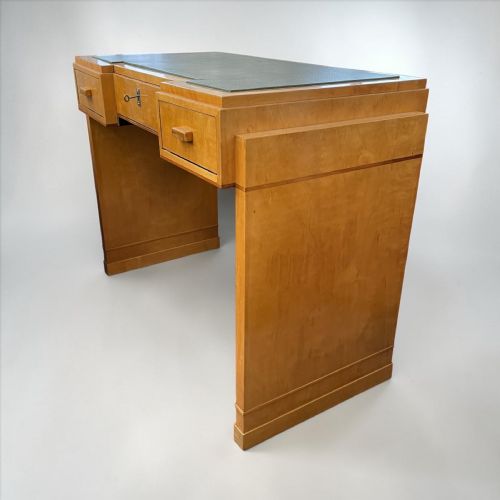
Makers working within the Arts and Crafts and Cotswold School traditions produced notable examples of the light oak bureau, often emphasising honest construction and visible grain. Art Deco variants and Jacobean revival interpretations also emerge within the records.
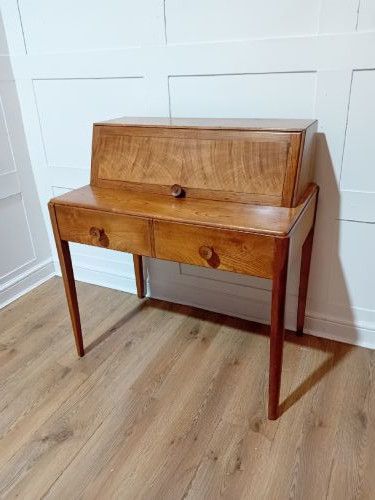
Many examples double as bookcases or display cabinets, featuring glazed upper sections above the writing compartment. Smaller student forms provide compact writing spaces suited to modest rooms.
Factors of quality
Quality rests upon the integrity of the timber selection and the precision of the joinery within the internal pigeonholes and drawer linings. Hand-carved detailing and well-executed hardware distinguish workshop pieces from standard commercial production.
Original maker labels, such as those from Heal's or Cotswold School makers, elevate the standing of a light oak bureau. The balance of proportions between the upper bookcase section and the lower desk body also defines the finer examples.
Some student bureaux are small enough to tuck into a hallway nook, proving that previous generations also needed a spot to dump the mail.
Heals of London·Arthur Basil Reynolds·Bryn Mawr·Peter Waals
The Light Oak Bureau Glossary
- Bureau
- A desk featuring a sloping hinged writing flap that drops down to reveal internal compartments and small drawers. It often sits atop a chest of drawers.
- Fall-front
- The hinged sloping panel of a bureau that pulls down to create a horizontal writing surface. It is typically supported by pull-out lopers when opened.
- Limed oak
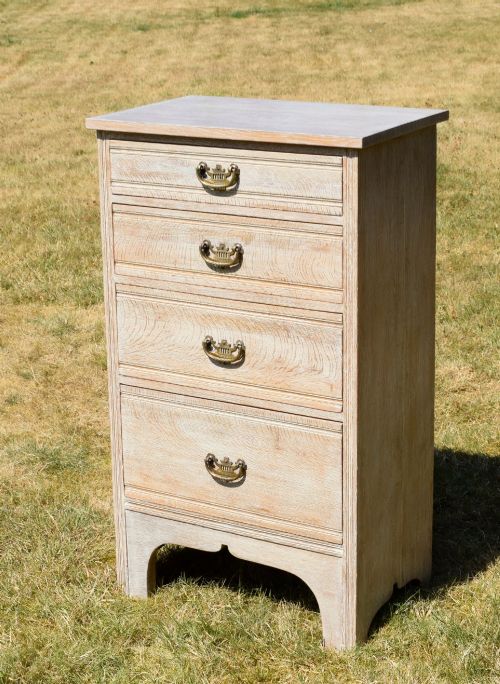
- Timber treated with a specialised finish that highlights the open grain with a whitish deposit. This technique became popular during the Edwardian period and later decades.
- Cotswold School
- An influential twentieth-century English craft movement associated with honest construction and vernacular furniture design. Makers in this tradition worked largely by hand with solid local timbers.
- Pigeonhole
- A small, open compartment fitted inside the interior of a desk or bureau for sorting letters and papers.
Light Oak Bureau: Frequently Asked Questions
How do I date a light oak bureau?
Dating relies on examining stylistic details, construction methods, and materials used in the piece. Victorian and Edwardian examples often feature traditional mouldings, while 1930s pieces align with Arts and Crafts or Art Deco design.
Maker labels or stamps provide the most reliable evidence for specific attribution. Hardware styles and secondary wood linings also help narrow the period of origin.
Where were these bureaux made?
The majority of these bureaux originate from English workshops, including Cotswold School makers and London firms such as Heal's. Regional variations reflect the distinct styles of individual craftsmen and regional guilds.
Production methods span both individual artisan workshops and established commercial cabinet makers of the late nineteenth and early twentieth centuries.
How do I care for light oak furniture?
Maintain light oak furniture by keeping it away from direct heat sources and strong sunlight to prevent the timber from drying out or splitting. Dust regularly with a dry cloth and apply appropriate wax sparingly.
Avoid using silicone-based polishes that can build up on the wood surface and alter the natural finish of the grain.