
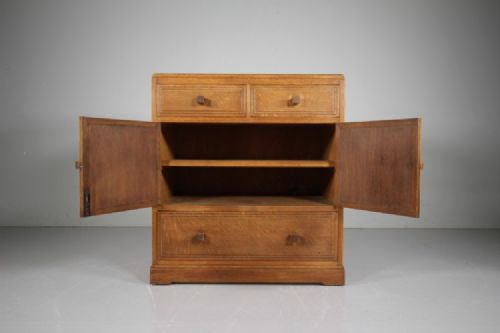
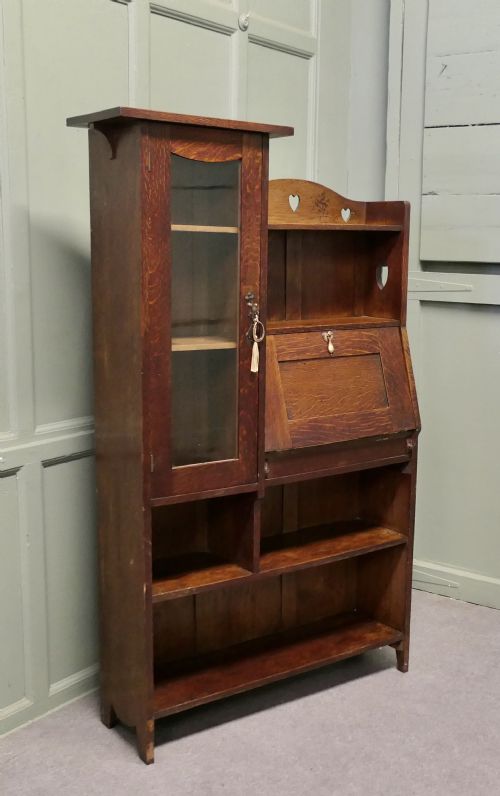


Arts and Crafts Writing Cabinet
An arts and crafts writing cabinet provides a dedicated workspace with fitted internal compartments, uniting utility with vernacular design.
Arts and Crafts Writing Cabinet
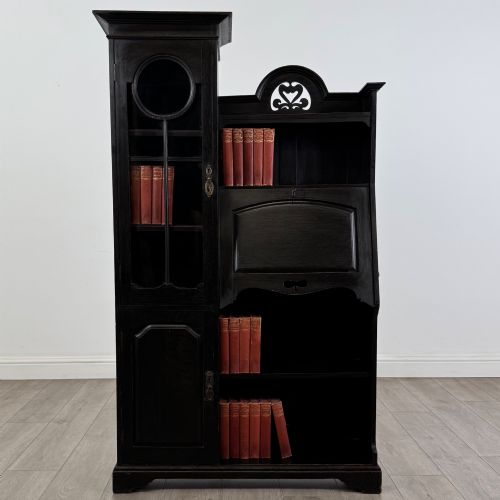
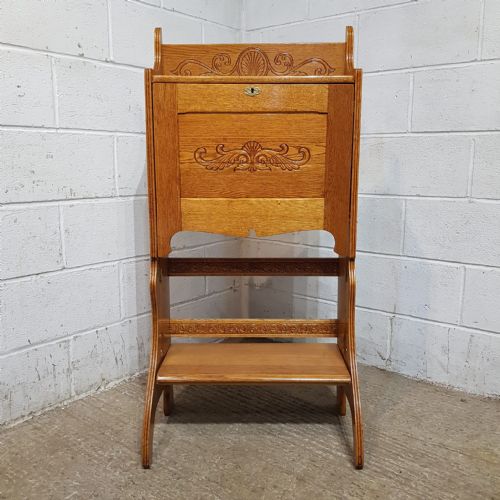
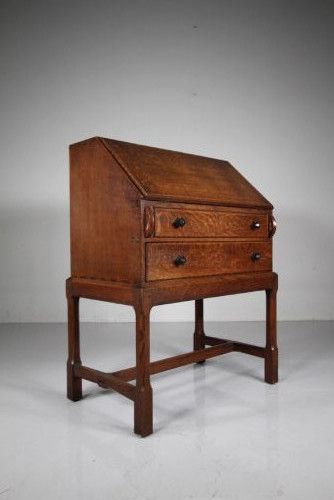
An arts and crafts writing cabinet combines a drop-front writing surface or bureau with storage compartments, shelving, or enclosed bookcase sections. These pieces span the late Victorian era through the mid-twentieth century, drawing on Edwardian and revival aesthetics alongside dedicated Arts and Crafts principles.
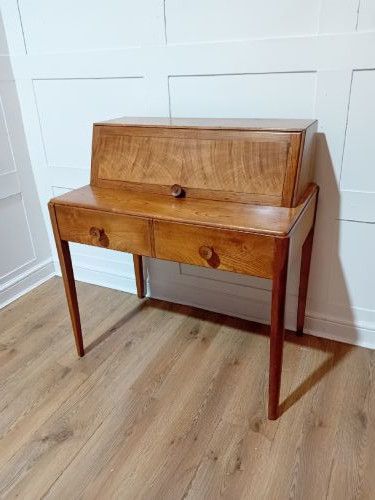
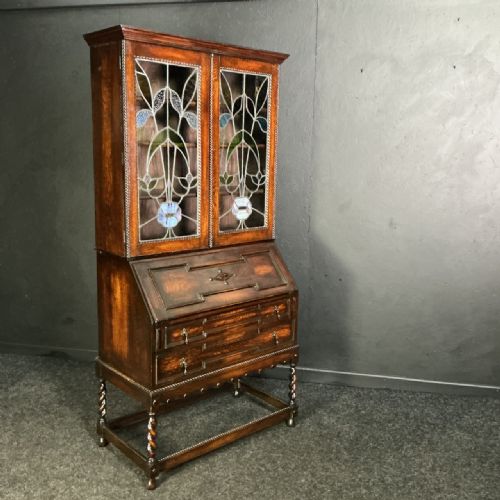
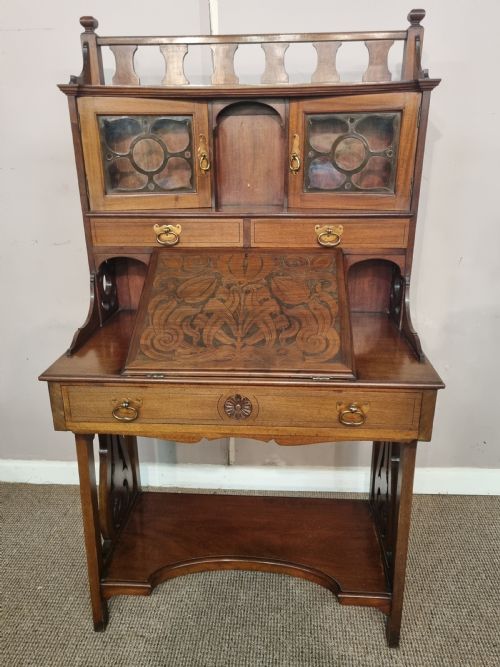
The dominant material on this page is oak, appearing in golden, fumed, and dark tones, alongside polished mahogany. Formats range from narrow student models and desktop stationery boxes to substantial bureau bookcases and display cabinets with glazed doors.
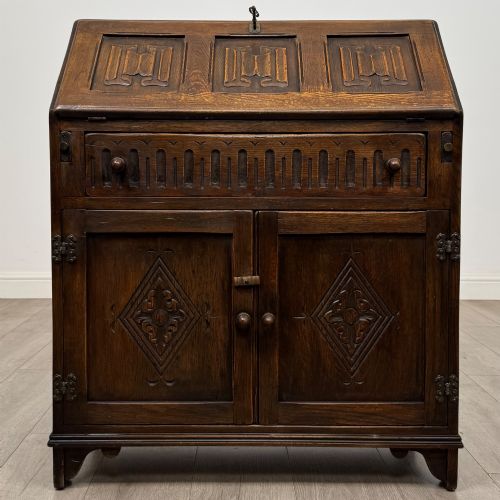
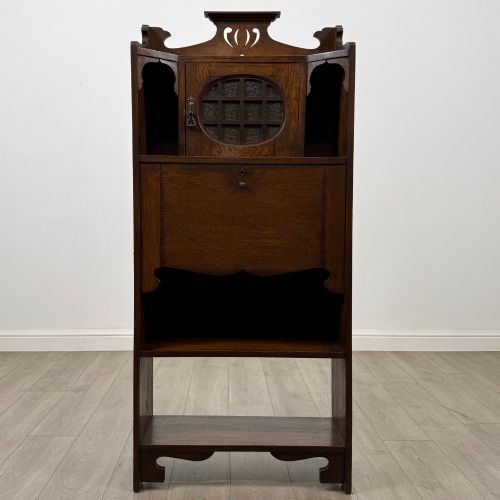
Makers and retailers associated with these designs include Liberty & Co, Morris & Co, and regional workshops such as the Cotswold School. Structural variations include linenfold panelling, ebonised finishes, and leaded glass accents.
Construction and Materials
Carpenters utilised solid timber construction, primarily oak and mahogany, often enhanced by oak veneers and interior cedar or softwood linings. Construction methods rely on traditional joinery, including dovetail joints for drawers and mortise and tenon frames.
Metalwork forms an integral part of the aesthetic, with visible hinges, drop handles, and strapwork rendered in brass, copper, and iron. Decorative elements incorporate leaded glass panels, subtle wood carving, and occasional leather writing inserts.
Listings feature pieces spanning the Victorian era through the 1940s, constructed predominantly in oak and mahogany with copper and brass hardware.
Grading Quality
Quality rests on the integrity of the timber selection, the crispness of hand-carved details, and the provenance indicated by maker stamps, paper labels, or documented attribution. Pieces associated with named workshops or retail houses demonstrate superior joinery and thoughtful proportion.
Hardware execution marks the division between standard commercial production and finer studio output. Hand-beaten copper fittings, bespoke brass strapwork, and well-executed leaded glass differentiate standard utility items from ambitious cabinetwork.
Arthur Basil Reynolds·Stanley Webb Davies·Bryn Mawr·Robert Mouseman Thompson·Morris And Co·George W Jack·Harris Lebus·Liberty Of London·Gregory And Co·James Shoolbred And Co
The Arts and Crafts Writing Cabinet Glossary
- Bureau
- A desk featuring a sloping hinged flap that drops down to reveal a writing surface and small interior compartments. This form evolved to keep correspondence and stationery neatly organised.
- Escritoire
- A fine writing cabinet or desk, often fitted with numerous drawers and pigeonholes. The term derives from the French word for writing.
- Fumed Oak
- Oak subjected to ammonia fumes to darken the natural tannins in the wood without obscuring the grain. This technique was widely utilised by Arts and Crafts cabinetmakers to achieve an antique, rich brown tone.
- Linenfold
- A style of wood carving that imitates folded linen or parchment. It frequently decorates the lower panels of bureau doors and cabinets from this period.
- Strapwork
- Ornamental flat bands of metal, often brass or copper, applied across hinges and woodwork. It provides both structural reinforcement and linear visual interest.
Arts and Crafts Writing Cabinet: Frequently Asked Questions
What is a writing cabinet?
A writing cabinet is a compact piece of furniture designed for correspondence, featuring a fold-down or pull-out writing surface paired with internal pigeonholes and small drawers. These units keep stationery and writing tools neatly contained when not in use.
Many examples incorporate upper bookcase sections or display shelving behind glass doors, combining a writing desk with library storage in a single footprint.
How do I date an arts and crafts cabinet?
Dating relies on stylistic markers, construction techniques, and any accompanying maker labels or stamps. Pieces from the early period often feature hand-hammered copper hardware and simple Morris-influenced lines, while later Edwardian examples lean into revival styles.
Inspect the secondary woods inside drawers and the type of screws or fixings used. Machine-cut dovetails generally point to the twentieth century, whereas hand-cut joints suggest earlier work.
Where should I place a bureau bookcase?
These cabinets suit studies, living rooms, and large hallways where their vertical height and storage capacity can be fully appreciated. Ensure the room has adequate clearance for the drop-front flap to open completely horizontal.
Keep wooden furniture away from direct sunlight and heat sources to prevent the timber and any leather writing inserts from drying out or cracking.
Are these cabinets made of solid oak?
Most pieces on this page utilise solid oak or mahogany for their primary structural frames, drawer fronts, and exterior panels. Some variants incorporate oak veneers over secondary timbers on large flat surfaces to ensure stability.
Internal drawer linings and backing boards may consist of secondary softwoods, which was standard trade practice during the period.