



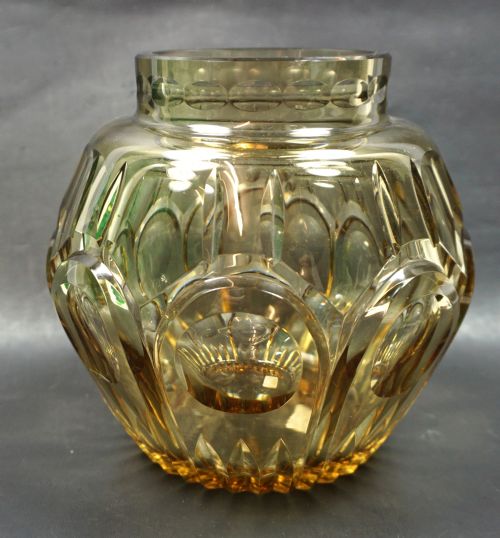
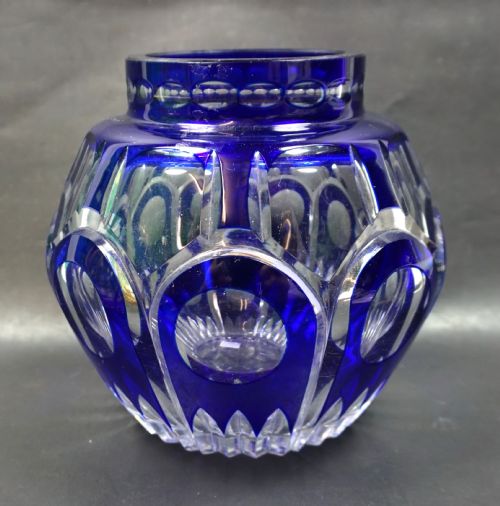


Vintage Cut Glass Vase
A vintage cut glass vase brings weight and sharp refraction to a room, catching daylight through deep wheel-cut facets and layered colours.

Vintage Cut Glass Vase
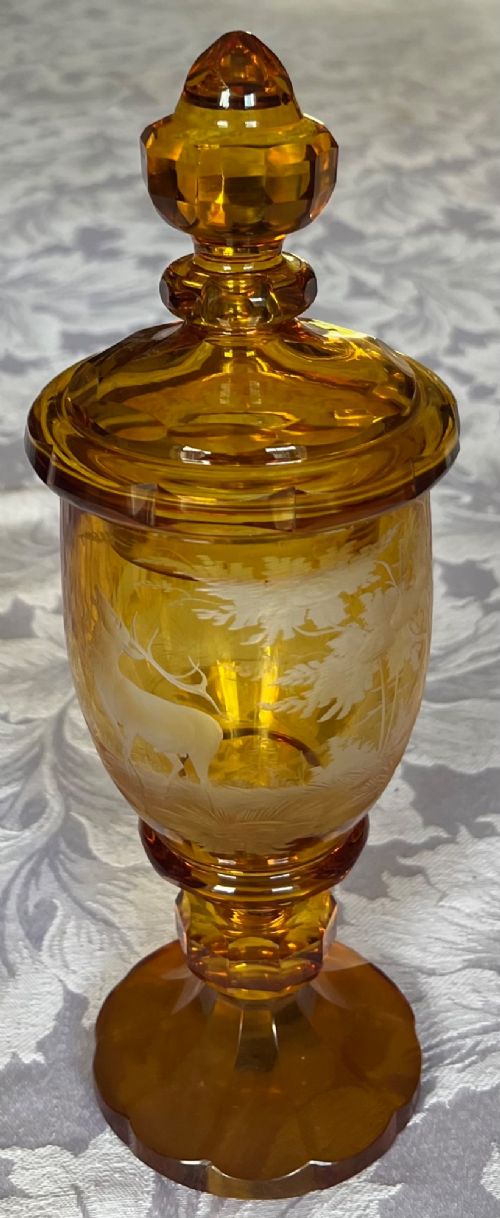
A vintage cut glass vase is a heavy, light-reflecting vessel shaped by wheel-cutting and polishing, appearing across Victorian, Edwardian, and Art Deco periods. These pieces range from simple domestic flower holders to elaborate lidded urns and richly coloured display objects. Buyers search for this phrase to find both clear lead crystal vessels and vibrant cased glass items that anchor a mantelpiece or table.
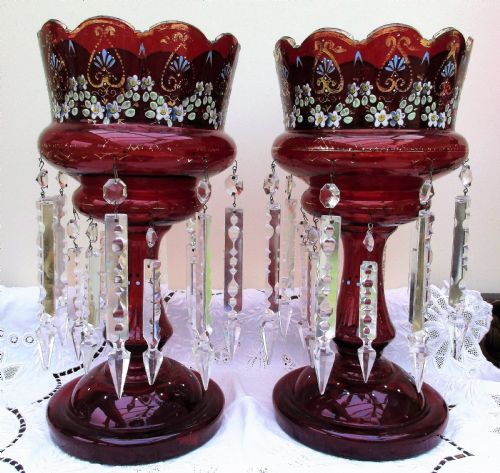
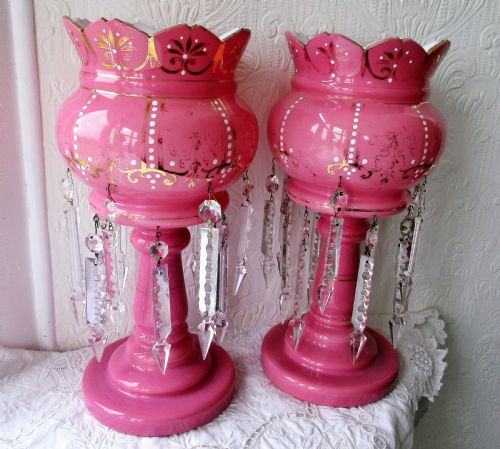
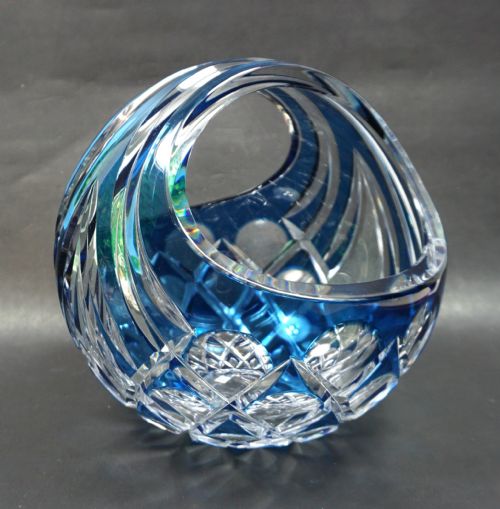
The selections available here lean heavily towards Victorian table wares and 1930s continental production, particularly Belgian cased pieces and Bohemian decorated works. Makers utilised overlay techniques, where a coloured glass layer is cut away to reveal clear crystal beneath, creating striking contrast. Forms stretch from straightforward spill vases to complex mantel lustres hung with glass drops.
Victorian examples often feature cobalt blue or ruby glass cut back to clear, displaying dense geometric or floral motifs typical of the nineteenth century. Later twentieth-century versions embrace clean geometric lines, square profiles, and stylised enamel etching characteristic of the Art Deco movement. Each period brings distinct weight, depth of colour, and cutting patterns to the domestic interior.
Judging quality in cut glass
Quality rests primarily on the crispness of the cutting and the depth of the facets rather than the mere presence of decoration. Superior pieces display sharp, clean edges where cuts intersect, whereas lesser items show rounded, blurred transitions resulting from hasty polishing or worn moulds. The brilliance of the crystal itself, determined by lead content and purity, dictates how effectively the vessel refracts light.
Proportion and weight also separate standard production from exceptional work, as heavier lead crystal provides a more resonant ring and greater physical stability. The precision of the overlay work in cased pieces matters immensely, with top-tier examples showing uniform colour thickness and exact alignment between the cut windows and the underlying crystal base.
The selection includes lead crystal, cased glass, ruby glass, and enamel-etched pieces spanning the Victorian period through to the 1940s.
Val St. Lambert·Karl Palda·Stevens & Williams·Hukin & Heath
The Vintage Cut Glass Vase Glossary
- Cut to clear
- A technique where a coloured outer layer of glass is cut away to expose the clear crystal underneath. This method produces high-contrast patterns and intricate multi-coloured visual effects.
- Lead crystal
- Glass containing a significant percentage of lead oxide, which increases weight, refractive index, and clarity. It allows deeper and sharper cutting than standard soda-lime glass.
- Cased glass
- Glass composed of two or more distinct layers of different colours fused together during the blowing process. Cutters use this layered structure to carve contrasting windows into the vessel.
- Mantel lustre
- A decorative ornamental vase hung with dangling glass prisms or pendants, designed to sit on a fireplace mantel. These pieces reflect candlelight and daylight through their hanging drops.
- Wheel engraved
- A method of decorating glass by holding the vessel against a small rotating abrasive wheel. This technique creates detailed figural or botanical illustrations directly on the surface.
Vintage Cut Glass Vase: Frequently Asked Questions
How can I tell Victorian cut glass from later pieces?
Victorian items frequently exhibit heavier proportions, deep diamond or hobnail cutting, and rich saturated colours like ruby red and cobalt blue. The pontil mark on the underside is often polished smooth, but older pieces may retain a rough concave scar where the blowing iron was detached.
Twentieth-century examples from the Art Deco era typically introduce cleaner geometric profiles, streamlined overlays, and lighter pastel shades or stark black-and-clear contrasts. Maker signatures or specific design motifs characteristic of 1930s European glassworks also point away from the Victorian period.
Were these vases meant for flowers?
Many smaller spill vases and straightforward vessels served practical daily functions for holding fresh blooms on dining tables and mantelpieces. However, larger lidded urns, heavy centrepieces, and mantel lustres functioned primarily as decorative display objects rather than utilitarian flower holders.
Items fitted with hanging crystal prisms or delicate enamel work were designed to catch ambient light in drawing rooms. Using them for water and displays requires care to avoid damaging vulnerable interior surfaces or historic mounts.
What is the difference between crystal and glass?
True crystal contains a high proportion of metallic oxides, specifically lead, which increases the material's density and refractive index. This composition allows artisans to cut much sharper facets that scatter light more brilliantly than standard glass.
Lead crystal also feels noticeably heavier in the hand and produces a clear, resonant chime when gently tapped. Standard glass lacks this high lead content, resulting in lighter weight and softer cutting edges.