

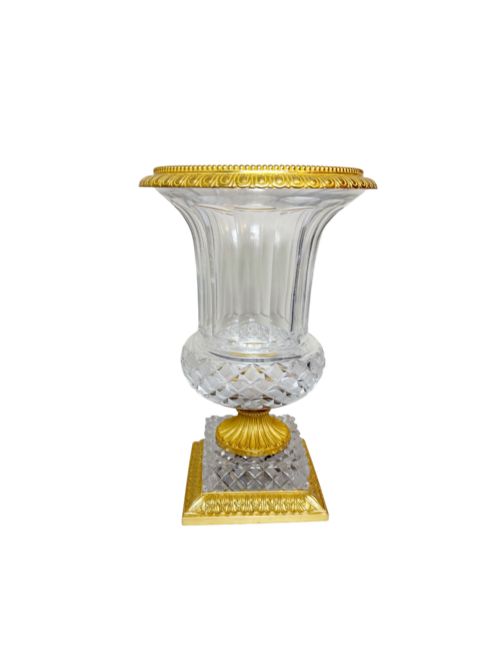
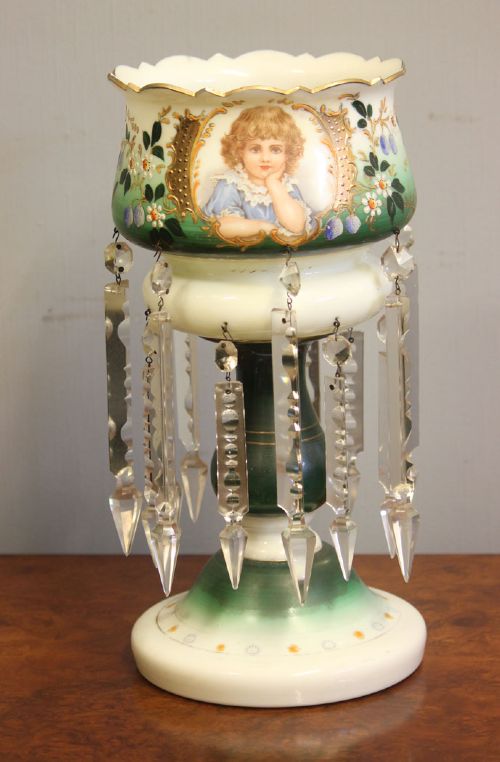
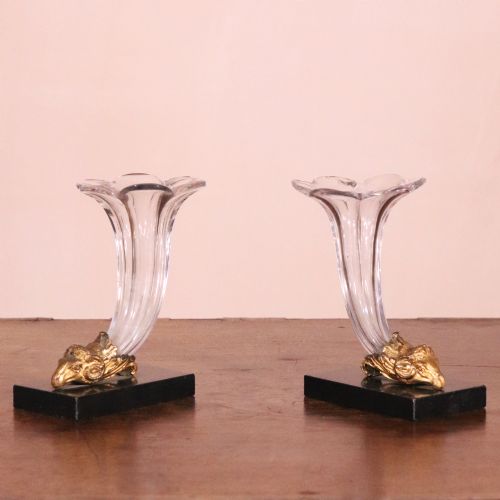

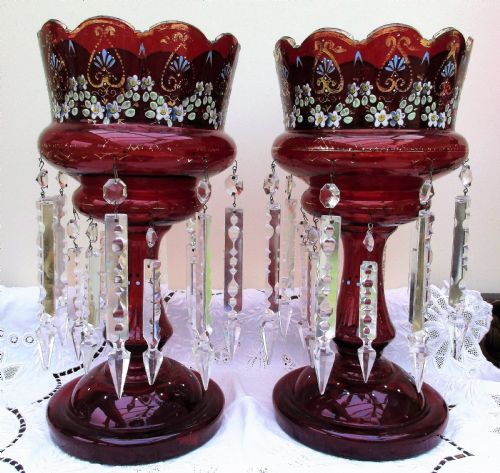
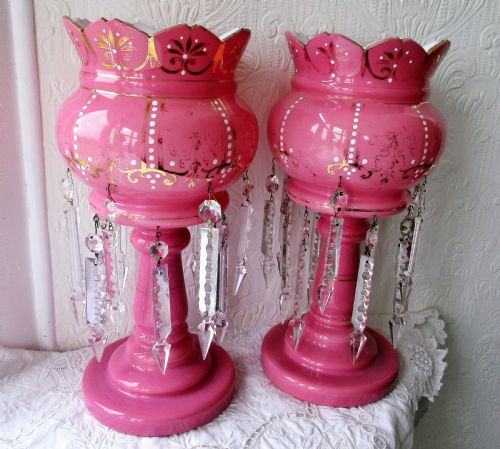
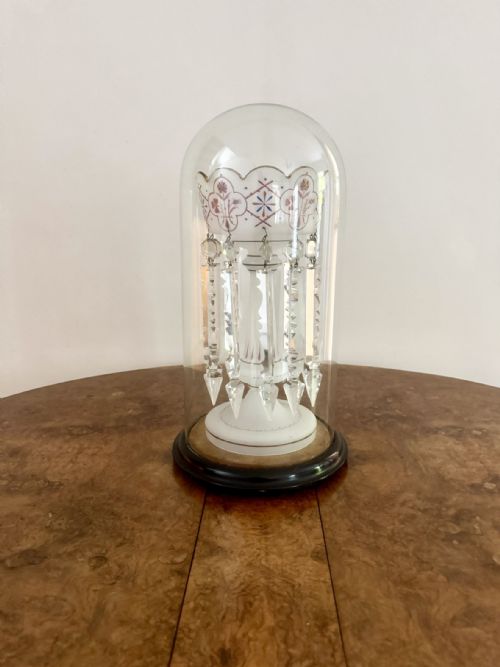


Cut Glass Mantel Vase
These cut glass mantel vase items are decorative vessels designed for the hearth, combining reflective glass with classic Victorian and Edwardian forms.

Cut Glass Mantel Vase
A cut glass mantel vase serves as an ornamental centrepiece traditionally displayed upon a fireplace mantelpiece. The pieces listed here span the nineteenth century and the Edwardian period, encompassing Victorian, Edwardian, and Regency styles.
The inventory on this page largely consists of glass lustres and mantel lustres alongside decorative vases, often appearing in matched pairs. Coloured glass variants such as ruby, green, pink, and cranberry feature prominently alongside clear crystal forms.
Makers and origins include English and Bohemian examples, showing diverse decorative treatments from flash glass to silver plating. Forms range from simple spill vases to elaborate lustres hung with glass drops.
How they were made
Makers utilised free-blown or mould-blown glass techniques, subsequently shaping the bodies through wheel-cutting to achieve faceted surfaces that catch the light. Overlay and flash glass methods involved casing one colour over another before cutting away the top layer to reveal contrasting hues beneath.
Enamel painting and gold leaf application often added surface decoration to the coloured glass bodies of Victorian and Edwardian examples. Lustres required additional assembly, featuring drilled rims fitted with glass pendants suspended on metal wires.
Cut Glass Mantel Vase Retail Price Guide 2026
Typical asking prices for cut glass mantel vase among the pieces listed under this phrase on Sellingantiques today, from the lower quarter to the upper quarter. They describe what is for sale here now, not the wider market.
Listings on this page span the nineteenth century into the Edwardian era, featuring materials from cranberry glass to gold leaf.
What varies in quality
The crispness of the wheel-cutting separates finer examples from simpler production, with deep, sharp facets demonstrating greater technical skill. The clarity of the crystal or the saturation and depth of coloured glasses like ruby and cranberry also dictate the visual weight of the piece.
Completeness alters the standing of a lustre, particularly whether the original glass pendants remain intact and match across the pair. The integration of mounts, such as gilt bronze or silver plating, shows varying degrees of chased detail and structural refinement.
The Cut Glass Mantel Vase Glossary
- Lustre
- An ornamental glass vase fitted with a ring of hanging glass pendants designed to refract candlelight or daylight. These mantel ornaments were particularly popular during the Victorian period.
- Cranberry glass
- A transparent pinkish-red glass produced by adding gold chloride to the molten batch. It appears frequently in nineteenth-century mantel garnitures.
- Flash glass
- A vessel formed by dipping a core of clear or contrasting glass into a molten pot of coloured glass. Subsequent cutting removes parts of the thin outer layer to create patterns.
- Spill vase
- A narrow receptacle used to hold slender tapers of wood or paper for lighting candles and fires. These functional vessels frequently used cut glass or silver-plated mounts.
- Cornucopia
- A horn-shaped container symbolising abundance, adapted during the Regency period into decorative mantel ornaments made from glass and metal.
Cut Glass Mantel Vase: Frequently Asked Questions
Where were mantel vases displayed?
These decorative objects sat prominently on the mantelpiece above a fireplace, often arranged as a matched pair flanking a clock or candelabra.
Their reflective glass surfaces and hanging pendants caught the flicker of hearth fires and candle illumination in Victorian and Edwardian rooms.
How do I date a glass mantel vase?
Dating relies on observing the silhouette, the depth and style of the glass cutting, and the specific hues of the material.
Nineteenth-century examples frequently show rich cranberry, ruby, or green flash glass, while Edwardian pieces often lean towards crisply cut crystal and integrated silver-plated elements.
Can I use these vases for water?
Many antique mantel vessels, particularly lustres with pierced rims and metal or enamel decorations, function strictly as decorative ornaments.
Introducing water to pieces with gilt leaf, enamel work, or assembled metal components risks damaging the historic finishes.