



Cut Glass Flower Vase
These cut glass flower vase selections bring weight and sharp refraction to a room, holding stems securely while catching the light.
Cut Glass Flower Vase
A cut glass flower vase provides a heavy, refractive vessel designed for floral displays, appearing in forms from tall cylindrical cylinders to squat table centrepieces. When you search for a cut glass flower vase, you encounter pieces spanning the Victorian, Edwardian, and Art Deco periods, alongside 19th-century works.
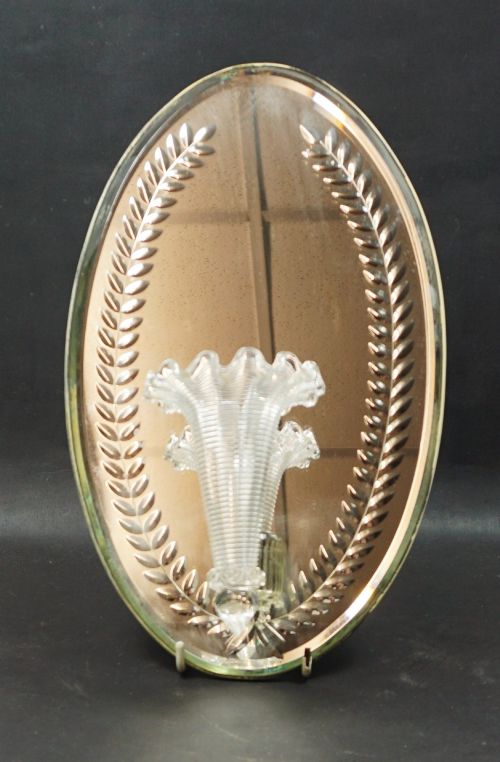
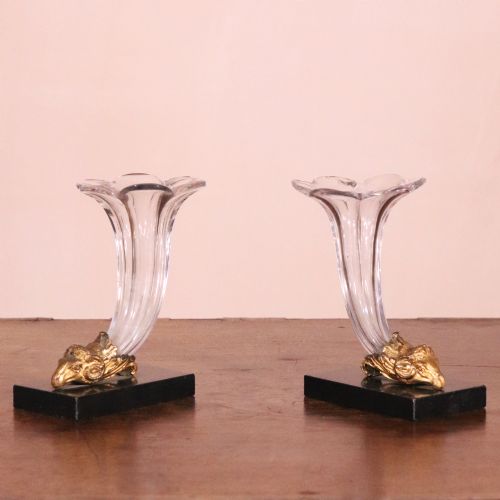
The objects take various shapes, including spill vases, cornucopias, and decorative centrepieces incorporating mixed media. Victorian and Edwardian examples often pair the glass with sterling silver or silver plate mounts, while 1930s pieces showcase strong geometric lines and coloured crystal.
Origin points range across England and Belgium, with specific pieces attributed to notable continental designers and domestic silversmiths. The forms vary from straightforward glass bodies to elaborate combinations with marble, gilt bronze, and enamel etching.
Materials and construction
Makers utilised lead crystal, cased glass, and standard glass, applying wheel engraving, cutting, and acid etching to create surface pattern and depth. Coloured overlays, such as green and blue over crystal layers, required skilled thermal bonding before the exterior glass layer was cut away to reveal the contrasting tone underneath.
Metal components in sterling silver, silver plate, and gilt bronze provide structural mounts, rims, and liners, joined to the glass bodies with secure mechanical fittings. Marble and enamel add further weight and colour contrast to specific Art Deco and neoclassical designs.
Cut Glass Flower Vase Retail Price Guide 2026
Typical asking prices for cut glass flower vase among the pieces listed under this phrase on Sellingantiques today, from the lower quarter to the upper quarter. They describe what is for sale here now, not the wider market.
Socrates gazes out from an English wheel-engraved cylinder, proving ancient Greek philosophers make surprisingly stern floral companions.
Evaluating craftsmanship and condition
Quality rests upon the crispness of the wheel cutting and the depth of the engraving, where sharper facets yield superior light dispersion. Fine pieces display uniform facet symmetry and careful hand-polishing within the cut grooves rather than a soft, moulded finish.
The integration of secondary materials dictates the standard of the piece, from robust sterling silver mounts bearing clear hallmarks to heavy, stable bases. Well-preserved original glass liners and undamaged silver plate elevate an example above altered or heavily worn counterparts.
Charles Graffart for VSL·Val St. Lambert·Karl Palda·Keith Murray for Stevens & Williams·Hukin & Heath·Goldsmiths & Silversmiths
The Cut Glass Flower Vase Glossary
- Cut glass
- Glass shaped and patterned by holding it against a rotating abrasive wheel, producing sharp facets and deep incisions. This technique distinguishes hand-cut pieces from mold-pressed imitations.
- Cased glass
- Glass composed of two or more distinct layers of different coloured glass fused together while hot. Cutting through the outer layer exposes the contrasting inner colour.
- Wheel engraved
- A decoration technique where a small rotating copper or stone wheel cuts fine pictorial or geometric details into the glass surface. This method allows for precise portraits and classical motifs.
- Spill vase
- A tall, narrow container originally used to hold taper candles or spills for lighting fires and lamps. Later examples served primarily for single-stem floral arrangements.
- Cornucopia
- A horn-shaped vessel symbolising abundance, adapted in decorative arts as a curved vase or centrepiece. These pieces often feature metal mounts supporting the glass horn.
Cut Glass Flower Vase: Frequently Asked Questions
How do I clean an antique glass vase safely?
Wash the glass by hand in warm, soapy water using a soft cloth, avoiding abrasive pads that scratch the surface or damage engraved details.
Remove silver or metal mounts before washing if possible, and dry the piece immediately with a lint-free cloth to prevent water spots.
What defines an Art Deco glass vase?
Art Deco pieces from the 1930s typically feature geometric forms, sharp angles, and bold contrasting colours such as deep blue or green over crystal.
They often incorporate enamel etching and streamlined profiles that break away from Victorian floral ornamentation.
How can I date an Edwardian silver mounted vase?
Examine the metal mounts for British silver hallmarks, which include city assay office marks, date letters, and maker stamps.
Comparing the hallmark date letter with standard assay tables provides the exact year of manufacture for the silver collar or base.
Are these vases suitable for daily use with water?
Most antique glass vases hold water safely, provided the glass lacks internal cracks or structural damage from historical knocks.
Inspect the interior for cloudiness or mineral scale deposits, which indicate prolonged exposure to standing water over decades.
What is cased glass?
Cased glass consists of a clear or coloured glass core encased within one or more distinct outer layers of contrasting glass.
When artisans cut through the outer layer, the base colour shows through, creating sharp visual contrast in patterns.