


Vintage Country Kitchen Armchair
A vintage country kitchen armchair brings rugged practicality to a room, offering sturdy seating built from honest native timbers.
Vintage Country Kitchen Armchair
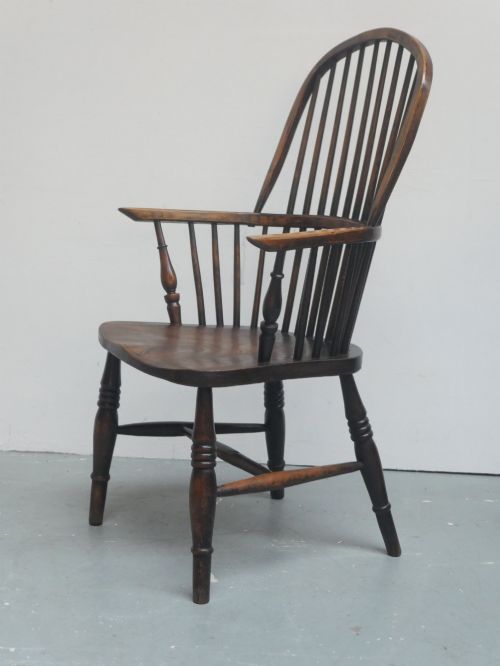
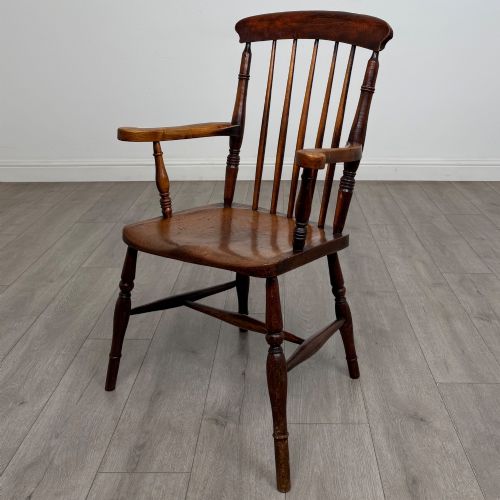
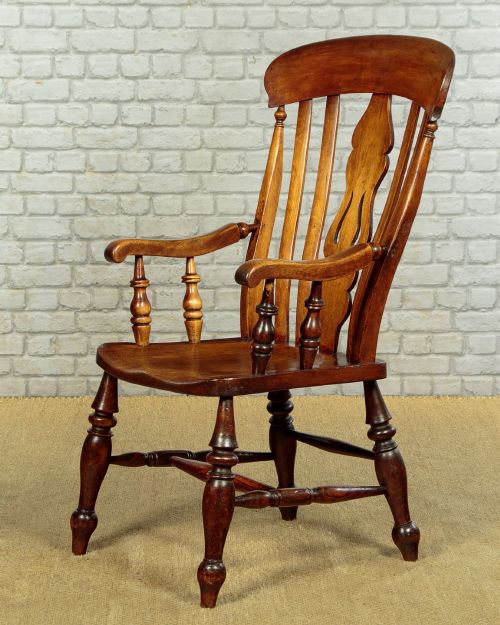
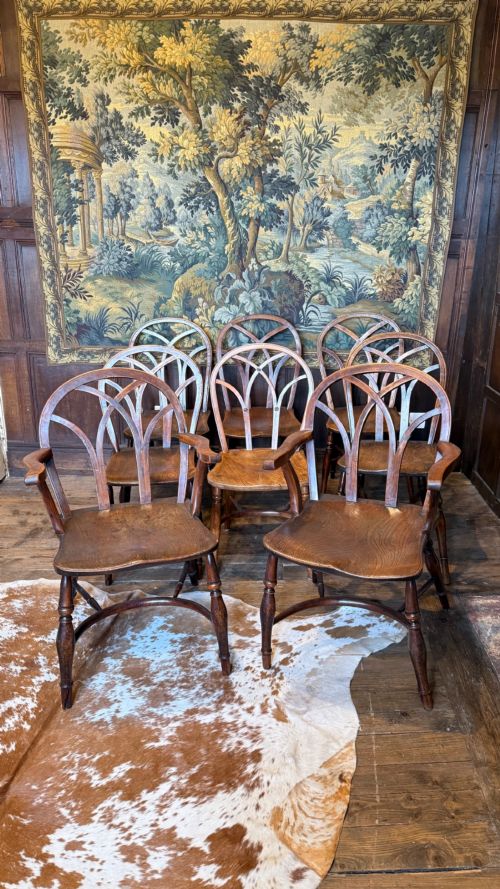
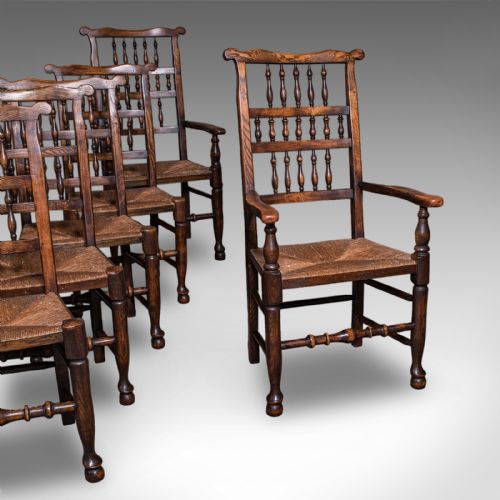
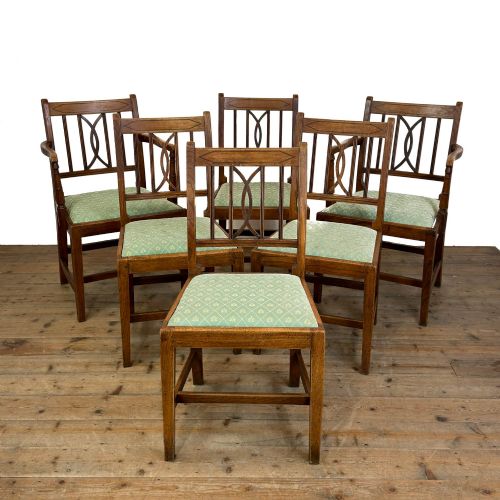
A vintage country kitchen armchair is a utilitarian seating form rooted in rural domestic life, spanning periods from the early nineteenth century through to the Edwardian era. When you search for this phrase, you encounter robust Windsor designs alongside stick-back, lath-back, and slat-back variants intended for daily farmhouse use.
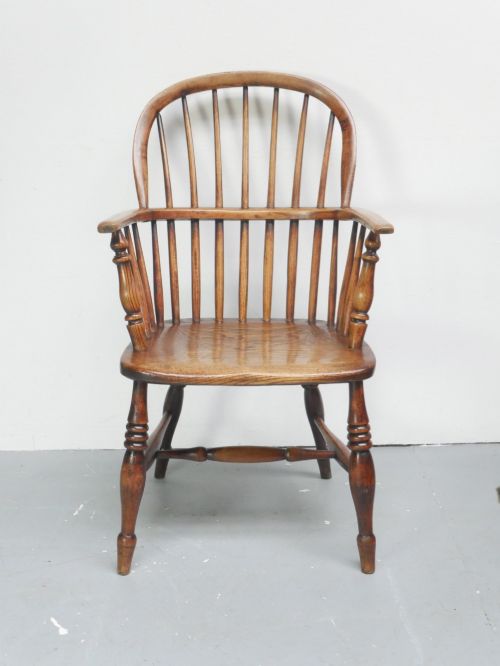
The most common examples on this page are Windsor armchairs featuring elm seats combined with ash, beech, or yew for the frames and spindles. These pieces range from low-back forms to high-back and broad-arm variations originating across English, Scottish, and Welsh vernacular traditions.
How they were made
Construction relies heavily on native hardwoods selected for specific structural duties, pairing resilient elm for carved saddle seats with flexible ash or beech for bentwood hoops and turned spindles. Yew appears in select frames, prized for its distinctive grain and durability in provincial joinery.
Joinery methods utilise traditional techniques where legs and spindles are wedged directly into bored holes within the solid wood seat slab. Steam-bending forms the continuous bows and arm rails, while turned components demonstrate the work of local pole lathes and traditional woodturning.
Listings feature regional variations spanning English, Scottish, and Welsh vernacular traditions, constructed predominantly in elm, ash, beech, and oak.
What varies in quality
Quality in a country armchair rests upon the integrity of the timber selection and the retention of original structural components. Chairs fashioned with thick, well-figured elm seat slabs and matching native turnings command higher regard than those compromised by later repairs or mismatched replacement parts.
Proportion and stance dictate visual success, separating master provincial output from utilitarian workshop output. A balanced comb-back or bow hoop with crisp spindle turnings and minimal historical alteration demonstrates superior regional craftsmanship.
The Vintage Country Kitchen Armchair Glossary
- Windsor
- A chair built with a solid wooden seat into which the legs and back spindles are separately inserted. This form dominates rural seating traditions.
- Saddle seat
- A wooden seat base carved into a concave, ergonomic depression for comfort. Elm is the timber most frequently shaped for this purpose.
- Spindle back
- A chair back constructed from vertical turned wooden rods. These components provide rigid support within the arched frame.
- Broad arm
- An armchair featuring widened, flat wooden armrests designed for utility. This variation is common in heavier farmhouse seating.
- Vernacular
- Regional furniture made by local craftsmen for practical domestic use rather than following formal metropolitan design styles.
Vintage Country Kitchen Armchair: Frequently Asked Questions
Are these chairs comfortable for daily sitting?
Most examples feature ergonomically shaped elm saddle seats that provide surprising support during prolonged use. Their sturdy timber construction makes them well suited for regular dining or desk tasks.
Because they lack upholstery, adding a simple cushion can increase softness if you plan to sit for extended periods.
How do I identify a Windsor armchair?
A Windsor is defined by its construction method, where all structural parts including legs and back rails attach directly into a thick wooden seat. Look for turned spindles and a bentwood bow forming the upper back.
Regional variations differ in hoop shapes and arm designs, but the central principle of a solid slab seat remains constant.
Will an antique armchair fit a modern kitchen?
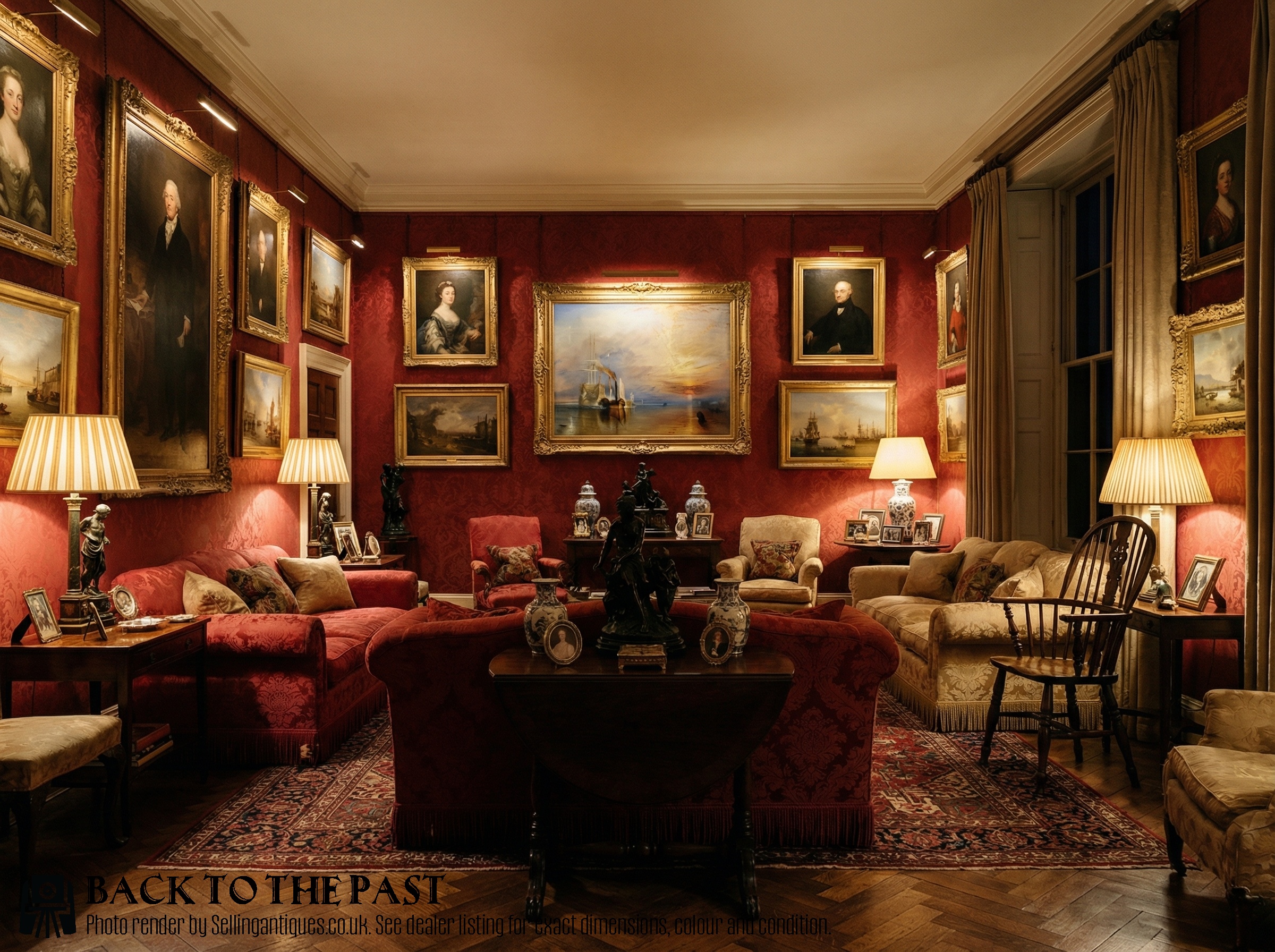
These rustic seats integrate easily into contemporary spaces by providing a natural contrast to sleek surfaces and modern cabinetry. Their modest footprints allow them to function as desk chairs or standalone accent pieces.
Measure the height of your table or desk beforehand, as older arm clearance dimensions can vary significantly.
How should I care for historic wood?
Maintain the timber by applying traditional beeswax periodically to nourish dry surfaces and preserve the natural patina. Avoid placing chairs near direct heat sources to prevent the wood from splitting.
Gentle dusting with a dry cloth keeps the finish intact without stripping away decades of historical wear.