

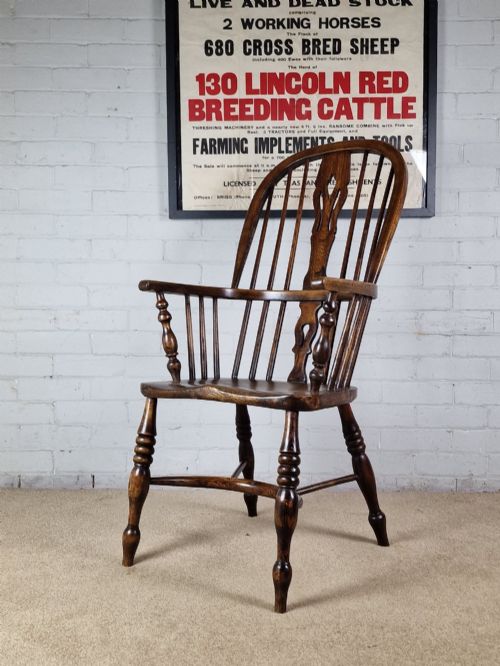
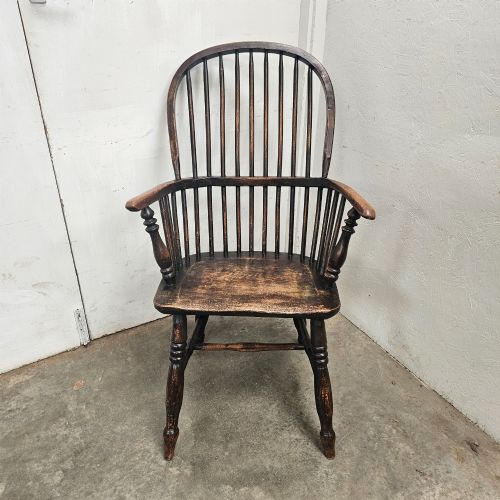
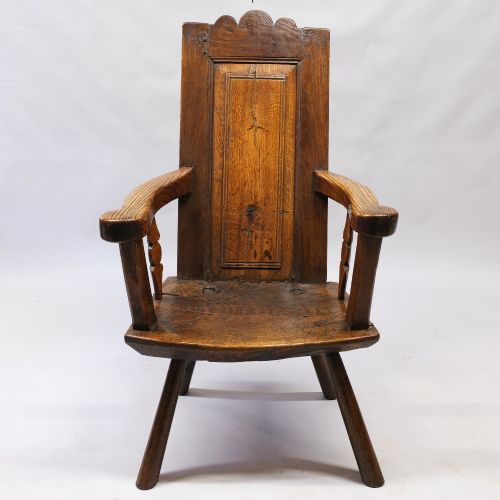
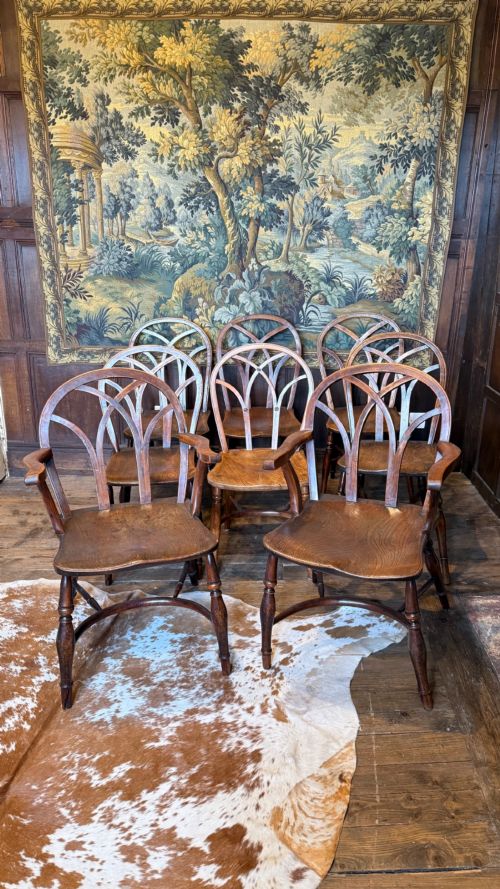
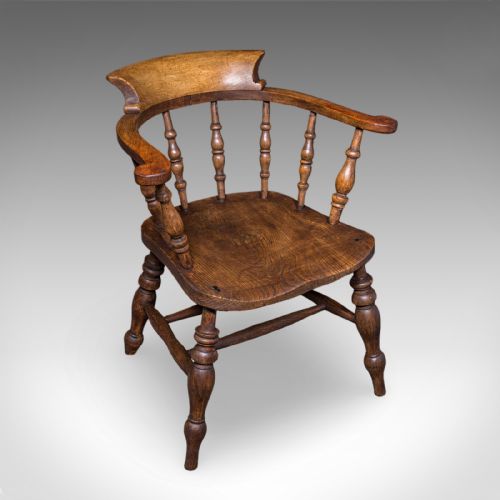
Dark Oak Windsor Armchair
A dark oak windsor armchair brings tactile warmth and vernacular strength to a room, offering sturdy seating shaped by centuries of regional craftsmanship.
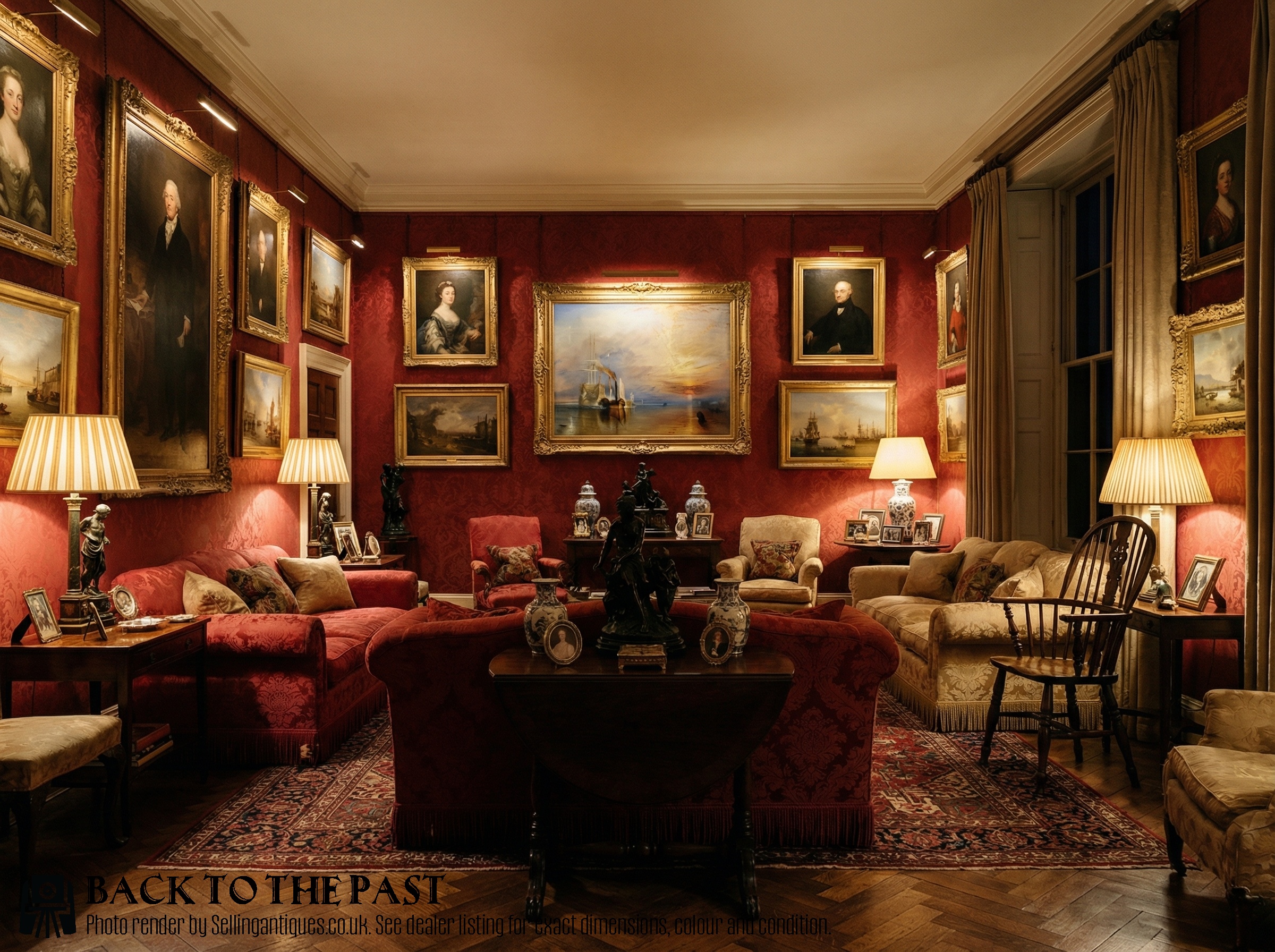
Dark Oak Windsor Armchair
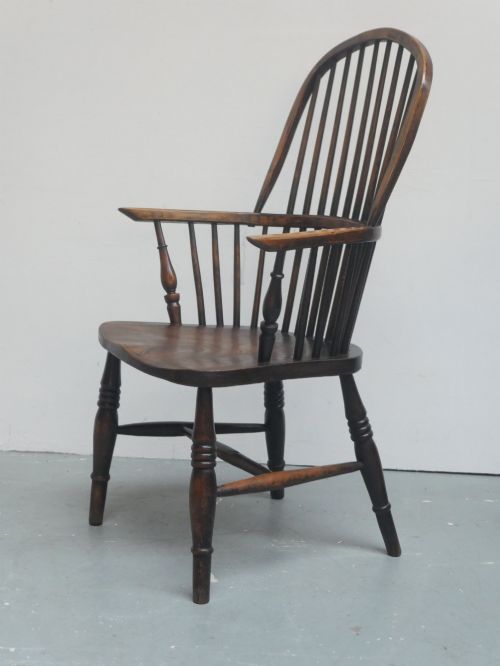
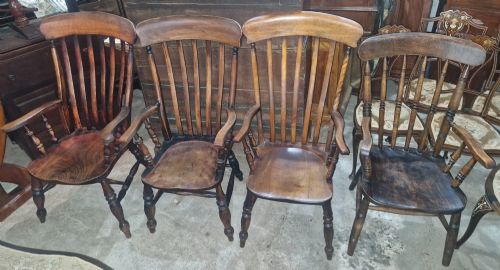
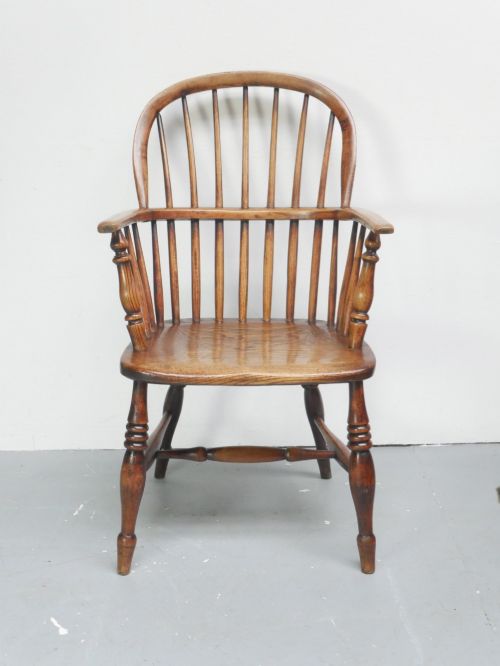
A dark oak windsor armchair is a robust form of seating defined by its wooden seat with legs and back spindles pegged directly into the block. When searching for a dark oak windsor armchair, buyers encounter pieces originating from regional traditions across the British Isles, spanning the eighteenth century through the Edwardian period.
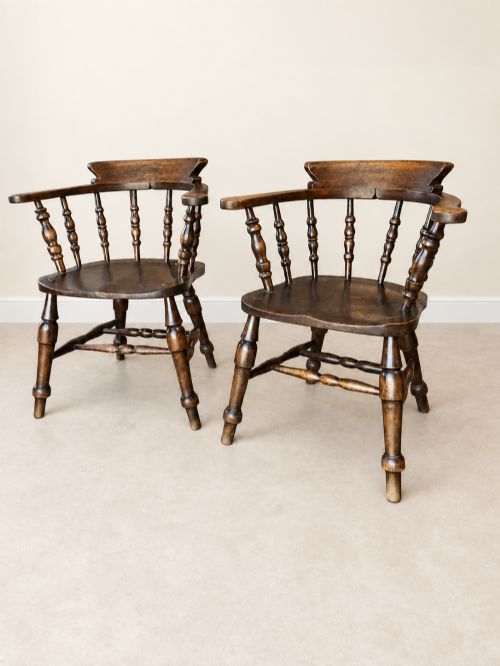
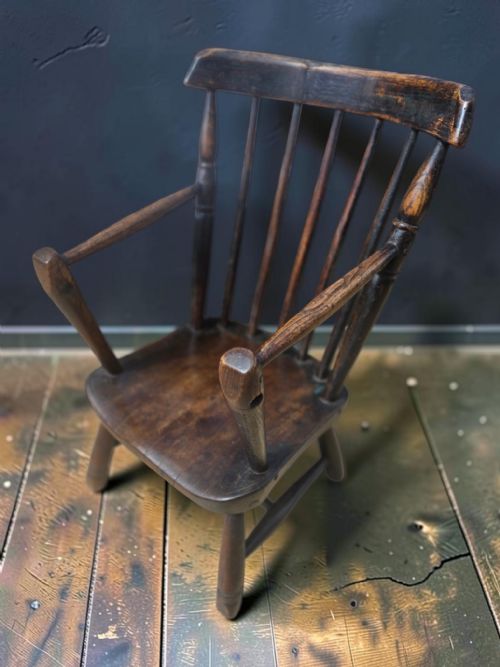
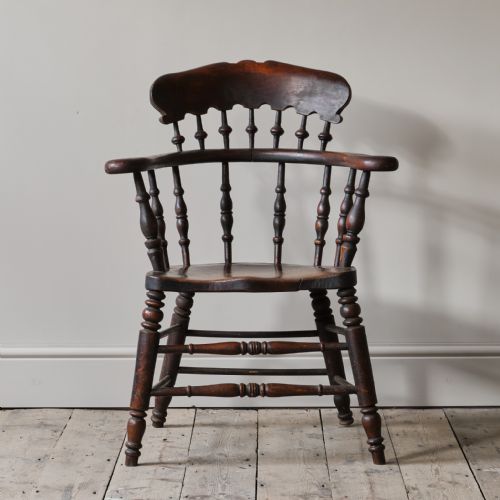
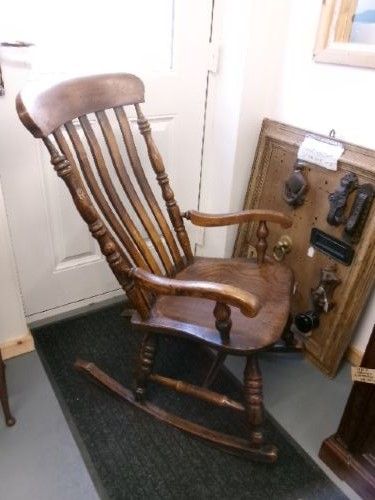
The selections on this page encompass various regional vernacular styles, including Thames Valley, Welsh, Scottish, and Yorkshire forms. Alongside standard armchairs, the inventory includes smoker's bows, captains' chairs, rocking chairs, and children's high chairs.
Most examples date from the nineteenth century, built for farmhouse kitchens, country houses, and rural parlours. Earlier eighteenth-century iterations appear alongside later Victorian and Edwardian interpretations.
What varies in quality
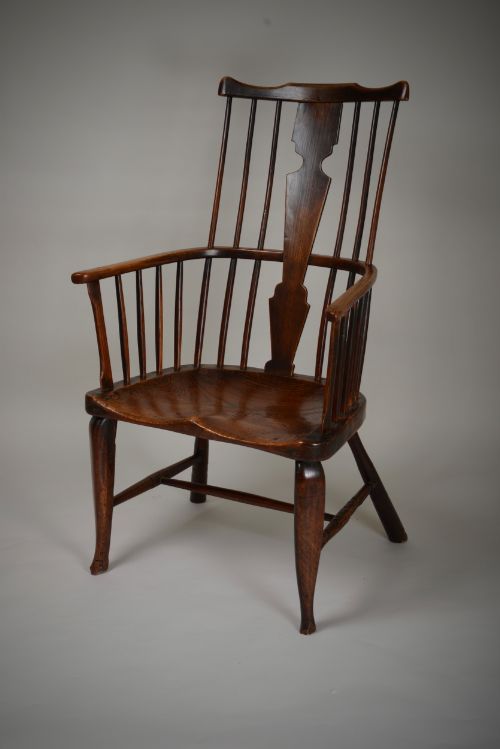
Quality in these chairs rests upon the harmony of proportions, the selection of timber, and the subtlety of the turner's work on the spindles and legs. Superior examples display confident ergonomics, such as a well-sculpted comb or hoop back that offers genuine lumbar support.
The integrity of the original timber surface and the presence of a natural, timeworn patina elevate a piece significantly. Chairs that retain their original wedged joints and uncompromised undercarriages represent the pinnacle of regional vernacular craft.
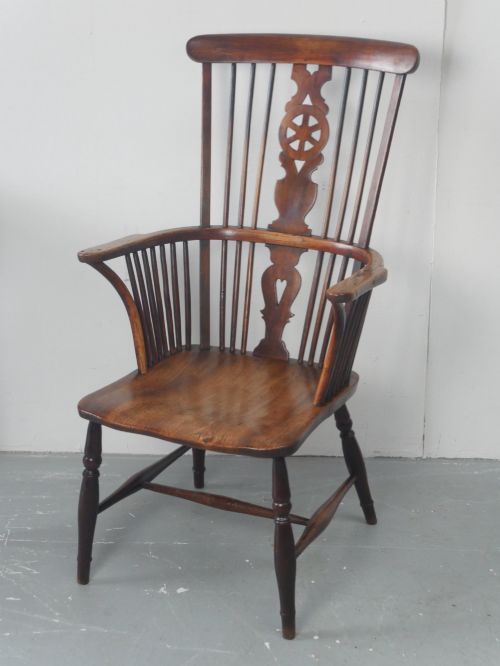
Makers occasionally added a bulls-eye detail to the central splat, leaving a distinctive carved signature unique to certain workshops.
Duncan McKellar of Fenwick
The Dark Oak Windsor Armchair Glossary
- Comb back
- A Windsor chair variation where the vertical spindles extend upward to support a horizontal top rail resembling a traditional hair comb.
- Smoker's bow
- A low-backed Windsor armchair, often associated with pubs and smoking rooms, featuring a continuous curved arm rail.
- Vernacular
- Objects designed and built by local craftsmen using regional traditions and readily available materials rather than following academic pattern books.
- Spindle back
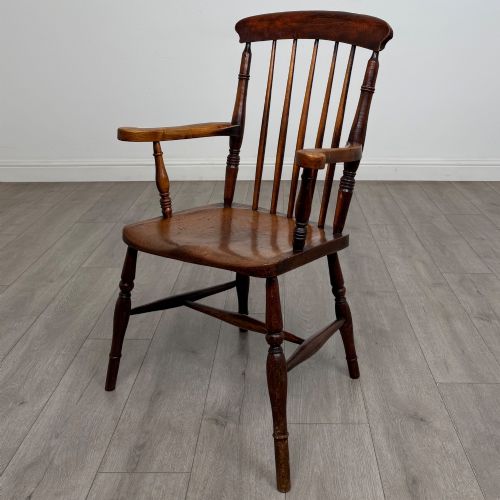
- A chair design utilising numerous slender turned wooden rods to form an open, supportive backrest.
- Patina
- The surface sheen and colour developed over decades of handling, exposure to light, and polishing by human hands.
Dark Oak Windsor Armchair: Frequently Asked Questions
What is a dark oak windsor armchair?
A dark oak windsor armchair is a traditional timber seat constructed with a solid wooden plank base into which the legs and back spindles are tenoned. These chairs developed through distinct regional styles across Britain, combining multiple native woods into a single sturdy frame.
They served utilitarian roles in farmhouses, kitchens, and country houses before becoming appreciated for their sculptural qualities and comfortable vernacular design.
How do I tell an 18th-century chair from a Victorian one?
Eighteenth-century examples often exhibit deeper saddle-shaped seats, finer spindle turnings, and older construction methods like cleft oak components. They typically display a more primitive, organic shaping born of individual rural workshop traditions.
Victorian and later pieces tend toward standardised production methods, heavier proportions, and sometimes machine-turned parts. Examining the underside reveals tool marks and joinery techniques unique to specific periods.
Where were these chairs historically used?
These armchairs found places in farmhouse kitchens, cottage hearths, and country house drawing rooms as everyday utility seating. Sturdy construction made them suitable for constant daily use by family members and guests alike.
Specific variants like smoker's bows were common in commercial establishments, while smaller versions were built specifically for children in domestic settings.
How do I care for a vintage wooden armchair?
Keep the timber conditioned by applying appropriate beeswax or natural polish periodically to maintain the surface moisture and protect the patina. Avoid placing the chair near direct heat sources or rapid temperature shifts that might cause the wood to split.
Inspect the undercarriage and leg joints occasionally to ensure the wedged tenons remain secure within the seat block.