
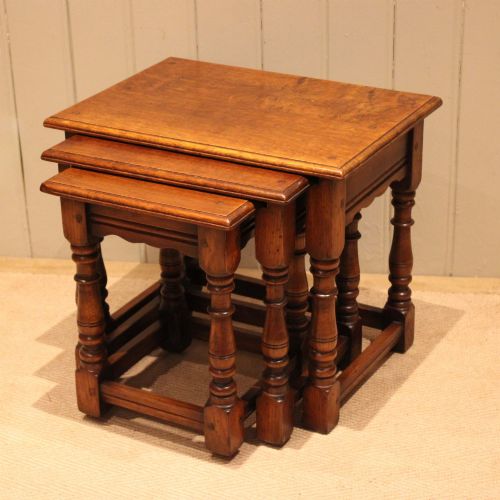
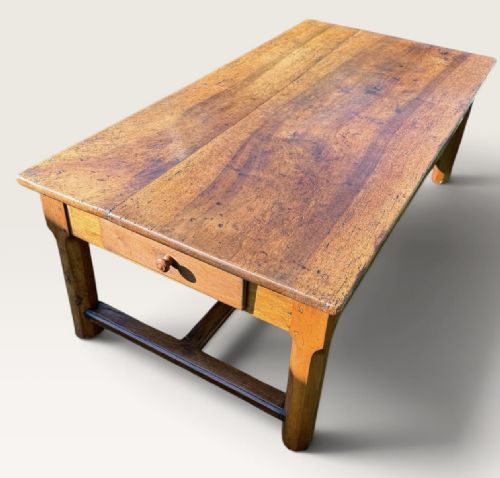
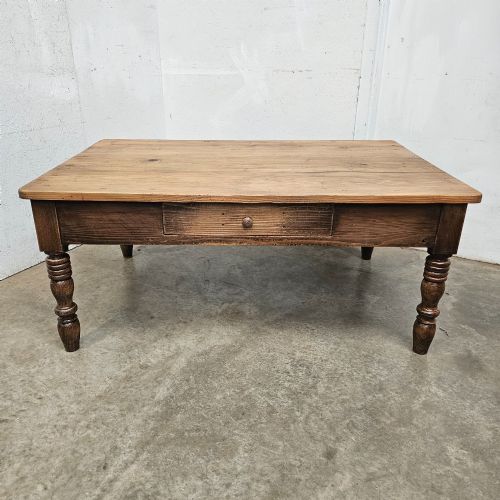
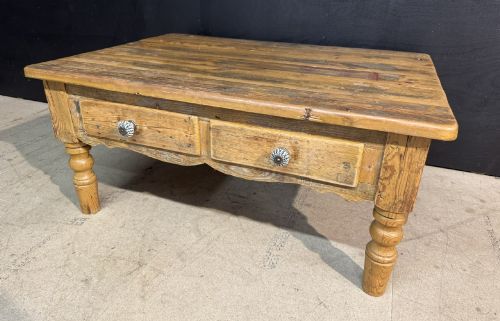
Vintage Country Coffee Table
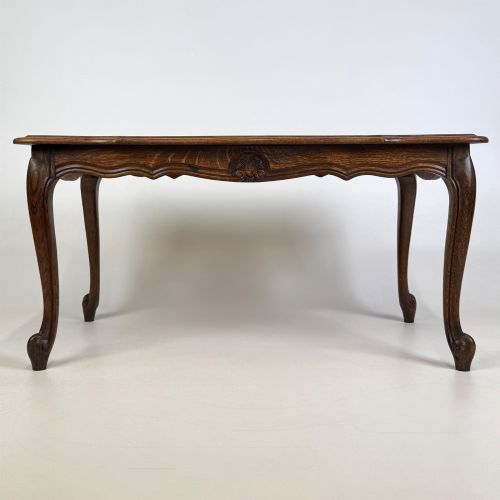
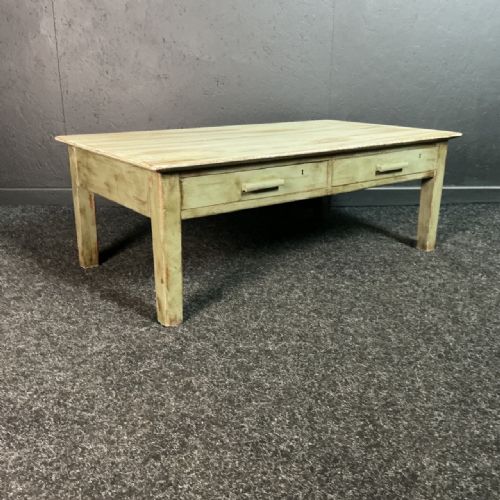
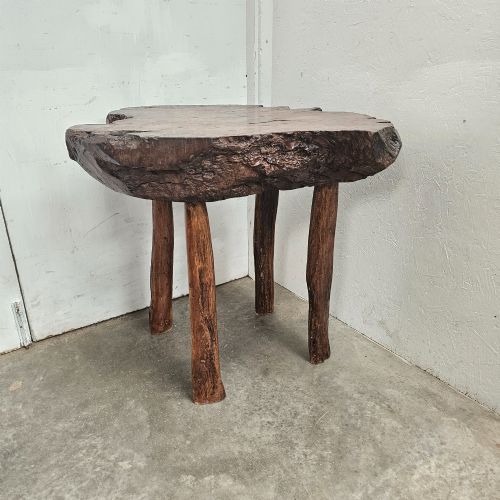
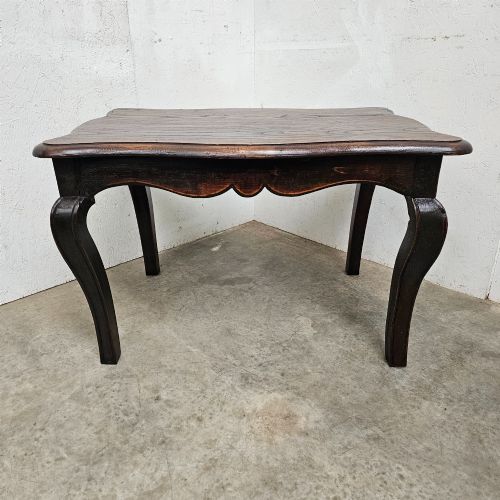
A vintage country coffee table brings robust timber and relaxed domestic history straight to the hearth of a sitting room.
Vintage Country Coffee Table
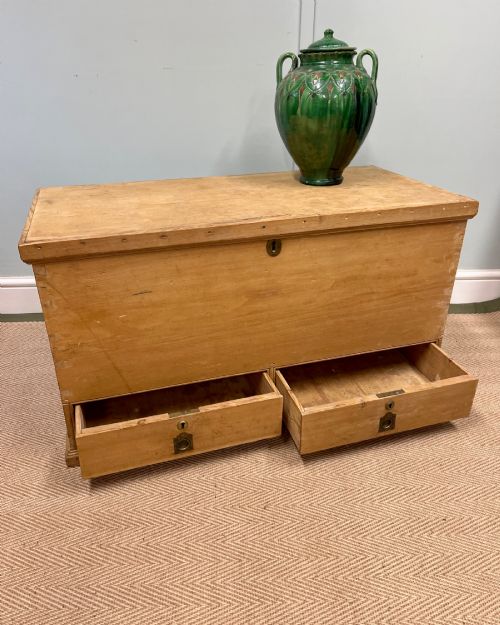
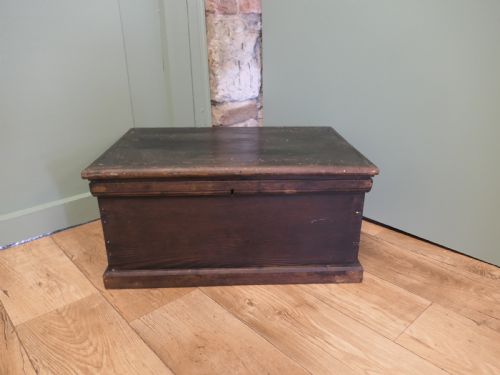
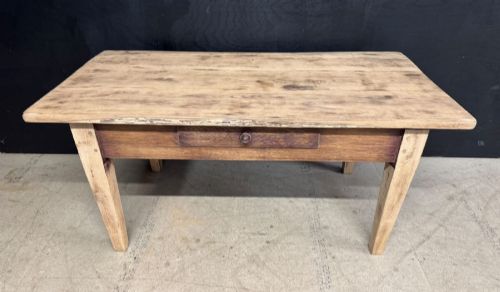
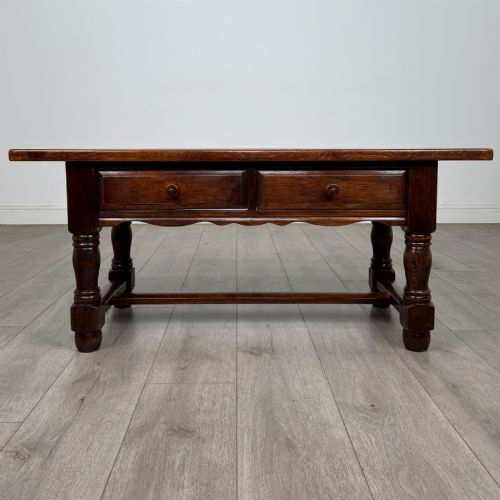
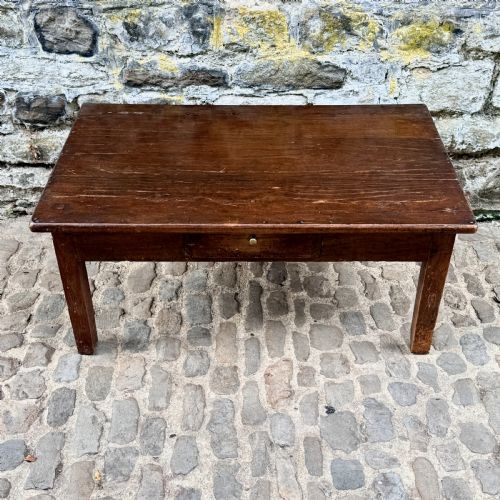
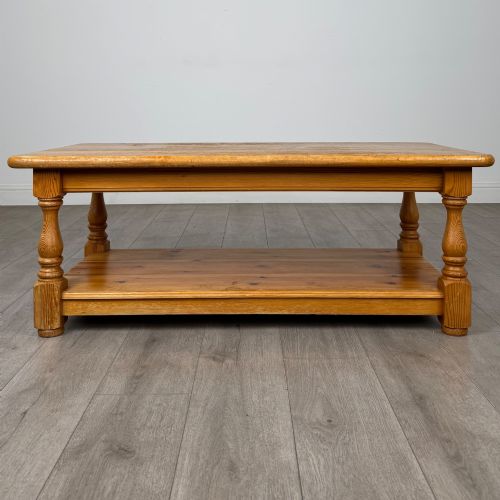
A vintage country coffee table encompasses low utilitarian forms adapted for modern living, drawing heavily from nineteenth-century and early twentieth-century domestic life. When searching for a vintage country coffee table, buyers encounter a rich mix of repurposed benches, low side tables, and sturdy pine or oak boards.
The pieces appearing most frequently on this page originate from English and French traditions, often featuring the honest construction of regional workshops. Forms span from turned-leg pine tables and low elm boards to adapted pig benches and cheese press tables.
Makers working within these styles prioritized utility and sturdy local timbers, resulting in low tables that anchor a room with unpretentious character. The selection balances rustic farmhouse charm with the quieter elegance of polished oak and cherry wood.
Materials and construction
Construction relies upon honest, durable timbers such as oak, pine, elm, and fruitwood, often joined with simple pegging or sturdy dovetailing. Artisans shaped these domestic woods by hand, leaving tool marks and grain patterns visible beneath waxed or painted surfaces.
Many examples utilise repurposed agricultural or workshop items, converting sturdy pine pig benches, dairy tables, and chestnut boards into low tables. Wrought iron and brass hardware occasionally appear on French low tables and tray tops, adding functional contrast to the wooden frames.
Design styles represented include rustic farmhouse, French provincial, Jacobean revival, and English country house aesthetics.
Assessing quality in country furniture
Quality rests in the integrity of the timber and the honesty of the conversion, distinguishing purposeful regional craftsmanship from later alterations. Dense grain, mature patina, and original fixings elevate a piece above simpler utilitarian items.
Proportion and stability separate finer low tables from standard workshop output, particularly in pieces adapted from longer benches or presses. The depth of the waxed finish and the preservation of natural wear mark the distinction between everyday items and superior examples.
The Vintage Country Coffee Table Glossary
- Pig bench
- A low wooden bench traditionally used in agricultural preparation, frequently adapted today as a long coffee table. These pieces usually feature narrow proportions and sturdy solid timber construction.
- Cheese press table
- A heavy utilitarian table derived from dairy production equipment, valued for its substantial wooden top and robust framework. They provide exceptional character and stability in a living space.
- Turned leg
- A support column shaped on a lathe to create cylindrical or decorative profiles. This classic joinery detail appears frequently on nineteenth-century pine and oak tables.
- Patina
- The deep surface sheen and mellow coloration developed by wood through decades of handling, waxing, and exposure to light. It serves as a primary indicator of genuine age.
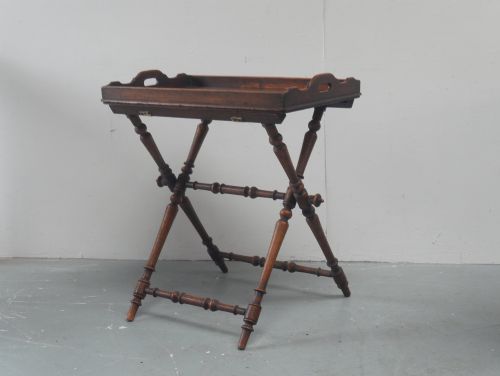
- Butlers tray
- A portable wooden tray with hinged or shaped sides, designed to fit upon a folding stand. When paired together, they create a versatile surface suited for occasional use.
Vintage Country Coffee Table: Frequently Asked Questions
What is a country coffee table?
A country coffee table is a low surface made from traditional timbers like pine, oak, and elm, often originating from utilitarian forms such as benches or farmhouse tables. These pieces bring warmth and functional history into a modern sitting room.
They stand apart from formal antique furniture through their unpretentious construction and visible signs of past domestic or agricultural use.
How do I style a wooden coffee table?
Pair a wooden coffee table with upholstered seating and textiles to balance the robust texture of antique oak, pine, or fruitwood. Keeping the surface clutter-free allows the natural grain and aged patina to command attention.
Mixing these rustic surfaces with contemporary lamps or books creates a grounded, layered interior scheme.
How do I tell pine from oak?
Pine is a softer softwood that typically displays a lighter colour and straighter grain, often finished with wax or paint in country interiors. Oak is a dense hardwood featuring prominent growth rings and medullary rays that produce a distinctive flecked pattern.
Weight and surface hardness also differentiate the two timbers, with oak offering greater resistance to daily wear.
Are these tables suitable for daily use?
These tables are exceptionally well-suited for everyday living because they were originally built for hard work in farmhouses, workshops, and kitchens. Their durable timber construction easily handles the demands of daily family life.
Existing knocks and marks mean that modern use simply adds to their ongoing history rather than damaging a pristine finish.
What period do these tables come from?
The listings span from the eighteenth century through the Victorian era and into the early twentieth century. This timeline captures an era when furniture was handmade by regional artisans using locally sourced woods.
Victorian and Edwardian examples sit alongside earlier pieces, offering a wide spectrum of regional styles.