





Vintage Corner Whatnot
A vintage corner whatnot offers tiered display space designed specifically to fit an unutilised room angle.
Vintage Corner Whatnot
A vintage corner whatnot takes the form of a tiered shelving unit built to slot neatly into the intersection of two walls. These pieces serve as display stands, etageres, and shelving units for ornaments and books.
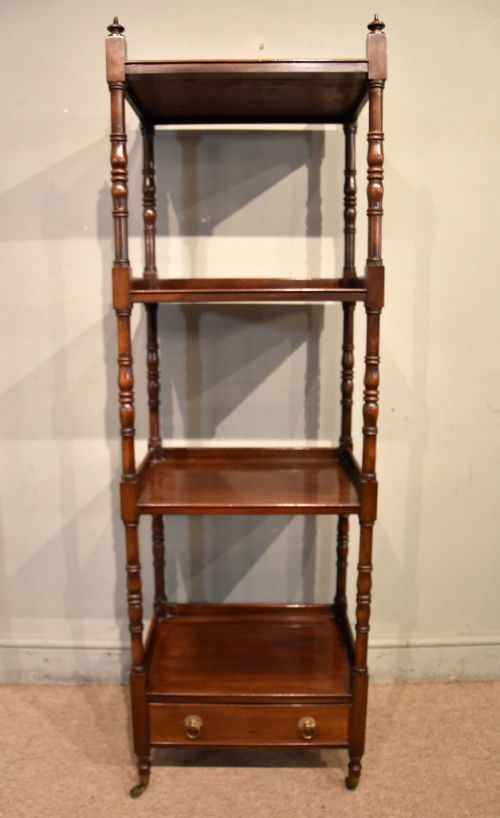
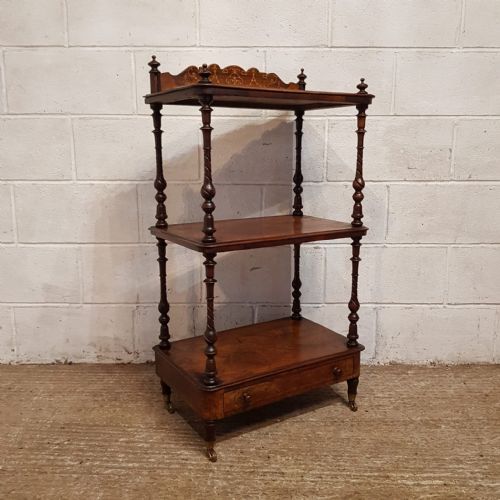
The selections appearing under this search span multiple periods including Georgian, Regency, Victorian, and Edwardian eras. Formats range from simple three-tier open shelves to sophisticated units featuring built-in cupboards.
Makers utilised various configurations such as A-frame structures and tapering forms to maximise display capacity in compact spaces. Mahogany and walnut dominate the structural choices across these historical pieces.
Materials and construction
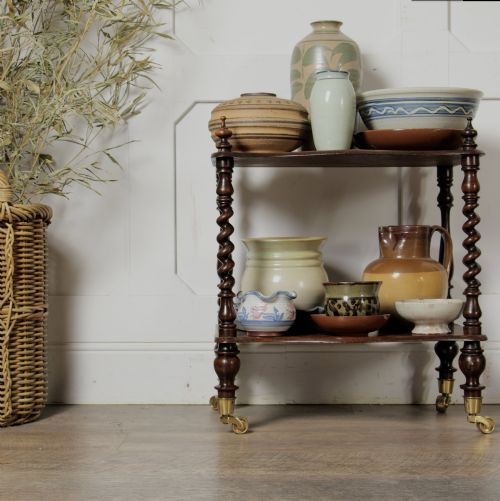
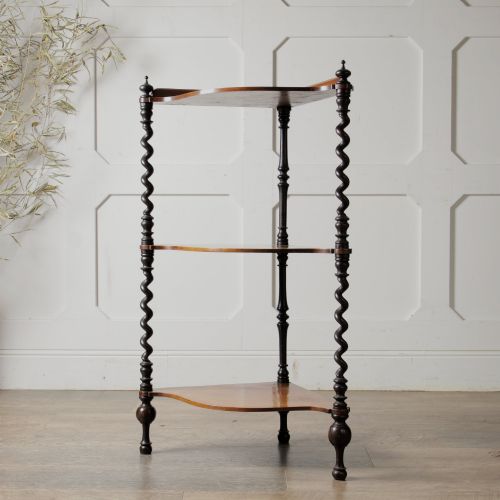
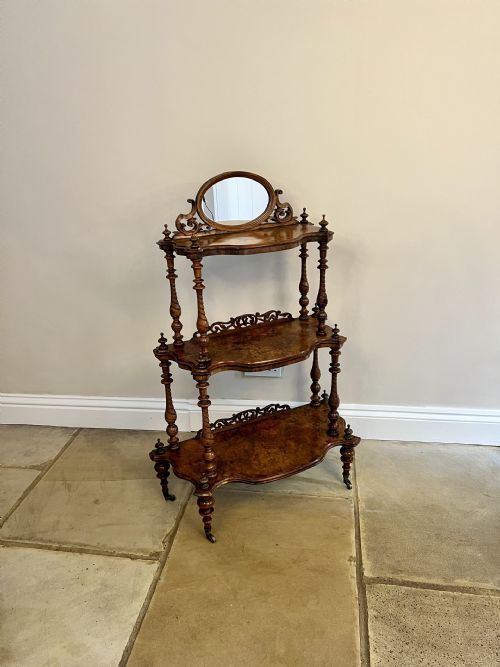
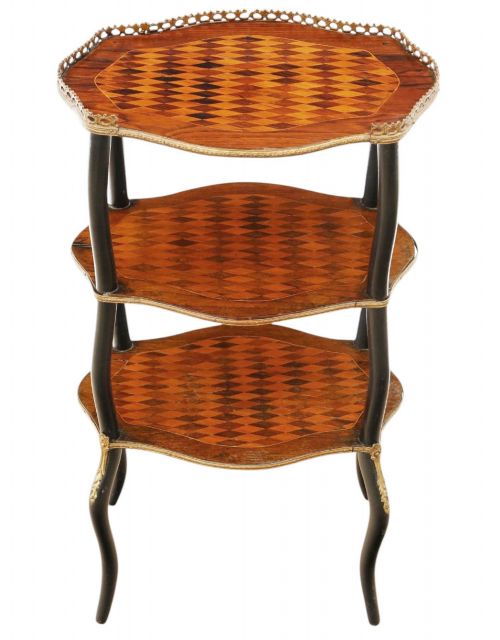
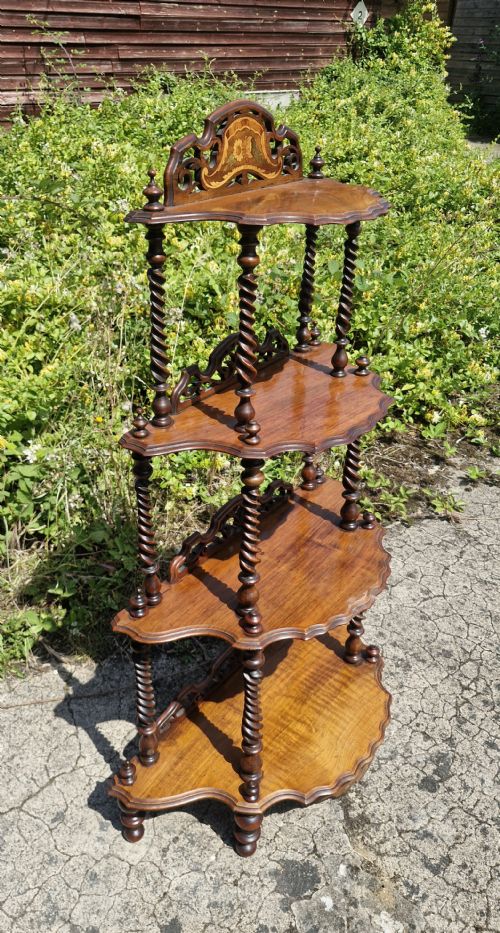
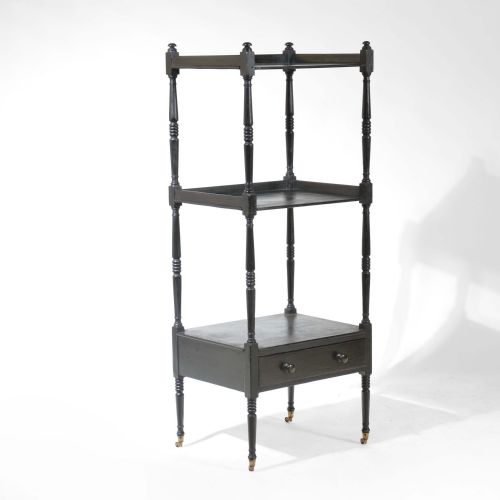
Cabinetmakers constructed these corner shelves primarily using dense timbers like mahogany, walnut, and burr walnut, sometimes incorporating ebonised wood for contrast. Inlaid parquetry and decorative turned elements such as barley twist columns appear frequently across the pieces.
Fine joinery techniques secure the multiple tiers to upright supports, ensuring stability across taller four and five-tier units. Additional details include brass fittings, mirror glass panels, and occasional marble tops on late period examples.
Some Victorian examples feature barley twist columns so energetically turned they appear ready to dance out of the corner.
What separates the best from the rest
Quality in these corner units rests upon the choice of timber and the precision of the cabinetwork. Burr walnut veneers and intricate inlaid parquetry denote finer workshop production compared to simpler mahogany shelves.
Structural refinement shows in the turning of columns, such as barley twist supports, and the tight fit of the corner joints. The inclusion of functional cabinetry or superior surface finishing elevates the stature of an individual piece.
The Vintage Corner Whatnot Glossary
- Whatnot
- A set of open shelves used for displaying ornaments and small objects. It originated in the late eighteenth century and gained immense popularity throughout the Victorian era.
- Etagere
- A piece of furniture consisting of a set of open shelves for displaying small articles. The term derives from the French word for a stage or shelf.
- Barley twist
- A type of decorative turning resembling a helix or rope. This technique frequently forms the upright supports on Victorian stands.
- Parquetry
- Geometric mosaic woodwork used for decorative floors or furniture panels. Craftsmen arrange contrasting timber veneers to form intricate patterns.
- Dumb waiter
- A tiered stand used for holding food or tableware without the need for servants. Some examples share forms with traditional shelving units.
Vintage Corner Whatnot: Frequently Asked Questions
What is a corner whatnot used for?
These tiered stands provide elevated display space for ceramics, small sculptures, and books. Their angular shape allows them to occupy unused room corners efficiently.
Historically, they served practical storage and display functions in parlours and drawing rooms. Today, they function well in modern interiors for exhibiting collections without taking up central floor space.
How do I date a corner whatnot?
Dating relies upon examining the timber species, decorative styles, and construction methods. Georgian and Regency examples typically display clean architectural lines in mahogany, while Victorian pieces often feature burr walnut or barley twist supports.
Later nineteenth and early twentieth-century versions may incorporate ebonised wood and inlaid parquetry. Reviewing the specific turnings and hardware helps narrow down the period of manufacture.
Are all these stands made for corners?
The listings include both specific corner designs and freestanding rectangular units. Freestanding etageres and multi-tier shelves share similar functions but are built for flat walls rather than room angles.
Buyers searching for corner units should check the structural description and shape. Tapering forms and A-frame constructions often indicate a piece intended for an angle.
How do I care for a walnut whatnot?
Maintain walnut and mahogany surfaces by keeping the furniture away from direct sunlight and rapid temperature fluctuations. Regular dusting with a soft, dry cloth preserves the polished finish.
Avoid placing damp items directly onto the timber or marble tops. Applying a traditional wax polish occasionally helps nourish the historic wood.