
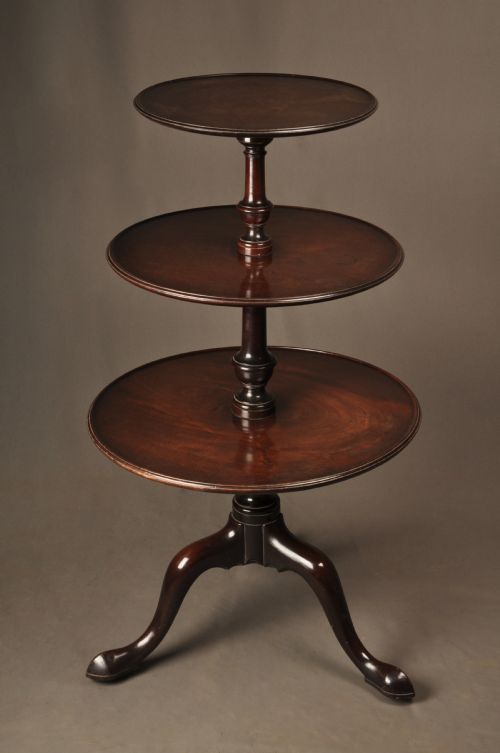


Three Tier Accent Table
A three tier accent table offers tiered surfaces for display and service, combining practical multi-level storage with period character.
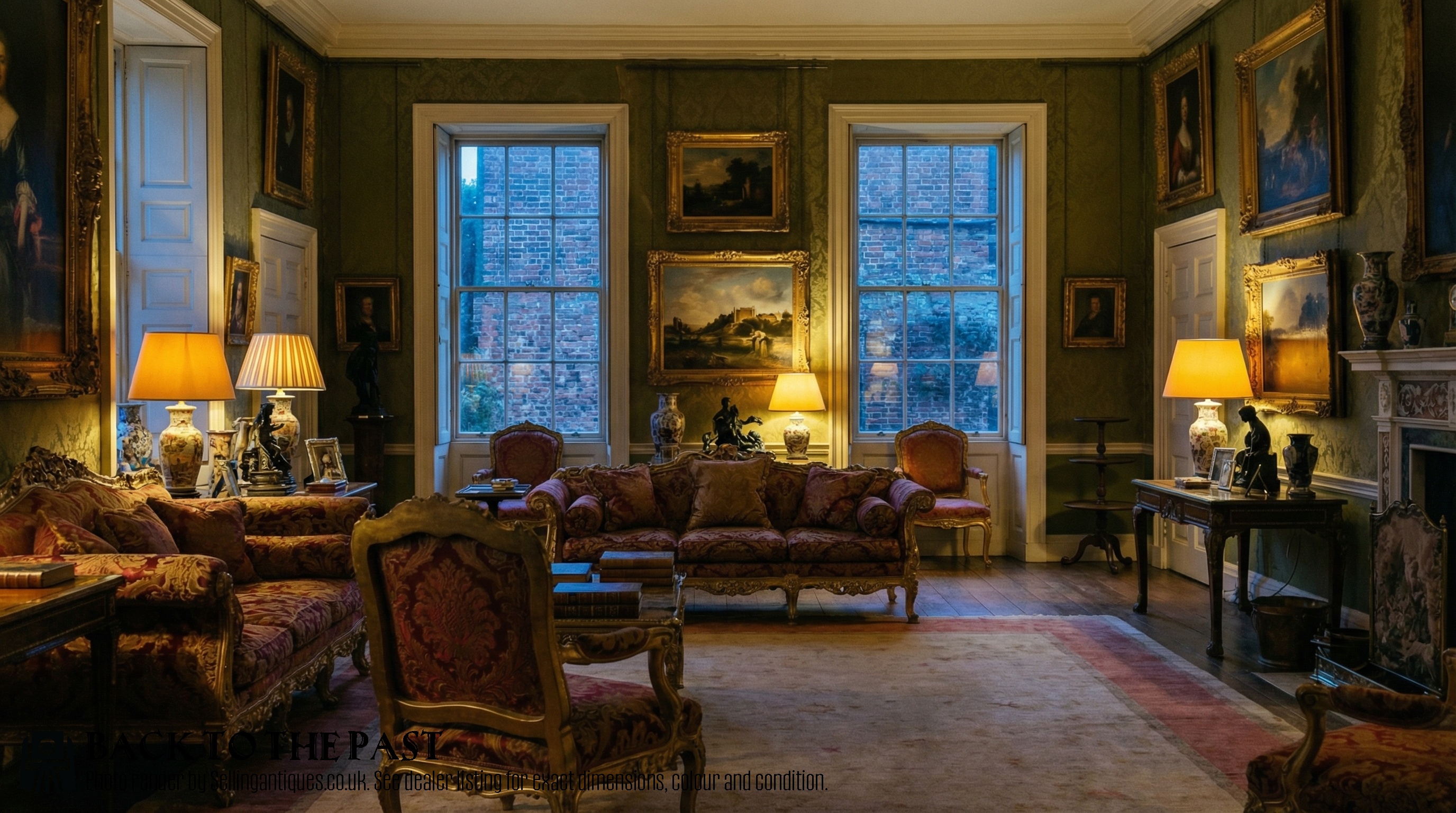
Three Tier Accent Table
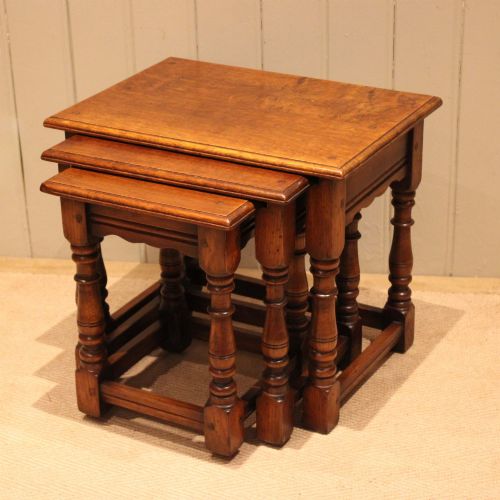
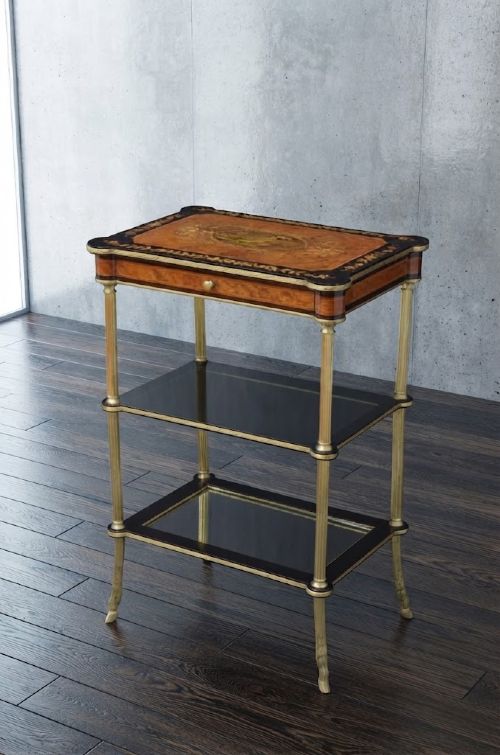
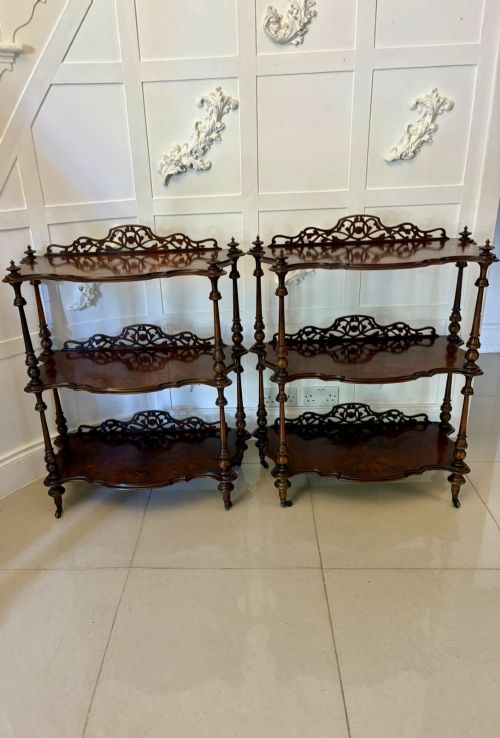
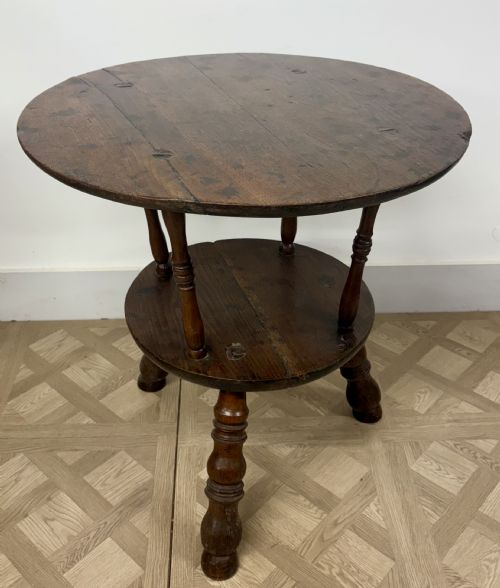
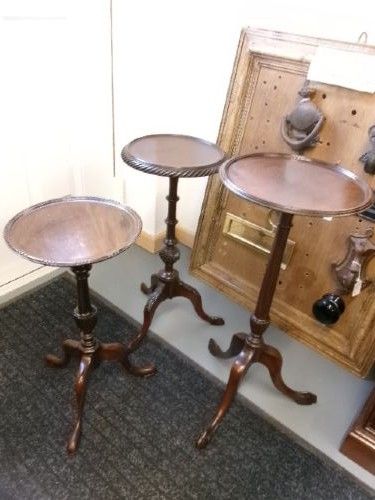
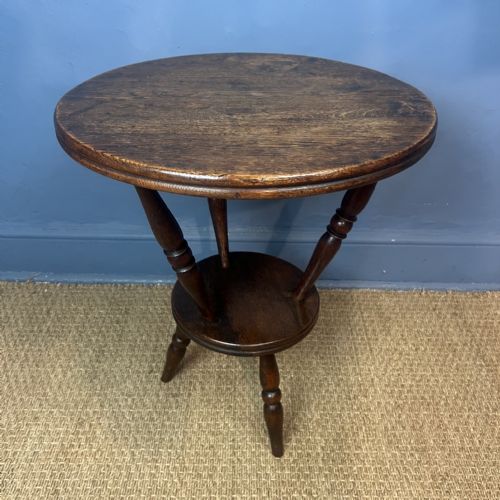
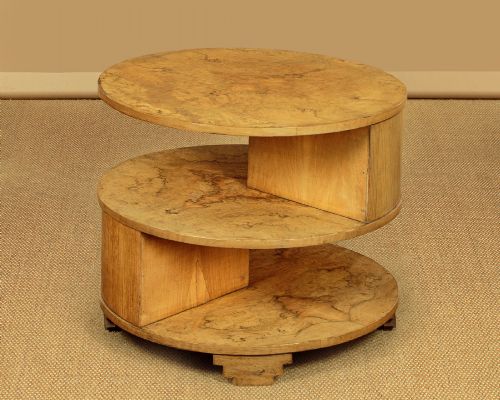
A three tier accent table encompasses varied multi-level forms designed for service and display, spanning centuries of British and continental cabinet-making. You will encounter classical dumb waiters, tiered whatnots, etageres, and nests of tables in these listings.
The pieces emerge from distinct eras, ranging from Georgian and Regency workshops to Victorian, Edwardian, and Art Deco periods. Mahogany, walnut, and oak dominate the selection, often complemented by brass mounts, marble tops, and marquetry inlay.
Materials and Construction
Cabinet-makers utilised dense hardwoods such as mahogany, rosewood, walnut, and oak to construct upright supports and graduated shelves. Finer examples incorporate decorative veneers, amboyna, ebonised wood, and brass mounts.
Joinery methods varied according to the period, employing turned columns, tripod bases, and galleried edges to secure the multiple tiers. Marble inserts and mirrored glass frequently serve as surfaces on French etageres and side tables.
Design periods span the eighteenth century, Georgian, Regency, Victorian, Edwardian, Art Deco, and the twentieth century.
Evaluating Craftsmanship
Quality rests upon the selection of timber figures, the crispness of carved details, and the integrity of the tier supports. Superior examples display balanced proportions and refined turning on the central columns or uprights.
The refinement of brass fittings, the precision of inlaid marquetry, and the stability of stacked shelves distinguish workshop pieces from mass production. Original surfaces and patination further elevate the standing of antique tiers.
Gillows·Michel Dufet
The Three Tier Accent Table Glossary
- Dumb waiter
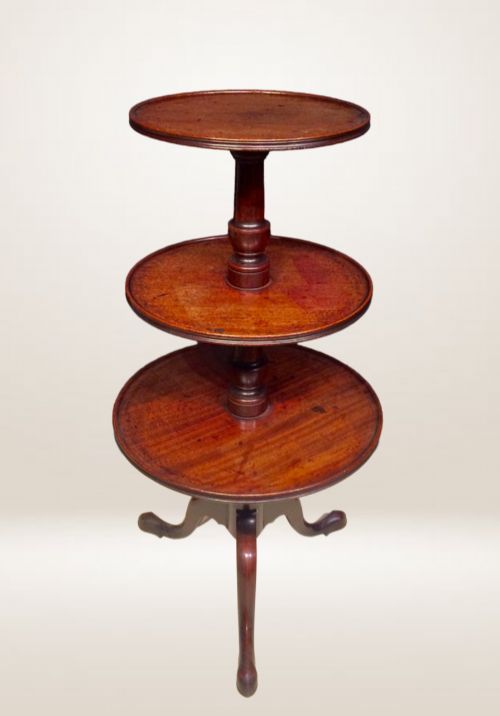
- A tiered serving table fitted with graduating circular or rectangular trays on a central pillar. These pieces originated in the dining rooms of the eighteenth century.
- Whatnot
- An open set of freestanding shelves designed for displaying ornaments and books. Victorian and Georgian examples frequently feature three or more tiers.
- Etagere
- A French multi-tiered piece of furniture used for display. These items often showcase marquetry, brass inlay, and mirrored panels.
- Galleried
- A raised edge or miniature rail surrounding a tabletop or shelf. This feature prevents objects from sliding off upper tiers.
- Nest of tables
- A set of graduated tables designed to fit neatly beneath one another. They appear in mahogany and oak across Edwardian and later twentieth-century output.
Three Tier Accent Table: Frequently Asked Questions
What is a three tier accent table used for?
These pieces function as multi-level surfaces for displaying decorative objects, holding lamps, or serving food and drinks. Their stacked design maximises surface area while occupying a modest footprint in a room.
Historically, forms like dumb waiters and whatnots served dining rooms and drawing rooms alike. Today, they integrate easily beside seating areas or within hallways as versatile display stands.
How do I identify a Georgian dumb waiter?
Georgian examples typically feature three graduated circular trays supported by a central turned pillar and tripod base. Mahogany is the predominant timber, often finished with subtle mouldings or galleried edges.
Cabinets of this era prioritize sturdy pillar construction and balanced proportions designed for dining room service. Maker attributions sometimes point to prominent workshops of the eighteenth century.
What is the difference between an etagere and a whatnot?
An etagere is typically of French origin, frequently incorporating decorative elements such as brass mounts, marquetry, and mirrored glass tiers. They emphasise decorative display in formal reception spaces.
Whatnots generally refer to English shelving furniture from the Victorian and Georgian periods. They serve a similar multi-tiered purpose but often employ simpler turned uprights in mahogany, walnut, or rosewood.
How do I care for antique wood tiers?
Maintain timber surfaces by dusting regularly with a soft, dry cloth and avoiding excessive moisture. Natural wax applications help preserve the historic patination of antique mahogany and walnut.
Keep these tables away from direct heat sources and strong sunlight to prevent veneer lifting or timber splitting. Marble and mirrored glass inserts require gentle cleaning with appropriate non-abrasive solutions.