
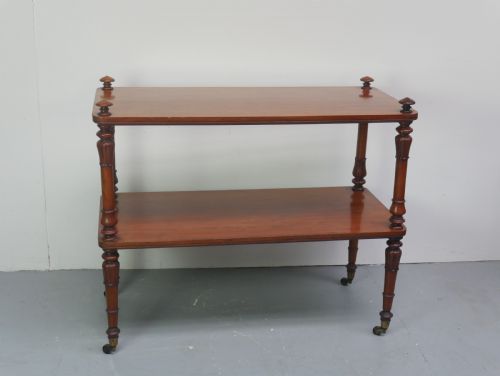


Edwardian Dumb Waiter Table
Edwardian dumb waiter table pieces offer tiered wooden surfaces for serving and display, bringing practical British dining history into modern rooms.
Edwardian Dumb Waiter Table
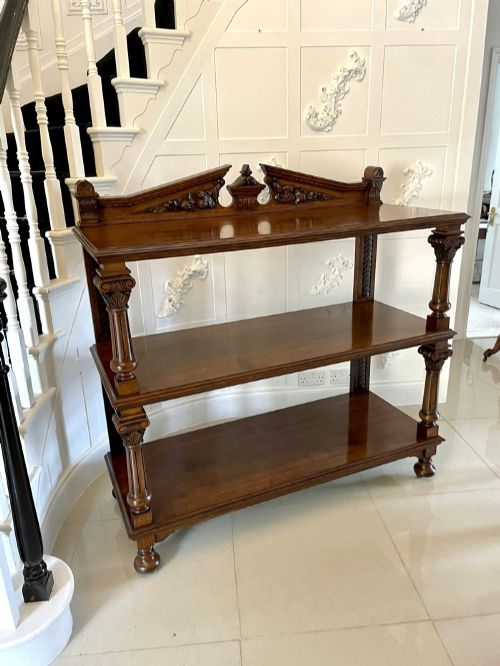
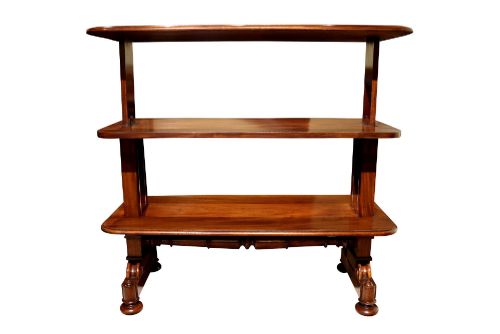
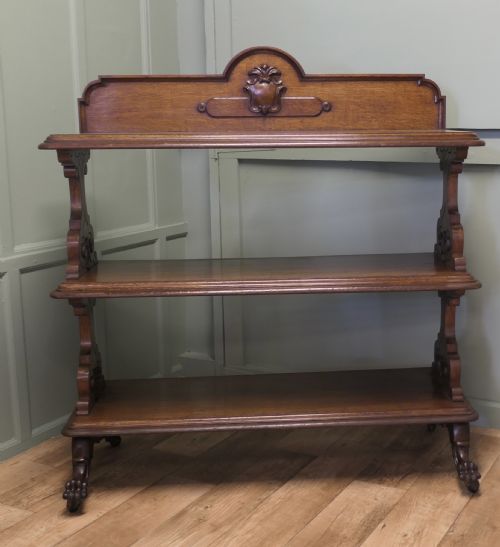
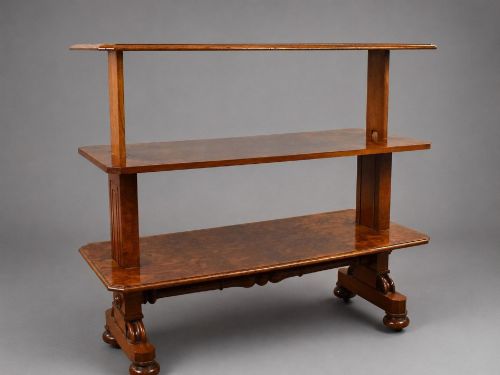
An edwardian dumb waiter table provides stacked tiers of timber for holding dishes, books, or drinks within a domestic setting. These tiered items function as serving aids or display stands, drawing on earlier dining room traditions.
The versions most common here include mahogany and satinwood pieces featuring two or three tiers, sometimes with inlaid details or revolving mechanisms. While many carry Edwardian dates, the selection also spans Victorian, Georgian, and later periods using similar tiered forms.
What varies in quality
The standard of timber and intricacy of inlay separate standard examples from finer works, particularly where figured mahogany or delicate satinwood banding appears. Subtle differences in the turning of the central column and the precision of the tier joints dictate the overall refinement.
Mechanical elements such as revolving actions, rise and fall mechanisms, and folding designs show varying degrees of joinery skill. Examples retaining original brass fittings and stable tiered platforms demonstrate superior workshop execution.
The documented periods span from Georgian and Victorian eras through the Edwardian years and into the 1920s and 1930s.
Halls Patent
The Edwardian Dumb Waiter Table Glossary
- Dumbwaiter
- A multi-tiered serving table designed to hold food, drinks, or books without the need for constant attendants. These pieces use stacked circular or oval shelves supported by a central pillar.
- Etagere
- A set of open shelves used for displaying small objects, ornaments, or books. This form shares the tiered structure common to many dumb waiter tables.
- Lazy Susan
- A revolving tray or tabletop placed on a central pivot to allow items to be easily shared around a group. Revolving examples appear frequently among these serving tables.
- Inlay
- A technique where pieces of contrasting wood, such as satinwood, are inserted into recessed sections of a primary timber like mahogany to create decorative patterns.
- Rise and fall
- A mechanical function allowing specific tiers or columns to be adjusted in height. This mechanism appears on select telescopic dining and buffet tables.
Edwardian Dumb Waiter Table: Frequently Asked Questions
What is an edwardian dumb waiter table used for?
These pieces function as tiered serving stands or display surfaces for books, drinks, and decorative objects. Their stacked shelves provide extra horizontal space in dining rooms and living areas.
Historically, they aided in the service of meals by holding dishes near the dining table. Today, they serve equally well as side tables or plant stands.
How many tiers do these tables have?
Most examples feature either two or three tiers arranged vertically on a central wooden pillar. Some folding or revolving variants also utilise this multi-level design.
The height and number of shelves determine whether a piece functions as a low occasional table or a taller buffet stand.
Are these tables made of solid wood?
Makers constructed these pieces primarily from solid timbers like mahogany and oak, often incorporating veneers such as satinwood and burr walnut. Brass fittings and marble tops also appear on specific models.
The combination of dense hardwoods and turned columns ensures the stability required to support multiple stacked shelves.
How do I distinguish Edwardian from Victorian tables?
Edwardian examples often display lighter woods, subtle satinwood inlay, and refined Sheraton Revival influences. Victorian pieces tend to be heavier, utilising darker mahogany, burr walnut, and more robust turned supports.
Comparing the decorative carving, timber choice, and overall weight helps clarify the period of manufacture.
Do all dumb waiters revolve?
Not all pieces in this category revolve; many feature fixed tiers secured to a central column. Revolving models often incorporate terms like lazy susan or revolving in their description.
Whether fixed or rotating, the core design relies on stacked shelves supported by a central pedestal or tripod base.