




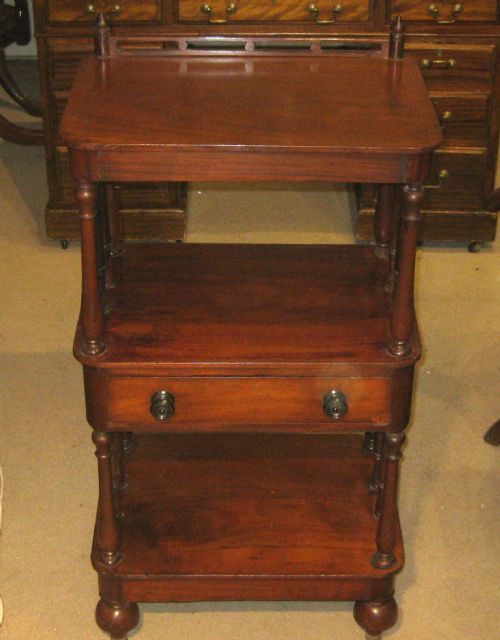


Edwardian Mahogany Whatnot
An edwardian mahogany whatnot brings tiered display space to a room, offering upright shelving with rich timber grain.

Edwardian Mahogany Whatnot
The search for an edwardian mahogany whatnot leads you to multi-tiered freestanding or hanging shelving units designed for display and utility. These pieces provide several open levels supported by uprights, serving as practical storage for books, collectibles, or bedside essentials.
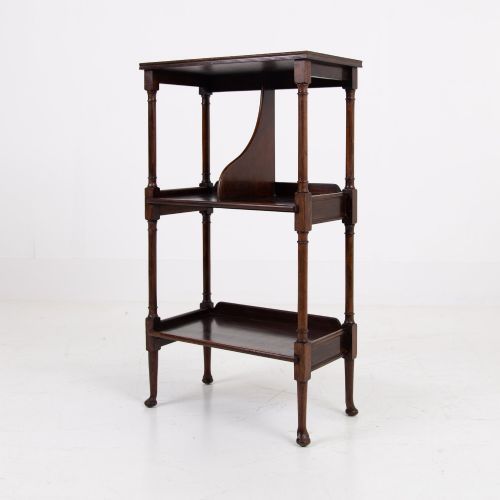
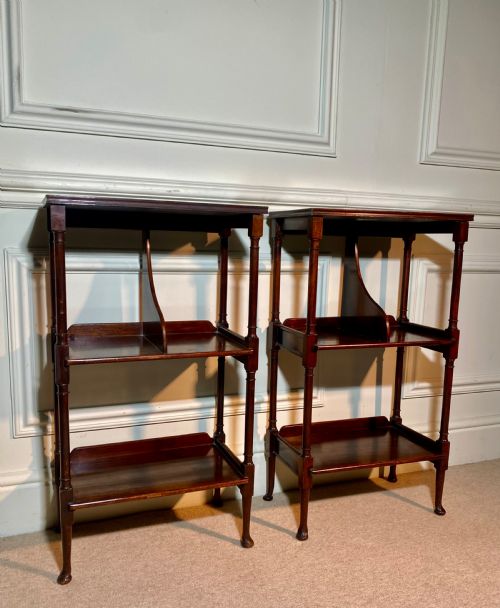
On this page, you are most likely to meet pieces dating from the Edwardian era and the turn of the twentieth century, alongside Victorian examples. The forms range from tall four-tier standing shelves to hanging wall units, bedside stands, and combination display tables.
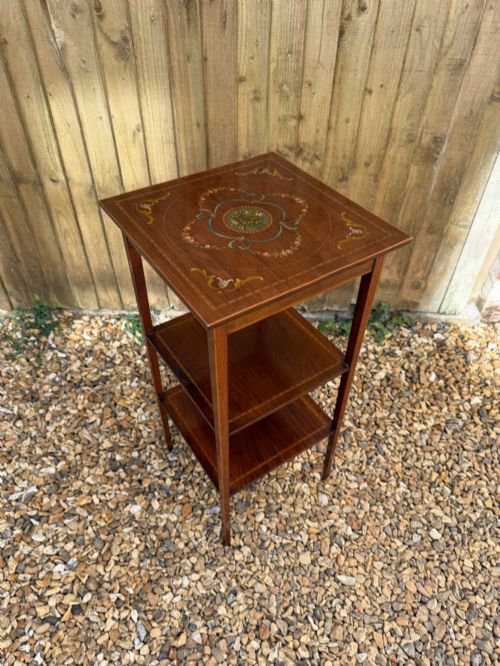
Makers of the period utilised mahogany timber as the primary structural material, often enhancing the surfaces with contrasting stringing, boxwood inlay, or satinwood details. Surviving examples demonstrate the enduring appeal of multi-level wooden furniture designed to organise household objects.
Materials and Construction Techniques
The primary material across these pieces is mahogany, selected for its stability and rich brown tone, frequently paired with secondary woods like satinwood or boxwood for decorative inlay work. Craftsmen constructed the tier supports and frames to bear weight across multiple shelves while maintaining a slender profile.
Surface decoration often incorporates painted details or delicate inlaid lines that trace the borders of the shelves and panels. Certain examples include functional additions such as brass castors for mobility, marble tops for durable surfaces, or integrated cupboard bases.
Edwardian Mahogany Whatnot Retail Price Guide 2026
Typical asking prices for edwardian mahogany whatnot among the pieces listed under this phrase on Sellingantiques today, from the lower quarter to the upper quarter. They describe what is for sale here now, not the wider market.
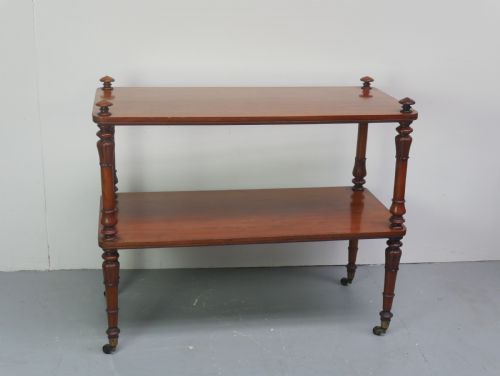
Several pieces arrive equipped with original castors, ensuring your multi-tier shelves can roll smoothly across the rug when rearranging the parlour.
Distinctions in Quality and Make
Quality in these tiered shelves rests on the crispness of the timber joinery and the precision of any inlaid boxwood or satinwood stringing. Finer pieces display balanced proportions across multiple tiers, with substantial mahogany boards that resist warping and turning.
The integration of secondary elements, such as fitted brass castors, veined marble tops, or hand-painted botanical motifs, separates standard utility items from more ambitious cabinet work. Structural soundness in the vertical uprights ensures that loaded shelves remain stable without leaning.
The Edwardian Mahogany Whatnot Glossary
- Whatnot
- An open set of tiered shelves designed for displaying ornaments, books, or collectibles, developed in the eighteenth century and popular through the Victorian and Edwardian periods.
- Etagere
- A French term for a piece of furniture consisting of a set of open shelves for displaying small objects, often synonymous with a whatnot.
- Inlay
- A decorative technique where pieces of contrasting timber, such as boxwood or satinwood, are inserted into recessed portions of the mahogany base to create patterns.
- Dumb Waiter
- A tiered stand or side table used for holding dishes or serving items, sharing the multi-level vertical construction seen in many shelf units.
- Canterbury
- A low stand featuring partitions for holding sheet music, books, or newspapers, sometimes combined with shelf or lamp standards in later examples.
Edwardian Mahogany Whatnot: Frequently Asked Questions
What is an Edwardian mahogany whatnot?
An edwardian mahogany whatnot is an open, tiered shelving unit made from mahogany timber, designed during the early twentieth century for displaying ornaments and holding household items.
These pieces feature multiple levels supported by vertical columns, appearing in both freestanding floor-standing versions and hanging wall variants.
How were these shelves used?
Historically, these multi-tier stands held books, ceramics, tea wares, and decorative collectibles in parlours, drawing rooms, and bedrooms.
Bedside variants served to hold night lamps and personal volumes, while larger four-tier models maximised vertical display space in smaller rooms.
Where should I place a whatnot?
These units suit corners, hallway spaces, or living rooms where vertical display is needed without taking up extensive floor area.
Freestanding stands work well against plain walls, while hanging versions anchor above side tables or desks to utilise wall space.
How do I care for mahogany furniture?
Maintain mahogany timber by keeping pieces away from direct heat sources and strong sunlight that can dry out the wood finish.
Dust regularly with a dry cloth and occasionally apply appropriate beeswax polish to nourish the grain without building up heavy residues.
How do I distinguish Edwardian from Victorian pieces?
Edwardian furniture generally exhibits lighter proportions, simpler lines, and restrained satinwood or boxwood inlay compared to heavier Victorian predecessors.
Victorian examples often employ denser carved mahogany details or darker finishes, while turn-of-the-century pieces lean towards Sheraton Revival lightness.