


Vintage Corner Plant Stand
A vintage corner plant stand brings architectural interest to empty room angles through tiered shelves, sturdy uprights and period joinery.
Vintage Corner Plant Stand
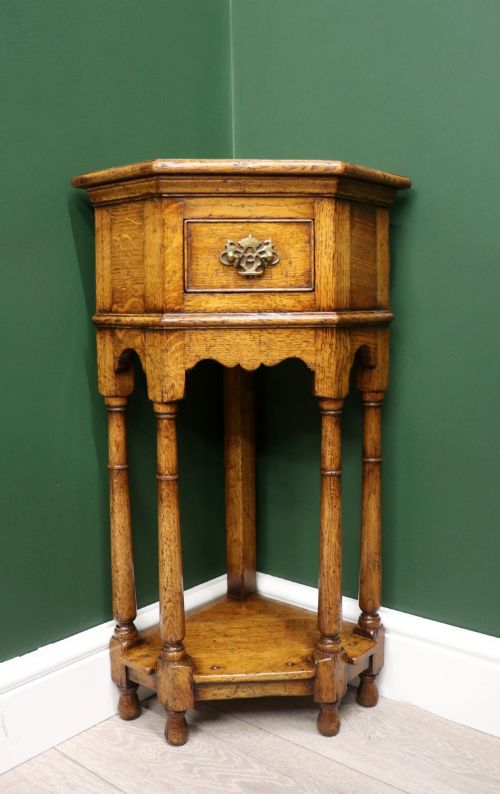
When you search for a vintage corner plant stand, you encounter pieces spanning the nineteenth century through the mid twentieth century. These furnishings make use of awkward domestic angles, elevating greenery or ornaments on graduated tiers and tripod or four legged frames.
Examples range from simple oak or beech frames to intricately detailed bamboo and inlaid mahogany constructions. Each piece reflects the interior design priorities of its respective decade, balancing utility with decorative presence.
Materials and construction methods
Carpenters utilised timbers such as oak, mahogany, walnut and exotic hardwoods, alongside structural metals including wrought iron and brass. Bamboo also appears frequently, bent and lashed to form lightweight yet resilient frames suited to conservatory settings.
Joinery methods varied by period, employing traditional mortise and tenon joints in earlier items alongside metal rivets and turned spindles in later iterations. Surface treatments involved polished veneers, applied brass trays, carved detailing and painted finishes.
Early twentieth century French bakers traded their bread racks for new lives as domestic plant holders.
What separates exceptional examples from ordinary ones
Quality rests upon the integrity of the timber selection and the precision of the corner fitting. Superior pieces demonstrate thoughtful grain matching, stable tier construction and robust joints that support weight without shifting.
The refinement of decorative elements distinguishes finer work, such as delicate string inlay, hand carved motifs or original metal hardware. Standard examples rely on simpler turned uprights and utilitarian assembly suited to everyday household use.
The Vintage Corner Plant Stand Glossary
- Occasional table
- A small movable table designed for a specific subsidiary purpose rather than central dining. These items often accompany larger seating arrangements or fill corners.
- Sheraton Revival
- A late nineteenth and early twentieth century design movement that reinterpreted the elegant neoclassical proportions and mahogany veneers associated with eighteenth century cabinetmakers.
- Bamboo
- A woody grass utilised extensively in nineteenth century furniture making for its lightweight strength and exotic aesthetic appeal. It was frequently paired with lacquer and woven panels.
- Washstand
- A domestic piece originally built to hold a basin and pitcher for personal hygiene, often featuring corner configurations and multiple tiers that translate well to plant display.
- Wrought iron
- Iron that has been heated and shaped with hand tools by a smith, resulting in durable structural frames with visible texture and riveted joints.
Vintage Corner Plant Stand: Frequently Asked Questions
How were corner plant stands used historically?
Households placed these stands in drawing rooms and conservatories to display potted ferns and flowering plants away from direct drafts. The tiered design allowed multiple plants to catch natural light without crowding the floor.
Over time, owners also utilised the surfaces for porcelain ornaments, lamps and books, adapting the corner furniture to changing interior fashions.
Can these stands support heavy plants?
Solid hardwood and iron versions generally handle substantial weight, provided the joints and leg assemblies remain firm. Lighter bamboo and multi tier occasional stands suit smaller potted greenery.
Checking the stability of the lower stretchers and tier attachments ensures safe display for heavier ceramic pots.
How do I date a wooden plant stand?
Construction details offer the clearest indication of age, such as hand cut dovetails, timber types and fastener styles. Edwardian and later twentieth century pieces often display machine turned components and standardised metal screws.
Stylistic markers like Arts and Crafts simplicity or Sheraton Revival inlay provide further clues to the manufacturing decade.
Where should I place one in a modern room?
These pieces excel at softening neglected room corners, adding vertical dimension and organic texture to plain walls. They fit neatly beside armchairs or between windows where standard rectangular furniture proves too bulky.
Pairing the stand with trailing foliage or sculptural ceramics highlights the architectural joinery of the frame.