
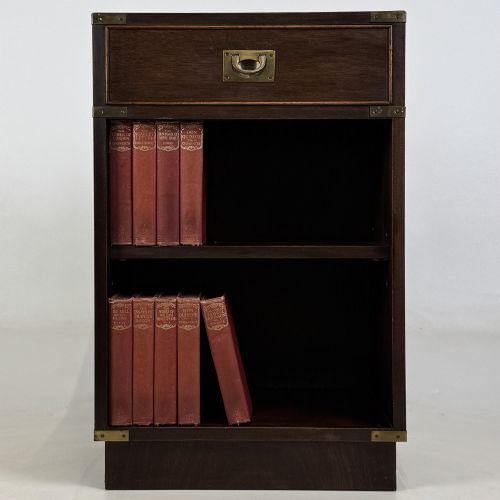


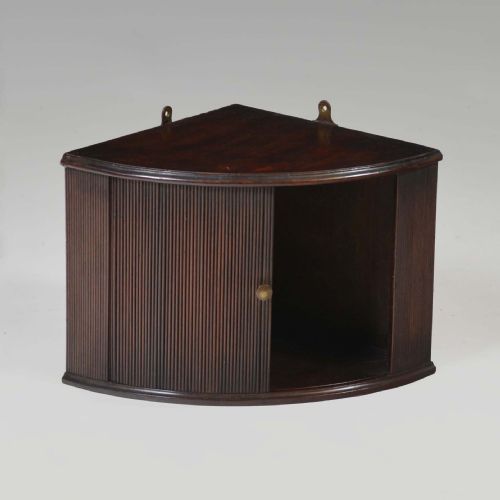

Mahogany Corner Shelf Unit
A mahogany corner shelf unit uses awkward spaces to display and store possessions with elegance.
Mahogany Corner Shelf Unit
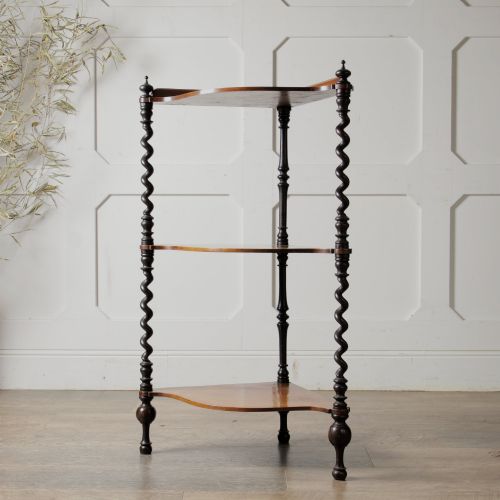
A mahogany corner shelf unit combines practical display space with a footprint designed specifically to fit room corners. You encounter multiple tiers and forms such as whatnots, etageres, and hanging or freestanding cupboards across periods from the Georgian era through to the Edwardian period.
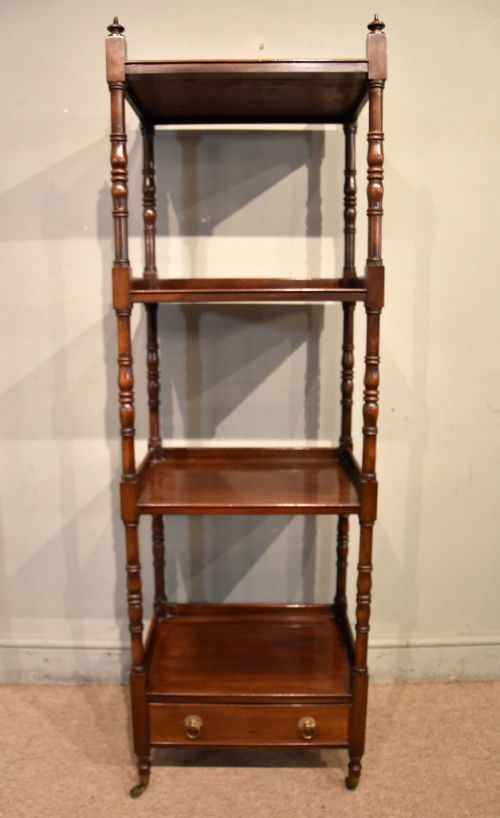
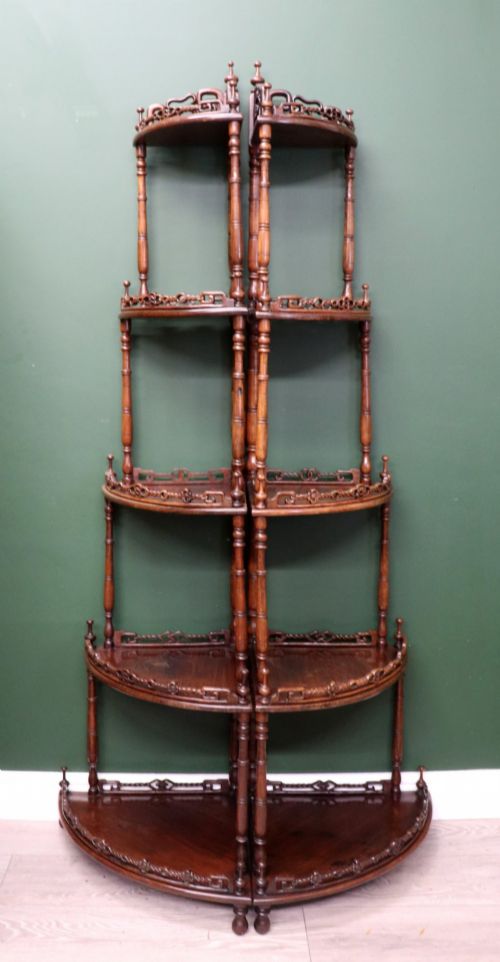
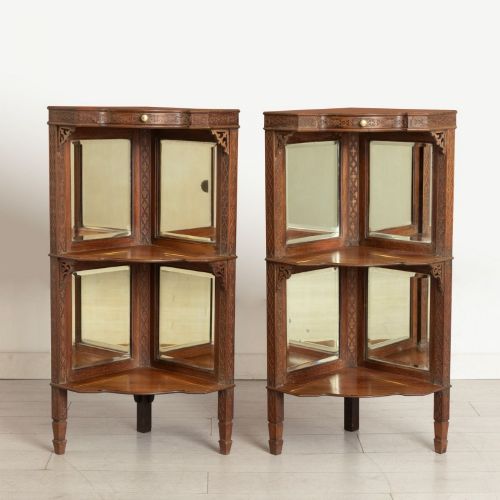
The pieces appearing here range from multi-tiered open shelves supported by turned or barley twist columns to glazed or tambour-fronted cabinets. Many adopt standard vertical formats with three, four, or five tiers, while others incorporate lower cupboards or washstand configurations.
Makers and cabinetmakers constructed these items primarily in mahogany, occasionally pairing the timber with walnut, satinwood, or brass details. The selection spans formal Georgian and Regency designs, substantial Victorian iterations, and later campaign or Moorish styles.
How they were made
Makers built these units using solid mahogany and mahogany veneers, sometimes incorporating secondary timbers like oak. Structural elements often feature turned columns, barley twist supports, or A-frame bracing to carry the weight of multiple tiers securely.
Surface details frequently include inlaid decorative veneers in satinwood or walnut, carved mouldings, and brass hardware such as hinges or handles. Glazed doors, mirror glass panels, and tambour fronts appear on enclosed cabinet variants to protect the contents while maintaining visibility.
Listings feature four-tier configurations most frequently among the multi-shelf variants.
What varies in quality
Quality reveals itself in the selection of the mahogany timber, the crispness of turned or carved elements like barley twists, and the integration of fine veneers or inlay work. Heavier timber gauges and substantial freestanding multi-tier frames indicate a higher grade of construction.
Edwards & Roberts·Liberty & Co.
The Mahogany Corner Shelf Unit Glossary
- Whatnot
- A piece of furniture consisting of multiple open shelves for displaying small objects or books. These typically feature three to five tiers supported by upright columns.
- Etagere
- A set of open shelves used for display, closely related in form to the whatnot. These often appear in compact scales from the Georgian and Regency periods.
- Tambour
- A flexible shutter made of narrow vertical strips of wood glued to a canvas backing. This allows cupboard doors to slide smoothly around a curved corner.
- Campaign Style
- Furniture designed to be dismantled or easily transported for military travel. These pieces often feature flush brass fittings and robust construction.
- Serpentine Front
- A furniture front characterised by a wavy line with a convex centre flanked by concave curves. This contour adds visual movement to cabinet and shelf edges.
Mahogany Corner Shelf Unit: Frequently Asked Questions
What is a corner shelf unit used for?
These units provide vertical display and storage by utilising unused angles in a room. They hold books, decorative objects, and small collections across multiple open or enclosed tiers.
Enclosed versions with doors also conceal items while keeping them protected from dust. Their triangular footprint allows them to sit flush against walls without obstructing floor space.
How do I tell a Georgian piece from a Victorian one?
Georgian pieces generally exhibit restrained proportions, simpler classical lines, and lighter construction such as A-frame frames or bow fronts. Timbers often display a rich, natural grain without excessive ornamentation.
Victorian examples frequently introduce heavier carving, darker finishes, and busier details like barley twist columns, mirrored glass, or ebonised accents. They also tend to incorporate multi-tiered shelving with greater vertical height.
Are these units freestanding or wall-mounted?
The selection includes both freestanding models, which rest firmly on the floor across multiple tiers, and hanging cupboards designed to be secured to walls. Freestanding whatnots and etageres can be repositioned easily.
Hanging corner cupboards mount directly into wall studs to save floor space entirely. Both types utilise the 90-degree angle of a room's corner.
What woods were used besides mahogany?
Mahogany serves as the primary timber, but makers frequently combined it with contrasting woods for decorative effect. Satinwood and walnut appear as inlay materials or secondary veneers.
Oak and other structural timbers occasionally provide internal support for shelves and carcases. Brass fittings and mirror glass also supplement the primary wooden structures.