





Painted Iron Plant Stand
A painted iron plant stand brings structural green and old-world character to a room or garden.
Painted Iron Plant Stand
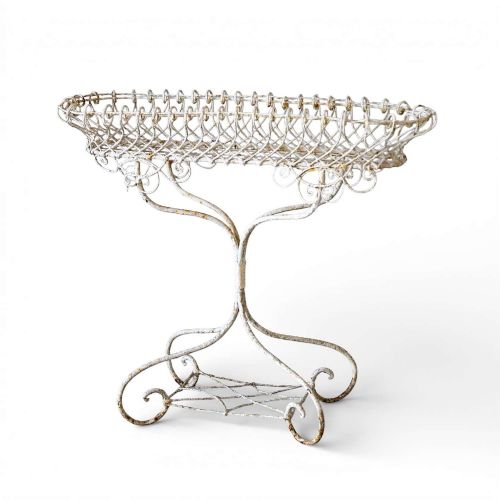
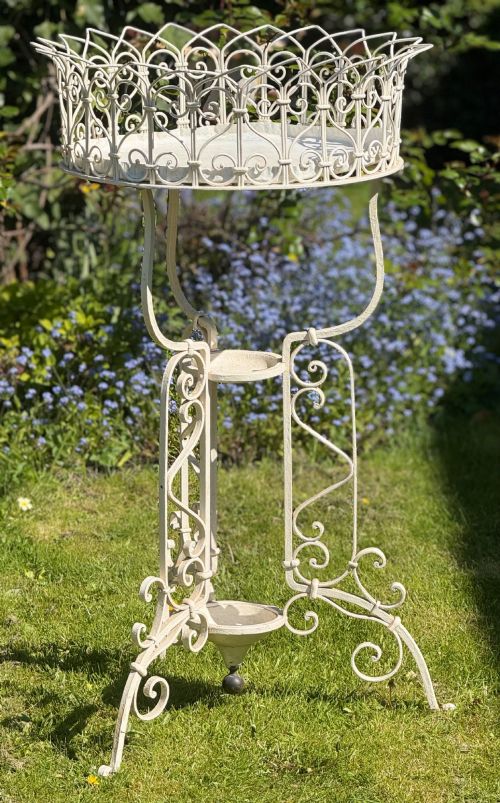
A painted iron plant stand is a utilitarian garden and conservatory furnishing designed to elevate pots, urns, and jardinieres. When you search for a painted iron plant stand, you encounter pieces that range from modest wirework tiers to heavy cast iron columns and structural scrollwork baskets.
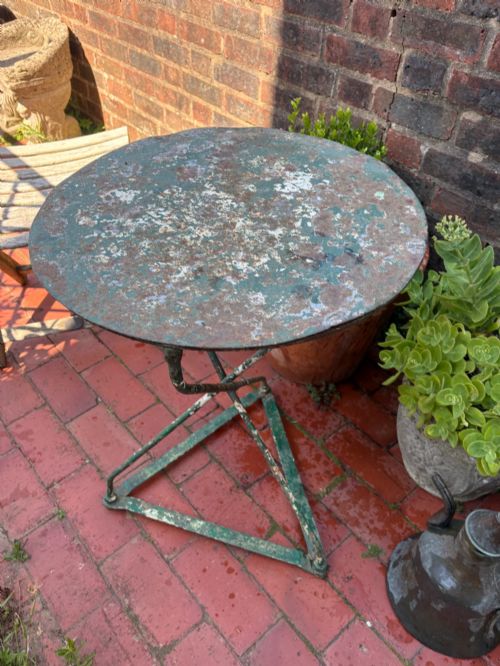
The versions most frequently met on this page span the Victorian and nineteenth-century periods, alongside French country and provincial interpretations. They appear as round tables, multi-tiered wire structures, corner units, and washstands adapted for horticultural display.
Makers and manufacturers of these utilitarian objects often left them unsigned, relying instead on the strength of the metalwork, lattice baskets, and riveted joints to define their utility. Their primary function remains the same today: lifting greenery off damp ground to display foliage and flowers.
How they were made
These stands rely primarily on wrought iron, cast iron, and wirework, shaped through forging, casting, and hand-wiring techniques. Makers utilised sheet metal, steel, and occasionally wood components for tops or structural reinforcement.
Structural elements like scrollwork, lattice baskets, and strapp work are formed from manipulated bars and interwoven wire, joined by rivets or traditional forge welding. The resulting frames receive protective coats of paint in green, white, or various historical tones to resist corrosion in damp garden environments.
The listings here feature pieces spanning from the Georgian period through the nineteenth century and into the twentieth century, constructed from wrought iron, cast iron, and wirework.
What varies in quality
The quality of a painted iron plant stand rests in the weight of the metal and the complexity of the hand-formed wirework or scrollwork. Heavier cast iron columns and finely riveted wire tiers show a higher degree of artisan skill than simpler utility racks.
The integrity of the structural joints and the handling of decorative elements, such as lattice baskets and turned metal legs, distinguish finer examples. Patina accumulated through generations of paint layers also contributes to the visual depth of the piece.
The Painted Iron Plant Stand Glossary
- Wrought iron
- Iron that has been heated and hammered into shape by hand, resulting in a fibrous structure with high tensile strength. It bends rather than snaps under heavy loads.
- Cast iron
- Iron poured in a molten state into a mould to create rigid, highly detailed decorative forms. It offers great compressive strength but can be brittle.
- Wirework
- The art of bending, weaving, and joining metal wire into lightweight, open structures. It allows for intricate tiered designs and lattice baskets.
- Jardiniere
- An ornamental pot or stand for holding plants and flowers, often taking a prominent architectural form in nineteenth-century interiors and gardens.
- Strapp work
- Flat metal strips riveted or joined together in geometric or strap-like patterns to form sturdy frames for tables and plant supports.
Painted Iron Plant Stand: Frequently Asked Questions
Where should I put a painted iron plant stand?
These stands suit conservatories, sheltered porches, and garden rooms where they can support heavy pots of foliage and flowers. In interior spaces, they add an industrial or botanical element to living areas and hallways.
Because the materials include iron and wirework, placement in dry or semi-sheltered spots helps preserve the painted surface over time. They work particularly well when positioned to catch natural light next to windows.
How do I date a nineteenth-century plant stand?
Dating relies on observing construction methods, such as hand-forged scrollwork versus mass-produced cast iron components. Material choices like early wirework frames or riveted sheet metal offer clues to the manufacturing era.
Victorian and Georgian examples often feature distinct patination and specific joining techniques that set them apart from later twentieth-century iterations.
Can I leave my plant stand outside all year?
While these stands were originally built for garden and conservatory use, prolonged exposure to harsh winter weather affects painted surfaces. Wrought and cast iron withstand elements well, but moisture can promote oxidation beneath older paint layers.
Moving lighter wirework and delicate stands indoors or under cover during freezing months extends their working life.
What is the difference between cast and wrought iron stands?
Cast iron pieces are formed by pouring molten metal into moulds, yielding heavier, highly ornamented items like garden column planters. Wrought iron pieces are hammered and bent by hand, resulting in resilient frames with visible forging marks.
Wirework represents a third distinct category, utilising thin drawn wire woven into lightweight structural tiers and baskets.