

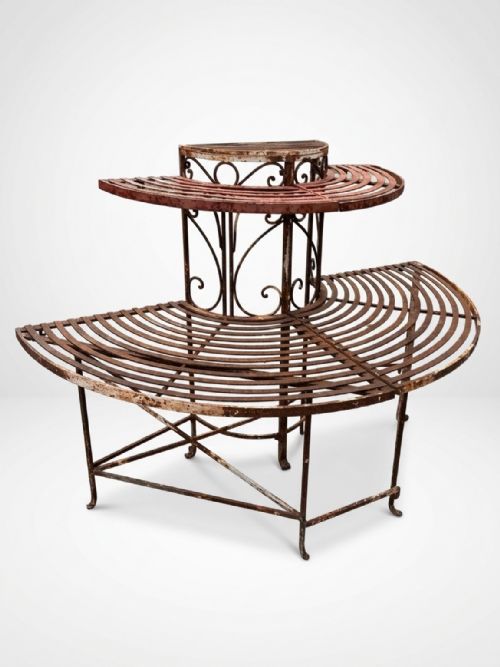


Tiered Iron Plant Stand
A tiered iron plant stand brings structural height and botanical display to any interior or garden, offering robust metal frames designed to showcase multiple pots.
Tiered Iron Plant Stand
A tiered iron plant stand is a multi-level display structure designed to hold pots, jardinieres, and plants at varying heights. When searching for a tiered iron plant stand, buyers encounter pieces originating from the Georgian period through to the 1920s, encompassing Victorian and Edwardian examples.
The most common forms on this page include cast iron and wirework plant stands, often featuring circular tiers or corner configurations. These structures utilise materials such as wrought iron, steel, and painted metal to support botanical arrangements.
Originating from British and French country traditions, these stands vary from three-tier circular models to five-height pan stands and slatted riveted racks. Their primary function remains the elevation of greenery, utilising vertical space efficiently in homes and conservatories.
How they were made
Makers constructed these stands using robust metals like cast iron, wrought iron, and steel, frequently combining them with wirework and brass elements. Structural components were often riveted together to ensure stability across multiple tiers.
Surfaces were commonly finished with paint, resulting in white painted or black cast iron finishes designed to withstand moisture and outdoor conditions. Wirework frames required intricate bending and soldering techniques to shape delicate yet supportive plant holders.
Tiered Iron Plant Stand Retail Price Guide 2026
Typical asking prices for tiered iron plant stand among the pieces listed under this phrase on Sellingantiques today, from the lower quarter to the upper quarter. They describe what is for sale here now, not the wider market.
The listings show tiered iron plant stands spanning from the Georgian era through the Victorian period and into the 1920s.
What varies in quality
Quality in these stands is determined by the complexity of the metalwork, such as the intricacy of wirework or the precision of cast iron mouldings. Superior examples display refined proportions and robust structural joints that maintain stability across every tier.
The choice of materials also dictates the grade of the piece, with combinations of cast iron and brass indicating higher craftsmanship than simple utilitarian storage racks. Original surface treatments, such as weathered paint or aged patination, distinguish finer period items from later utility pieces.
The Tiered Iron Plant Stand Glossary
- Cast iron
- A strong, hard iron alloy poured into a mould to create decorative and structural forms. It provides heavy, stable bases for multi-tiered plant stands.
- Wirework
- Metal wire bent, woven, or soldered into intricate mesh and framework patterns. This technique creates lightweight yet supportive tiers for botanical displays.
- Jardinere stand
- A decorative pedestal or rack specifically designed to elevate a large ornamental flower pot. These stands often feature circular platforms to fit standard pot bases.
- Wrought iron
- Iron that is heated and hammered into shape by hand, resulting in a fibrous structure. It offers flexibility in design and high tensile strength for slender frames.
- Riveted
- Joined together using metal pins that are hammered flat at the ends. This mechanical fastening method secures structural joints in slatted iron and corner stands.
Tiered Iron Plant Stand: Frequently Asked Questions
How do I date an iron plant stand?
Dating relies on observing manufacturing techniques, material choices, and stylistic markers present in the ironwork. Georgian and Victorian examples often feature hand-forged elements or specific casting marks typical of the nineteenth century.
Later pieces from the 1920s tend to utilise simpler riveted construction or utilitarian painted metal finishes. Comparing the structural assembly to documented period items helps narrow the timeframe of manufacture.
Can these stands be used outdoors?
Most iron and wirework stands were originally built to withstand garden environments, greenhouses, and conservatories. Cast iron and painted metal naturally resist outdoor elements, though weathering occurs over decades of exposure.
Placing them in sheltered garden spots helps preserve the original painted or weathered surfaces. Regular checks for moisture accumulation protect the structural integrity of joints and wirework.
What is the difference between cast and wrought iron?
Cast iron is poured molten into a mould, creating rigid, heavy components with detailed ornamental patterns. It provides exceptional downward load-bearing strength for multi-tiered stands.
Wrought iron is worked by hand with hammers while hot, resulting in a fibrous material that can be bent into slender, resilient frames. Wrought iron components typically offer more flexibility and resistance to sudden impacts.
How do I care for a painted metal plant stand?
Preserving the surface requires gentle cleaning with a soft brush to remove dust and debris without damaging the original finish. Avoiding harsh chemical cleaners protects aged paint and weathered patination.
Keeping the metal dry prevents active oxidation from spreading across structural joints and wirework mesh. Indoor placement minimises humidity fluctuations that can affect older painted surfaces.